

Zelensky urges Western nations to ban all Russian travellers. Plus: Poland toughens its rhetoric in its standoff with Brussels, a look at the life and legacy of the late Japanese designer Issey Miyake and a flick through today’s papers.
Category Archives: Politics

Stories: Hamas Sits Out Israel-Palestine Strikes, Gen Z Roils Workforce
A ceasefire is holding after a weekend of deadly strikes. We ask why Hamas, the Palestinian movement that controls Gaza, did not get involved.
As Generation Z tentatively enters the workforce, they are clamouring for more flexibility and money than their forebears enjoyed. And reflecting on the flawed but brilliant poet Philip Larkin on the centenary of his birth.
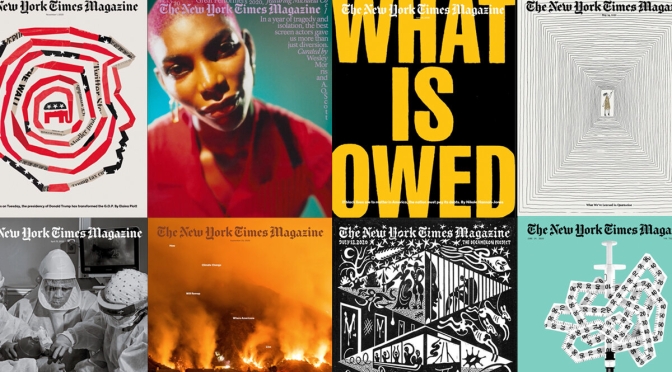
Preview: New York Times Magazine – August 14, 2022
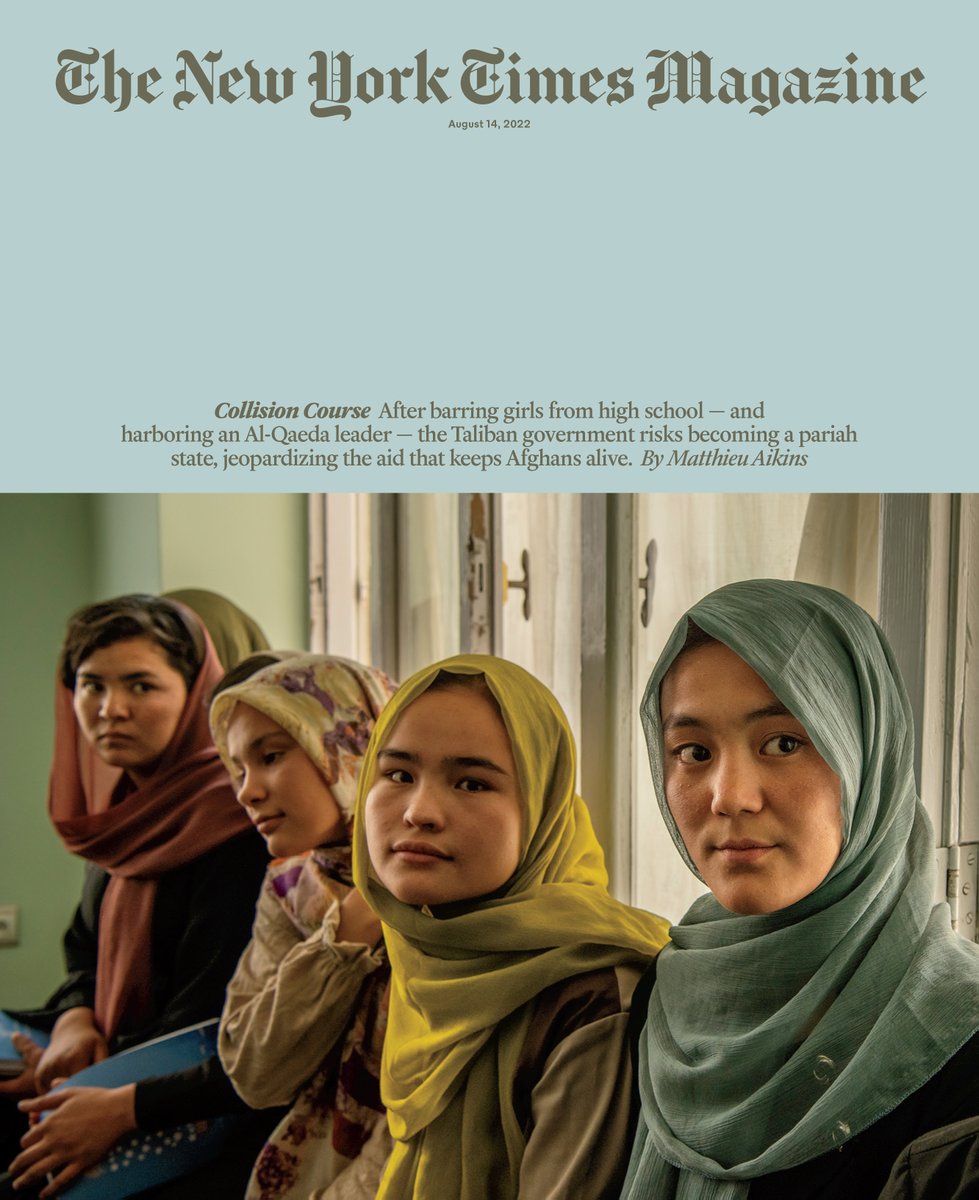
The Taliban’s Dangerous Collision Course With the West
After barring girls from high school — and harboring an Al-Qaeda leader — the regime now risks jeopardizing the billions of dollars of global aid that still keeps Afghans alive.
Read more: https://nyti.ms/3BPMloE
Opinion: The Despot In The Desert, Big-Tech Decline, Imperfect Is OK At Work
A selection of three essential articles read aloud from the latest issue of The Economist. This week, MBS: despot in the desert, the era of big-tech exceptionalism may be over (49:05), and why it’s OK not to be perfect at work (55:30).

Preview: The New Yorker Magazine – August 15, 2022

Gayle Kabaker’s “Summer Walk”
The artist on loosening up and the rewards of keeping a sketchbook.
By Françoise Mouly, Art by Gayle Kabaker (August 8, 2022)

Morning News: Senate Passes Health-Climate Bill, U.S. – Africa Relations
Senate Democrats pass major legislation addressing health care, taxes, and climate change. Antony Blinken is in South Africa to lay out a new strategy for US relations in the region. Results of a new poll find stark racial disparities when it comes to accessing healthcare.

Sunday Morning: Stories & Headlines From Zurich, London And Thailand
Monocle’s Tyler Brûlé and Emma Nelson, Eemeli Isoaho and Chandra Kurz cover the weekend’s biggest talking points. Plus: We hear from our friends and colleagues in England, Estonia and Thailand.
Headlines: China-Taiwan Tensions, Trump & Orbán Speak At CPAC Conference
We discuss the brewing crisis in Taiwan that has dominated the Asean meeting. Plus: Donald Trump and Viktor Orbán take centre stage at the Conservative Political Action Conference, a review of the papers and the latest business news.
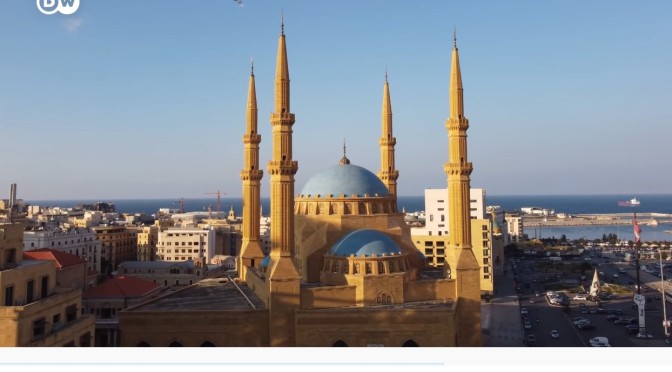
Documentary: Lebanon’s Historic Economic Crisis
Lebanon is now going through the worst economic crisis in its history. 80 per cent of the population lives below the poverty line. In one year, food prices have jumped 500 per cent due to galloping inflation. Lebanon was long regarded as the Switzerland of the Middle East.
But those days are gone. A series of crises have plunged the nation into the abyss. And its people are suffering. For Riad, who runs a grocery store in the suburbs of Beirut, business has become hellish. Every morning, calculator in hand, he changes the labels of his products according to the day’s exchange rate. An operation made all the more complex by the fact that his store is plunged into darkness, due to a lack of electricity.
The Lebanese government no longer provides more than two hours of electricity per day in the country. It is impossible for the population to heat, light or use their refrigerators. Taking advantage of the situation, a network of private generators has emerged. The Lebanese pound, the local currency, has lost 90 per cent of its value.
The only people unaffected are those paid in dollars. The greenback, which can be exchanged for a small fortune against the local currency, has created a new privileged social class in the country. A salesman in an international pharmaceutical company, Joseph lives like a king in a ruined Lebanon. Thanks to his new purchasing power, he repaid his mortgage in two months, instead of… twenty years!
In a bankrupt state, plagued by corruption, six out of ten Lebanese now dream of leaving the country. In Tripoli, in northern Lebanon, Mohammed and his son set out for Germany by sea. Even though the trip was cut short off the Turkish coast, the young father is still ready to take all possible risks to reach the European Eldorado.
Headlines: China Live-Fire Military Drills, Politics In Italy, Sri Lanka Economy
China conducts live-fire military drills. Plus: Sri Lanka’s new economic plan, an alliance between Italy’s centre-left and centrists, and Japan’s ‘roll-the-dice train’.
 Boomers Daily