After Ethiopia’s Prime Minister, Abiy Ahmed, ended a decades-long border conflict, he was heralded as a unifier. Now critics accuse him of tearing the country apart.
Locust in Nashville is the most perfect restaurant for our time.
Locust is open three days a week, for five and a half hours a day. Two hours are dedicated to lunch; the remaining time is for dinner service. On average, there are about six dishes on the menu, plus the occasional special (or three). The wine list is just as short. It’s hard to define what exactly the restaurant is, but as of right now, the food mostly has a Japanese bent. And on any given night, there might be a heavy metal soundtrack blasting from the open kitchen, with a few chefs head-banging away as they prepare your next dish. Locust is fully, uncompromisingly, and unapologetically itself—which is exactly what makes it so playful and brilliant.
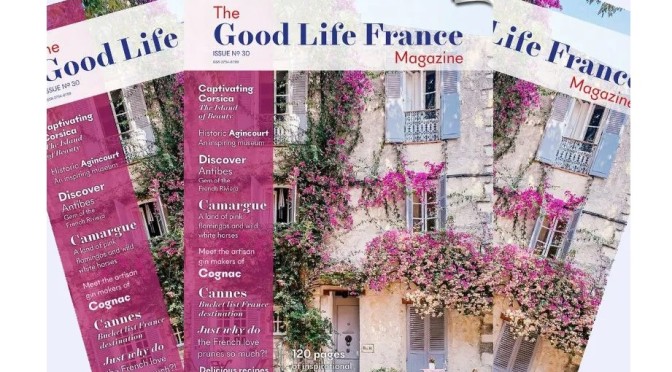
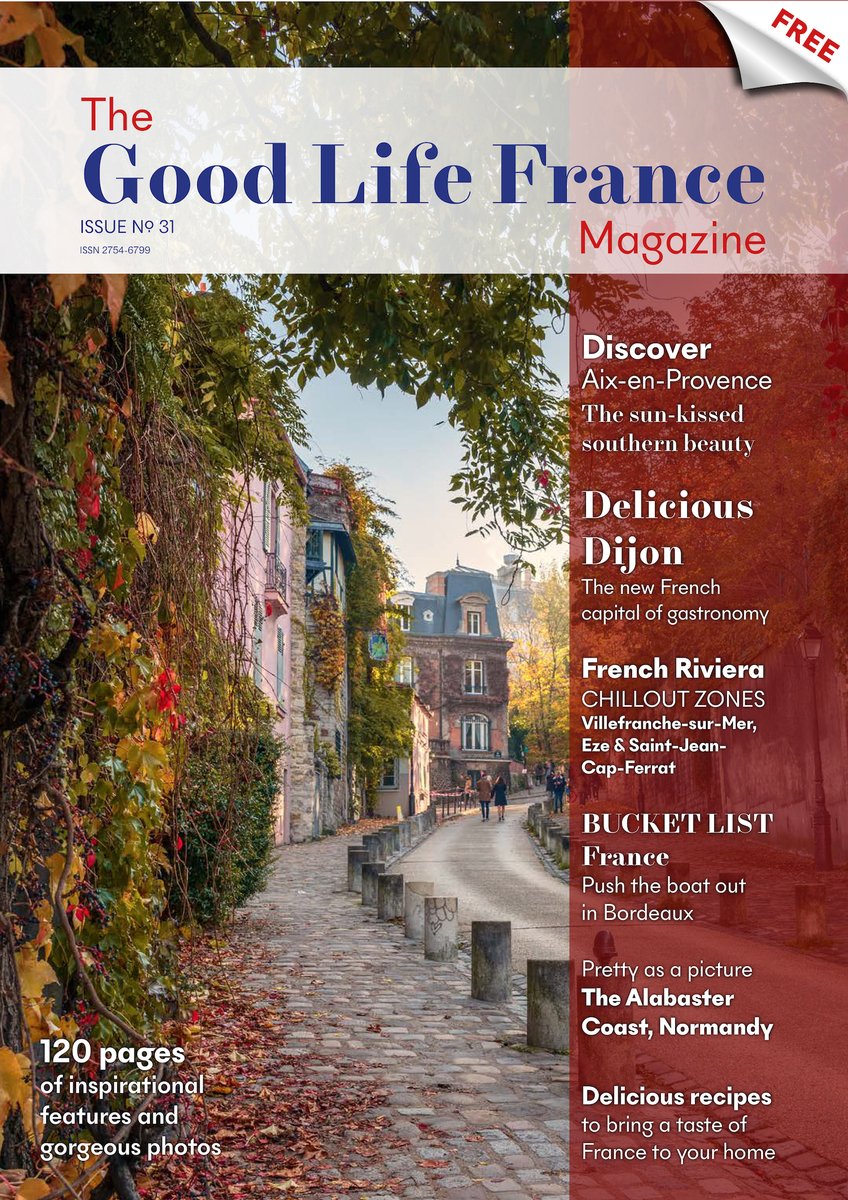
Discover Aix, the ‘Little Paris’ of Provence, the historic region of Beaune, a land of wine and castles. Beautiful Bordeaux and Normandy. The stork villages of Alsace and the pickled-in-the-past, post-card pretty perched town of Saint-Guilhem-le-Desert. Breath-taking Lavender fields in Provence, castles in the air in Dordogne. Exquisite Villefranche-sur-Mer and Nice. Discover what’s new, the best tours, recipes, a language lesson, practical guides and much, much more…
Haunted by the approach of another world war, the beloved fantasy author created a new story of Middle-earth that few people even knew about—until now. BY JOHN GARTH, PHOTOGRAPHS BY KIERAN DODDS
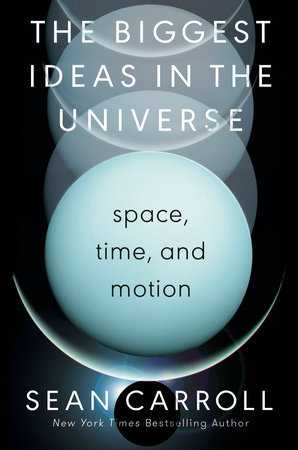
The goal of The Biggest Ideas in the Universe is to bridge the gap between popular-science treatments of modern physics and true expert knowledge. This is the real stuff — equations and all — presented in a way that presumes no prior knowledge other than high-school algebra. Readers will come up to speed about exactly what professional physicists are talking about, with an emphasis on established knowledge rather than speculation.
Volume One, Space, Time, and Motion, covers the domain of classical physics, from Newton to Einstein. We get introduced to Spherical Cow Philosophy, in which complications are stripped away to reveal the essence of a system, and the Laplacian Paradigm, in which the laws of physics take us from initial conditions into the future by marching through time. We learn the basic ideas of calculus, where we can calculate rates of change and how much of a quantity has accumulated. We think about the nature of space and time, separately and together. Finally we are introduced to the mysteries of non-Riemannian geometry and Einstein’s theory of curved spacetime, culminating into a dive into black holes.
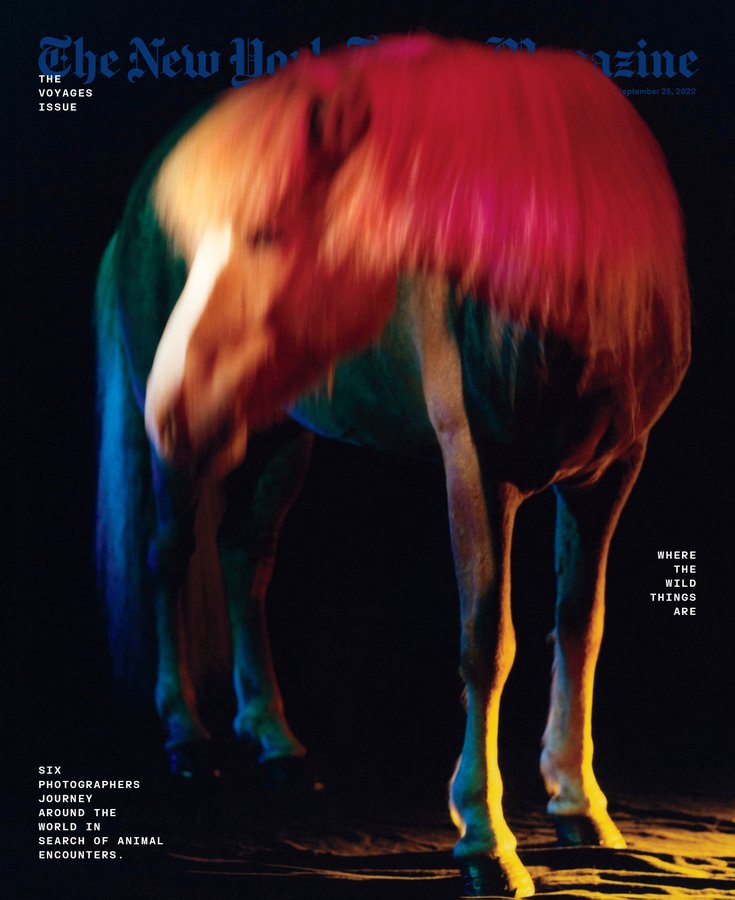
Horses that resemble My Little Ponies (but on Mars). Caimans that eat pythons. Monkeys that live alongside these caimans. High-fiving raccoons. Searching for a snow leopard. Six photographers. Six stories of animal encounters.





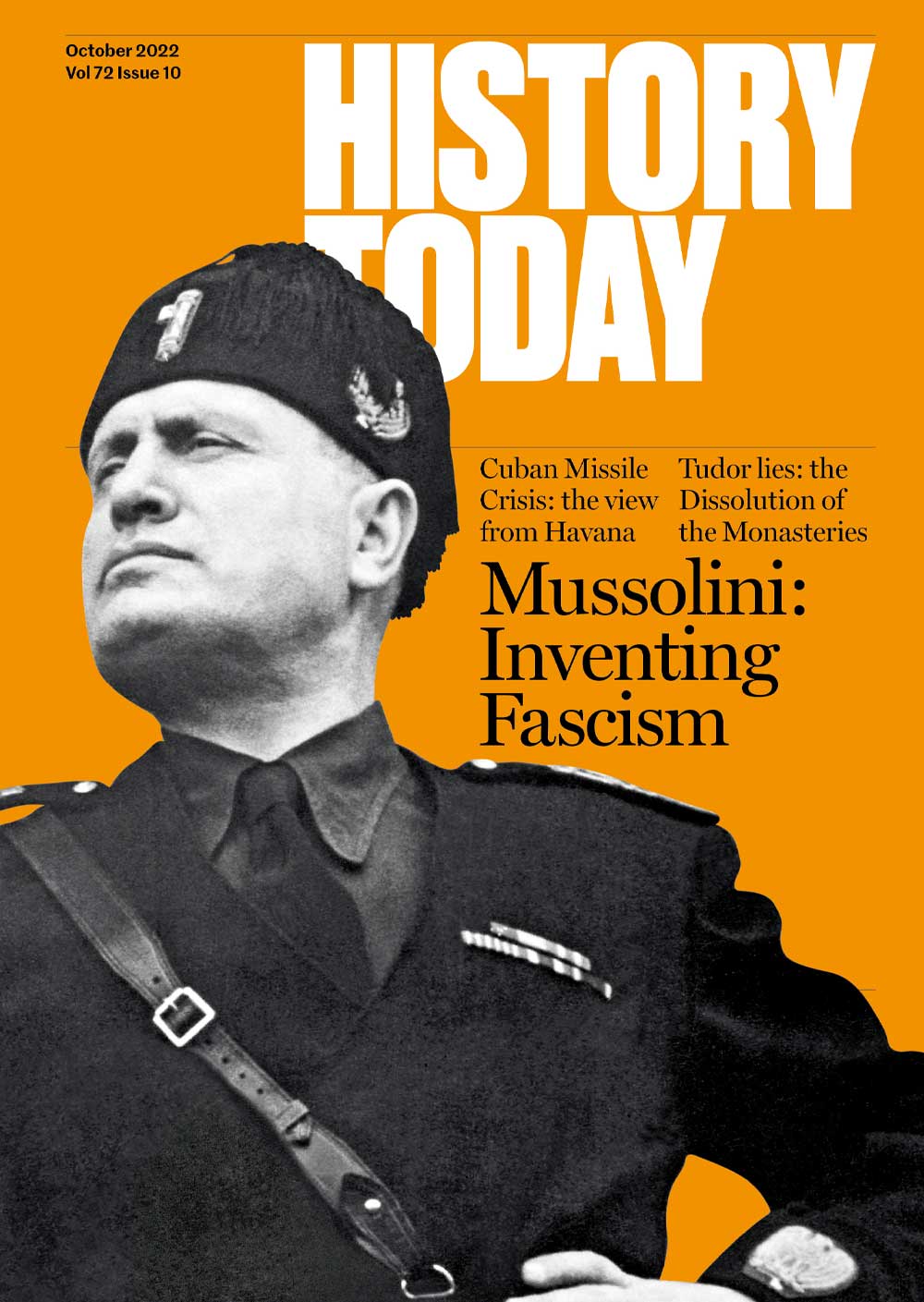
/https://tf-cmsv2-smithsonianmag-media.s3.amazonaws.com/filer_public/77/b2/77b26047-7784-4bc6-bf89-29de6b3bc7e7/oct22_web_cover.jpg)



 Boomers Daily