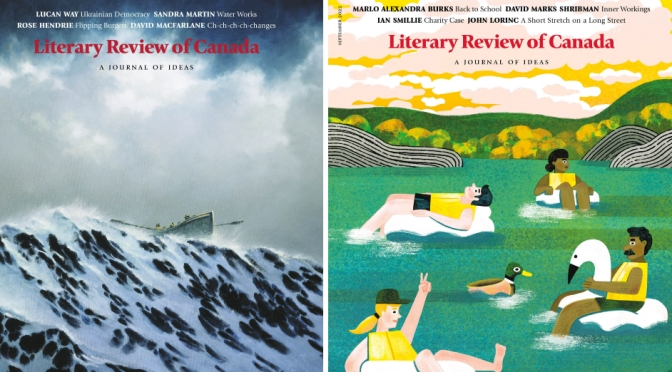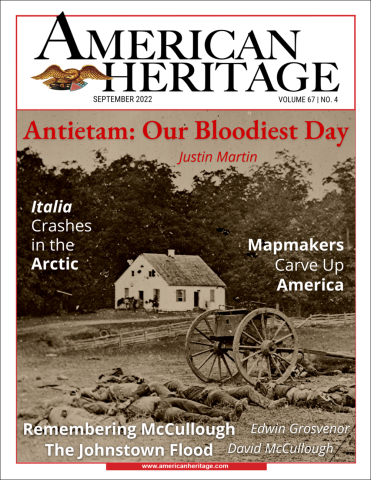
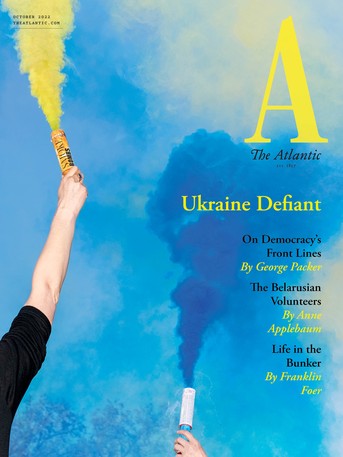
This week’s cover, by the designer Frank Viva, is a colorful, lyrical springtime ode to the pleasures of biking. We spoke to Viva about his love affair with cycling, his island retreat, and learning to prioritize what matters.
You might think that Tesla and electrification are the only things that matter today in the world of transportation—but there’s a lot more to the story. In this issue: pic.twitter.com/vM01DFIZGU
Richard Wilbur’s translations of Molière, now in the Library of America, have a fluency that goes beyond meter and rhyme to encompass textures of speech and movements of thought.
The US’s history of moral evasiveness around wartime atrocities undermines the very institution that might eventually bring Putin and his subordinates to justice: the International Criminal Court.
This week in Nature: Avian blues – Protected areas show mixed results for waterbirds, but conservation management boosts prospects. Browse the full issue here: https://t.co/cjlVHmLiBppic.twitter.com/L4fhIEZGvZ
Conservation efforts for waterbirds, such as the Dalmatian pelicans (Pelecanus crispus) pictured on the cover, have centred on creating protected areas to maintain suitable habitats. But it has been unclear to what extent protected areas affect species’ population levels. In this week’s issue, Hannah Wauchope and her colleagues present an analysis that suggests protected areas have a mixed impact on waterbird populations. The researchers examined 1,506 protected areas to assess how they affected 27,055 waterbird populations across the globe. By assessing population levels before and after the implementation of protection, and comparing this change between protected and unprotected areas, the researchers identified the mixed impact, but also saw a strong indication that areas that were managed for waterbirds or their habitats were more likely to benefit populations. As a result, the team suggests that conservation strategies will require not only an increase in the number of protected areas, but active management of those areas to have the best chance of success.
Coral reefs face many serious threats from human activity.
Experiments in sea anemone and mushroom coral now show that the sunscreen component oxybenzone can be converted to a powerful phototoxin in their cells. Read that study and more in Science: https://t.co/U2kCVGhyitpic.twitter.com/7xIpQXyn2q
Our June issue focuses on Pinot Noir, regarded for its distinction and versatility. We also explore Mendocino County in California but if spirits are more your tipple, we recommend the best gins for spring…https://t.co/ZrO1c8ztcS
The June issue of National Geographic Traveller (UK) is out now. The cover story this month focuses on Scandinavia Denmark, Norway and Sweden — where nature throws out the rulebook. Shaped by the elements and ruled by the seasons, this is a region not only bound by cultural ties, but by a love for epic outdoor adventures. From oyster safaris on Denmark’s dramatic shoreline and wilderness camping in Norwegian national parks to learning about Sámi culture in Swedish Lapland, these are the ultimate Scandinavian experiences.
Elsewhere in the issue:
South Africa: Safari projects are bouncing back after the pandemic in the country’s wild north east.
Portugal: Historic vines and traditional local sweets await on a journey through the Douro Valley.
Mauritius: Meet the conservationists preserving the islands’ extraordinary natural treasures.
Times Literary Supplement, May 6, 2022 – This week’s @TheTLS, featuring James Fenton on Volume IV of John Richardson’s Picasso biography; @joemoransblog on the “Premonitions Bureau”; @JuliusKrein on the American Right; @MElizabethLowry on William Kentridge; @AnaAliciaGarza on James Agee – and more
News, Views and Reviews For The Intellectually Curious