
Category Archives: International

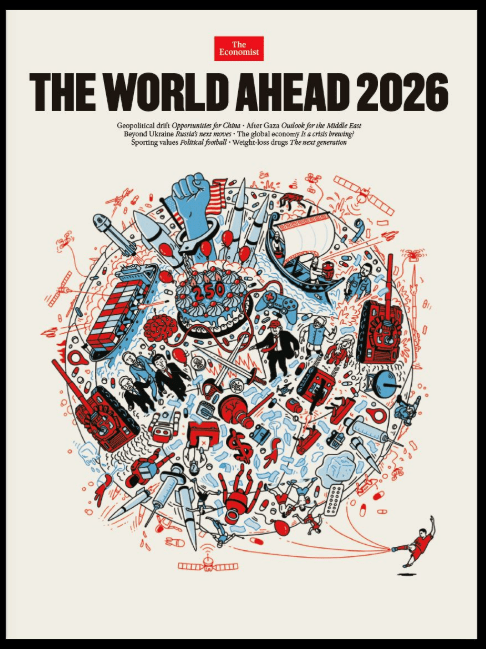
Analysis: The World Ahead In 2026 – The Economist

The Economist The World Ahead 2026 (November 13, 2025):

This is Donald Trump’s world—we’re all just living in it. The disruptor-in-chief was the biggest factor shaping global affairs in 2025, and that will be the case for as long as he remains in the White House. His norm-shattering approach has caused turmoil in some areas (as in trade) but has also delivered diplomatic results (as in Gaza) and forced necessary change (as with European defence spending). As the Trumpnado spins on in 2026, here are ten trends and themes to watch in the coming year.

1. America’s 250th.

Expect to hear wildly diverging accounts of America’s past, present and future, as Republicans and Democrats describe the same country in irreconcilably different terms to mark the 250th anniversary of its founding. Voters will then give their verdict on America’s future in the midterm elections in November. But even if the Democrats take the House, Mr Trump’s rule by bullying, tariffs and executive orders will go on.

2. Geopolitical drift.

Foreign-policy analysts are divided: is the world in a new cold war, between blocs led by America and China, or will a Trumpian deal divide the planet into American, Russian and Chinese “spheres of influence”, in which each can do as they please? Don’t count on either. Mr Trump prefers a transactional approach based on instinct, not grand geopolitical paradigms. The old global rules-based order will drift and decay further. But “coalitions of the willing” will strike new deals in areas such as defence, trade and climate.

3. War or peace? Yes.

With luck, the fragile peace in Gaza will hold. But conflicts will grind on in Ukraine, Sudan and Myanmar. Russia and China will test America’s commitment to its allies with “grey-zone” provocations in northern Europe and the South China Sea. As the line between war and peace becomes ever more blurred, tensions will rise in the Arctic, in orbit, on the sea floor and in cyberspace.

4. Problems for Europe.

All this poses a particular test for Europe. It must increase defence spending, keep America on side, boost economic growth and deal with huge deficits, even though austerity risks stoking support for hard-right parties. It also wants to remain a leading advocate for free trade and greenery. It cannot do all of these at once. A splurge on defence spending may lift growth, but only slightly.

5. China’s opportunity.

China has its own problems, with deflation, slowing growth and an industrial glut, but Mr Trump’s “America First” policy opens up new opportunities for China to boost its global influence. It will present itself as a more reliable partner, particularly in the global south, where it is striking a string of trade agreements. It is happy to do tactical deals with Mr Trump on soyabeans or chips. The trick will be to keep relations with America transactional, not confrontational.With rich countries living beyond their means, the risk of a bond-market crisis is growing

6. Economic worries.

So far America’s economy is proving more resilient than many expected to Mr Trump’s tariffs, but they will dampen global growth. And with rich countries living beyond their means, the risk of a bond-market crisis is growing. Much will depend on the replacement of Jerome Powell as chair of the Federal Reserve in May; politicising the Fed could trigger a market showdown.

7. Concerns over AI.

Rampant spending on infrastructure for artificial intelligence may also be concealing economic weakness in America. Will the bubble burst? As with railways, electricity and the internet, a crash would not mean that the technology does not have real value. But it could have wide economic impact. Either way, concern about AI’s impact on jobs, particularly those of graduates, will deepen.

8. A mixed climate picture.

Limiting warming to 1.5°C is off the table, and Mr Trump hates renewables. But global emissions have probably peaked, clean tech is booming across the global south and firms will meet or exceed their climate targets—but will keep quiet about it to avoid Mr Trump’s ire. Geothermal energy is worth watching.

9. Sporting values.

Sport can always be relied upon to provide a break from politics, right? Well, maybe not in 2026. The football World Cup is being jointly hosted by America, Canada and Mexico, whose relations are strained. Fans may stay away. But the Enhanced Games, in Las Vegas, may be even more controversial: athletes can use performance-enhancing drugs. Is it cheating—or just different?

10. Ozempic, but better.

Better, cheaper GLP-1 weight-loss drugs are coming, and in pill form, too. That will expand access. But is taking them cheating? GLP-1s extend the debate about the ethics of performance-enhancing drugs to a far wider group than athletes or bodybuilders. Few people compete in the Olympics. But anyone can take part in the Ozempic games.
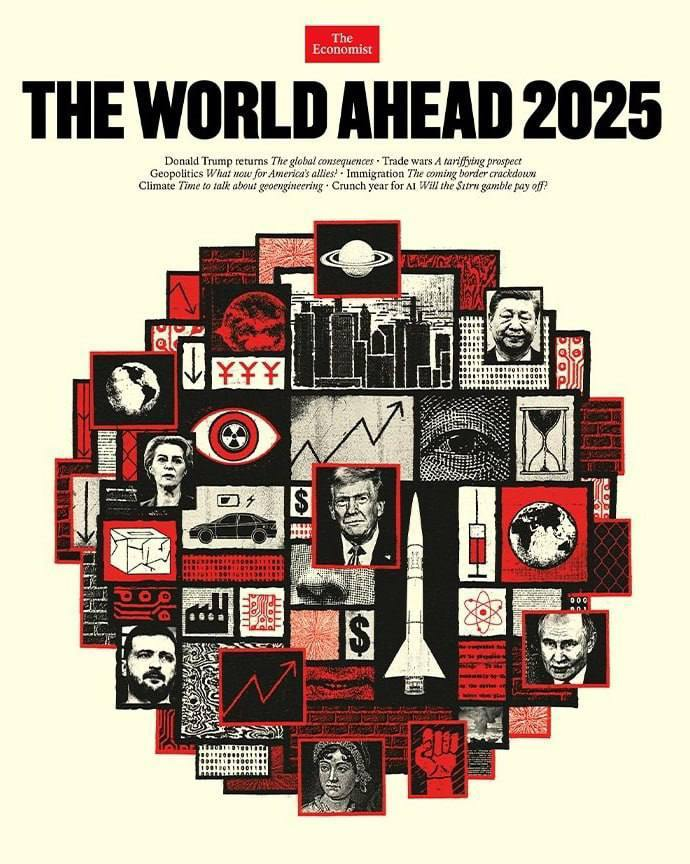
Analysis: The World Ahead In 2025 – The Economist

Image

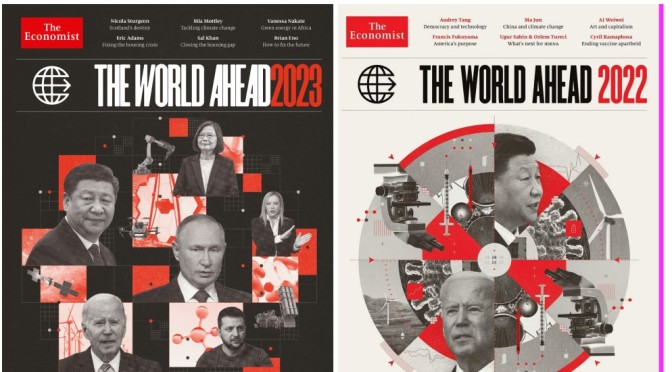
The Economist The World Ahead 2025 (November 20, 2024) : In 2025, as seen on the cover, the main event is Trump’s return to the White House and the global consequences of his policies, such as a new wave of trade wars with China. There is also an expected rise in technologies such as artificial intelligence and autonomous vehicles.

Tom Standage’s ten trends to watch in 2025

A letter from the editor of The World Ahead

The three forces that will shape 2025

Watch the interplay between Donald Trump, technology and radical uncertainty

The cover mentions climate issues and hints at a new phase in the fight for social equality, especially among women. Last year, the cover predicted geopolitical instability, an economic crisis, climate disasters, and the g

Book Reviews: Best Of International Fiction

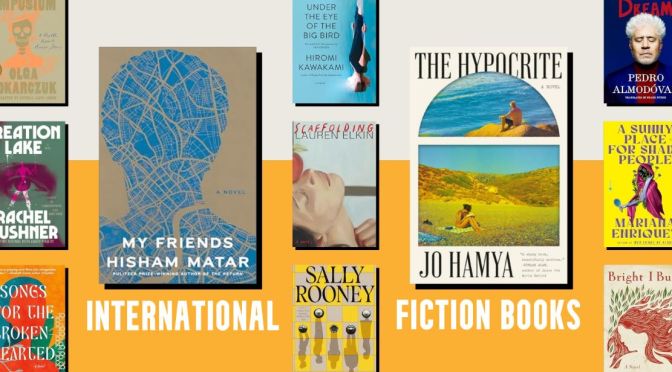
Foreign Policy (September 20, 2024): The Mediterranean was the backdrop for much of FP’s summer reading. For the first installment of our new column about international fiction, we travel to two very different settings along this vast sea: Muammar al-Qaddafi’s Libya and modern Sicily. Plus, we highlight the buzziest releases in international fiction this month.


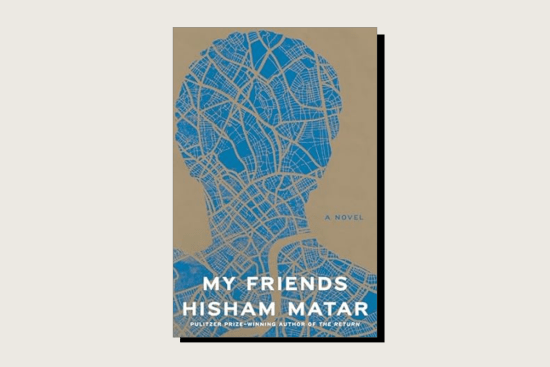
My Friends: A Novel

Hisham Matar (Random House, 416 pp., $28.99, January 2024)

Hisham Matar’s latest novel, recently longlisted for the 2024 Booker Prize, is about friendship and exile. Matar, a Libyan American writer based in London, was raised in a family of anti-Qaddafi dissidents and has made the tyrant’s maniacal rule the subject of most of his work.

In My Friends, Matar follows protagonist and narrator Khaled from his school days in Benghazi to the period following Qaddafi’s overthrow in 2011. After attending a 1984 anti-Qaddafi demonstration in London and landing on the dictator’s hit list, Khaled is forced to upend his quiet life as a university student in Edinburgh and start over in the British capital. (The real-life protest, where officials at the Libyan Embassy shot several protesters and killed a police officer, led Libya and Britain to sever ties.)

Khaled develops strong friendships with two fellow Libyans in London, Hosam and Mustafa. Unlike Khaled, both are unwavering in their political convictions. Although Khaled is opposed to Qaddafi’s regime, he is also aware of the costs—and futility—of speaking out. That Khaled’s criticism of Qaddafi’s Libya never leaves the private, rhetorical sphere is a point of contention between him and his friends. Ultimately, Hosam and Mustafa return to Libya in 2011 to join the militias fighting Qaddafi; Khaled remains in Britain, deeply insecure about his inaction.

Khaled’s decision to attend the 1984 protest was one he made hesitantly, so it is all the more shocking that his first brush with activism fundamentally altered the course of his life. Khaled’s father, an academic who resigned himself to a mid-level career under Qaddafi to avoid repression, had taught his son that it is “almost always best to leave things be.”

At its core, My Friends is a debate over whether, in the face of repression, such silence is a form of self-preservation or cowardice. This tension exists between the book’s main characters—the friends—as well as within Khaled’s own head. While Khaled’s exile led him to make great friends, his time in London is equally a painful experience of solitude. With Libyan phone lines tapped and mail pilfered by the regime, he has had to uphold a decades-long lie to his family about why he can no longer return home—all because he attended a single protest.

An author with an agenda might have sought to portray Hosam and Mustafa as valiant fighters whose sacrifices are rewarded, opposite Khaled, who prefers comfort to confrontation. But Libyan history does not follow a morally righteous narrative arc. At the end of the book, Libya becomes enveloped in a new crisis, and each friend seeks to find his place within it.—Allison Meakem


The Hypocrite: A Novel

Jo Hamya (Pantheon, 240 pp., $26, August 2024)

The Mediterranean is a time-honored stage for the psychosocial dramas of the elite. From British novelist John Fowles’s 1965 masterpiece, The Magus, to the entire Mamma Mia! franchise, fictional foreigners have long flocked to Greek and Italian isles to escape from—and, more often, confront—their heartbreaks and pathologies and familial squabbles. Often left out of these tales are the locals.

The Hypocrite by British author Jo Hamya at first seems like more of the same. It takes place over the course of one staging of a play about a summer that Sophia, the young playwright, once spent in Sicily’s Aeolian Islands with her father, a famous novelist whose work has aged poorly. It’s a smooth and often witty portrait of the upper-middle-class London art scene, written in the streamlined Rachel Cusk-esque register that defines much contemporary literary fiction.

Yet The Hypocrite also attempts to do something more. Although Sophia’s family dramas make up the bulk of the narrative, Hamya eventually shifts her focus to the family’s housekeeper in Sicily. She recalls that Sophia “was demanding in the worst way an English tourist could be.” Sophia didn’t try to learn even a little Italian. She and her father, the housekeeper thinks, were “lazy, messy people” who never bothered “to make her job easier with the simplest of acts.”

Hamya’s novel is part of the recent trend of examining who, historically, has been omitted in traditional narratives, especially ones set in locales that are under-resourced, exoticized, and deeply reliant on tourism. (Sicilians are European, yes, but they also live in one of Italy’s poorest regions.) In this regard, the novel is closer in spirit to HBO’s The White Lotus, the much-lauded send-up of the rich at a luxury resort chain (first in Hawaii, then in Sicily, and soon in Thailand), than many of its other predecessors.

Hamya does not dwell, however, on this upstairs-downstairs dynamic. Rather than skewering the careless interlopers, she aims for a bit more nuance, attending—if only fleetingly—to both the narrower interests of her protagonists and the invisible hands that helped set the stage for them that summer.—Chloe Hadavas

Analysis: The World Ahead In 2024 – The Economist

The Economist The World Ahead 2024 (November 14, 2023)Future-gazing analysis, predictions and speculation including Ten trends to watch in 2024; 2024 will be stressful for those who care about liberal democracy; America will need a new vocabulary to discuss its presidential election; Europe needs to step up support for Ukraine; Don’t give up on peace in the Middle East, and more…

Tom Standage’s ten trends to watch in 2024

A letter from the editor of The World Ahead

By Tom Standage

Life comes at you fast. Whether it’s the upsurge in armed conflict, the redrawing of the global energy-resources map or rapid progress in artificial intelligence (ai), the world is changing at mind-boggling speed. From the situation in the Middle East to the adoption of electric vehicles to the treatment of obesity, things look very different from the way they did just a year or two ago. Our aim is to help you keep your worldview up to date—and tell you what might be coming next. To kick things off, here are ten themes to watch in the coming year.

2024 will be stressful for those who care about liberal democracy

In theory it should be a triumphant year for democracy. In practice it will be the opposite

By Zanny Minton Beddoes

More than half the people on the planet live in countries that will hold nationwide elections in 2024, the first time this milestone has been reached. Based on recent patterns of voter turnout, close to 2bn people in more than 70 countries will head to the polls. Ballots will be cast from Britain to Bangladesh, from India to Indonesia. Yet what sounds like it should be a triumphant year for democracy will be the opposite.

The world must try to break a vicious cycle of insecurity 

A stick of dynamite with a lit fuse in the shape of a world map

The fragility of the Western coalition is a crucial weakness

By Patrick Foulis

As 2023 drew to a close, wars were raging in Africa, Israel and Gaza, and Ukraine. These crises are explosive in their own right. Combine them with a presidential race in America and 2024 promises to be a make-or-break year for the post-1945 world order.

The 2020s were destined to be dangerous. The West’s share of world gdp has fallen towards 50% for the first time since the 19th century. Countries such as India and Turkey believe the global institutions created after 1945 do not reflect their concerns. China and Russia want to go further and subvert this system.

The Arctic Circle: China’s Emerging ‘Polar Silk Road’

DW Documentary (April 1, 2023) – Following the rise of China’s power in Africa, are we on the verge of seeing a Chinese Arctic? Certainly, the country is seeking to expand its influence in this geopolitically important area. The US is worried, while Russia smells business.

But what are China’s plans for the region? In 2013, the “Yong Sheng” made history: It was the first Chinese cargo ship to reach Europe via the Arctic. This promising route, which Beijing soon dubbed the “Polar Silk Road,” made the “Yong Sheng” a symbol of Chinese ambitions in the far north. Increasingly self-confident, China is now expanding its sphere of influence bit by bit in the Arctic – a place of high geopolitical significance.

The country’s influence is spreading, with projects that include investments in gas resources in the Russian Arctic on the Yamal Peninsula. In January 2018, China initiated the “Polar Silk Road” project. Now, the country is pursuing a rapprochement with Iceland and Norway through businessmen. China maintains a research station on Spitsbergen and has even started to define itself publicly as a country “close to the Arctic” – a status from which China hopes to derive new rights.

The Arctic seems a long way from Beijing. But Chinese president Xi Jinping has understood how important this region is. China’s need for resources is driving Xi Jinping to negotiate with the major Arctic powers, who largely view him with suspicion. The new geopolitics of the Arctic are playing out not only in world capitals and in the media, but also on the ground: Emissaries, entrepreneurs, and mediators are traveling to the strategic region.

This group includes Chinese nationals as well as Norwegians, Icelanders, Swedes and Americans. China is expanding. After “Chinafrica,” will we now also speak of “Chinarctica”? China, it is said, has time on its side. And in the meantime it is openly dreaming of superpower status. The Americans are worried, the Europeans are hesitant and the Russians are eager for investments. But what are China’s real goals?

Views: How Black Market Oil Fuels Terrorism (2023)

National Geographic (March 23, 2023) – Join Mariana van Zeller as she examines the role that oil plays in the operations of some of the world’s most powerful terrorist organizations.

Catch all-new episodes of #TraffickedWithMarianavanZeller, Wednesdays at 9/8c on National Geographic.

World Economic Forum: Top Stories – Jan 13, 2023

World Economic Forum – January 13, 2023 top stories:

0:15 Solar powered car drives 1000kms – The Sunswift 7 weighs just 500kg. While an average car weighs between 1,500 and 2,000kg and boasts incredibly low rolling resistance due to its shape. A team at UNSW Sydney designed and built the car. Which completed 240 laps of a special test circuit. Equal to driving from Sydney to Melbourne, plus 100km.

1:32 3D printed bionic arms – Cure Bionics 3D-printed prosthetics are lightweight and muscle-controlled. They can be attached without surgical intervention and are charged wirelessly by solar power. The arms can be printed and ready within a week at the cost of just $3,000. Other providers can take months and charge up to $100,000. Cure Bionics’ arms are available for children with limb differences aged 8 and up. The low weight makes them easy for kids to operate. An immersive VR training programme helps patients learn to use their arms even before it’s made. Cure Bionics was founded in Tunisia, where the start-up has already launched a prototype. In spring 2023, it’s releasing a public version.

3:17 Geneva introduces driverless buses – 15 self-driving minibuses will be deployed in 2025. Providing an on-demand, door-to-door service, 24 hours a day. This pilot project will run for 1 year alongside similar schemes in Germany and Norway.

4:55 Implants restore vision to blind people – The implants were given to 20 people by scientists at Sweden’s Linköping University and LinkoCare Life Sciences. 14 were blind and 6 were on the verge of losing their sight. After 2 years, none of them were blind.

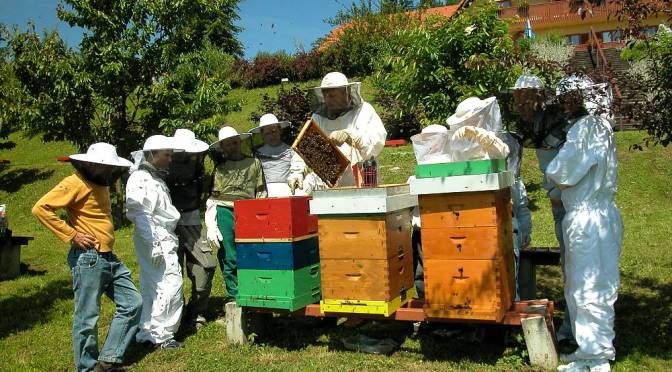
Culture & Tradition: The Beekeepers Of Slovenia

UNESCO – In Slovenia, beekeeping is a way of life for many individuals, families and communities, who obtain bee products for food and traditional medicine and use their knowledge and skills to care for the honeybees and the environment.

Communities express a loving and respectful attitude towards bees, and the knowledge, skills and practices relating to their keeping are shaped by centuries of tradition and transmitted from generation to generation. Beekeepers view their bees as teachers and friends. They expand their knowledge and skills through constant research.

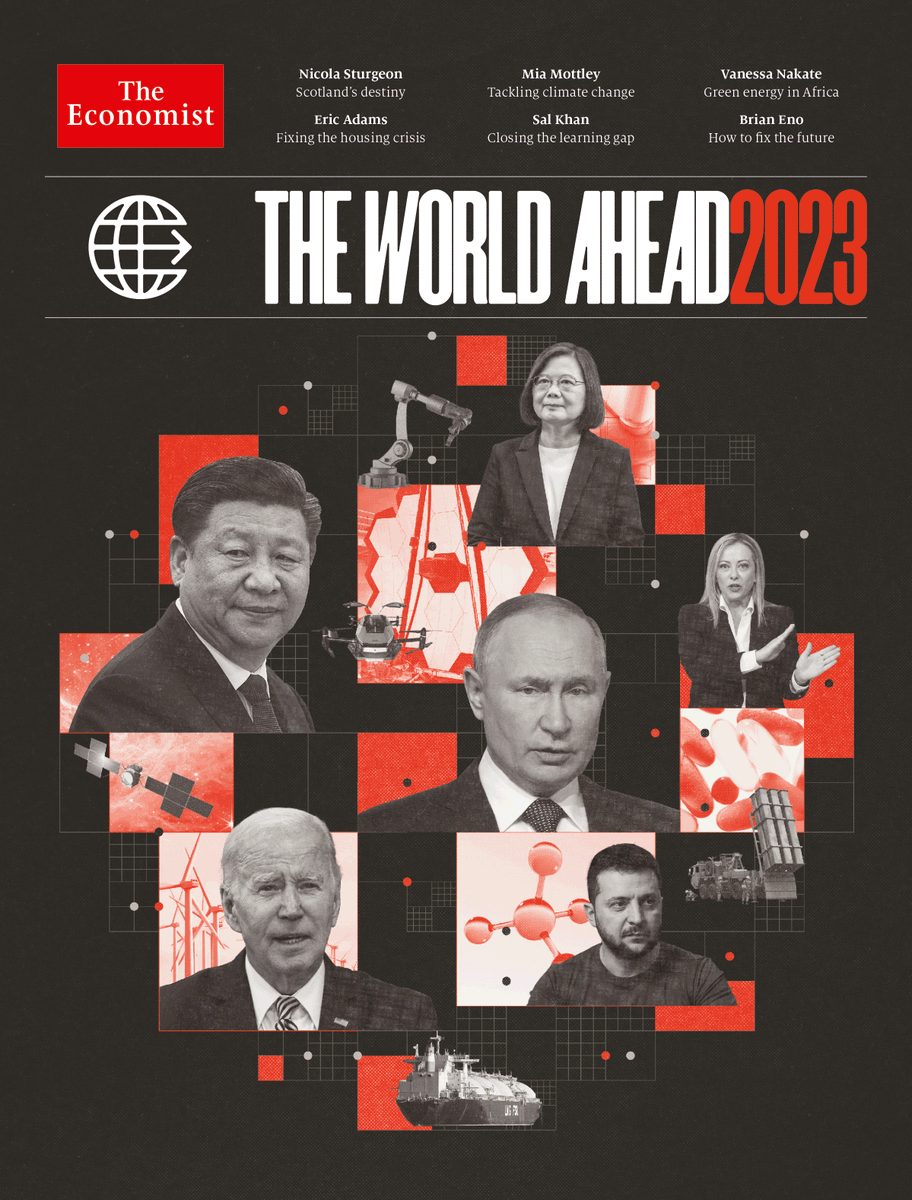
Analysis: The World Ahead 2023 – The Economist

Image

Ten trends to watch in the coming year

A letter from Tom Standage, editor of “The World Ahead 2023”

1. All eyes on Ukraine. Energy prices, inflation, interest rates, economic growth, food shortages—all depend on how the conflict plays out in the coming months. Rapid progress by Ukraine could threaten Vladimir Putin, but a grinding stalemate seems the most likely outcome. Russia will try to string out the conflict in the hope that energy shortages, and political shifts in America, will undermine Western support for Ukraine.

2. Recessions loom. Major economies will go into recession as central banks raise interest rates to stifle inflation, an after-effect of the pandemic since inflamed by high energy prices. America’s recession should be relatively mild; Europe’s will be more brutal. The pain will be global as the strong dollar hurts poor countries already hit by soaring food prices.

3. Climate silver lining. As countries rush to secure their energy supplies, they are turning back to dirty fossil fuels. But in the medium term the war will accelerate the switch to renewables as a safer alternative to hydrocarbons supplied by autocrats. As well as wind and solar, nuclear and hydrogen will benefit too.

4. Peak China? Some time in April China’s population will be overtaken by India’s, at around 1.43bn. With China’s population in decline, and its economy facing headwinds, expect much discussion of whether China has peaked. Slower growth means its economy may never overtake America’s in size.

5. Divided America. Although Republicans did worse than expected in the midterm elections, social and cultural divides on abortion, guns and other hot-button issues continue to widen after a string of contentious Supreme Court rulings. Donald Trump’s formal entry into the 2024 presidential race will pour fuel on the fire.

6. Flashpoints to watch. The intense focus on the war in Ukraine heightens the risk of conflict elsewhere. With Russia distracted, conflicts are breaking out in its backyard. China may decide that there will never be a better time to make a move on Taiwan. India-China tensions could flare in the Himalayas. And might Turkey try to nab a Greek island in the Aegean?

7. Shifting alliances. Amid geopolitical shifts, alliances are responding. nato, revitalised by the war in Ukraine, will welcome two new members. Will Saudi Arabia join the Abraham accords, an emerging bloc? Other groupings of growing importance include the Quad and aukus (two American-led clubs intended to deal with China’s rise) and i2u2—not a rock band, but a sustainability forum linking India, Israel, the United Arab Emirates and the United States.

8. Revenge tourism. Take that, covid! As travellers engage in post-lockdown “revenge” tourism, traveller spending will almost regain its 2019 level of $1.4trn, but only because inflation has pushed up prices. The actual number of international tourist trips, at 1.6bn, will still be below the pre-pandemic level of 1.8bn in 2019. Business travel will remain weak as firms cut costs.

9. Metaverse reality check. Will the idea of working and playing in virtual worlds catch on beyond video games? 2023 will provide some answers as Apple launches its first headset and Meta decides whether to change its strategy as its share price languishes. Meanwhile, a less complicated and more immediately useful shift may be the rise of “passkeys” to replace passwords.

10. New year, new jargon. Never heard of a passkey? Fear not! Turn to our special section, “Understand This”, which rounds up the vital vocabulary that will be useful to know in 2023. nimbys are out and yimbys are in; cryptocurrencies are uncool and post-quantum cryptography is hot; but can you define a frozen conflict, or synfuel? We’ve got you covered.