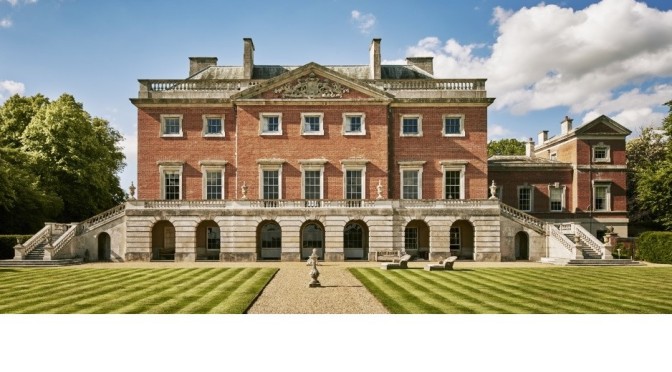
House & Garden (February 3, 2023) – Peter Sheppard and Keith Day welcome us into Wolterton Hall, an 18th-century English country house in Norfolk, England. Both Peter & Keith have been steadily restoring and redecorating Wolterton Park since they bought the estate in 2016 — bringing the state rooms back to their original glory and creating beautiful, practical living spaces.
Video timeline: 00:00 – Boudoir: “The walls were covered with a green hessian” 02:30 – Saloon: “This is where we have our best parties” 05:29 – State Bedroom: “It’s really funny to have a state bedroom when your friends come and stay…” 06:17 – State Bathroom: “It’s not conventional to have a bath of this size” 07:30 – Kitchen: “You shouldn’t hide away beautiful things” 08:49 – Living Room: “This was the Walpole’s library” 09:57 – Picture Room: “A 20th-century collection of paintings”
Watch the full episode of Design Notes as we tour Wolterton Hall and Peter & Keith explain how they live in the Palladian rooms of the piano nobile, from the State Bathroom with its alabaster-panelled bath to the Saloon that looks out on 500 acres of parkland. #HouseTour#ManorHouse#CountryHouse#England#HomeDesign
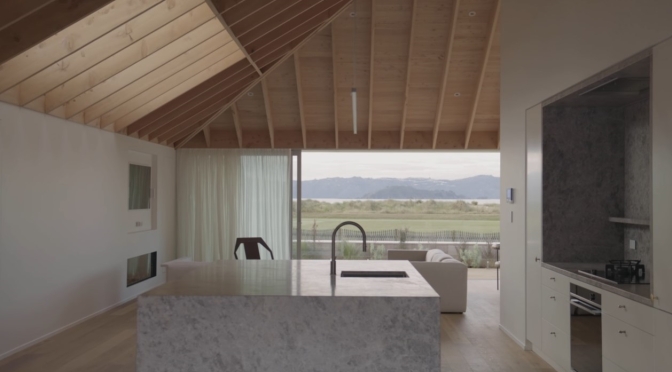
The Local Project (January 31, 2023) – Inside a calm and minimal modern architectural home located in the seaside town of Eastbourne, Wellington, RK Residence by Seear-Budd Ross incorporates distilled detailing and minimal finishes.
Video timeline:00:00 – Introduction to the Calm, Minimal and Modern Home 00:21 – The Idea Behind the Home 00:46 – The Location of the Home 01:08 – Natural Characteristics 01:39 – A Light-Filled Connection 01:57 – The Plan and Topography 02:11 – Utilising Timber 03:35 – Refinement and Detail 03:51 – Fisher & Paykel Integrated Appliances 04:16 – Favourite Aspects of the Home 04:40 – Simplicity, Craftsmanship and Atmosphere
Completing interior design and architecture, Seear-Budd Ross has created a family home that offers a calming atmosphere, as well as an interior space filled with distinct characteristics. Designed as two singular volumes, the front of the house is made to incorporate public entertainment and living quarters, whilst the second singular volume holds the private rooms.
Placed between the two volumes, the courtyard provides a moment of transition between each volume and an abundance of natural light. Still and meditative, the design of RK Residence was planned to include sweeping views from the back of the home to the harbour beyond. Whilst following the house tour inside a calm and minimal modern architectural home, the architects have used high-quality materials throughout – including bandsawn flooring and cladding, tumbled paving in the courtyard and honed stone in the kitchen.
With locally-sourced timber helping connect the home to its surrounding landscape, the architects have used New Zealand pine on the exterior cladding, whilst the interior employs macrocarpa timber, bringing a unique scent and texture to the home. Inside a calm and minimal modern architectural home, the architects have worked with Fisher & Paykel to fit the kitchen with appliances that have been refined down to their essence.
As such, integrated appliances have been employed inside a calm and minimal modern architectural home to impart a seamless look throughout – including the Fisher & Paykel ovens, integrated fridge and freezer and dishwasher drawers. Furthermore, the stove top and rangehood provides a unified look and supports the open plan entertaining space. Creating moments of simplicity through refined architectural and design choices, the architects have used the typology of Eastbourne to establish a natural characterisation throughout. Finished with neutral tones, both the exterior and interior reference the coastal surrounds.
The architects have imparted a meditative atmosphere for the owners to enjoy for years to come. Acting as a counterpoint holiday home to the clients’ rural home, RK Residence by Seear-Budd Ross is a journey of refinement that begins from the exterior and continues inside a calm and minimal modern architectural home.
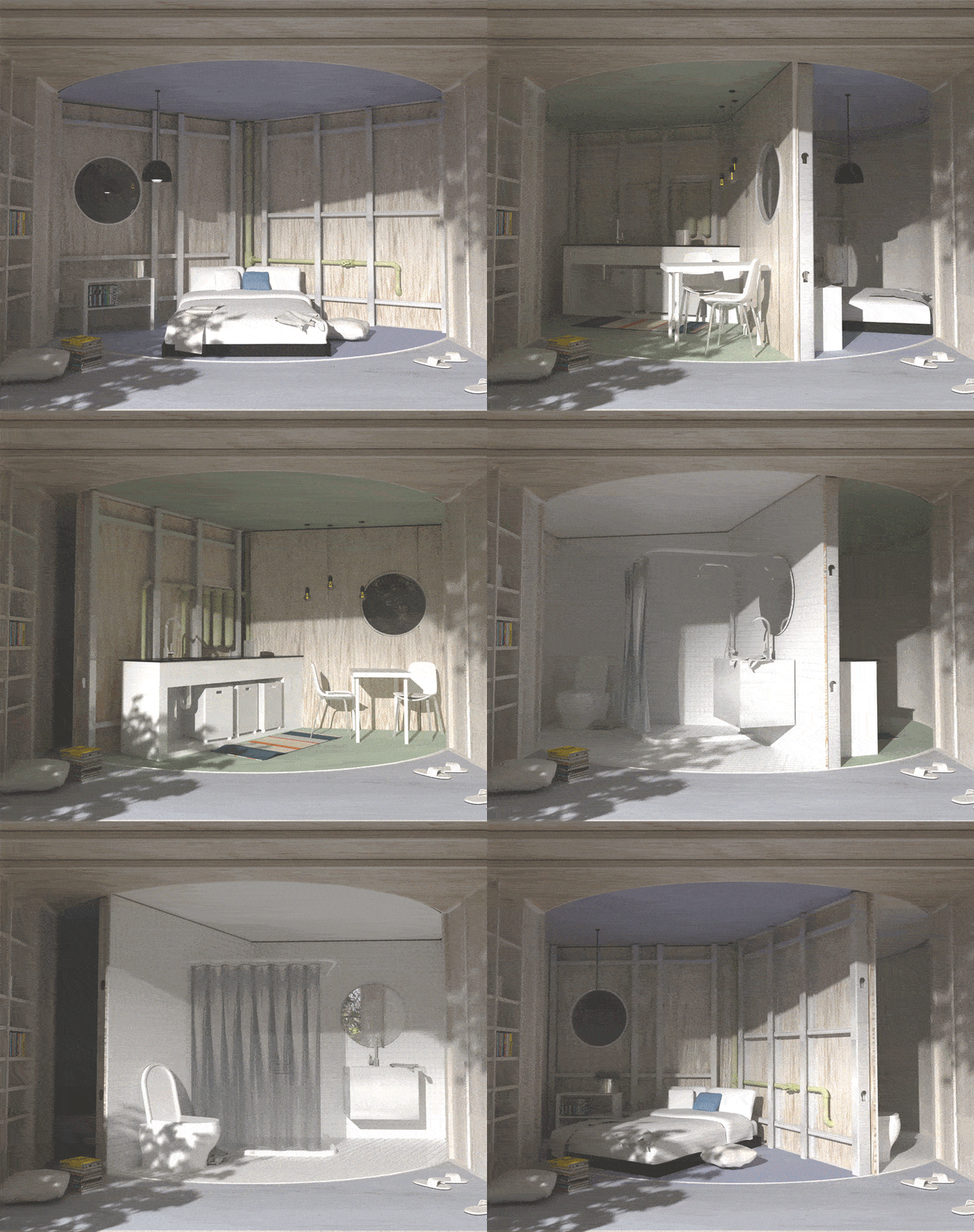
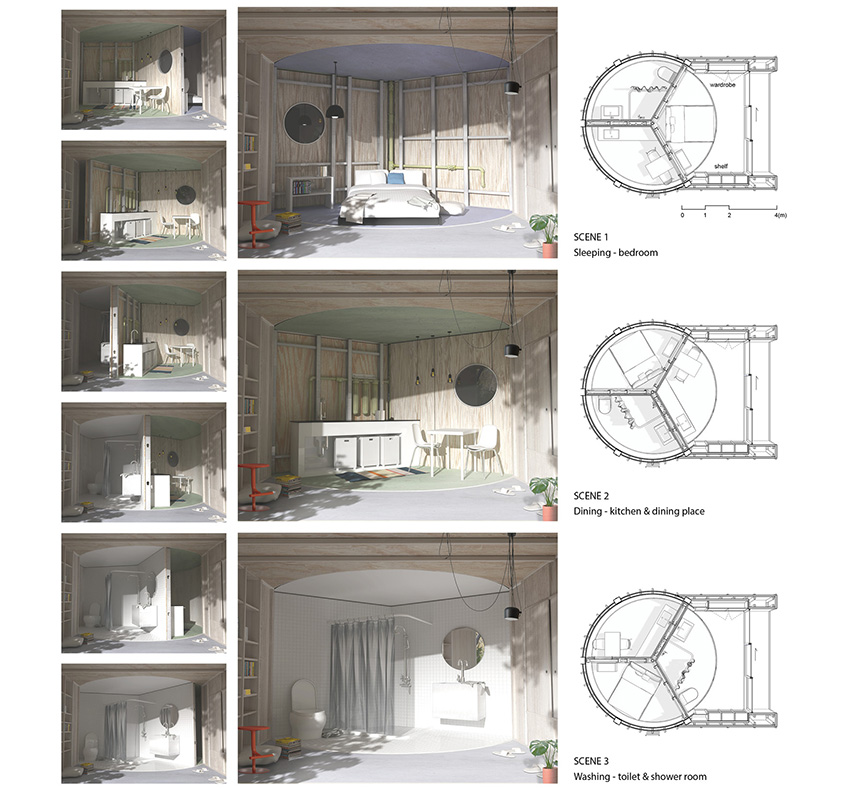
The three scenes of the home | all images by Studio Supra-Simplicities
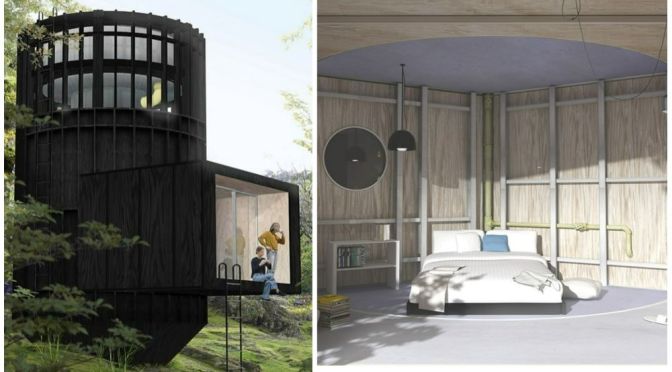
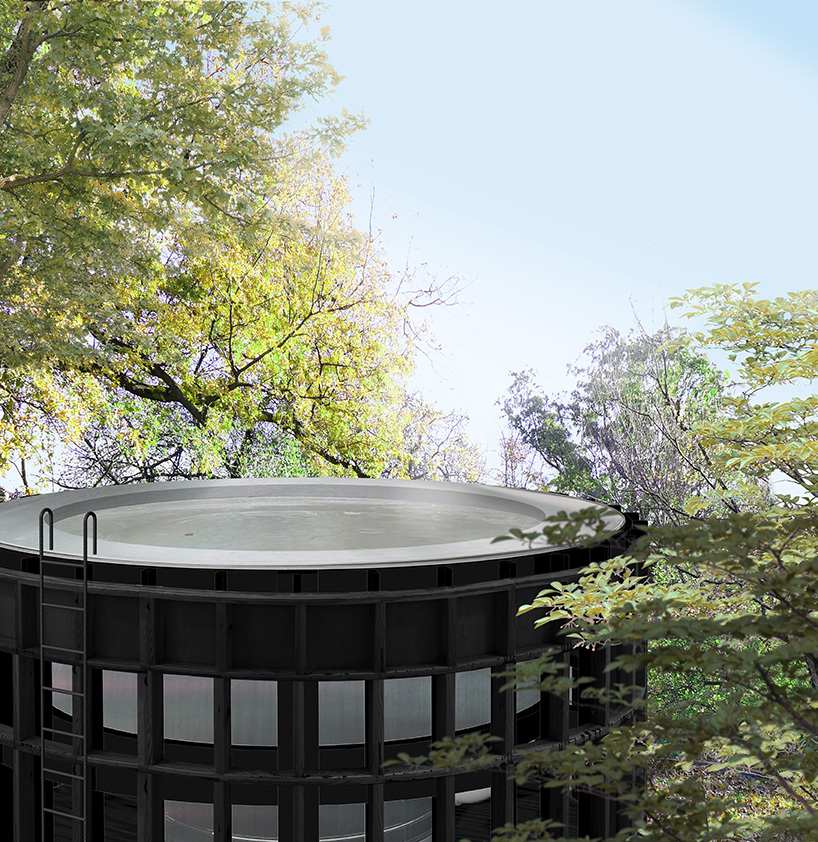
designboom (January 20, 2023) – In a swiftly rotating display, this micro-scale cabin shifts its program on its axis to integrate three different ‘scenes’ of living on one small platform. Studio Supra-Simplicities conceptualizes ‘3 Scenes of Home’ to compactly integrate spaces for sleeping, dining, and washing into one mechanism that marks a sophisticated integration between the typical house program and the theatrical function of a stage.
topped with a rainwater harvesting system
project info:
Removing the need for unnecessary circulation spaces and infusing a distinctive dynamic character, the structure maximizes its internal mobility and flexibility of living, while sitting with a micro footprint. It minimizes external impact by covering only a tiny parcel on the natural landscape, and recycling rainwater for daily use through its rooftop harvesting system.
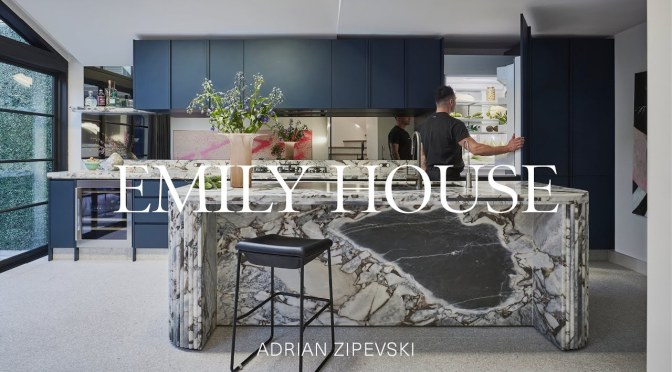
Working together, Aldini and Isaac Group have turned an abandoned warehouse into a modern dream home. Sitting on a small plot of land, the warehouse was in dire need of a contemporary lift – therefore the employment of organic shapes, elements and materials became the key focus for both interior designer and builder.
Video timeline: 00:00 – Introduction to the Modern Dream Home 00:25 – The Location of Emily House 00:38 – A Walkthrough of the Modern Dream Home 01:10 – Maximising the Previous Small Space 01:29 – The Builder 01:51 – Relationships and Working as a Team 02:14 – Utilising Natural Elements and Organic Shapes 03:10 – Elements of Softness and Curves 03:34 – Harnessing the Natural Light 04:02 – Favourite Parts of the Modern Dream Home 04:29 – Proud Moments
With a brief that only required the cathedral ceilings to be kept, the interior architecture was imbued with soft curves, natural shapes and materials, and a flood of natural light. In the end, the client’s home was turned into a modern dream home that would become a hub for connection, light and simple opulence.
Located in the inner west of Sydney, Emily House strikes an unassuming appearance with dark tones, leafy greens and a timber batten façade that hints at what is inside the modern dream home. Following the house tour inside, the front of the home contains the master bedroom and ensuite before offering a glimpse of the opulent kitchen – which is designed to be the hub for connection.
While using marble, granite and terrazzo throughout the modern dream home to add an opulence, the elements of curved bamboo, which is seen in the bathrooms and on the kitchen island bench, is used to soften the hardness of these materials. In the downstairs spaces, large steel windows, bi-fold doors and skylights have been installed to help bring more natural light inside while also adding to the sense of space inside.
Following the kitchen’s marble bench top and dark palette cabinetry, the dining and living room reference the same colours through the furnishings and marble that has been employed on the shelving and fireplace. To combat the hard lines of the steel and marble, the softening of elements has been encouraged throughout the interior design, which is seen in the soft curving of the Venetian plaster wall above the fireplace.
After the doors are opened, the courtyard helps to expand upon the liveable space and, with its terrazzo floor, curved seating arrangement and green wall the space, the downstairs living areas extend upon the client’s wish of creating a hub for connection. Upstairs, the inclusion of two more bedrooms and a bathroom further employs the use of stone, light and a natural colour palette.
Infused with natural light, the bedrooms offer guests an opulent stay that is reminiscent of five star hotels. Working together, the interior designer and builder established the modern dream home to become a space where the client could entertain. Additionally, the house is filled with a sense of softness – to which the client can find reprieve in the moments when it is needed.
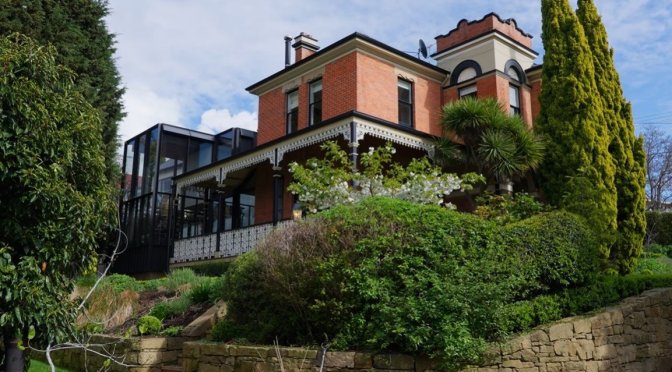
The Local Project (January 13, 2023) – Renovating an old house in Hobart, Bence Mulcahy added a two-storey extension made of glass and steel. Named Greenhouse, the structure replaces a 1980s iteration in a manner that best engages the nearby veranda, courtyard and garden.
Video timeline: 00:00 – Cloudy Bay 00:12 – Introduction to the Greenhouse 00:53 – The Brief for the Renovation 01:19 – House Tour of the Home 02:16 – The Sandstone Base of the Building 02:30 – The Lower and Upper Floor of the Extension 03:15 – The Exterior of the Greenhouse 03:25 – The Interior Materials Chosen 03:48 – The Furniture and Furnishing of the House 04:50 – Cloudy Bay
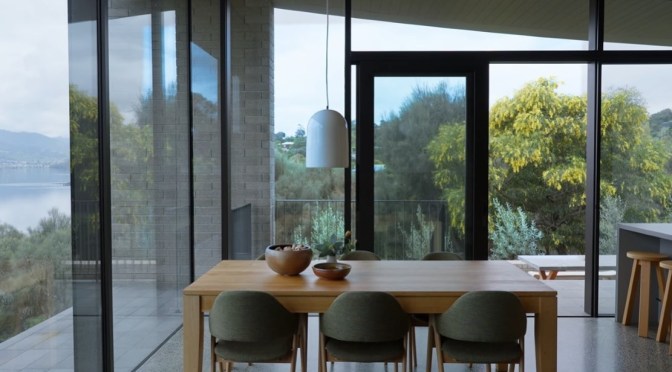
Located in the Hobart suburb of Mount Stuart, Greenhouse forms a contemporary addition to a red brick, Federation-style Italianate home. The new volume looks out onto the Derwent River and is supported by a veranda and a well-established garden complete with plants, trees and sandstone retaining walls. Bence Mulcahy identifies the key to renovating an old house is relating the extension to the main building – Greenhouse mirrors the scale of the existing dwelling, proposing a strong sense of verticality.
A house tour of the dream home begins at the formal entry space and transitions into the main hall. Beyond lies the beginning of the extension. The process of renovating an old house sees the final extension enclose the dining room, kitchen and an extra eating area. Upstairs, the addition houses an ensuite bathroom and walk-in wardrobe. Ample glazing then allows the home to borrow visual space from the external landscape.
Bence Mulcahy takes a seasoned approach to renovating an old house, inserting voids in order to manage the sense of privacy. A two-storey void is left over the dining room, whilst a separate alcove of the same size is located above the upstairs ensuite. Creating a glasshouse structure using a combination of glass and steel, Bence Mulcahy pays homage to a greenhouse inspiration. The durable nature of the material palette is particularly relevant to renovating an old house, promising an enduring outcome.
Internally, copper sinks and a copper island bench complement a wax-sealed timber floor and array of curated soft furnishings. Utilising the skills of local craftsmen, Bence Mulcahy does justice to the personal nature of the home. Greenhouse stands as a lesson in house renovation and embraces the tranquil quality of its natural surrounds.
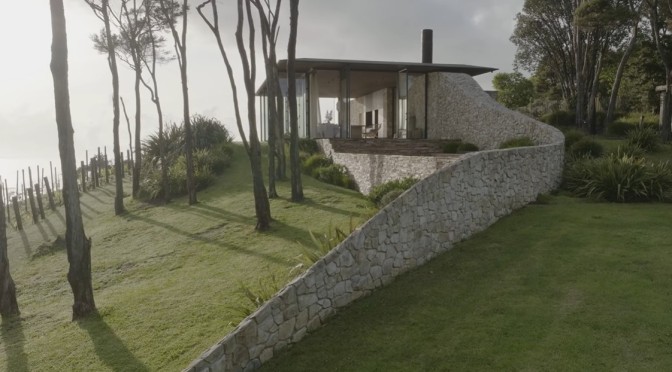
The Local Project – Through natural material selections, Cheshire Architects has unveiled Waiheke House, a home that embraces its surrounds to become the best modern house in the world. Operating under the rule that grandeur does not need to be shown through scale but rather quality, Waiheke House is a place of respite for its owners with only one and a half bedrooms and a focus on entertaining areas.
Video timeline:00:00 – Introduction to the Best Modern House in the World 00:45 – An Island Location 01:05 – The Aspect of the House 01:35 – Tasked with Entertaining 02:01 – The House Plan and its Materials 03:39 – Hidden Openings and Passages 04:22 – Bathing Rituals 05:27 – The Goal Behind the Home 05:43 – Creating a Centred Feeling 06:09 – Becoming One with the Environment 06:33 – A Vessel for Experience 06:53 – A Home Made with Real Materials 07:20 – A Love for the Layered Experience
While the views of Waiheke House are only part of what establishes it as the best modern house in the world, it is how the structure inserts itself into the landscape that is awe-inspiring. Focused on evoking the numerous meanings of ‘shelter,’ Waiheke House acts as a platform that can open or close for the watching of the weather as it changes. Comprised of two pavilions, which are slightly offset from one another,
Cheshire Architects have separated the living spaces to designate a place of reprieve and a place to entertain. The larger of the two pavilions, known as the seaward pavilion, is framed by landscaping. Shaped by the stone wall that curves around and holds the home, the idea of anchoring the seaward pavilion is seen through the home’s distinct architectural theme. To make the best modern house in the world feel warm and comfortable, the use of stone, wood and brass help the house insert itself into the surrounding nature. Created for entertaining, the seaward pavilion is intentionally designed to be small, with only a kitchen, large dining section and lounge.
Framed by glass on three sides, doors butterfly open so that the living areas can connect seamlessly with the lawn. Conceptually thought of as a canopy atop a mouth of a cave, Cheshire Architects has formed the best modern house in the world to navigate a spatial dialect that speaks to both broad ocean views and small, contained spaces. Throughout the house tour, it is evident that the selected surfaces and materials are chosen to act as a vessel for experience – an idea that Cheshire Architects hopes will still be embodied in 100 years as the home ages in place.
Seen in the stacked stone of the wall to the layered floor, Cheshire Architects avoids using crisp whites or laminates and instead imbues the home with richness from natural materials. Throughout the second pavilion, the adaption of narrower halls, lower ceilings and darker tones have been employed to create a dynamic internal contrast. Intended as a retreat for the owners, Waiheke House is a place to align and connect with the natural surroundings. By focusing on simple, high-quality design choices over scale, Cheshire Architects has created the best modern house in the world so that it may amplify what already exists.
The Local Project (December 27, 2022) – Taking a house tour inside a home made entirely from local and sustainable building materials, Topology Studio offers a rare insight into how a structure becomes one with its surrounds.
Video timeline:00:00 – Introduction to the Sustainable Home 00:30 – The Architect and The Home Owner 01:00 – The Location 01:19 – A Walkthrough of the Sustainable Home 01:40 – Expanding Spaces Through Shapes 02:27 – A Seamless Connection of Inside and Outside 02:47 – A Home that Sits Quietly and Calmly 03:00 – Using Local Manufacturers 03:21 – Maximising the Benefits of the Natural Elements 04:01 – An Entirely Electric Home 04:13 – Climate Change Impacts and Planning for the Future 04:48 – Minimising Footprints
Sitting atop the land, House at Otago Bay looks out toward the bay and as far as Mount Wellington – offering the owners a home that is flush with the landscape. Modest upon arrival, House at Otago Bay is positioned at the end of the drive with its back towards neighbours and its front facing the opposite bush reserve.
Made of locally sourced bricks, bushfire-resistant timber and glass, the home’s design showcases a passion for building sustainably for the present and future. Entering the home at the main living level, Topology Studio has designed the space to open and focus on unrivalled views of the bay. Though sitting on a narrow site, the insertion of unique architectural and design choices inside a home, such as the continuous curved ceiling, help the home to branch outwards and avoid being marginalised by frames. Stairs that sit off to the side lead down to the lower ground floor, in which a bedroom and ensuite have been partially set into the foundation of the home, offering a distinctive view out across the grass and towards the water’s edge.
With a seamless connection that isn’t often seen inside a home, the external façade blurs the lines between inside and out and adds a layer of connection to the surrounding environment. Sitting quietly and calmly upon the land, the architects have chosen to use tones that reference the rocks, water and greenery of the landscape. Using locally sourced and produced materials inside and out took away the need to import from overseas, avoiding unnecessarily increasing the home’s carbon footprint during construction.
After specifying the Tasmanian brick, Topology Studio positioned the building to maximise sunlight during winter and shield the inside during the summer, while also taking advantage of the expansive views. To cater to the changing temperature inside a home, the masonry and concrete floor provide a high level of thermal mass through the seasons and take away the need for external heating technology.
House at Otago Bay is supplied electricity by the solar panels on the boat house – taking away any need for gas and minimising running costs and impact on the environment. Though inside a home can be thought of as sustainable, Topology Studio has taken the extra step to respect the environment by providing robust materials across both outside and inside – proving that homes can provide longevity for its owners in sustainable and eco-friendly ways
To build such a house anew is no longer allowed in California, but following strict guidelines, we reconceived an existing structure, transforming the relationships between home, water and land. A steel frame inserted beneath the original floors anchors the home to the rocky hillsides, thus allowing us to remove supporting columns from within the creek bed.
A human-made object in nature may exist in harmony or disparity. Our goal was to deepen this home’s connection to the environment, creating a place where our clients can live immersed within an exceptional landscape. Taking care to protect and restore the land, we suspended the renovated house between two wooded hills, where it overlooks a rushing waterfall and spans the creek below.
A third floor addition strikes a more slender profile facing east, to engage the breadth of the site. The experience is one of being in nature and also humbled by it.
The goal with this unique site was to enhance the relationship of the structure to the nearby bodies of water and the rock face. Rather than bearing down and disturbing the creek below, the new structural system has been anchored to the bedrock within the flanks of the hill, suspending the home
News, Views and Reviews For The Intellectually Curious