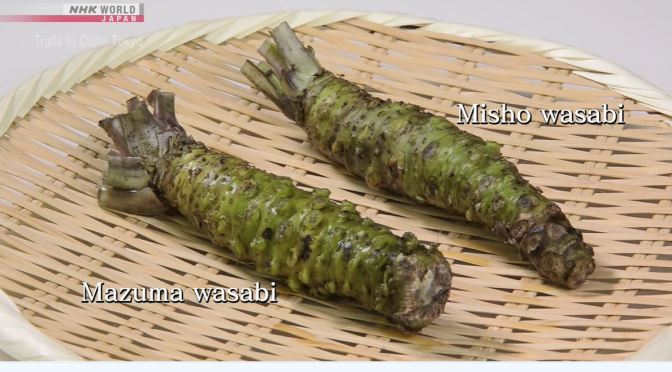
See what’s up with wasabi (Japanese horseradish), the root with a pungent punch that plays an important role in Japanese cuisine.
Wasabi or Japanese horseradish is a plant of the family Brassicaceae, which also includes horseradish and mustard in other genera. A paste made from its ground rhizomes is used as a pungent condiment for sushi and other foods.
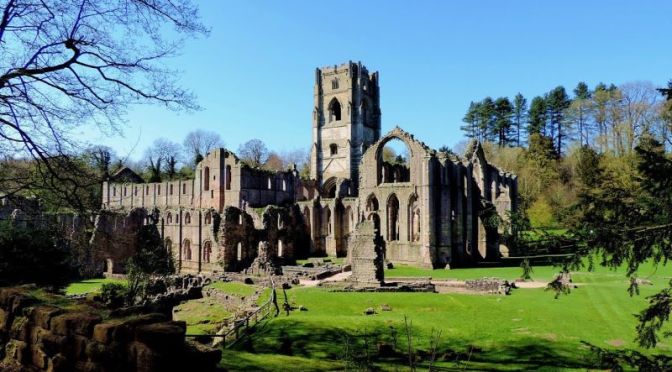
In this video tour, you’ll discover the story of Fountains Abbey, North Yorkshire, where archaeology has shed light on medieval life. Learn more about these archaeological finds and understand how modern technology allows this journey of discovery to continue.
Fountains Abbey is one of the largest and best preserved ruined Cistercian monasteries in England. It is located approximately 3 miles south-west of Ripon in North Yorkshire, near to the village of Aldfield.
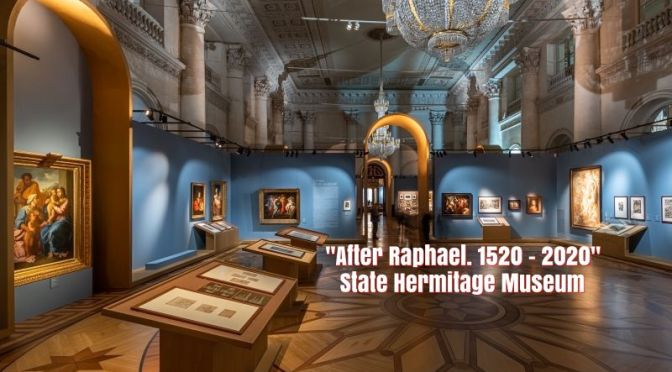
A film about the Exhibition “After Raphael. 1520 – 2020” at the State Hermitage Museum. Director of the film – Manas Sirakanyan. The film was made with the support of the U.S. Ambassadors Fund for Cultural Preservation, U.S. Embassy Moscow and the Hermitage Museum Foundation (USA)
Raphael is the most influential artist of the Modern Era. Over the course of five centuries, exponents of Mannerism and Academicism, Caravaggisti and masters of the Baroque, Romantics and Modernists have invariably compared their own work with Raphael’s legacy. What is the cause of such fame? What did his name represent in this or that historical period, and what does it represent today? What connects the artist’s followers in different centuries? The exhibition in the Hermitage is an attempt to answer those questions and to look at the art of the past 500 years through the lens of Raphael’s influence.
The large-scale display includes more than 300 exhibits – paintings, graphic art, sculpture and applied art from the Hermitage’s own stocks and twelve other collections in Russia and Western Europe. They include both famous masterpieces and previously unknown works. Dozens of paintings and pieces of graphic art are leaving the museum’s storerooms and being presented to the public for the first time, while a whole number of the exhibits are going on show after painstaking restoration in the Hermitage’s workshops.
The display opens with works by the master himself: a painting and drawings from European collections. Without claiming to be a full representation of the artist’s oeuvre, they serve to set the tone, as it were, and after viewers have “tuned themselves in” it will be easier for them to identify echoes of Raphaelesque harmony in the works from later centuries. The choice of graphic art for this purpose reveals another dimension to the main metaphor: it is specifically the beauty of the clear, precise line, so evident in the drawings made by the master’s own hand, that lies at the foundation of the aesthetics of Raphael himself and many of his followers.
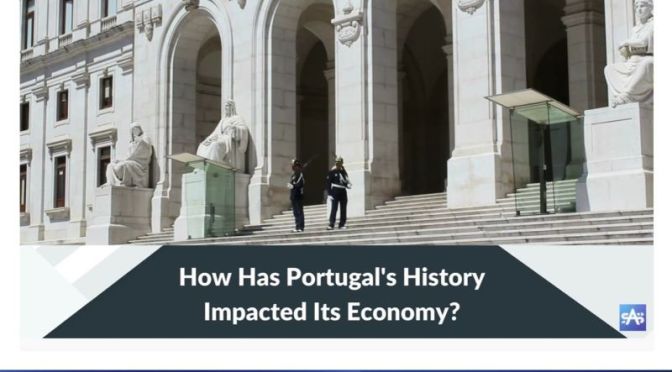
In the lead up to the Eurozone Crisis, Portugal’s Economy was an outlier. Whilst many economies went on an incredible run, the Portuguese Economy did not have such a good time. Not only underperforming the average eurozone growth rate, but unemployment actually rose from 3.8% to 7.5% between the millennium and 2008. Compare this against the likes of Greece, Spain and Italy, all of which had seen significant declines in unemployment. Raising the question of why? Why had Portugal’s Economy stagnated in what were supposed to be the good times? What was the impact of its long history as a colonial power? And to what extent did a 19th Century letter from Pope Leo the 13th influence its wider economic approach?
In this week’s episode of “Cocktails with a Curator,” savor the exquisite details of “Comtesse Daru,” the only painting in the Frick’s collection by renowned French neoclassical painter Jacques-Louis David. Join Curator Aimee Ng as she delves into the history of how this lovely, intimate portrait came to be painted by an artist largely known for producing monumental works in the service of Napoleon. This week’s complementary cocktail, the Orange Blossom, is inspired by the orange-blossom tiara that adorns the sitter’s head.
The Scottish Colourists were some of the most important and avant-garde artists working during the early 20th century. Their art was bold and vibrant and unlike anything that had been produced in Britain before. Sotheby’s upcoming sale ‘The Way of Colour: Pictures from the Harrison Collection’ (10 – 17 March) offers Fauvist inspired paintings by George Leslie Hunter, stunning still-lifes by Francis Campbell Boileau Cadell and Cezanne-like work by Samuel John Peploe.
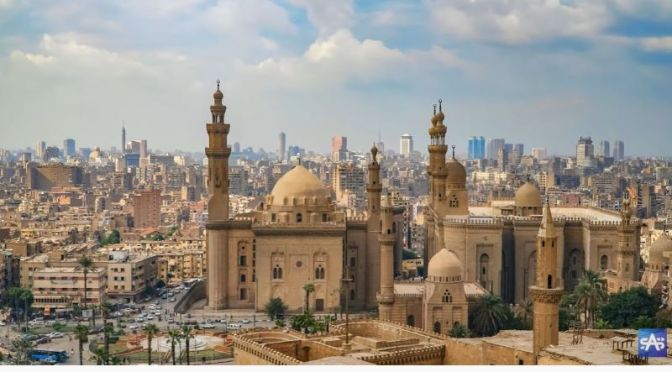
The Egyptian Economy was the only one in the Middle East North Africa region to avoid a recession in 2020. Being a good reflection of the economic rollercoaster Egypt routinely finds itself on. One driven by inflation rates of up to 30% a year, a halving of its currency and a painful IMF bailout in 2016. But how did Egypt’s Economy find itself in this situation? What impacts did Five Year Plans, spending nearly 20% of GDP on the military and widespread nationalisation have on its economy? Why is Egypt the world’s largest importer of wheat? And perhaps most importantly, what has its post 2011 revolution delivered?
Egypt, a country linking northeast Africa with the Middle East, dates to the time of the pharaohs. Millennia-old monuments sit along the fertile Nile River Valley, including Giza’s colossal Pyramids and Great Sphinx as well as Luxor’s hieroglyph-lined Karnak Temple and Valley of the Kings tombs. The capital, Cairo, is home to Ottoman landmarks like Muhammad Ali Mosque and the Egyptian Museum, a trove of antiquities.
In this week’s episode of “Cocktails with a Curator,” we welcome the Frick’s new Assistant Curator of Sculpture, Giulio Dalvit. In his premiere episode, he discusses one of the important bronze statuettes in the collection, a “Hercules” by Antico. A celebrated artist of great technical virtuosity, Antico worked primarily for the powerful Gonzaga family in Mantua in the late fifteenth and early sixteenth centuries. In celebration of Isabella d’Este, the marchioness of Mantua and one of Antico’s patrons, thisweek’s complementary drink is a glass of Malvasia, a sweet wine that Isabella would drink at breakfast. To view this object in detail, please visit our website: https://www.frick.org/anticohercules
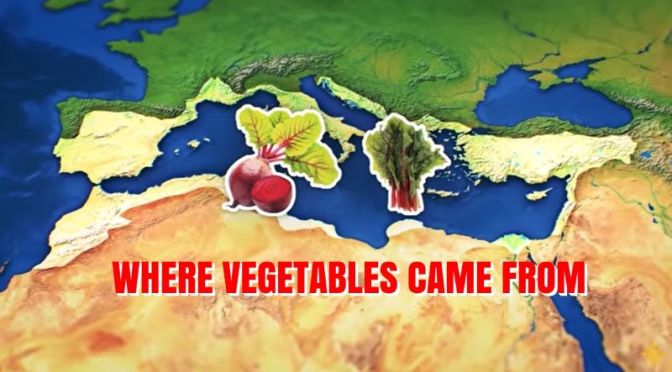
Vegetables are parts of plants that are consumed by humans or other animals as food. The original meaning is still commonly used and is applied to plants collectively to refer to all edible plant matter, including the flowers, fruits, stems, leaves, roots, and seeds.
Join us on a behind-the-scenes tour of the National Trust Chedworth Roman Villa in Gloucestershire and discover Britain’s first known 5th-century mosaic. Although the site in the Cotswolds is currently closed for visitors, you can still uncover the fascinating story behind this mosaic and meet one of the archaeologists involved in its excavation.
Archaeology is just one of the ways we can bring to life the stories of our places. We protect and care for places so people and nature can thrive. Everyone can get involved, everyone can make a difference. Nature, beauty, history. For everyone, for ever.
News, Views and Reviews For The Intellectually Curious





 Boomers Daily