Category Archives: History

Egyptian History: Saving The Temples On The Nile

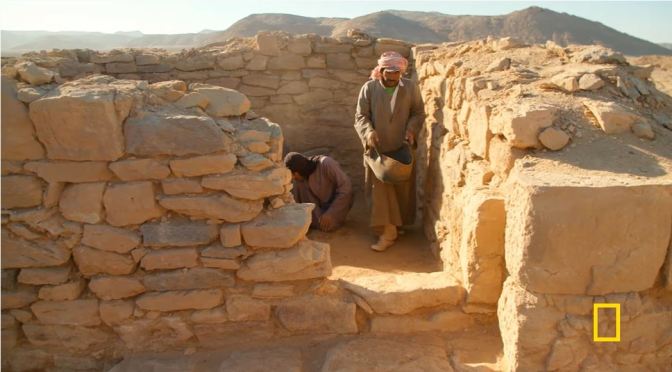
A timeless treasure, nearly lost forever. Without the UNESCO‘s unprecedented rescue operation, future generations might have only seen the stunning temples of Ramses II and Cleopatra in the pages of history books. Majestic stone colossi rising from the desert sands, structures like these kept their secrets for generations.

For centuries, Abu Simbel, Dendur, Amada and other monuments faced threats from looters, earthquakes, and floods. Ultimately, it was the waters of the Aswan Dam that nearly sealed their fate. In 1960, then Egyptian President Nasser ordered the dam‘s construction. In order to save the temples of Ramses II and Cleopatra, among others, UNESCO reached out to over 50 countries, and raised $80 million.

After receiving multiple proposals to save the structure, it was one from Sweden that proved successful. The plan: dismantling the complex and rebuilding it on higher ground. Between November 1963 and September 1968, saws were used to cut the two temples into 1,036 blocks, each weighing between seven and 30 tons.

Their new location was 64 meters above the old site and 180 meters further inland. After five years of construction, this major undertaking was completed on September 22, 1968. The Nubian temples of Abu Simbel are now a UNESCO World Heritage Site.
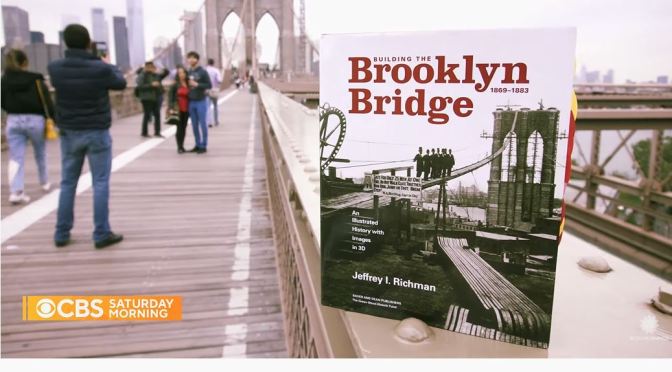
Book Review: ‘Building The Brooklyn Bridge, 1869 – 1883’ By Jeffrey Richman

The Brooklyn Bridge has been an indelible part of the New York City skyline for 140 years. When it was completed in 1883, it was hailed as an engineering marvel and called the Eighth Wonder of the World. It also linked what were then two of America’s largest cities — New York and Brooklyn. The story of its construction is a drama in itself and now a new book, “Building the Brooklyn Bridge,” gives readers an inside view of the 14-year construction process that has been largely out of sight, until now. Michelle Miller has the details.

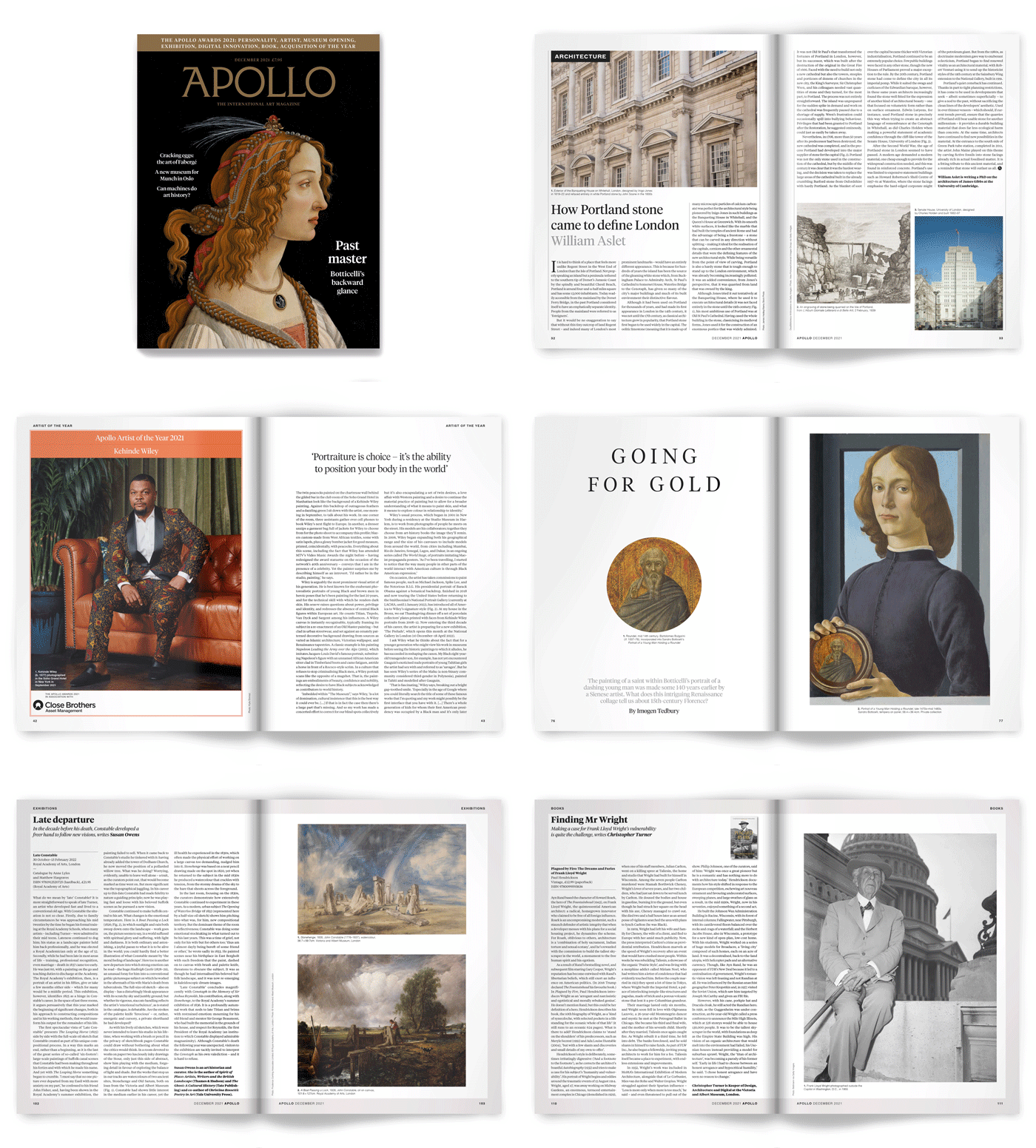
International Art: Apollo Magazine – December 2021

FEATURES | Imogen Tedbury on Botticelli’s bling; Kirsten Tambling on Fabergé’s fabulous baubles; Susan Moore visits the dealer and decorator Robert Kime in London; Jo Lawson-Tancred asks whether machines can do art history.

REVIEWS | Susan Owens on Constable’s late works in LondonKelly Presutti on 18th-century British glassware in Corning; Donal Cooper on Italian Renaissance altarpieces; Christopher Turner on Frank Lloyd Wright; Thomas Marks on Tiepolo’s gnocchi-munching Punchinellos.

Read more

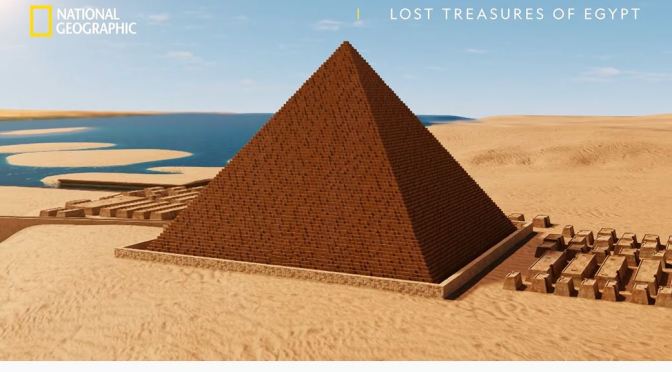
Egyptology: Engineering Secrets Of King Khufu’s Great Pyramid Of Giza

The Great Pyramid of Giza is the largest pyramid ever built and is a staple of Egyptian pyramid architecture. It was built to protect the tomb of King Khufu and was the first-ever true pyramid, due to its perfect shape and extraordinary features.

The entrance of the tomb is located 24 feet off centre and even if trespassers found it, a pulley system of ropes 130 feet above the passage dropped 3 enormous granite slabs to seal the burial chamber entrance. Topped with a layer of white limestone, The Great Pyramid was and is a symbol of the Pharaoh’s reputation and respect. Now, explorers are eagerly searching the pyramid for clues about the life and death of the great King Khufu.

Archaeology: The Lost City Of Chan Chan In Peru

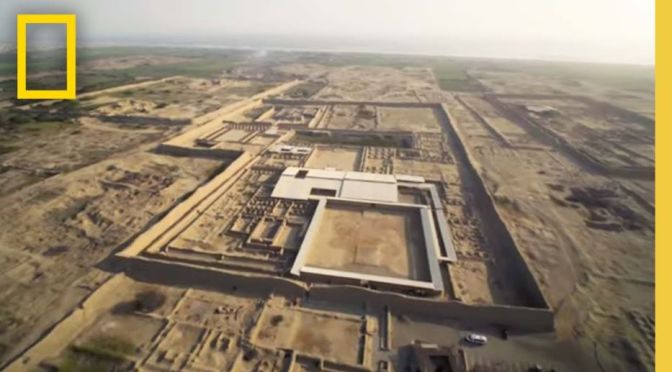
Dr. Albert Lin is investigating the true origin of the ancient story of the great flood. In his search for answers he comes to the lost city of Chan Chan where the Chimú people have recorded a violent shift in the ocean currents.

Chan Chan was the largest city of the pre-Columbian era in South America.[1] It is now an archaeological site in La Libertad Region 5 kilometres (3.1 mi) west of Trujillo, Peru.[2]

Chan Chan is located in the mouth of the Moche Valley[3] and was the capital of the historical empire of the Chimor from 900 to 1470,[4] when they were defeated and incorporated into the Inca Empire.[5] Chimor, a conquest state,[3] developed from the Chimú culture which established itself along the Peruvian coast around 900 AD.[6]

Chan Chan is in a particularly arid section of the coastal desert of northern Peru.[7] Due to the lack of rain in this area, the major source of nonsalted water for Chan Chan is in the form of rivers carrying surface runoff from the Andes.[4] This runoff allows for control of land and water through irrigation systems.

Art History: Auguste Renoir’s ‘Jeune Fille’

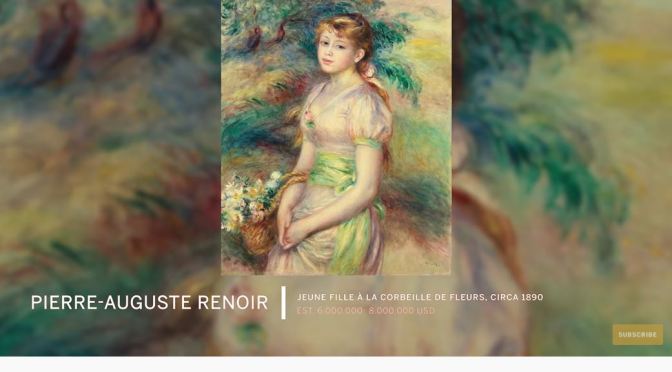
In this video, join Thomas Boyd-Bowman in an exploration of Pierre-Auguste Renoir’s Jeune fille à la corbeille de fleurs, a highlight of Sotheby’s Modern Art Evening Auction in November. Painted at one of the finest moments in Renoir’s career, Jeune fille à la corbeille de fleurs radiates with color and embodies the masterful portraiture for which he is best remembered. It was first acquired by the legendary art dealer Paul Durand-Ruel and later purchased by Dr. Albert Barnes of the esteemed Barnes Foundation, only to be returned to Durand-Ruel a few years later. With this extraordinary provenance, this painting exemplifies the triumph of impressionism from the perspective of artist, dealer and collector.

Book Reviews: ‘The Hungry Eye – Eating, Drinking And European Culture’ (2021)

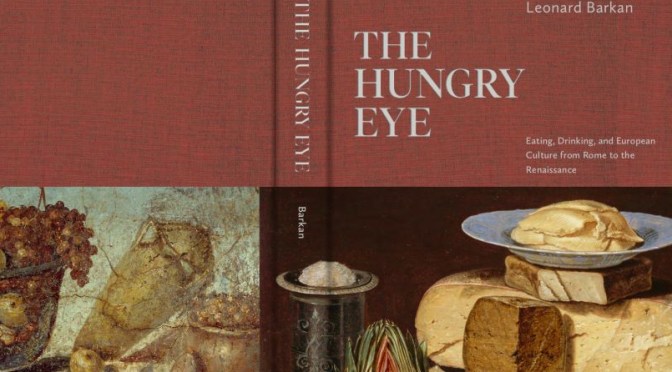
Eating and drinking can be aesthetic experiences as well as sensory ones. The Hungry Eye takes readers from antiquity to the Renaissance to explore the central role of food and drink in literature, art, philosophy, religion, and statecraft.

In this beautifully illustrated book, Leonard Barkan provides an illuminating meditation on how culture finds expression in what we eat and drink. Plato’s Symposium is a timeless philosophical text, one that also describes a drinking party. Salome performed her dance at a banquet where the head of John the Baptist was presented on a platter. Barkan looks at ancient mosaics, Dutch still life, and Venetian Last Suppers. He describes how ancient Rome was a paradise of culinary obsessives, and explains what it meant for the Israelites to dine on manna. He discusses the surprising relationship between Renaissance perspective and dinner parties, and sheds new light on the moment when the risen Christ appears to his disciples hungry for a piece of broiled fish. Readers will browse the pages of the Deipnosophistae—an ancient Greek work in sixteen volumes about a single meal, complete with menus—and gain epicurean insights into such figures as Rabelais and Shakespeare, Leonardo and Vermeer.

Read more

Art Views: Claude Monet’s “The Basin At Argenteuil”

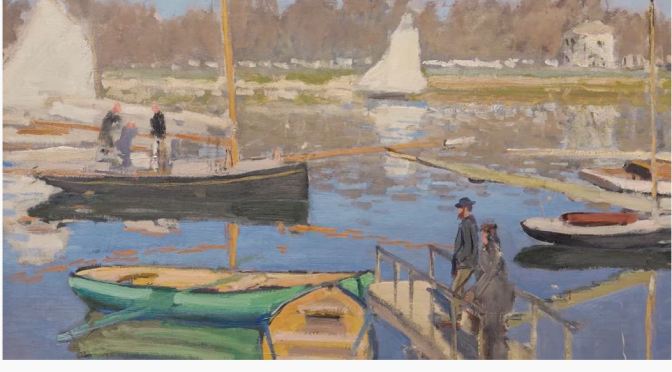
Painted along the banks of the Seine, Le bassin d’Argenteuil captures the rise of the middle class and the founding tenants of Impressionism Painted in 1874, Le bassin d’Argenteuil provides a glimpse into the ‘golden’ era of Impressionism. During this time, Claude Monet and his fellow Impressionists, including Pierre-Auguste Renoir, Edouard Manet and Alfred Sisley, codified their ideas while painting along the banks of the Seine. Expressing the dynamism of nature and the modernity of the Third Republic, Le bassin d’Argenteuil combines light and leisure to evoke the excitement of a new visual language. The painting, which brings together the artist most synonymous with Impressionism and the town identified with its origins, will be sold at Christie’s on 11 November as part of The Cox Collection: The Story of Impressionism. Learn More: https://www.christies.com/features/cl…