
From a Wall Street Journal online article:
 Mr. Chambers, a 48-year-old physical therapist in Jersey City, N.J., modified his sleep, diet and exercise routines. Eighteen months later, his performance on a battery of cognitive tests improved, particularly in areas like processing speed and executive function, such as decision-making and planning.
Most surprising, says Dr. Isaacson, is that the MCI patients who followed at least 60% of their recommendations showed cognitive improvement. However, MCI patients who followed less than 60% of the recommendations experienced cognitive declines similar to the control groups, he notes.
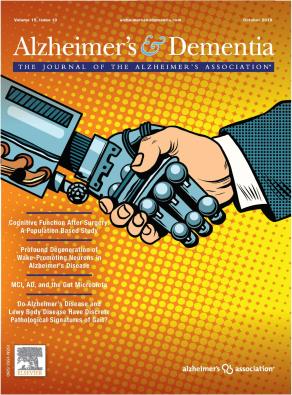
Mr. Chambers is among 154 patients in a study, published Wednesday in Alzheimer’s & Dementia: The Journal of the Alzheimer’s Association, that doctors say shows encouraging results. Among healthy patients, people who made changes in nutrition and exercise showed cognitive improvements on average. People who were already experiencing some memory problems also showed cognitive improvement—if they followed at least 60% of the recommended changes.
To read actual study: https://els-jbs-prod-cdn.literatumonline.com/pb/assets/raw/Health%20Advance/journals/jalz/JALZ_2985-1572445934507.pdf?mod=article_inline
To read more: https://www.wsj.com/articles/the -link-between-diet-exercise-and-alzheimers-11572427802

 The plot line of The Farewell is familiar to me. Like Billi’s Nai Nai, my aunt was diagnosed with metatastic lung cancer. Nobody in the family told her – nor did the doctors when she later underwent surgery to remove a tumour. The last time I saw her was in north-eastern China a few years ago. Her once-plump figure had shrunk to a wiry frame. She was in her early 70s, in good spirits, but a far cry from the feisty matriarch who used to dominate conversations.
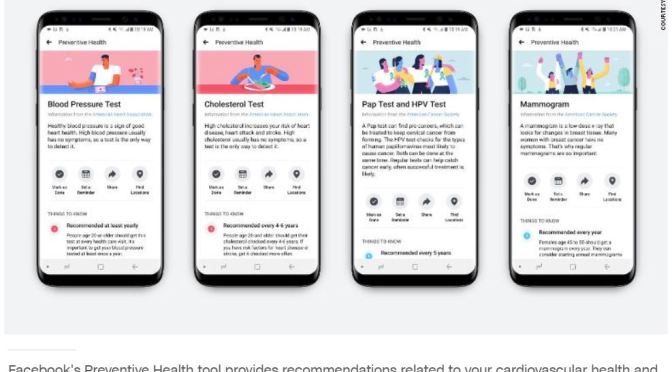
 The tool is simply called Preventive Health, and is now available to Facebook users in the United States. It takes a user’s age and sex from their Facebook profile and provides them with a list of recommended screenings based on those two data points.
 First place prize awarded to MapHabit: This mobile software provides behavior prompts with customizable picture and keyword visual maps to assist memory-impaired people with accomplishing activities of daily living. The care management platform employs different interfaces depending on whether the user is a person with impaired memory, caregiver or long-term care community manager. Caregivers can monitor adherence to medication schedules or track other activities.
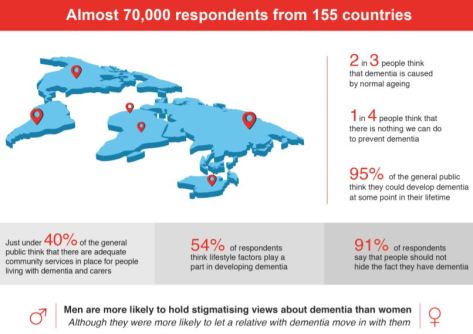
 LSE developed the survey to target four key groups:
 In the survey analysis we highlight the behavioural element first, giving prominence to the voices and experiences of people living with dementia as direct assessment of actual behaviour is central to discrimination and is the closest representation of the true impact of stigma on people living with dementia.
 The current study points to the role of norepinephrine, a neurotransmitter that signals arousal and stress in the central nervous system. This chemical is present in low levels in the brain while we sleep, but when production ramps up it arouses our nerve cells, causing us to wake up and become alert. The study showed that norepinephrine also acts on a specific receptor, the beta2 adrenergic receptor, which is expressed at high levels in microglia. When this chemical is present in the brain, the microglia slip into a sort of hibernation.
 The prototype revealed that using artificial intelligence and machine learning to examine certain combinations of vital signs and other biomarkers could strongly
 The top 10 most commonly administered antibiotics in the ER for nonadmitted patients were:
 Boomers Daily