
Will the coronavirus pandemic lead to long-term changes in how we shop for food? To better understand the challenges facing grocery stores, WSJ’s Alexander Hotz spoke with an industry insider, a store owner and a Walmart executive.

Will the coronavirus pandemic lead to long-term changes in how we shop for food? To better understand the challenges facing grocery stores, WSJ’s Alexander Hotz spoke with an industry insider, a store owner and a Walmart executive.
Public health organizations track the spread of coronavirus and use graphs and charts to visualize the data. WSJ’s Brianna Abbott explains what to look for in the data to understand how the virus is impacting your community.
Photo illustration: Laura Kammermann/WSJ

From U.S. News (July 7, 2020):
“Numerous studies have linked insufficient sleep with significant health consequences. Yet, many people ignore the signs of sleep problems or don’t allow enough time to get adequate sleep,” said lead researcher Eileen Leary. She is a senior manager of clinical research at Stanford University in Palo Alto, Calif.

“REM sleep appears to be a reliable predictor of mortality and may have other predictive health values,” Leary said. “Strategies to preserve REM may influence clinical therapies and reduce mortality risk, particularly for adults with less than 15% of REM sleep.”
REM (rapid eye movement) sleep is when dreams occur and the body repairs itself from the ravages of the day. For every 5% reduction in REM sleep, mortality rates increase 13% to 17% among older and middle-aged adults, researchers report.
For the study, Leary and her colleagues included more than 2,600 men, average age 76, who were followed for a median of 12 years. They also collected data on nearly 1,400 men and women, average age 52, who were part of another study and were followed for a median of 21 years.
Poor REM sleep was tied to early death from any cause as well as death from cardiovascular and other diseases, the researchers found.
 The spread of misinformation is crippling our fight against the coronavirus. Social media and a deeply partisan divide are fueling what the World Health Organization calls an “infodemic,” which is just as urgent as the virus itself.
 Chest pain is a common chief complaint. It may be caused by either benign or life-threatening aetiologies and is usually divided into cardiac and non-cardiac causes. James E. Brown, Professor and Chair, Wright State University Boonshoft School of Medicine, Kettering, Ohio, gives us an overview of assessing chest pain in the emergency setting.
From Johns Hopkins Medicine:
 “The sleep environment is something that can easily be fixed,” Salas says. By giving a little thought to positioning your body and bed, you might find your slumber is even sweeter.
For young, healthy people, sleep position is less important, Salas says. “But as you get older and have more medical issues, sleep position can become positive or negative.”
Consider these factors before you switch off the light:
Don’t underestimate the importance of optimizing your bedroom to help you get a good night’s sleep. Salas adds:
 Researchers have run numerous military-style simulations to predict the consequences of fictitious viral outbreaks. We discuss how these simulations work, what recommendations come out of them and if any of these warnings have been heeded.
24:08 One good thing
Our hosts pick out things that have made them smile in the last week, including audience feedback, the official end of the Ebola outbreak in the northeastern Democratic Republic of the Congo, and an enormous t-shirt collection.
News: World’s second-deadliest Ebola outbreak ends in Democratic Republic of the Congo
28:50 The latest coronavirus research papers
Benjamin Thompson takes a look through some of the key coronavirus papers of the last few weeks.
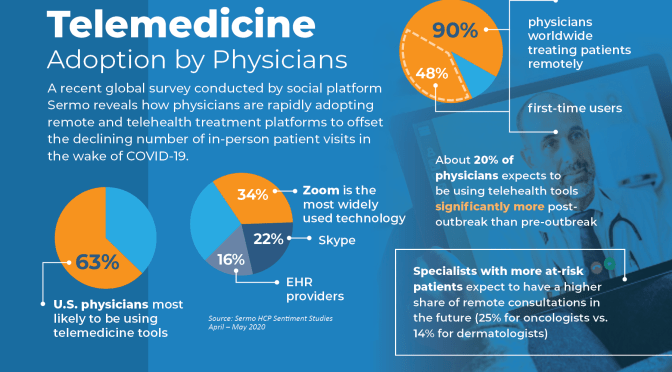
Diagnostics World (June 30, 2020): The shift from face-to-face patient visits to remote medical appointments is a worldwide phenomenon, but most especially in the U.S., finds a recent global survey conducted by the doctors-only social networking platform Sermo. Unsurprisingly, Zoom tops the list of most-mentioned technologies. About one-fifth of surveyed doctors say they expect to be using telehealth tools “significantly” more post-pandemic than before COVID-19 upended business as usual.







 Boomers Daily