Category Archives: Economics

Previews: The Economist Magazine – March 25, 2023

Image

The Economist – March 25, 2023 issue:

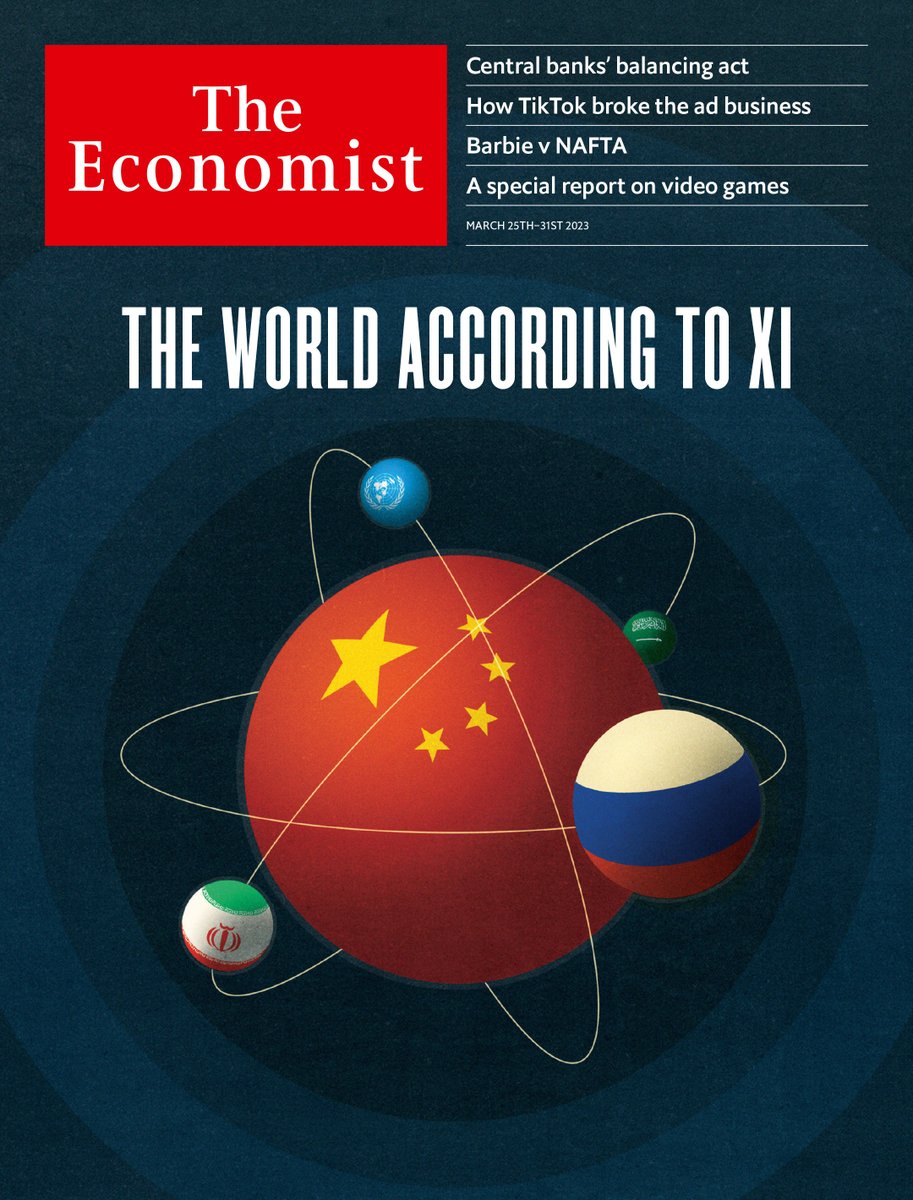
The world according to Xi

Even if China’s transactional diplomacy brings some gains, it contains real perils

A lesser man than Xi Jinping might have found it uncomfortable. Meeting Vladimir Putin in Moscow this week, China’s leader spoke of “peaceful co-existence and win-win co-operation”, while supping with somebody facing an international arrest warrant for war crimes. But Mr Xi is untroubled by trivial inconsistencies. He believes in the inexorable decline of the American-led world order, with its professed concern for rules and human rights. He aims to twist it into a more transactional system of deals between great powers. Do not underestimate the perils of this vision—or its appeal around the world.

Central banks face an excruciating trade-off

They have to choose between financial instability and high inflation. It wasn’t meant to be that way

Mandatory Credit: Photo by SHAWN THEW/EPA-EFE/Shutterstock (13840861r)US Federal Reserve Board Chairman Jerome Powell concludes a press conference following a Federal Open Market Committee meeting at the William McChesney Martin Jr. Federal Reserve Board Building in Washington, DC, USA, 22 March 2023. Powell announced a 0.25 percentage point interest rate increase.Powell announces a 0.25 percentage point interest rate increase, Washington, USA - 22 Mar 2023

The job of central bankers is to keep banks stable and inflation low. Today they face an enormous battle on both fronts. The inflation monster is still untamed, and the financial system looks precarious.

The trouble with Emmanuel Macron’s pension victory

The way a wise policy was forced through will have political costs

TOPSHOT - A firefighter holds a bin as he stands next to a burning pile of rubbish in front of Opera Garnier during a demonstration a few days after the government pushed a pensions reform through parliament without a vote, using the article 49,3 of the constitution in Paris on March 20, 2023. - The French government survived two no-confidence motions in parliament on March 20, 2023 but still faces intense pressure over its handling of a controversial pensions reform. (Photo by Christophe ARCHAMBAULT / AFP) (Photo by CHRISTOPHE ARCHAMBAULT/AFP via Getty Images)

Any French president who asks his fellow citizens to retire later does so at his peril. When Jacques Chirac tried in 1995, crippling strikes made him shelve the project; 18 months later voters sacked his government. Piles of rubbish were left to rot on the streets, as they are today on the boulevards of Paris. Bin collectors have joined strikes against the decision by the current president, Emmanuel Macron, to raise the minimum pension age from 62 to 64. So it was with some relief that on March 20th his minority government narrowly survived two no-confidence votes, opening the way for his reform to enter the statute books.

Previews: The Economist Magazine – March 18, 2023

Image

The Economist – March 11, 2023 issue

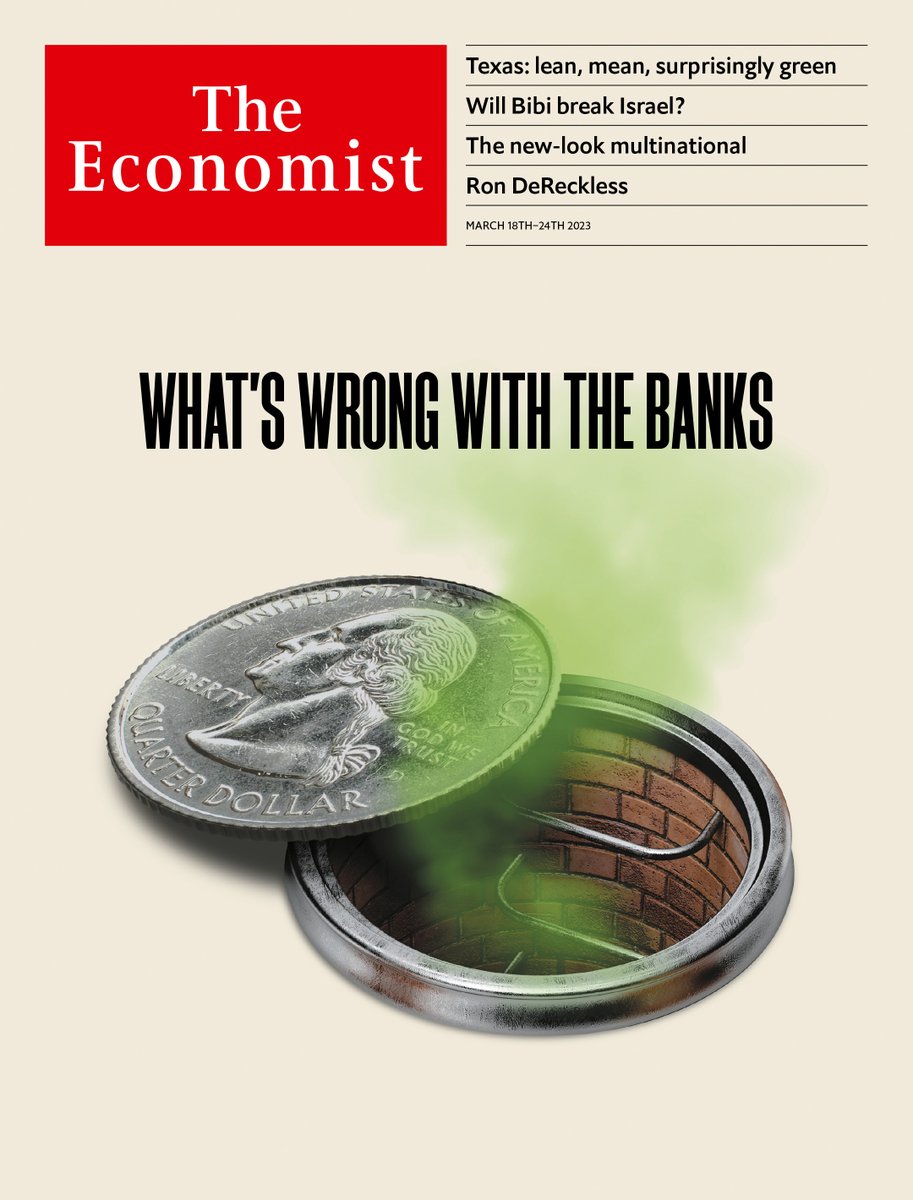
What’s wrong with the banks

Rising interest rates have left banks exposed. Time to fix the system—again

Only ten days ago you might have thought that the banks had been fixed after the nightmare of the financial crisis in 2007-09. Now it is clear that they still have the power to cause a heart-stopping scare. A ferocious run at Silicon Valley Bank on March 9th saw $42bn in deposits flee in a day. svb was just one of three American lenders to collapse in the space of a week. 

Will Bibi break Israel?

Binyamin Netanyahu and a constitutional crisis

When Israel’s best and brightest are up in arms it is time to worry

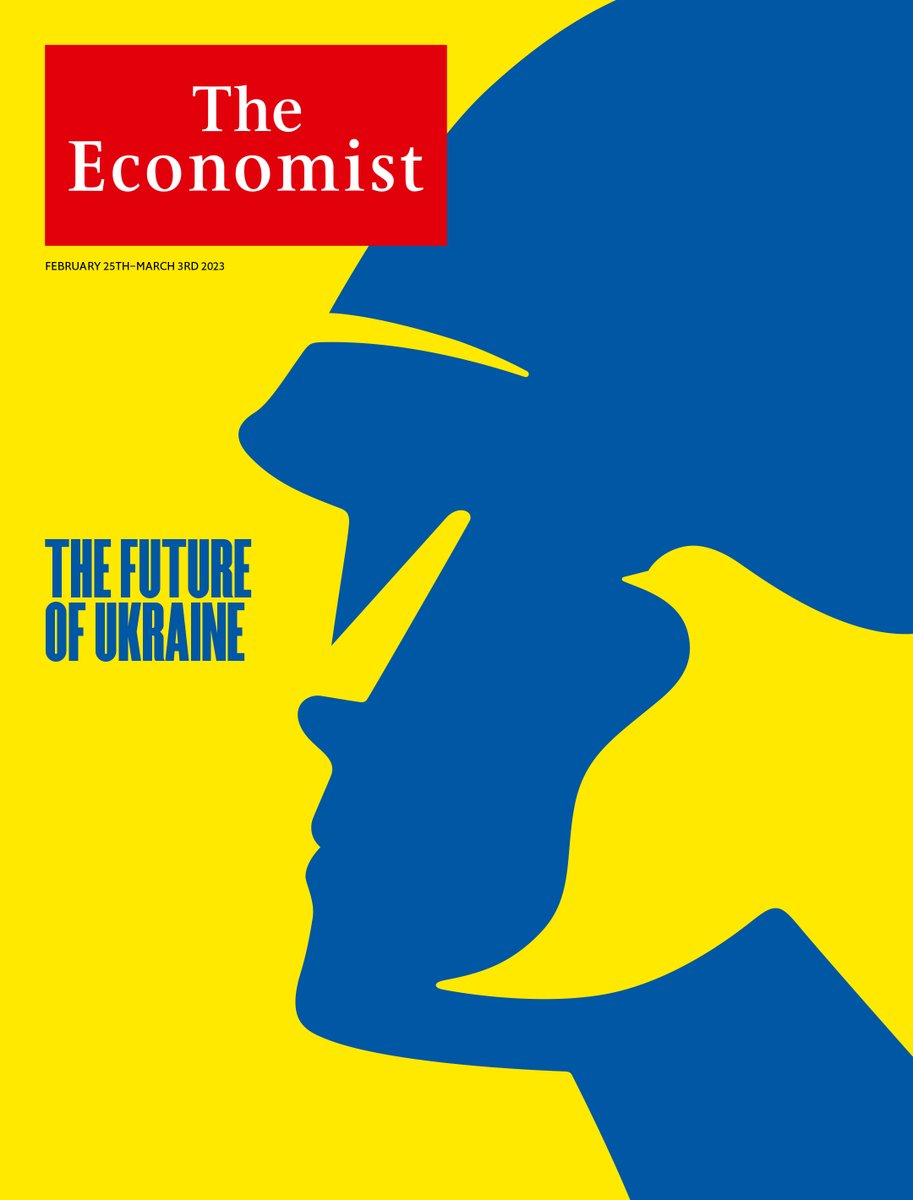
Florida’s governor has blundered over Ukraine

By saying Ukraine is not a vital American interest, Ron DeSantis emboldens Vladimir Putin

Book Reviews: Politics & Free Markets (March 2023)

The Currency of Politics: The Political Theory of Money from Aristotle to Keynes by STEFAN EICH

NOBODY HAS EVER seen the economy. We can see specific markets, but my local farmers’ market looks very different from the Diamond District in Manhattan and even the street stalls I frequented in East London.

Markets are institutions with more or less physical infrastructures, but “the market” (like “the economy”) is an abstraction, no more fixed or certain than “the Left” or “nature.” If “the economy” and “the market” are often described as though they were things out there in the world to be measured and monitored while other abstractions (such as “beauty” and “joy”) are not, that tells us as much about ways of thinking as it does about the workings of the world.

Powered by this insight, the history of economic thought (and related “new histories of capitalism”) has grown over the past 20 years to become one of the most lively and popular historical subfields.

Free Market: The History of an Idea by JACOB SOLL

The recent controversy over Jacob Soll’s new book Free Market: The History of an Idea (2022) reveals just how attached some people are to their economic ideologies (no surprise there) and to their ideas about who gets to have “economic thoughts.”

In a sweeping text that ranges across 2,500 years in barely 250 pages, Soll argues that, for centuries, “free” markets were understood as existing only where strong, moral governments liberated trade from domination by selfish, moneyed merchants. Markets had to be set free—they were not born that way—and the danger has always lurked of commerce being recaptured to enrich the few rather than benefit the many.

This is a loosely “antitrust” way of describing market freedom, and it might have barely registered at all had Soll attributed it chiefly to Louis Brandeis, Frances Perkins (secretary of labor under FDR), or even Machiavelli. But by invoking the name “Adam Smith,” Soll seems to have violated the holy of holies. 

Previews: The Economist Magazine – March 11, 2023

Image

The Economist – March 11, 2023 issue

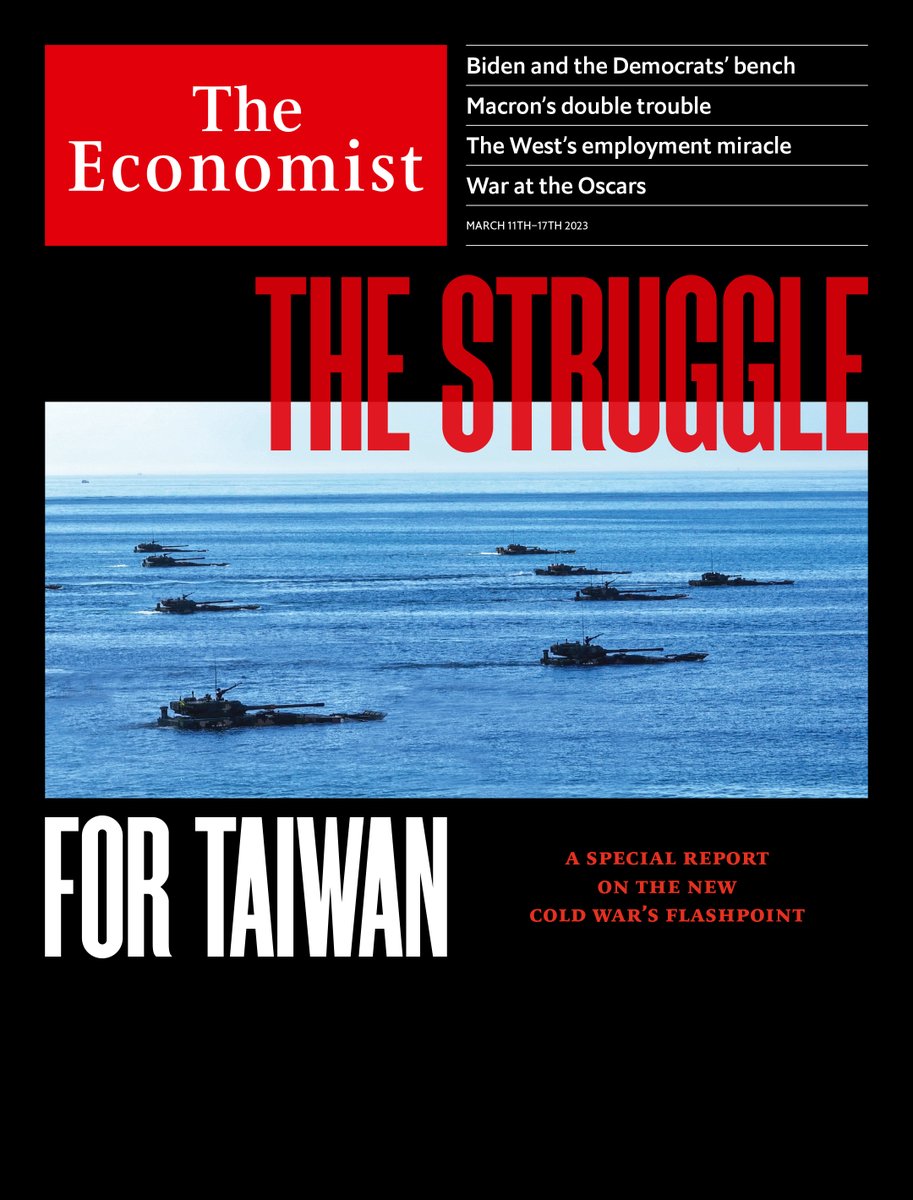
How to avoid war over Taiwan

A superpower conflict would shake the world

Europe is witnessing its bloodiest cross-border war since 1945, but Asia risks something even worse: conflict between America and China over Taiwan. Tensions are high, as American forces pivot to a new doctrine known as “distributed lethality” designed to blunt Chinese missile attacks. Last week dozens of Chinese jets breached Taiwan’s “air defence identification zone”. This week China’s foreign minister condemned what he called America’s strategy of “all-round containment and suppression, a zero-sum game of life and death”.

A stubbornly strong economy complicates the fight against inflation

Higher interest rates are not sufficiently slowing global growth

Emmanuel Macron’s vision of a more muscular Europe is coming true

But his allies disagree on its strategies and goals

Previews: The Economist Magazine – March 4, 2023

This week's cover, March 2nd 2023 | The Economist

The Economist – March 4, 2023 issue:

This week’s worldwide cover celebrates the new drugs promising an end to the world’s obesity epidemic. They could bring riches for their makers, savings for health systems and better lives for millions.

New drugs could spell an end to the world’s obesity epidemic

The long-term effects must be carefully studied. But the excitement is justified

The new Brexit deal is the best Britain can expect. Support it

Both the Tories and the Democratic Unionist Party should get behind the new agreement with the EU

Delta force

Is Bangladesh’s admired growth model coming unstuck?

A development superstar faces malign politics and rising corruption

The tech slump is encouraging venture capital to rediscover old ways

Small, profitable firms in strategic industries are now all the rage

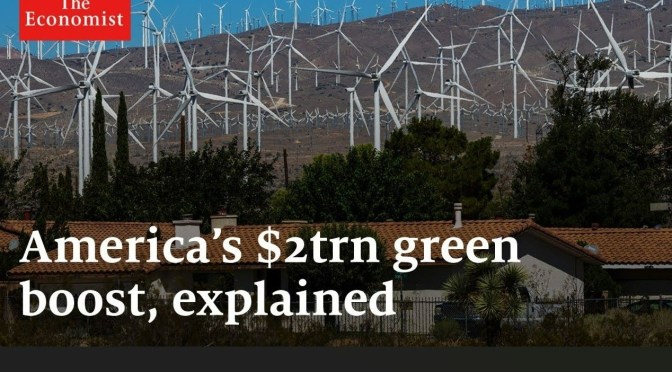
American Economy: The $2 Trillion Green Stimulus

The Economist (March 2, 2023) – America is spending trillions of dollars in an effort to make the country stronger, greener and richer. These are the three key things you need to know about the plan and its chances of success.

Video timeline: 00:00 – A new green America 00:30 – Democrats are being ambitious 01:14 – Manufacturing will move to America 01:53 – Planning could be a stumbling block

To read more about Biden’s plans to remake America’s economy: https://econ.st/3IEGNiP

Previews: The Economist Magazine- Feb 18, 2023

Image

The Economist Magazine- February 18, 2023:

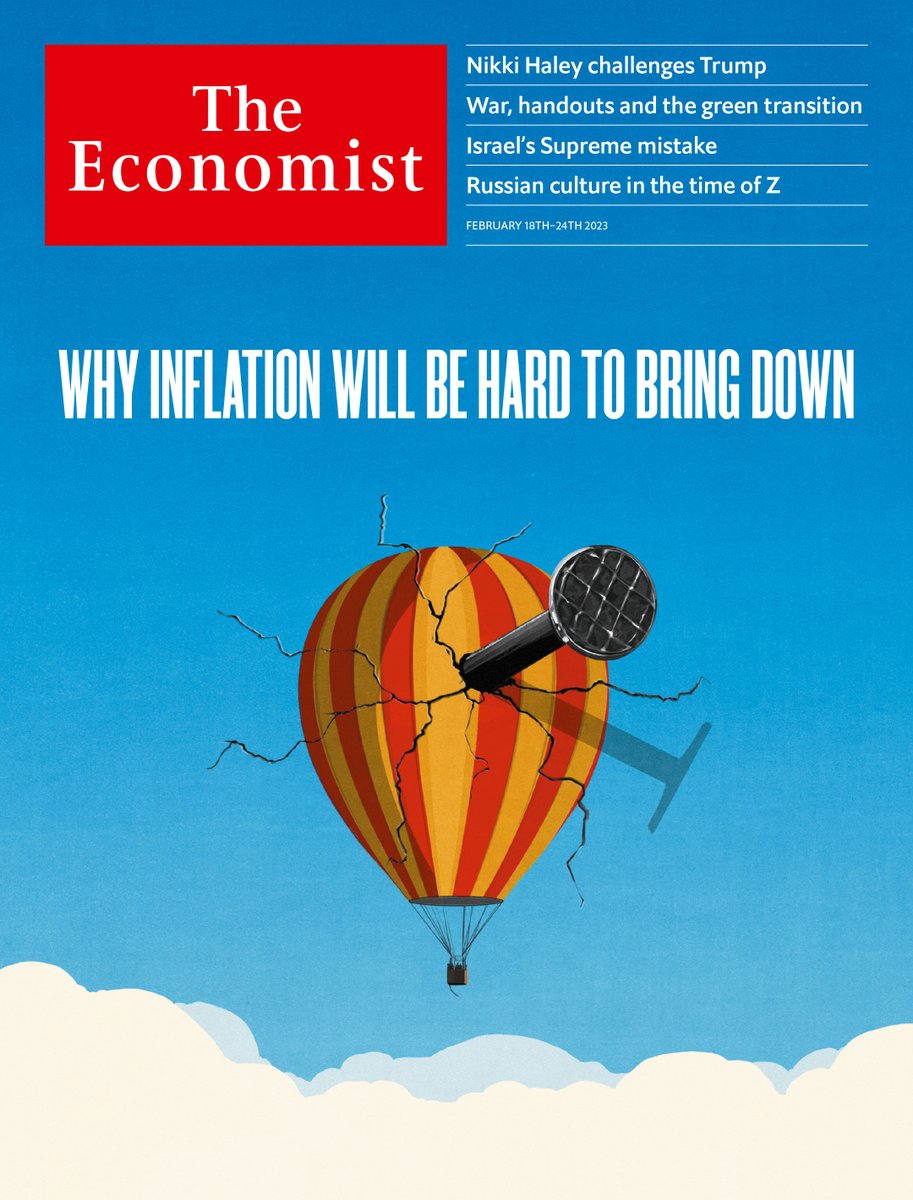
Inflation will be harder to bring down than markets think

Investors are betting on good times. The likelier prospect is turbulence

Israel’s proposed legal reforms are a dreadful answer to a real problem

They will damage the country at home and abroad

The World Bank’s embattled chief steps down

David Malpass’s record is better than his many critics will credit

World Economic Forum: Top Stories – Feb 3, 2023

World Economic Forum (February 3, 2023) – This week’s top stories include:

  • 0:15 This AI robot is revolutionizing farming – The robot can identify weeds and crops at rate of 20 plants a second. The robot then delivers either weedkiller or fertilizer directly to individual plants to an accuracy of within 1mm. It can treat up to 500,000 plants per hour. The robot was invented by US firm Verdant Robotics.
  • 1:24 This company cancelled all internal meetings – In January, e-commerce platform Shopify cancelled all regular meetings with 3 people or more and imposed a 2-week window before staff could schedule anything new. It also permanently banned meetings on Wednesdays and limited large meetings to a strict window on Thursdays. More organizations are trying a ‘meeting reset’, from Dropbox to Asana and Zapier. But why – and could your organization try it too?
  • 3:00 How to build a thriving workplace – Businesses often ask staff why they resign. So why not ask why they’re joining or staying? “Why would you wait until people have already committed to walk out the door to say, ‘If only I had a time machine, I would go back to the past and convince you to stay’? What I would much rather see employers do are entry interviews and stay interviews. Entry interview is just asking the same questions you would normally pose at exit at the beginning of the employment relationship: Why are you here? What are you hoping to learn? Right. What are some of the best projects you’ve worked on? Tell me about the worst boss you’ve ever had so we can try to emulate the good and avoid the bad.”
  • 5:22 ChatGPT is already being used for scientific research – ChatGPT launched to the public in November 2022. It gives in-depth, natural language answers to prompts, based on what it has learned from a huge database of books and articles. People have been using ChatGPT to perform an impressive range of tasks, from writing university-level essays to debugging code and filling in job applications. It has written fake scientific reports that have fooled scientists and has even been used to write a children’s book.

The World Economic Forum is the International Organization for Public-Private Cooperation. The Forum engages the foremost political, business, cultural and other leaders of society to shape global, regional and industry agendas. We believe that progress happens by bringing together people from all walks of life who have the drive and the influence to make positive change.

Previews: The Economist Magazine- February 4, 2023

Image

View

The Economist – February 4, 2023 issue:

Joe Biden’s effort to remake the economy is ambitious, risky—and selfish

But America’s plan to spend $2trn could help save the planet

Nagging questions over the Adani empire won’t go away

A short-seller’s report raises uncomfortable questions for India’s policymakers, too

Why the West’s oil sanctions on Russia are proving to be underwhelming

Another embargo comes into force on February 5th. Manage your expectations