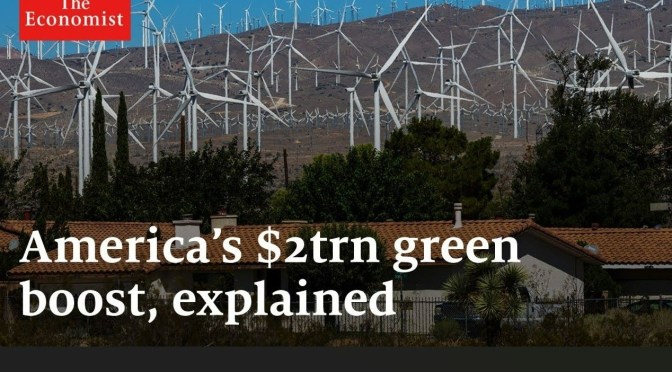
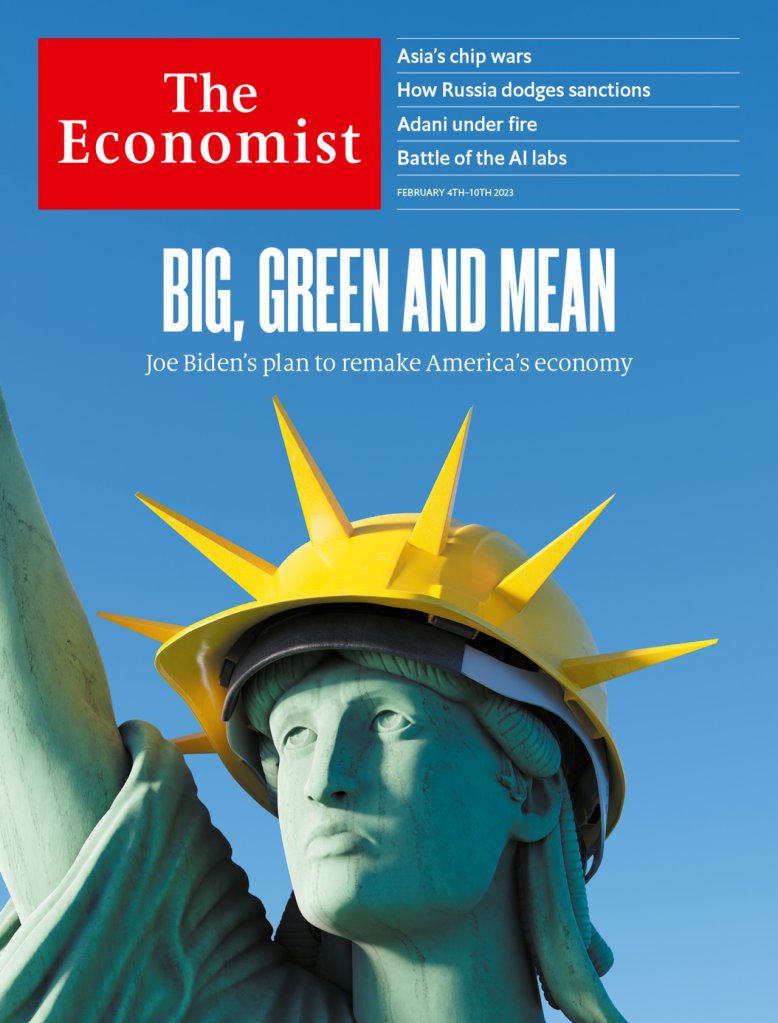
The Economist (March 2, 2023) – America is spending trillions of dollars in an effort to make the country stronger, greener and richer. These are the three key things you need to know about the plan and its chances of success.
Video timeline:00:00 – A new green America 00:30 – Democrats are being ambitious 01:14 – Manufacturing will move to America 01:53 – Planning could be a stumbling block
0:15 This AI robot is revolutionizing farming – The robot can identify weeds and crops at rate of 20 plants a second. The robot then delivers either weedkiller or fertilizer directly to individual plants to an accuracy of within 1mm. It can treat up to 500,000 plants per hour. The robot was invented by US firm Verdant Robotics.
1:24 This company cancelled all internal meetings – In January, e-commerce platform Shopify cancelled all regular meetings with 3 people or more and imposed a 2-week window before staff could schedule anything new. It also permanently banned meetings on Wednesdays and limited large meetings to a strict window on Thursdays. More organizations are trying a ‘meeting reset’, from Dropbox to Asana and Zapier. But why – and could your organization try it too?
3:00 How to build a thriving workplace – Businesses often ask staff why they resign. So why not ask why they’re joining or staying? “Why would you wait until people have already committed to walk out the door to say, ‘If only I had a time machine, I would go back to the past and convince you to stay’? What I would much rather see employers do are entry interviews and stay interviews. Entry interview is just asking the same questions you would normally pose at exit at the beginning of the employment relationship: Why are you here? What are you hoping to learn? Right. What are some of the best projects you’ve worked on? Tell me about the worst boss you’ve ever had so we can try to emulate the good and avoid the bad.”
5:22 ChatGPT is already being used for scientific research – ChatGPT launched to the public in November 2022. It gives in-depth, natural language answers to prompts, based on what it has learned from a huge database of books and articles. People have been using ChatGPT to perform an impressive range of tasks, from writing university-level essays to debugging code and filling in job applications. It has written fake scientific reports that have fooled scientists and has even been used to write a children’s book.
The World Economic Forum is the International Organization for Public-Private Cooperation. The Forum engages the foremost political, business, cultural and other leaders of society to shape global, regional and industry agendas. We believe that progress happens by bringing together people from all walks of life who have the drive and the influence to make positive change.
0:15 Global Recession 2023 – Kristalina Georgieva, the IMF’s Managing Director, says 2023 will be ‘a difficult year for the world’. The European economy has been severely affected by Russia’s war in Ukraine. Half of the EU will go into recession in 2023, Georgieva says. While for the first time in 40 years, growth in China – the world’s second-largest economy – is not likely to exceed global growth.
2:02 Japan’s worldbeating health system – For more than 50 years, Japan has offered healthcare without restrictions to anyone living in the country for 3 months or more whether or not they are Japanese. Payments are decided on a sliding scale depending on age, residence and income status.
3:26 These pipebots stop water leaks – The tiny bots patrol the inside of pipes. They’re small enough to avoid blocking the pipes and are fitted with sensors, cameras and a microphone. They take pictures and listen to the pipe to detect any faults and weaknesses before these develop into leaks.
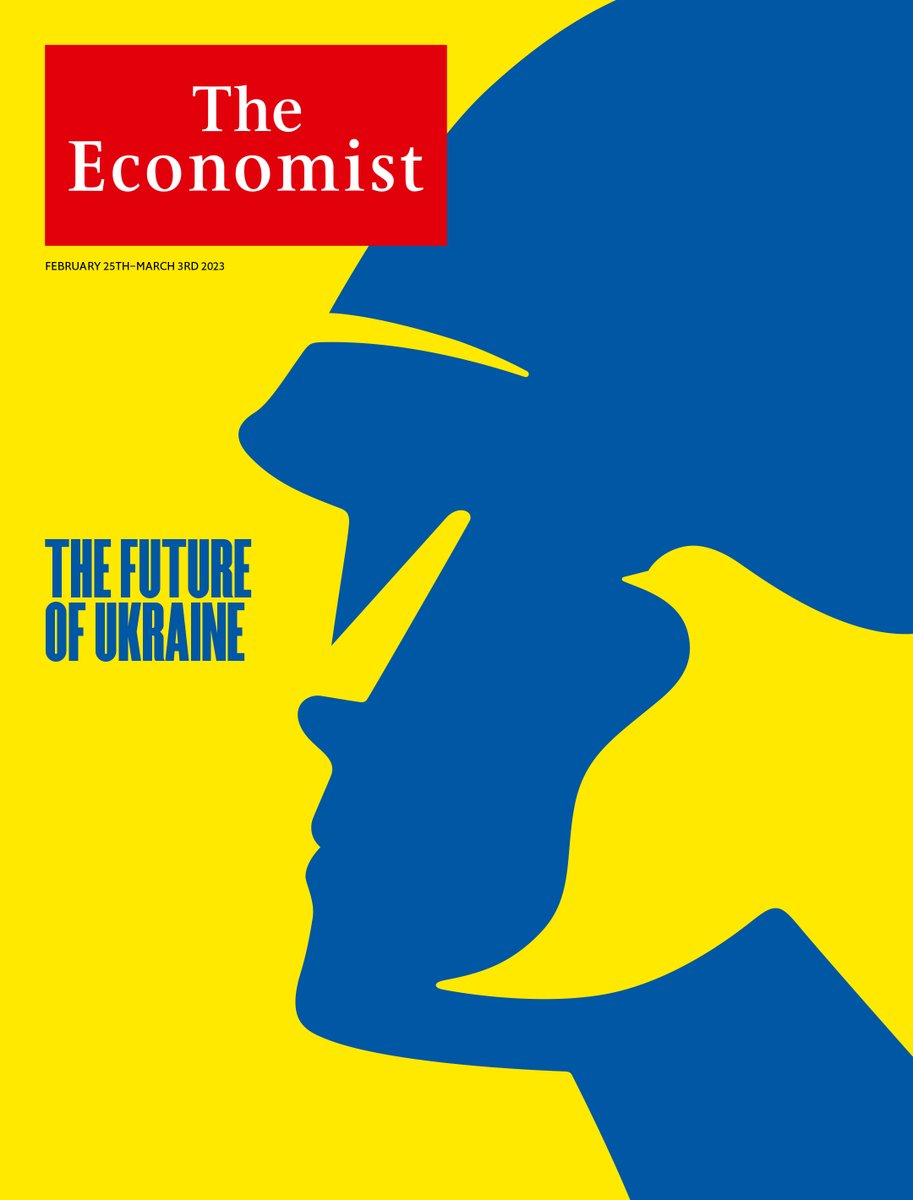
4:48 Ukraine uploads their treasures to the cloud – Volunteers use the Backup Ukraine app to scan cultural artifacts – from statues and paintings to buildings, mosaics, and monuments – to preserve the country’s heritage and history from Russian theft, vandalism, and bombing. Backup Ukraine turns these symbols of Ukrainian culture into 3D models, which take their place in a digital archive, safe from Russian attacks.
As of 12 December 2022, UNESCO had verified damage to 227 cultural sites in Ukraine. Russian troops had removed the bones of Prince Potemkin from Kherson, stolen priceless relics of the Scythian Empire, and allegedly stripped thousands of pieces of art from local museums. Backup Ukraine is a collaboration between UNESCO, Blue ShieldDenmark, and the media group Virtue. Watch to learn how Ukrainian culture is being impacted. _____________________________________________
The World Economic Forum is the International Organization for Public-Private Cooperation. The Forum engages the foremost political, business, cultural and other leaders of society to shape global, regional and industry agendas. We believe that progress happens by bringing together people from all walks of life who have the drive and the influence to make positive change.
Wall Street Journal (December 19, 2022) – In recent years, the city’s railyards have seen severe bottlenecks as the supply chain choked up nationally. With $3 trillion in goods traveling through Chicago every year, the city is the busiest rail hub in the U.S. WSJ breaks down how important rail is to the region, and how vulnerable the system is to a work stoppage like a strike.
Illustration: Adele Morgan
News, Views and Reviews For The Intellectually Curious








 Boomers Daily