
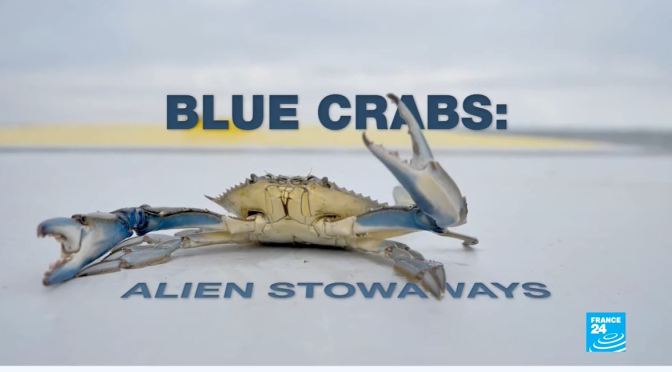
A captivating #crustacean and a ferocious #predator: in this edition we discover a #transatlantic invader that’s taking no prisoners in its quest for domination. Safe from its natural predators on the Atlantic coast of #NorthAmerica, the blue crab devours everything in its path, dealing a painful blow to an already fragile #ecosystem.
Category Archives: Documentaries
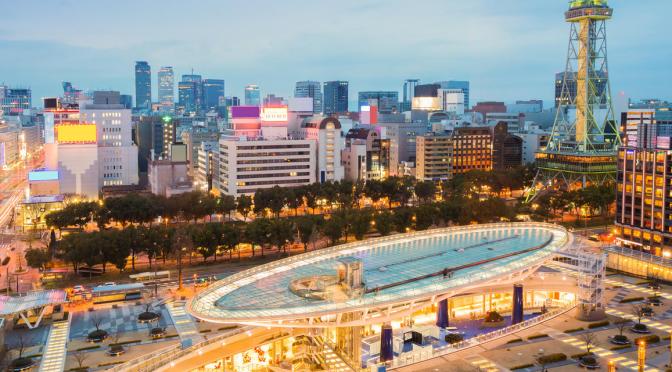
Cities & Architecture: Nagoya – Japan (Video)
Focus in on the picturesque architecture of Nagoya, a city that reflects the past, present and future of Japan.
[Skip Intro] 1:04
Nagoya, capital of Japan’s Aichi Prefecture, is a manufacturing and shipping hub in central Honshu. The city’s Naka ward is home to museums and pachinko (gambling machine) parlors. Naka also includes the Sakae entertainment district, with attractions like the Sky-Boat Ferris wheel, which is attached to a mall. In northern Naka is Nagoya Castle, a partly reconstructed 1612 royal home displaying Edo-era artifacts.

Craft Chocolate: Finding The Best Cacao Beans
Like craft beer, craft chocolate is hip. The more exotic the cocoa, the more popular the end product. Craft chocolatiers comb the jungles of the Peruvian Amazon in search of cacao varieties that have never been used in chocolate production before.
Their prospective buyers belong to a select group of connoisseurs with a taste for exotic cocoa beans. Aside from satisfying people’s craving for luxury, craft chocolate makers are also working to create positive change. They’re helping local cocoa farmers document the widespread impact of illegal deforestation, the drug trade, and large agribusinesses on the lives of the indigenous population in Peru’s Amazonas region. Will craft chocolatiers succeed in getting consumers to shell out more money – enough to ensure cocoa farmers‘ livelihoods? Can they get chocoholics to develop a craving for high quality, organic products that also support environmental sustainability?
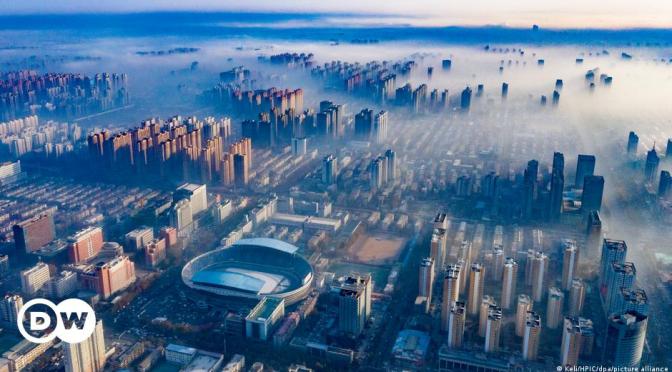
Urban Views: Living In China’s Megacities (Video)
More than 60 percent of China’s population of 1.4 billion currently lives in cities. Within a decade, the share of urban dwellers is expected to increase to 75 percent. Construction is booming and competition for residential land is fierce.
But the right to live in a city in China is conditional. Authorities want their modern cities to be peopled with well-educated, highly-qualified or politically well-connected residents. As a result, certain standards have to be met to be eligible for a modern, urban home. Only members of China’s political classes and the financially successful have a hope of qualifying. Yet more than half of the people who live in cities are so-called “migrant workers.” They come from rural communities and have no official rights to settle in cities. They are there to work. With no proper rights, they are merely tolerated while they serve as merchants, servants, waitstaff, cleaners, construction workers and tradespeople.
But while they are indispensible to daily life in the cities, they are unable to afford their exorbitant rents. This documentary looks at how and where these workers live, and asks whether middle and working class Chinese even figure in the official vision of shiny, high-tech cities. The filmmakers also look at what happens to those who oppose official plans, or stand in the way of the building boom.
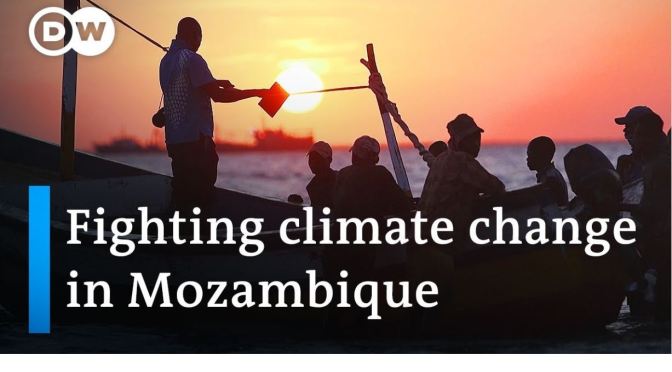
Climate: Mozambique Builds Green Areas To Curb Cyclone Flooding
In 2019, Cyclone Idai devastated Mozambique’s port city of Beira. Many died and entire neighborhoods were flooded. The city is now setting up large green areas designed to absorb future floodwaters. But entire fishing communities need to relocate.
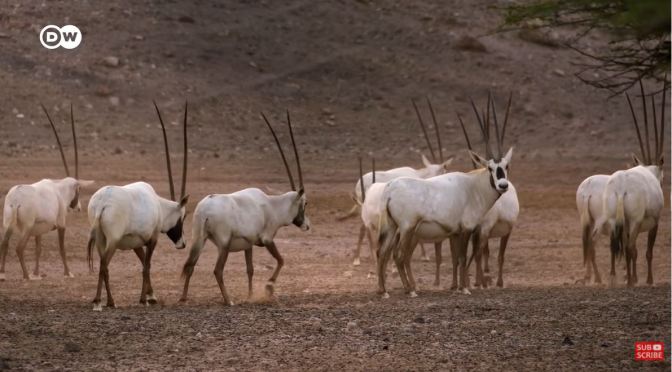
Views: The Endangered Species Refuge Of ‘Sir Bani Yas Island’ – Abu Dhabi, UAE
The Arabian oryx is a beautiful, almost luminously white antelope. But, after being over-hunted by humans in the 20th century, it only narrowly escaped extinction. Today, on the desert island of Sir Bani Yas, the endangered animals find refuge. Part of an archipelago west of Abu Dhabi, Sir Bani Yas is home to a large wildlife reserve, where animals from Arabia, Asia and Africa roam freely. You can watch cheetahs hunting, and imagine how the Bedouins once lived, under open desert skies. Established in the 1970s, extensive ecological measures turned Sir Bani Yas into a man-made “paradise for wild animals.” Now, the reserve stands for the region’s desire for a sustainable future. It’s also a great place to see the magnificent Arabian oryx running free, once more.
Sir Bani Yas Island is part of the Al Gharbia region of the United Arab Emirates. It’s dominated by the Arabian Wildlife Park, with its roaming giraffes, cheetahs and gazelles. Multiple archaeological sites across the island include the ruins of an ancient Christian monastery. Salt dome hills define the island’s desert interior. The coast features beaches, sea kayak routes and a shipwreck.
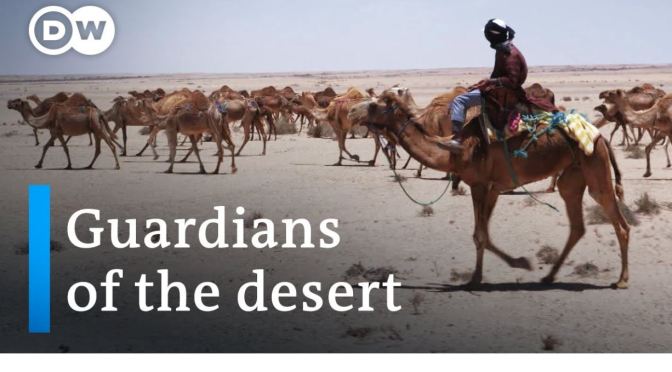
Views: Camel Herders Of The Sahara Desert (Video)
It was once common practice to herd camels hundreds of kilometers through the desert. Now, with only a handful of herders left, the ancient art of desert navigation will soon be lost. From the south of Morocco, the great Sahara Desert extends more than a thousand kilometers into Mauritania. Hot and dry, the desert is hostile to life.
Yet for centuries, camel herders have successfully traveled back and forth across this landscape, between their herd’s winter and summer camps. Today, only some thousand families remain dedicated to this traditional way of life. They breed dromedaries: domesticated, one-humped camels. Among these guardians of the old ways are the shepherds Moulay and Hadrami, both of the Oulad Ben Sbaa tribe. Their families live in the city, having abandoned the nomadic life.
But Moulay and Hadrami are passionate shepherds, closely bonded to their 200 camels. In this rich documentary, the men take us along as they go about their work: arming themselves against sandstorms, preparing their herd for nightly migrations, and searching the desert’s endless expanse for lost newborn animals and their mothers. An invaluable glimpse into the hardscrabble existence of these shepherds, the film shows a way of a life that will soon cease to exist.
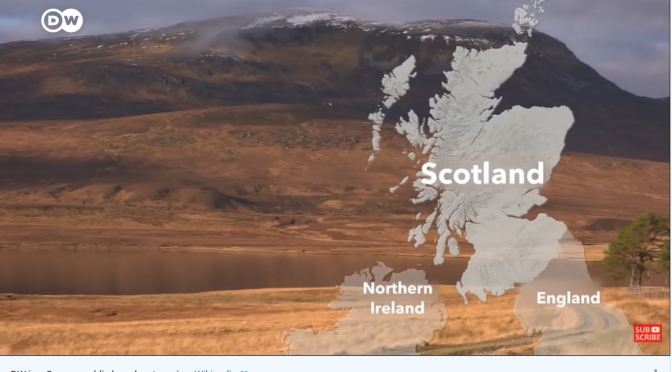
Cultural View: What Will An Independent Scotland Look Like? (Documentary)
What does it mean to be Scottish? Since Brexit, people here at the northernmost end of the island of Great Britain have been asking this question with renewed vigour. Now, with the Scottish Parliament election approaching, many Scots see their future outside of the United Kingdom. So how do ordinary Scottish citizens see their homeland?
On her journey through Scotland, journalist Diana Zimmermann quickly learns that it is impossible to travel through the country these days without talking about Brexit. Geography and history have brought the Scots to a breaking point. Just ask Sophie Gault, a deer-hunter whose breath-taking workplace is in the heart of the Highlands, at the foot of Ben Alder. “Being Scottish is something I’m really proud of,” says Gault, adding that taking this job was the best decision she ever made.
“Being with nature and with wildlife, it makes you appreciate Scotland even more. There’s always that sense of community. And I’m very proud of our own Scottish humour.” What does fisherman Victor Laurenson, who had hoped Brexit would bring him better fishing conditions, think of his country now?
Janey Godley, a comedian from Glasgow, brings yet another perspective: In the Scottish independence referendum in 2014, she says, the English told the Scots to vote against independence so that Scotland could stay in the EU. “It’s basically like your Mum and Dad saying – look – if you go to bed early, when you wake up, you will have a pony. And you go to bed, you sleep early, you wake up and there’s just a cushion in the shape of a cat instead, and it’s not even a good cat.”

Climate Views: Rising High Water Levels In Kenya’s Great Rift Valley (Video)
In Kenya’s Rift Valley, climate change has brought an unprecedented increase in annual rainfall over the past several years, drowning pastureland, farms, homes, schools, churches, clinics and businesses.
The Great Rift Valley is part of an intra-continental ridge system that runs through Kenya from north to south. It is part of the Gregory Rift, the eastern branch of the East African Rift, which starts in Tanzania to the south and continues northward into Ethiopia.[1] It was formed on the “Kenyan Dome” a geographical upwelling created by the interactions of three major tectonics: the Arabian, Nubian, and Somalian plates.[2] In the past, it was seen as part of a “Great Rift Valley” that ran from Madagascar to Syria. Most of the valley falls within the former Rift Valley Province.

Documentary: What Is The Future For Algeria (Video)
Since February 2019, millions of Algerians have demonstrated against the government. They first took to the streets to demand more democracy and protest the renewed candidacy of former authoritarian president Abdelaziz Bouteflika. The COVID-19 pandemic may have brought the Algerian protest movement “Hirak” to a premature end in March 2020, and even though Bouteflika withdrew his candidacy, its demands are still far from being met. Opponents of the government still say their country is a long way from genuine democracy and is at the same time plagued by corruption, economic mismanagement and military interference in politics.
This documentary follows five young Algerians who are all taking part in the protests. They tell viewers why they are challenging Algeria’s powerful elites and describe what they want for their country. Their stories are about hope and resignation, as well as the open question of their futures in Algeria.
 Boomers Daily