ABC News spoke with acclaimed mountaineer Nirmal “Nims” Purja about his recent documentary, “14 Peaks,” and the dangers of high-altitude mountaineering.
14 Peaks: Nothing Is Impossible is a 2021 documentary film directed by Torquil Jones, and produced by Noah Media Group, Little Monster Films and Torquil Jones with Nirmal Purja, Jimmy Chin and Elizabeth Vasarhelyi as executive producers. The film follows Nepalese mountaineer Nirmal Purja and his team as they attempt to climb all 14 eight thousander peaks within a record time of under 7 months.
Bangladesh is struggling just to stay afloat. Literally: By 2050, it’s estimated that climate issues will displace one in seven of the country’s inhabitants.
This film takes the viewer on a journey through Bangladesh, exploring why overflowing rivers flood three-quarters of the country every year. We see how flooding threatens the country’s food security, how soil erosion thrusts thousands into homelessness, and how climate refugees are forced to flee their homes in a desperate act of survival.
Along the way, we meet communities adapting to rising sea climate change by growing food on water. This is a strategy which could prove very useful in the near future, as rising sea levels threaten to inundate 11% of the country’s land in the next 30 years.
This documentary brings us to the front lines of the battle against catastrophic climate change in Bangladesh. It also tells the stories of activists who are bringing the dangers posed by man-made threats to light.
Combining unheard audio recordings, dramatic reconstructions and personal archives, The Real Charlie Chaplin traces Charlie Chaplin’s meteoric rise from the slums of Victorian London to the heights of Hollywood superstardom, before his scandalous fall from grace. Watch the premiere on Saturday, December 11 at 8/7c on SHOWTIME.
China is building a huge digital surveillance system. The state collects massive amounts of data from willing citizens: the benefits are practical, and people who play by the rules are rewarded. Critics call it “the most ambitious Orwellian project in human history.”
China’s digital surveillance system involves massive amounts of data being gathered by the state. In the so-called “brain” of Shanghai, for example, authorities have an eye on everything. On huge screens, they can switch to any of the approximately one million cameras, to find out who’s falling asleep behind the wheel, or littering, or not following Coronavirus regulations. “We want people to feel good here, to feel that the city is very safe,” says Sheng Dandan, who helped design the “brain.” Surveys suggest that most Chinese are inclined to see benefits as opposed to risks: if algorithms can identify every citizen by their face, speech and even the way they walk, those breaking the law or behaving badly will have no chance. It’s incredibly convenient: a smartphone can be used to accomplish just about any task, and playing by the rules leads to online discounts thanks to a social rating system. That’s what makes Big Data so attractive, and not just in China. But where does the required data come from? Who owns it, and who is allowed to use it? The choice facing the Western world is whether to engage with such technology at the expense of social values, or ignore it, allowing others around the world to set the rules.
The elegant “American Colony Hotel” in Jerusalem is an island of tranquility in a troubled city. The grand hotel has lived through all of Jerusalem’s serious crises. Everyone is welcome here, no matter where they come from or what they believe. The name “American Colony Hotel” goes back to a group of 19th Century American pilgrims. In its early days, the grand hotel was located among olive groves outside Jerusalem’s city walls. For over a hundred years, many parties to the Palestinian-Israeli conflict have shaken hands, eaten and drunk here together. People mingle here in a way they would never do elsewhere. Behind it all is the fascinating story of Anna and Horatio Spafford, who, after several tragic events, moved from the US to the Holy Land with a community of devout Christians. With diligence, skill, and an insistence on neutrality and tolerance despite political difficulties, they created a hotel in a truly special location. Its atmosphere continues to attract illustrious guests from the worlds of politics, diplomacy, literature, art and entertainment.
Humanity faces major challenges. Could roots hold the answers? It’s possible: Research shows that roots have the potential to provide food for the world’s population, stop climate change and help extract resources in an environmentally friendly way. Plants must withstand periods of drought and heat, as well as flooding, and they use their roots to do this. Roots also help them actively search for nutrients in the soil, while warding off dangers such as pathogens and toxins.
Now, scientists at the research institute Forschungszentrum Jülich are investigating root growth using high-tech methods. The goal is to breed stress-resistant seeds for plants with robust roots. They are not alone: In Sweden, Professor Linda Maria Mårtensson is conducting research on a perennial wheat variety that will ensure higher yields while protecting the soil. Along the world’s coasts, too, roots are a lifesaver.
Coastal ecologist Professor Tjeerd Bouma has discovered that if special grasses are planted in front of dikes, they create a salt marsh that acts as a natural breakwater. Meanwhile, geochemist Dr. Oliver Wiche of the Technical University of Freiberg is researching something known as “phytomining.” He wants to know which plants are best suited for mining metals from the soil. Could this root research give rise to a new, environmentally friendly branch of industry?
Porsche 911 – the world’s most successful sports car. Its rear-mounted boxer engine and classic styling are unmistakable. It combines sportiness and everyday functionality like no other vehicle. A street-legal race car. For almost 70 years the 911 has stood for sportiness, elegance and quality. The latest version, the Porsche 992, is equipped with almost 400 hp in the basic version and costs almost a quarter of a million euros. In this documentary, racing legend Hans-Joachim Stuck takes you through the world of what is perhaps the most famous sports car.
Postponed by a year. Plagued by existential rumors. The Tokyo Olympics have had a rocky road, thus far. But what’s it like for the athletes? This film looks at how Olympic hopefuls experience Olympic-sized uncertainties, under the already strained circumstances of a global pandemic.
Despite the rampant Coronavirus pandemic, the mythos of the Olympic Games is alive and well. The world’s top athletes dream of participating, though only a fraction of them will make it that far. This film accompanies four athletes over the course of a year, as they try to reach the Olympic Games in Tokyo. For fencer Alexandra Ndolo, high jumper Marie-Laurence Jungfleisch, javelin thrower Thomas Röhler and taekwondo master Madeline Folgmann, the time leading up to the Summer Games constitutes the greatest sporting challenge of their lives.
The postponement of the Games throws a wrench in their intensive training plans. It also forces them to confront some uncomfortable questions. What if all of this intensive preparation goes to waste? Are they working towards a moment in their lives that may never come? These four competitive athletes experience a year full of disruption, hardships, health risks, small successes, and big disappointments.
For one athlete, the pandemic even becomes a stroke of luck – but can she take advantage of it? The challenges that these elite athletes face striving for their dream of competing in the Olympic Games are unique. It is a time that will leave its mark on these athletes, as they embark on a journey with an uncertain outcome.
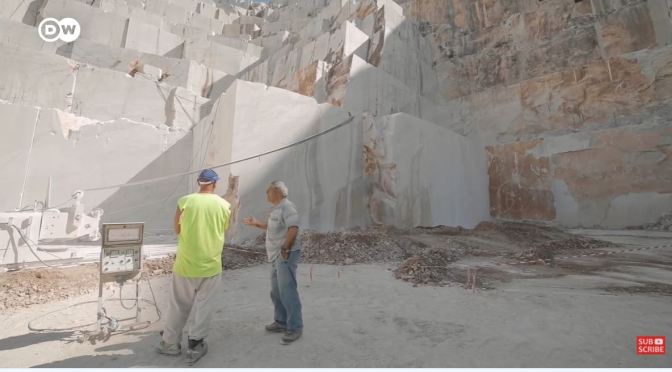
Italy’s Carrara marble quarries are a source of controversy, pitting nature against economic gain. Environmentalists warn of overexploitation, while others defend the jobs these Tuscan quarries provide.
Franco Barratini quarries marble blocks that sell for €4,000 per ton. The amount of marble that was once quarried in a month can now be extracted in just three days, and environmentalists are alarmed at the consequences. Marble dust leaks into groundwater, turns rivers milky-white and hangs in the air. The effects of this are still not completely clear.
Sandro Manfredi is fighting what he sees as severe overexploitation in the marble quarries of Tuscany’s Apuan Alps. In 2018, he filed a complaint against an illegal marble quarry, and afterwards was nearly killed when someone tampered with his car. Carrara has experienced four floods in the last nine years. Environmentalists blame marble quarrying, which has increased dramatically thanks to rapidly evolving extraction techniques, upsetting the region’s hydrogeological balance.
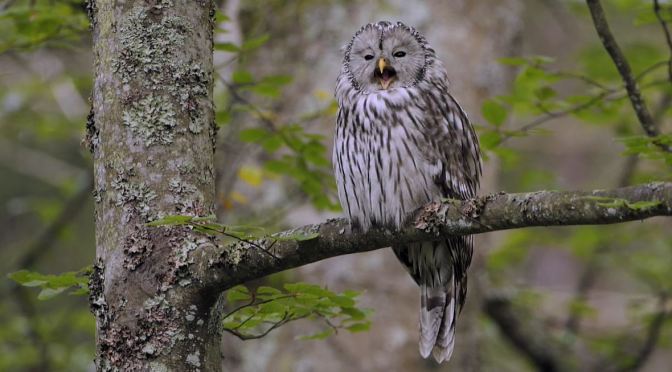
“Wild Slovenia ” A film by Matej Vranič. World Premiere at the 2021 WCFF.
SYNOPSIS: The documentary WILD SLOVENIA visually presents the very diverse fauna and flora of Slovenia, focusing on mammals and birds, and shows some particularly interesting species of amphibians, fish, insects and plants.
In the film, we venture among the highest Alpine peaks and into the remote Dinaric forests; we travel across the Pannonian plains, descend into the underground caves of the Karst world and dive into the Adriatic Sea. The film offers the insight into the secret life of some animal species that live in close proximity to humans, often even in an urban environment, but never quite come to our sight. We witness individual interactions between humans and animals. Throughout the 83-minute film, stunning details from the animal world emerge, combined into compelling and unobtrusively instructive stories shown through interesting footage. More than 50 animal species are presented; monitored over a period of one year and presented in different roles, as dictated by their life cycle – hunting and eating, courting, fighting, mating, and caring for the offspring. With the more common species, that we see frequently, the film introduces some lesser-known features.
The film, which takes place over a period of one year, also takes the viewer through typical Slovenian landscapes and briefly introduces their main characteristics. The plot crosses between the provinces and occasionally returns to the same area in order to show what is happening in the animal world in the second part of the year. A very rich ecosystem diversity, rarely seen recordings, and scientifically verified information weaved into the intelligible text are key attributes of this film.
News, Views and Reviews For The Intellectually Curious








 Boomers Daily