

TikTok is becoming a popular forum for Gen-Z and Millennials to learn about entrepreneurship and making money. To find out more, WSJ spoke with three TikTokers who are attracting large audiences that support their thriving online businesses.
Category Archives: Business
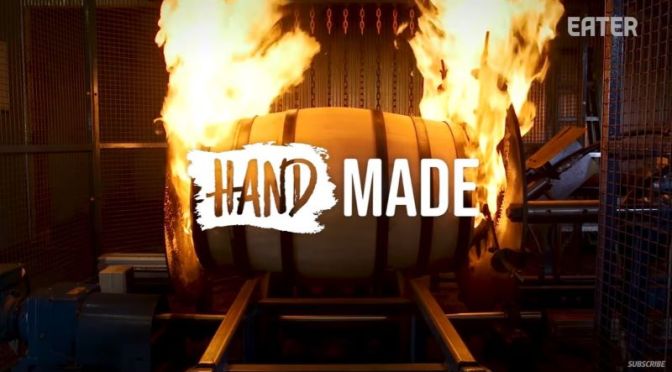
Wine & Spirits: Making Handmade ‘Fire-Charred Whiskey Barrels’ (Video)
Adirondack Barrel Cooperage uses traditional coopering methods to build spirit barrels out of American oak. Their one-of-a-kind barrel charring and toasting process imparts complex flavors in spirits, like smoke, coconut, vanilla, caramel, and more.
Website: https://www.adirondackbarrelcooperage…
Credits: Producers: Carla Francescutti, Pelin Keskin Director: Carla Francescutti Camera: Murilo Ferreira, Carla Francescutti Editor: Carla Francescutti
The Future Of Work: ‘Is Working From Home A Long-Term Trend?’ (Video)
The white-collar world has been forced by Covid-19 into a “work from home” experiment, and the results are in. It turns out we can be just as productive at home, if not more so, and many don’t want to go back to the office — at least not full time. So what will happen to the office? Will we see workers coming in only when they have to? And if so, what does that mean to the multibillion- dollar commercial real estate industry?

Online Shopping: ‘How Amazon Drone Delivery Will Look & Work’ (Video)
It’s well over a decade since Amazon launched its Prime delivery service; in fact it was 2007 when the company first introduced us to unlimited next-day shipping on what was at the time almost a million products.
But in 13 years, we have seen little change. That is, until recently. Many areas now offer same-day delivery, but behind closed doors Amazon had been working on an ambitious plan to realise almost instant delivery. The goal? Just 30 minutes, from the click of the ‘order now’ button to the tangible products, in our hands.
Every delivery company can agree that the final mile or so of a product’s journey is the most expensive. As it leaves a shipping container, and steps away from the lorry’s vessel, it enters the smallest vehicle yet – vans, and sometimes cars. Rather than carrying millions of products, a driver can now only carry a few dozen. Employing thousands of drivers comes at incredible cost to shipping companies.

Health: ‘Travel Bubbles’- Can They Revive Air Travel?
Travel bubbles are under development in some places in an effort to revive air travel, which has plummeted during the pandemic. WSJ explains how reopening the skies without quarantine requirements at both ends of a trip could help reboot the global economy.
Illustration: Crystal Tai

Commerce: ‘Will Digital Payments Replace Cash?’
Is cash still king? The coronavirus pandemic may cause a drastic decline in cash usage due to the risk of contamination. The unprecedented surge in the demand for contactless payment has also shown outstanding performances for major companies offering cashless payment methods, like Apple, Square and Paypal. Could covid-19 signal the end of cash in the United States and can the U.S. really function without physical currency?

Smartphone Apps: ‘The Rise Of Google Maps’ (Video)
Google Maps has taken on competitors like MapQuest, Yahoo and Apple. But after a decade of investing, collecting data and billions of images through Street View, Google has over a billion monthly users. It updated tens of thousands of times a day and has mapped more than 220 countries and territories. Here’s a look at how Google came to dominate maps.

Enterainment: Will AMC Theaters Survive Covid-19 Closures During 2020?
The coronavirus pandemic shuttered every single AMC theater for months. But the pandemic isn’t the only thing pushing the company onto financially shaky ground. Photo Illustration: Jacob Reynolds/WSJ
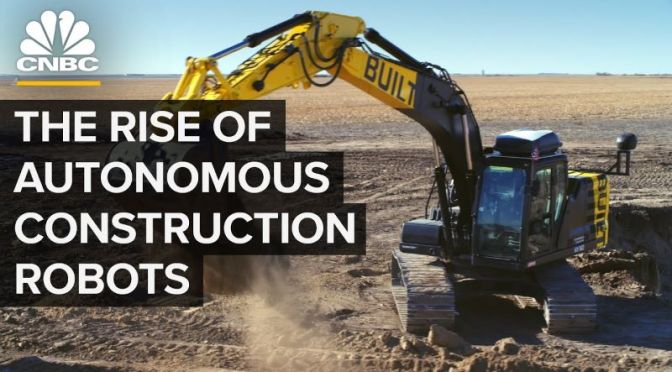
Building Industry: ‘The Rise Of Autonomous Construction Robots’
There’s a lot of buzz around self-driving cars, but autonomous-driving technology could revolutionize a different industry first — construction. That industry hasn’t changed much over the last several decades, according to some experts, making it an ideal candidate for automation.
“The way we build today is largely unchanged from the way we used to build 50 years ago,” said Gaurav Kikani, vice president of Built Robotics. “Within two years, I think we’re really going to turn the corner, and you’re going to see an explosion of robotics being used on construction sites.”
The industry is also faced with a labor shortage that the Covid-19 pandemic has further complicated. “Covid is making people step back and say, ‘hey, the way we’ve been doing things for a long time is just not sustainable,’” said Kevin Albert, founder and CEO of Canvas. “It is just a wake-up call for the industry.”
Canvas is one of several companies working on autonomous construction technology. Big players like Caterpillar and Komatsu, and start-ups like SafeAI and Built Robotics, see value in using autonomous machines to accelerate construction projects. The mining industry was one of the first to employ the use of self-driving tech.
Caterpillar began its first autonomy program more than 30 years ago. The company now has the largest fleet of autonomous haul trucks. Caterpillar says it’s hauled 2 billion metric tons in just over six years. Built Robotics is a San Francisco-based start-up founded by an ex-Google engineer that already has machinery out in the field. It’s automated several pieces of equipment, such as bulldozers and excavators.
“You can now collapse your construction timeline so you can knock out work overnight so that it’s ready for your human workers in the morning to speed them along,” Kikani said. SafeAI is another Silicon Valley start-up. It recently teamed up with Obayashi for a pilot program. It’s been retrofitting equipment like dump trucks, bulldozers and loaders. Robots are also helping inside.
San Francisco-based Canvas created an autonomous machine for finishing drywall and has worked on projects like the San Francisco International Airport and Chase Arena. Humans work alongside its robotic system. “Drywall is very hard work on the body,” Albert said. “And we’ve seen that 1 out of every 4 workers has to end their career early because of injuries. This will create longer careers for people and also enable people to join the trades that haven’t had access before.”
The construction industry is one of the largest sectors in the global economy, with about $10 trillion spent each year. That spending accounts for 13% of the world’s GDP, even though the sector’s annual productivity growth has only increased 1% over the past 20 years. According to McKinsey & Co., $1.6 trillion of additional value could be created through higher productivity, and autonomy would help the industry achieve that.
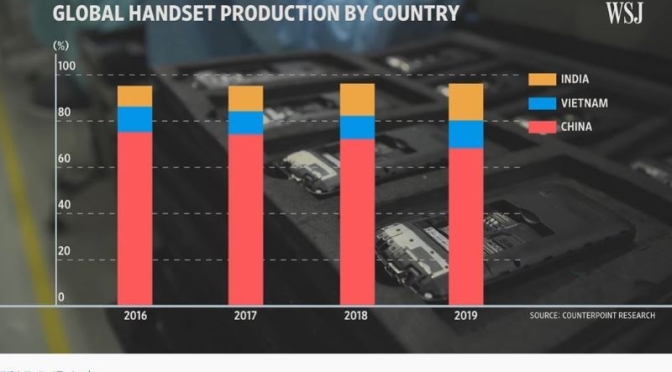
Technology Trends: India Quickly Becoming A Major Smartphone Producer
India is positioning itself as a smartphone-production hub amid a U.S.-China trade war that has disrupted global supply chains and left tech firms such as Apple and Samsung looking for alternatives to China to manufacture their products. Photo: Olivier Le Hellard for The Wall Street Journal
 Boomers Daily