
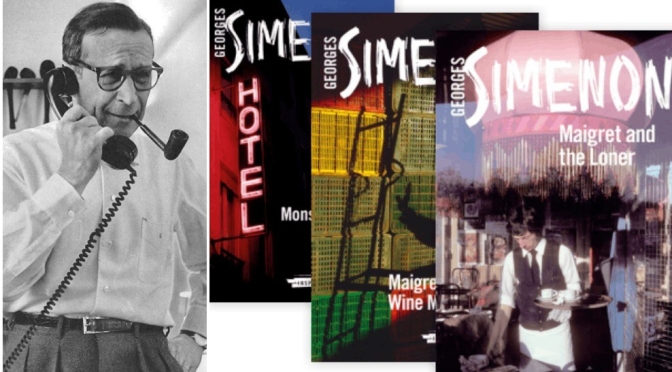
London Review of Books’ John Lanchester talks to Thomas Jones about Georges Simenon, whose output was so prodigious that even he didn’t know how many books he wrote.
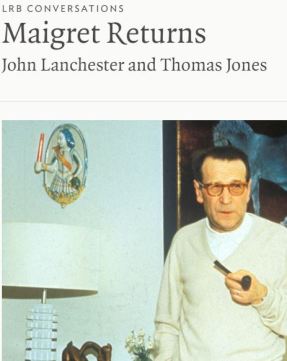 TRANSCRIPT
Thomas Jones: Hello, and welcome to the London Review of Books podcast. My name is Thomas Jones, and today I’m talking to John Lanchester, who’s written a piece in the current issue of the LRB about Georges Simenon and his 75 Maigret novels, which Penguin have just finished reissuing in new translations. Hello, John.
John Lanchester: Hi Tom. Thanks for having me.
TJ: Thank you for joining me. And I thought we could begin where you begin your piece with Simenon’s ‘colossal output’, as you put it, and that nobody knows how many books he actually wrote, though it was probably more than four hundred, which is fewer than Barbara Cartland, but still puts the rest of us to shame.
JL: He didn’t half crack on, that’s true. Yes, he started as a young man in Liège, his home town in Belgium. And he got a job as a reporter on the local paper. I think he was not quite 16, which is properly strange. It’s like something out of a high concept kid’s TV show, you know, Georges Simenon – Boy Reporter, and very early on latched onto the idea of making money through writing.He began writing when he was 18, his first book came out when he was 19. He started writing every sort of potboiler, thrillers, romances, sort of semi-porn westerns, things like that, at an absolutely astounding rate of productivity. And his target was eighty pages a day, typewritten, and even on the assumption that the pages … I mean, a short page would be 150 words and it could well have been more, but it was 10,000 words a day, and he did that every single day. And then he’d write eighty pages, and then he’d go and be sick. Just from the physical and mental exertion and the strain. That was in the morning. And then he’d recover and do a bit of light reading and pottering about. And then the next day he did the same again, over and over and over for about seven years. And in that period, as you’ve mentioned, we don’t know exactly how many, because he forgot, and he had multiple pseudonyms. The main one being Georges Sim, which was how he was known when he began writing the Simenon novels. People thought that Simenon was a pseudonym because George Sim was so well known, but he seems to have written about 150 or more books in this seven-year burst. It makes you feel peculiar even to think about what that must have been like.
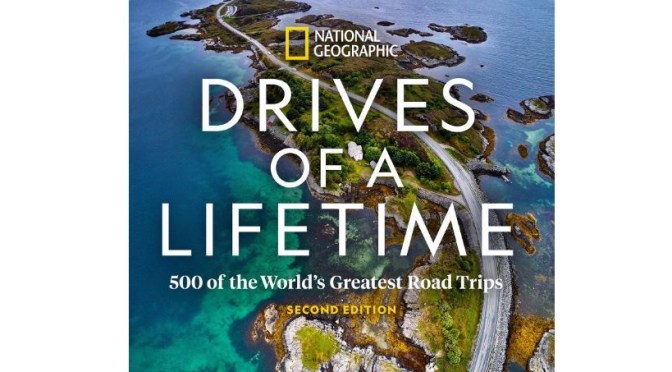
 The possibilities are endless: Take Colorado’s San Juan Skyway for a 10,000-foot climb over towering mountain passes. Or travel the ancient Silk Road on an expedition across Central Asia and through time. Or why not drive the perimeter of Puerto Rico, a tropical paradise with many beaches along the way?
 This inspiring compilation of the most innovative projects in digital art covers the work of the artists and creatives at the forefront of this aesthetic. Discover Filip Hodas and his captivating pop culture dystopia artwork series, explore Massimo Colonna’s surrealist urban landscapes and dive into the abstract compositions of Ezequiel Pini, founder of Six N. Five studio.


 Gertrude Stein
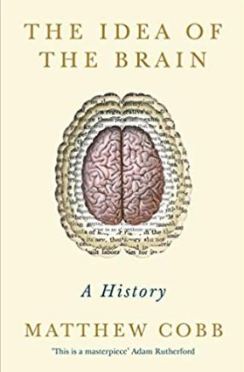 Although it might seem to be a story of ever-increasing knowledge of biology, Cobb shows how our ideas about the brain have been shaped by each era’s most significant technologies. Today we might think the brain is like a supercomputer. In the past, it has been compared to a telegraph, a telephone exchange, or some kind of hydraulic system. What will we think the brain is like tomorrow, when new technology arises?
 I first went to Hydra six years ago, when it was simply a beautiful Greek island and not a place I went to commune with its ghosts. I don’t think I was even aware that it was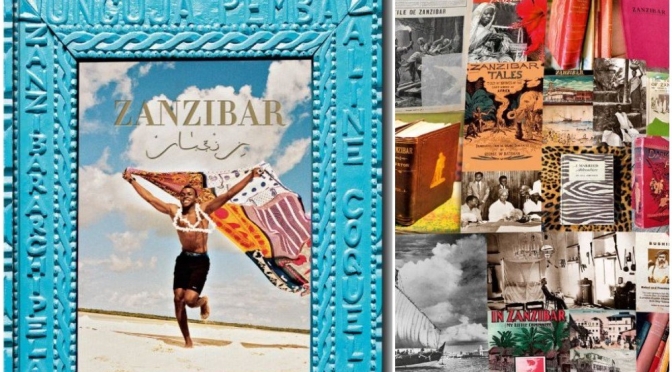
 Off the coast of East Africa in the Indian Ocean sits an archipelago known as Zanzibar. It all started ten million years ago when the island of Pemba separated from mainland Africa and then ten thousand years ago, the island of Unguja followed suit. Thus, begins the legend of Zanzibar.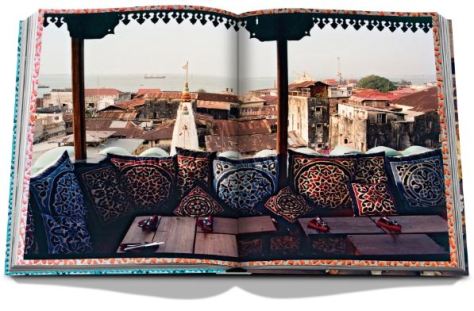

 Monocle 24’s “The Stack” speaks to Marianne Julia Strauss on her new book “Do You Read Me?” on the best bookshops around the globe. Then, author Patrick McGinnis on his new release “Fear Of Missing Out”.
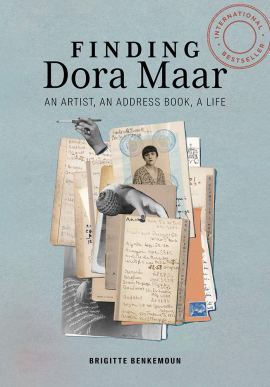 In search of a replacement for his lost Hermès agenda, Brigitte Benkemoun’s husband buys a vintage diary on eBay. When it arrives, she opens it and finds inside private notes dating back to 1951—twenty pages of phone numbers and addresses for Balthus, Brassaï, André Breton, Jean Cocteau, Paul Éluard, Leonor Fini, Jacqueline Lamba, and other artistic luminaries of the European avant-garde.
 Be Well delves into one of life’s greatest pleasures; a day spent rejuvenating the body and nourishing the spirit. Humans have practiced self-care for centuries—in the sweat lodges of the American Southwest, Roman baths, the hammams of the Ottoman Empire, Japanese onsens, and Finnish saunas. Today, a new interest in self-care is redefining how we accomplish wellness, and there have never been more options.
 Boomers Daily