
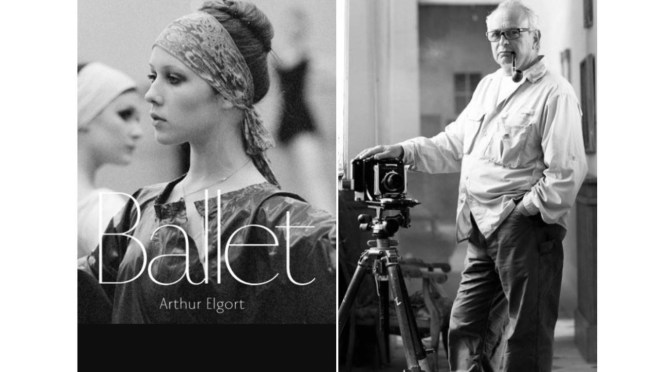
Following his career-spanning monograph The Big Picture, Arthur Elgort pays homage to his first love and eternal muse in this new collection of photographs. While glimpsing ballet through Elgort’s lens we are taken not to the front of the stage but behind the scenes, where the hard work is done.
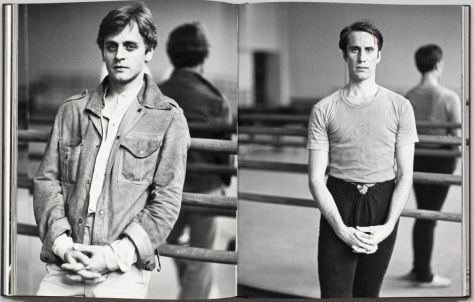
On this journey through the hallways and rehearsal spaces of some of the world’s most distinguished ballet schools, including the New York City Ballet and the Vaganova Academy of Russian Ballet, we see previously unpublished images of legends such as Balanchine, Baryshnikov and Lopatkina. The perfection of the prima ballerina disappears in these quiet photographs where the viewer is able to witness the individual dancers’ natural glamor as they work to perfect their craft.
Elgort’s snapshot style allows the pain and pleasure of one of the world’s most beloved forms of expressive dance to be seen with beauty.


 ulia Hobsbawm is a writer, speaker, social entrepreneur and strategist whose work focuses on finding solutions for humans in an ever-changing world. She speaks to Georgina Godwin about her latest book, ‘The Simplicity Principle: Six Steps Towards Clarity in a Complex World’.
 TRANSCRIPT
 The possibilities are endless: Take Colorado’s San Juan Skyway for a 10,000-foot climb over towering mountain passes. Or travel the ancient Silk Road on an expedition across Central Asia and through time. Or why not drive the perimeter of Puerto Rico, a tropical paradise with many beaches along the way?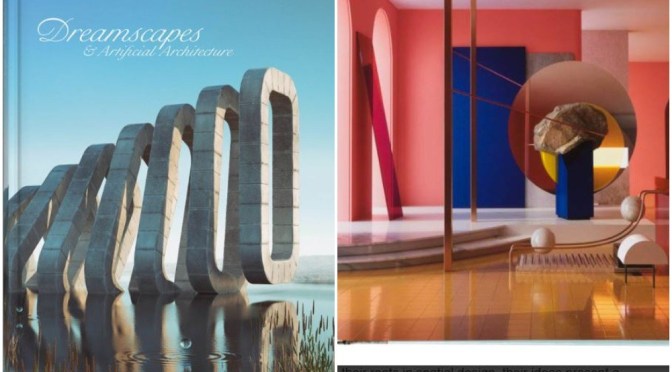
 This inspiring compilation of the most innovative projects in digital art covers the work of the artists and creatives at the forefront of this aesthetic. Discover Filip Hodas and his captivating pop culture dystopia artwork series, explore Massimo Colonna’s surrealist urban landscapes and dive into the abstract compositions of Ezequiel Pini, founder of Six N. Five studio.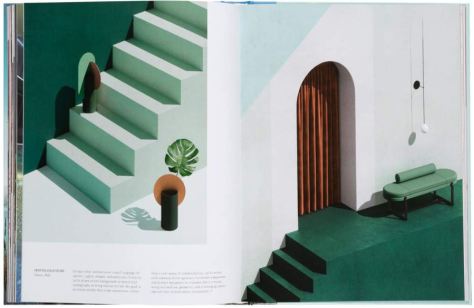


 Gertrude Stein
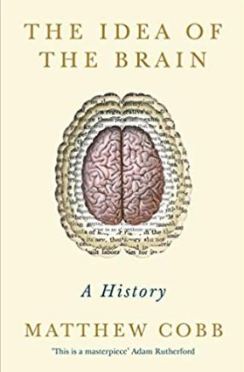 Although it might seem to be a story of ever-increasing knowledge of biology, Cobb shows how our ideas about the brain have been shaped by each era’s most significant technologies. Today we might think the brain is like a supercomputer. In the past, it has been compared to a telegraph, a telephone exchange, or some kind of hydraulic system. What will we think the brain is like tomorrow, when new technology arises?
 I first went to Hydra six years ago, when it was simply a beautiful Greek island and not a place I went to commune with its ghosts. I don’t think I was even aware that it was
  Boomers Daily