Steidl – In Edward Burtynsky’s recent photographs, produced across the African continent, the patterns and scars of human-altered landscapes initially appear to form an abstract painterly language; they reference the sublime and often surreal qualities of human mark-making.
While chronicling the major themes of terraforming and extraction, urbanization and deforestation, African Studies conveys the unsettling reality of sweeping resource depletion on both a human and industrial scale.
From natural landscapes to artisanal mining and mechanized extraction, several distinct chapters culminate with China in Africa: a series depicting the economic inroads being made by China, including the interiors of gigantic newly built manufacturing plants. This project brings together the work of seven years, presenting the latest installment in Burtynsky’s ongoing œuvre.
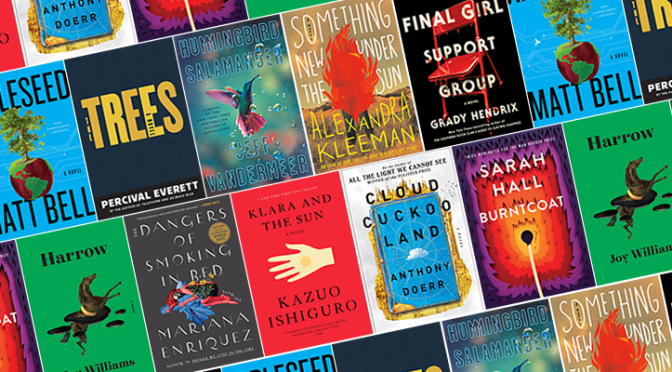
Literary Hub (December 19, 2022) – From 35 lists and from 29 publications (yes, there are even more lists out there, but we’re all going to die some day), tallying a total of 887 books. 84 books were highlighted on 4 or more lists, and those are collated those for you here, in descending order of frequency.
An unparalleled novel about money, power, intimacy, and perception. Even through the roar and effervescence of the 1920s, everyone in New York has heard of Benjamin and Helen Rask. He is a legendary Wall Street tycoon; she is the daughter of eccentric aristocrats. Together, they have risen to the very top of a world of seemingly endless wealth–all as a decade of excess and speculation draws to an end. But at what cost have they acquired their immense fortune? This is the mystery at the center of Bonds, a successful 1937 novel that all of New York seems to have read. Yet there are other versions of this tale of privilege and deceit.
On a bitter-cold day, in the December of his junior year at Harvard, Sam Masur exits a subway car and sees, amid the hordes of people waiting on the platform, Sadie Green. He calls her name. For a moment, she pretends she hasn’t heard him, but then, she turns, and a game begins: a legendary collaboration that will launch them to stardom. These friends, intimates since childhood, borrow money, beg favors, and, before even graduating college, they have created their first blockbuster, Ichigo. Overnight, the world is theirs.
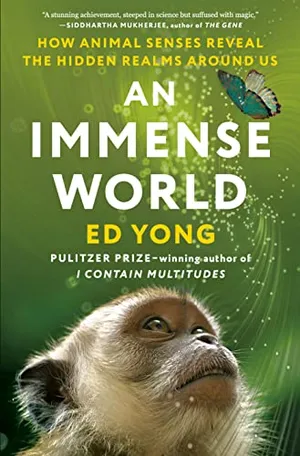
The Earth teems with sights and textures, sounds and vibrations, smells and tastes, electric and magnetic fields. But every kind of animal, including humans, is enclosed within its own unique sensory bubble, perceiving but a tiny sliver of our immense world.In An Immense World, Ed Yong coaxes us beyond the confines of our own senses, allowing us to perceive the skeins of scent, waves of electromagnetism, and pulses of pressure that surround us. We encounter beetles that are drawn to fires, turtles that can track the Earth’s magnetic fields, fish that fill rivers with electrical messages, and even humans who wield sonar like bats.
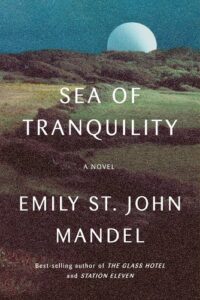
“In Sea of Tranquility, Mandel offers one of her finest novels and one of her most satisfying forays into the arena of speculative fiction yet, but it is her ability to convincingly inhabit the ordinary, and her ability to project a sustaining acknowledgment of beauty, that sets the novel apart. As in Ishiguro, this is not born of some cheap, made-for-television, faux-emotional gimmick or mechanism, but of empathy and hard-won understanding, beautifully built into language … It is that aspect of Sea of Tranquility, Mandel’s finely rendered, characteristically understated descriptions of the old-growth forests her characters walk through, the domed moon colonies some of them call home, the robot-tended fields they gaze over or the whooshing airship liftoff sound they hear even in their dreams, that will, for this reader at least, linger longest.”
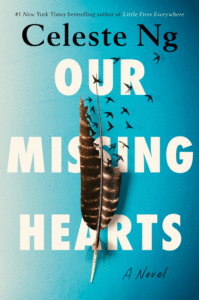
“Stunning … One of Ng’s most poignant tricks in this novel is to bury its central tragedy…in the middle of the action. This raises the narrative from the specific story of a confused boy and his defeated father to a reflection on the universal bond between parents and children … Our Missing Hearts will land differently for individual readers. One element we shouldn’t miss is Ng’s bold reversal of the biblical story of the Tower of Babel. It is the drive for conformity, the suppression of our glorious cacophony, that will doom us. And it is the expression of individual souls that will save us.”
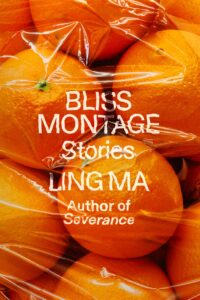
“The strangeness of living in a body is exposed, the absurdity of carrying race and gender on one’s face, all against the backdrop of an America in ruin … Ma’s meticulously-crafted mood and characterization … Ma’s gift for endings is evident … Ma masterfully captures her characters’ double consciousness, always seeing themselves through the white gaze, in stunning and bold new ways … Even the weaker stories in the book…are redeemed by Ma’s restrained prose style, dry humor, and clever gut-punch endings. But all this technical prowess doesn’t mean the collection lacks a heart. First- and second-generation Americans who might have been invisible for most of their lives are seen and held lovingly in Ma’s fiction.”
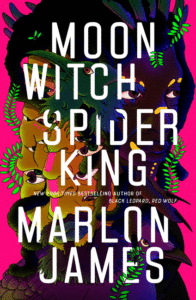
“Marlon James’s Moon Witch, Spider King, the second book in his Dark Star trilogy, is both a continuation of the narrative that began with Black Leopard, Red Wolf in 2019 and an outstanding retelling of that story that expands on what the first book started. While shifting points of view, James…enriches the existing story, and the result is a book that simultaneously celebrates African mythology while creating its own … an impressive amalgamation of folklore, magic, and mythology that weaves together several narratives, but the element that makes it memorable is James’s prose. As lush as the forests he describes, the prose in this novel is simple, rhythmic, and strangely elegant. This is writing with a kind of cadence that turns every line into a poem, every story a tale told around a fire, every event an occurrence deserving of attention … Retelling the same story from a different perspective is not a gimmick here; it is a successful literary device that leads to a gripping narrative … This is a novel about the power of grief where anger is a driving force, and in that, despite all its fantastical elements, it is a deeply human story.”
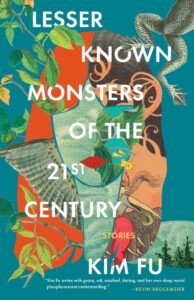
Read a story from Lesser Known Monsters of the 21st Centuryhere
“..the horrors are more intimate, smaller, and less global in scale. This is not a collection filled with fantastic beasts, although a sea monster does make an appearance, but instead illuminates the monstrous nature of humanity … Technology, rather than magic, catalyzes these changes. That is not to say there are not some traces of unexplained fantasy, such as a girl who sprouts wings from her ankles, but mostly, Fu’s monsters manifest from modernity … The success of Kim Fu’s stories is the element of the unexpected. There are surprises lurking in these narratives, whether it is a quick final plot twist or unexpected peculiarity …
Although Fu seems more concerned with alienation stemming from individual relationships, there is criticism of conventional consumer capitalism … The characters in Fu’s collection are eccentric and unexpected in their choices, and many of their stories feature unforeseen endings that strike the right tone for the dark era we live in … Fu opens a window looking onto the sad possibilities of our own failures.”
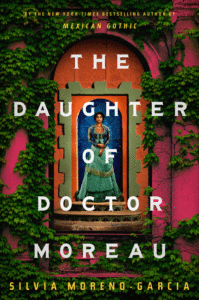
“The imagination of Silvia Moreno-Garcia is a thing of wonder, restless and romantic, fearless in the face of genre, embracing the polarities of storytelling—the sleek and the bizarre, wild passions and deep hatreds—with cool equanimity … the novel immerses readers in the rich world of 19th-century Mexico, exploring colonialism and resistance in a compulsively readable story of a woman’s coming-of-age … The visceral horror of what Carlota has endured, combined with Moreno-Garcia’s pacing and drama, makes for a mesmerizing horror novel.”
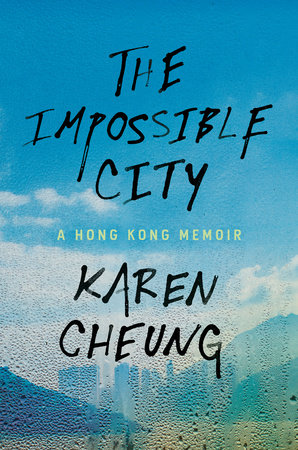
An illuminating and moving personal account of how Hong Kong descended into the mass street unrest of 2019, and of the pandemic-abetted repression that has crushed it since. The author speaks powerfully for a desperate generation of young Hong Kongers conscious that their home city has lost what made it home.
A look at why Americans are so much more likely to suffer violent “accidents” than people in other rich countries. The author shows how poor road design, rather than bad driving, explains the persistence of car crashes and how factories use rule books and disciplinary procedures as a cheap substitute for real safety improvements.
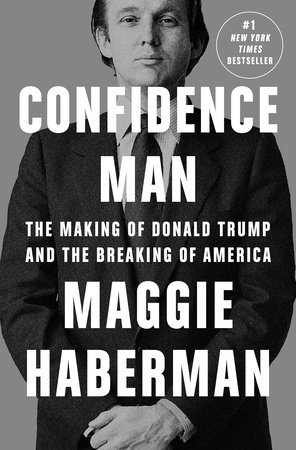
A chronicle of the life and lies of the 45th president of the United States, from outer-borough brat to White House bully. This portrait of a master scammer is by a New York Times journalist who covered Donald Trump for decades. He learned early, she notes, that celebrity was power.
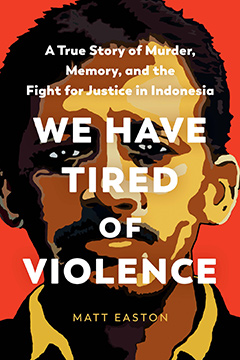
A meticulous narration of the efforts to bring to justice the killers of Munir, a prominent Indonesian human-rights activist murdered in 2004. It reads like an enthralling legal-procedural whodunnit, as evidence is slowly unearthed from telephone records, lost documents are retrieved from deleted computer files and intriguing new witnesses emerge.
The Naked Don’t Fear the Water By Matthieu Aikins
In 2016 the author, a Canadian journalist, went undercover to accompany an Afghan friend on his perilous journey to a new life in Europe—always knowing that, if push came to shove, he could fall back on his Western citizenship, while his friend would have to rely on his luck. The result is a devastatingly intimate insight into the refugee crisis.
The Age of the Strongman By Gideon Rachman
It is striking how many of today’s leaders fit the strongman mould, notes a columnist for the Financial Times (formerly of The Economist). His subjects, including Xi Jinping and Prince Muhammad bin Salman, are a threat not only to the well-being of their own countries, he says, but to a world order in which liberal ideas are increasingly embattled.
The Economic Weapon By Nicholas Mulder
A fortuitously timed history of the use of economic sanctions during the interwar period of the 20th century. Their mixed success cautions against hoping that the West’s sanctions against Russia can bring about an end to war in Ukraine.
London Review of Books (LRB) – December 9, 2022: Among the Ancients, with Emily Wilson and Thomas Jones, which we’ll be re-running from January next year. With a new episode each month, Among the Ancients will consider some of the greatest works of Ancient Greek and Roman literature, from Homer to Horace. In this sample Emily and Tom discuss the Iliad.
A sample from the first episode of the Close Readings series from Emily Wilson and Thomas Jones.
Dating to the ninth century B.C., Homer’s timeless poem still vividly conveys the horror and heroism of men and gods wrestling with towering emotions and battling amidst devastation and destruction, as it moves inexorably to the wrenching, tragic conclusion of the Trojan War. Renowned classicist Bernard Knox observes in his superb introduction that although the violence of the Iliad is grim and relentless, it coexists with both images of civilized life and a poignant yearning for peace.
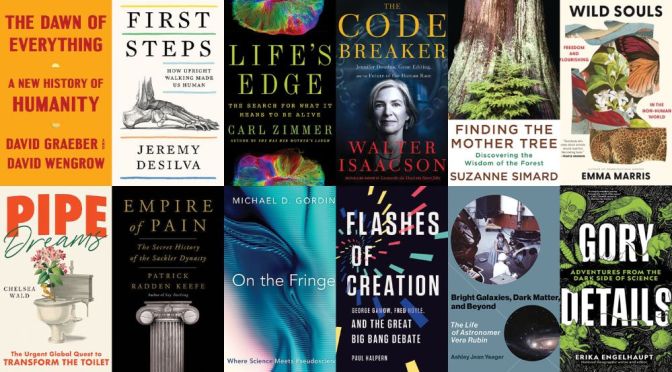
Smithsonian Magazine – Ten Best Science Books of 2022 – December 7, 2022: From a detective story on the origins of Covid-19 to a narrative that imagines a fateful day for dinosaurs, these works affected us the most this year
An Immense World: How Animal Senses Reveal the Hidden Realms Around Us by Ed Yong
In An Immense World, science journalist Ed Yong dives into the vast variety of animal senses with a seemingly endless supply of awe-inspiring facts. As humans, we move through the world within our Umwelt—a term for subjective sensory experience Yong borrows from the Baltic German biologist Jakob von Uexküll. But every creature on Earth has its own Umwelt that we can scarcely imagine. Through interviews with scientists around the globe, Yong teases out the astonishing details of other animals’ perceptions, introducing us to their fantastic Umwelten. Scallops, for example, have up to 200 eyes with impressive resolution, but their brains are likely not complex enough to receive and process such crisp images. Some butterflies can perceive ultraviolet color patterns on their wings that distinguish them from other species. And hammerhead sharks have receptors that scan the seafloor for the electric fields emitted by hidden prey, “as one might use metal detectors,” Yong writes. But many creatures’ senses have been thrown off by human activity, he notes. For example, our visually centered society has erected artificial lights that disorient migrating birds and hatchling sea turtles.
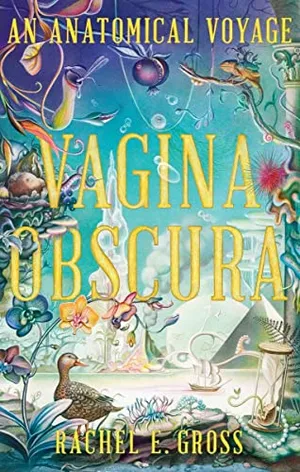
Vagina Obscura: An Anatomical Voyage by Rachel E. Gross
Perhaps no aspect of our anatomy is both more fascinating and misunderstood than the vagina—down to the very common usage of what that word means. A vagina isn’t the whole of a woman’s reproductive anatomy. Instead, the vagina is a muscular canal that’s part of many people’s reproductive systems, of varying genders, whether they were born with it or had it surgically constructed. Nuance exists in this territory that is so often overwhelmed by a tangle of science, myth and cultural perceptions, and journalist Rachel E. Gross has composed an enthralling, sensitive book that’s relevant to everyone no matter what your personal topography looks like.
The pages of Vagina Obscura contain plenty of cutting-edge popular science and historic reflection on everything from how ovaries were once miscategorized as female testicles to how operations for individuals injured in war paved the way for gender-affirming surgeries. The book is arranged by anatomical part, and Gross details the function each part carries out. Gross’ work stands out because the unfolding story is couched in what we’ve been wrong about, how our ideas have changed, and how every person—no matter their sex—shares far more in common than we often recognize. Everyone’s reproductive anatomy, as Gross notes, is made up of the same parts in different arrangements, a quirk of human development that underscores commonality. Gross’ exploration is far more than a natural history of human anatomy, but a narrative that busts myths and celebrates all that we’ve come to know about vaginas and their associated parts during a time when such clarity on sex, gender and bodily autonomy is more needed than ever. Where the popular understanding of human anatomy is sometimes shallow, Vagina Obscura brings depth. (Riley Black)
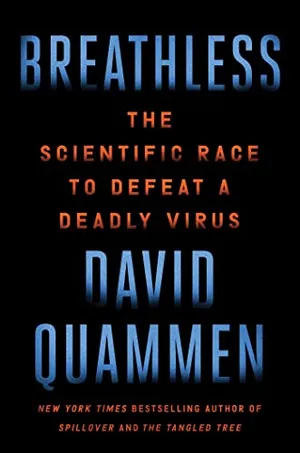
Breathless: The Scientific Race to Defeat a Deadly Virus by David Quammen
In Breathless, David Quammen has constructed a masterful book about scientists’ efforts to understand SARS-CoV-2, the virus that causes Covid-19. Make no mistake, the book is not about healthcare and our response to Covid-19. The main character in this tale is the virus, and Quammen crafts a detective tale about the coronavirus SARS-CoV-2 by chronicling the efforts of scientists around the world to identify it, search for its origins, understand how it mutates and respond to it. He interviewed 95 scientists and allows readers to look over the shoulders of many of them as they use their specialized expertise to study the virus. To show how the scientific process works on a global scale, he details the work of a genomic epidemiologist here, an evolutionary virologist there and a computational biologist somewhere else. Each expert adds or refutes some important detail about the rapidly evolving virus that has created a pandemic. Each discovery builds on those that came before.
Quammen has said he wrote the book with no outline, instead allowing each addition to naturally form on the next, in the way a crystal forms. He has the skills and knowledge to do this thanks to decades spent writing captivating science books, on everything including evolution and the spillover of disease from animals into humans. What results from his immense effort is a solid, reliable and entertaining scientific thriller about a shifty and prolific virus that is still very much evolving. (Joe Spring)




















 Boomers Daily