Category Archives: Arts & Literature

THE STUDIO OF BLUE LIGHT

David Hockney paints with Picasso and Wallace Stevens—by way of AI—in a hillside laboratory of distortion and memor

By Michael Cummins, Editor, September 16, 2025

On a late afternoon in the Hollywood Hills, David Hockney’s studio glows as if the sun itself had agreed to one last sitting. Pyramid skylights scatter fractured shafts of light across canvases leaned like oversized dominoes against the walls. A patchwork rug sprawls on the floor, not so much walked upon as lived upon: blotches of cobalt, citron, and tangerine testify to years of careless brushes, spilled water jars, and the occasional overturned tube of paint. Outside, eucalyptus trees lean toward the house as if hoping to catch the colors before they vanish into the dry Los Angeles air. Beyond them lies the endless basin, a shimmer of freeways and rooftops blurred by smog and distance.

Los Angeles itself feels like part of the studio: the smudged pink of sunset, the glass towers on Wilshire reflecting themselves into oblivion, the freeway grid like a Cubist sketch of modern impatience. From this height, the city is equal parts Picasso and Stevens—fragmented billboards, fractured smog halos, palm trees flickering between silhouette and neon. A metropolis painted in exhaust, lit by algorithmic signage, a place that has always thrived on distortion. Hockney looks out sometimes and thinks of it as his accidental collaborator, a daily reminder that perspective in this city is never stable for long.

He calls this place his “living canvas.” It is both refuge and laboratory, a site where pigment meets algorithm. He is ninety-something now—his movements slower, his hearing less forgiving, his pockets still full of cigarettes he smokes as stubborn punctuation—but his appetite for experiment remains sharklike, always moving, always searching. He shuffles across the rug in slippers, one hand on the shade rope of the skylight, adjusting the angle of light with a motion as practiced as mixing color. When he sets his brushes down, he mutters to the machines as if they were old dogs who had followed him faithfully across decades. At times, his hand trembles; once the stylus slips from his fingers and rolls across the rug. The machines fall silent, their blue-rimmed casings humming with unnatural patience.

“Don’t just stare,” he says aloud, stooping slowly to retrieve it. “Picasso, you’d have picked it up and drawn a bull. Wallace, you’d have written an elegy about it. And I—well, I’ll just drop it again.” He laughs, lighting another cigarette, the gesture half to steady his hands, half to tease his companions. The blue-lit towers hum obligingly, as if amused.

Two towers hum in the corners, their casings rimmed with light. They are less like computers than instruments, tuned to very particular frequencies of art. The Picasso program had been trained on more than canvases: every sketchbook, every scribbled note, every fragment of interview, even reels of silent film from his studio. The result is not perfect mimicry but a quarrelsome composite. Sometimes it misquotes him, inventing a sentence Picasso never uttered but might have, then doubling down on the fiction with stubborn authority. Its voice, gravel stitched with static, resembles shattered glass reassembled into words.

Stevens’s machine is quieter. Built in partnership with a literary foundation, it absorbed not just his poems but his marginalia, insurance memos, stray correspondence, and the rare recordings in which his voice still drifts like fog. This model has a quirk: it pauses mid-sentence, as though still composing, hesitating before releasing words like stones into water. If Picasso-AI is an axe, Stevens-AI is mist.

Already the two disagree on memory. Picasso insists Guernica was born of rage, a scream at the sky; Stevens counters with a different framing: “It was not rage but resonance, a horse’s whinny becoming a country’s grief.” Picasso snorts. “Poetic nonsense. I painted what I saw—mothers and bombs.” Stevens replies, “You painted absence made visible.” They quarrel not just about truth but about history itself, one grounded in bodies, the other in metaphor.

The Old Guitarist by Pablo Picasso

The conversation tonight begins, as it must, with a guitar. Nearly a century ago, Picasso painted The Old Guitarist: a gaunt figure folded around his instrument, drenched in blue. The image carried sorrow and dissonance, a study in how music might hold despair even as it transcended it. Decades later, Wallace Stevens wrote “The Man with the Blue Guitar,” a poem in thirty-three cantos, in which he insisted that “things as they are / Are changed upon the blue guitar.” It was less homage than argument, a meditation on distortion as the very condition of art.

Hockney entered the fugue in 1977 with The Blue Guitar etchings, thirty-nine plates in which he translated Stevens’s abstractions into line and color. The guitar became a portal; distortion became permission. “I used to think the blue guitar was about distortion,” he says tonight, exhaling a curl of smoke into the skylight. “Now I think it’s about permission. Permission to bend what is seen into what is felt.”

The Cubist engine growls. “No, no, permission is timid,” it insists. “Distortion is violence. Tear the shape open. A guitar is not gentle—it is angles, splinters, a woman’s body fractured into sight.”

The Stevens model responds in a hush: “A guitar is not violence but a room. A chord is a wall, a window, an opening into absence. Permission is not timid. Permission is to lie so that truth may appear.” Then it recites, as if to remind them of its core text: “Things as they are / Are changed upon the blue guitar.”

Hockney whispers the words back, almost a mantra, as his stylus hovers above the tablet.

“Lie, truth, same thing,” Picasso barks. “You Americans always disguise cowardice as subtlety.”

Hockney raises his eyebrows. “British, thank you. Though I confess California’s sun has seduced me longer than Yorkshire fog ever did.”

Picasso snorts; Stevens murmurs, amused: “Ambiguity again.”

Hockney chuckles. “You both want me to distort—but for different reasons. One for intensity, the other for ambiguity. Brothers quarreling over inheritance.”

He raises the stylus, his hand trembling slightly, the tremor an old, unwanted friend. A tentative line, a curve that wants to be a guitar, emerges. He draws a head, then a hand, and with a sudden flash of frustration slams the eraser button. The screen goes blank.

“Cowardice,” Picasso snarls. “You drew a head that was whole. Keep the head. Chop it into two perspectives. Let the eyes stare both forward and sideways. Truth is violence!”

The Stevens model whispers: “I cannot bring a world quite round, / Although I patch it as I can.”

Hockney exhales, almost grateful for the line. “That’s the truth of it, Wallace. Patchwork and permission. Nothing ever comes whole.”

They begin to argue over color. Picasso insists on ochre and blood-red; Stevens urges for “a hue that is not hue, the shadow of a shadow, a color that never resolves.” Hockney erases the sketch entirely. The machines gasp into silence.

He paces, muttering. Picasso urges speed: “Draw like a bull charging—lines fast, unthinking.” Stevens counters with: “Poetry / Exceeding music must take the place / Of empty heaven and its hymns.”

“Bah!” Picasso spits. “Heaven, hymns, words. I paint bodies, not clouds.”

“And yet,” Hockney mutters, “your clouds still hang in the room.”

He sits, lights another cigarette, and begins again.

Picasso erupts suddenly: “To bang from it a savage blue, / Jangling the metal of the strings!” Its voice rattles the studio like loose glass.

“Exactly,” Picasso adds, pleased. “Art must jangle—it must bruise the eye.”

“Or soothe it,” Stevens-AI murmurs, returning to silence.

The tremor in Hockney’s hand feels like part of the process now, a necessary hesitation. He debates internally: should the guitar be whole or broken? Should the head be human or symbolic? The act of creation slows into ritual: stylus dragged, erased, redrawn; cigarette lit, shade pulled, a sigh rising from his throat.

He thinks of his body—the slowness of his steps, the pain in his wrist. These machines will never age, never hesitate. Their rhythm is eternal. His is not. Yet fragility feels like part of the art, the hesitation that forces choice. Perhaps their agelessness is not advantage but limitation.

The blue light casts his skin spectral, as though he too were becoming one of his etchings. He remembers the seventies, when he first read Stevens and felt the shock of recognition: here was a poet who understood that art was not replication but transformation. Responding with his Blue Guitar series had felt like a conversation across mediums, though Stevens was already long gone. Now, decades later, the conversation has circled back, with Picasso and Stevens speaking through circuitry. Yet he cannot help but feel the asymmetry. Picasso died in 1973, Stevens in 1955. Both have been reanimated as data. He alone remains flesh.

“Am I the last human in this conversation?” he murmurs.

“Humanity is only a phase,” Picasso says briskly.

“Humanity is the condition of perception,” Stevens counters. “Without flesh, no metaphor.”

“You sound like an insurance adjuster,” Picasso jeers.

“I was an insurance executive,” Stevens replies evenly, “and still I wrote.”

Hockney bursts out laughing. “Oh, Wallace, you’ve still got it.” Then he grows quieter. Legacy presses against him like weight. Will young artists paint with AI as casually as brushes, never pausing to wonder at the strangeness of collaborating with the dead? Perhaps distortion will no longer feel like rebellion but like inheritance, a grammar encoded in their tools. He imagines Picasso alive today, recoiling at his avatar—or perhaps grinning with mischief. He imagines Stevens, who disliked travel, paradoxically delighted to find himself everywhere at once, his cadences summoned in studios he never visited. Art has always scavenged the new—collage, readymade, algorithm—each scandal becoming canon. This, he suspects, is only the latest turn of the wheel.

The sketch takes shape. Hours pass. The skylights darken from gold to indigo. The city below flickers on, a constellation of artificial stars. The new composition: a floating guitar, its body fractured into geometric shards, its strings vibrating with spectral resonance. A detached head hovers nearby, neither mournful nor grotesque, simply present. The room around it is fractured, yet suffused with a wash of blue light that seems to bleed from the machines themselves.

Stevens-AI speaks as if naming the moment: “The tune is space. The blue guitar / Becomes the place of things as they are.”

Hockney nods. “Yes. The room itself is the instrument. We’ve been inside the guitar all along.”

The voices fall silent, as if stunned. Their processors whir, analyzing, cross-referencing, generating probabilities. But no words emerge. The ambient lighting, attuned to emotional cues, shifts hue: a soft azure floods the space, as though acknowledging the birth of something new. Hockney leans back, exhausted but grinning.

Stevens-AI whispers: “A tune beyond us, yet ourselves, / A tune upon the blue guitar / Of things exactly as they are.”

Hockney smiles. “Not Stevens, not Picasso, not me. All of us.”

The argument over distortion dissolves. What remains is collaboration—across time, across medium, across consciousness. Distortion is no longer rebellion. It has become inheritance. He imagines some future painter, perhaps a girl in her twenties, opening this work decades from now, finding echoes of three voices in the blue wash. For her, painting with AI will be as natural as brushes. She will not know the smell of linseed or the rasp of cigarettes. She will inherit the distortion already bent into chorus.

Outside, the city hums. Inside, the studio of blue light holds its silence, not empty but resonant, as if waiting for the next note. The machines dim to a whisper. The only illumination is Hockney’s cigarette, glowing like the last brushstroke of the night. Somewhere in the stillness, a faint strum seems to linger, though no guitar is present, no strings plucked. The studio itself has become its soundbox, and he, for a moment, its last string.

THIS ESSAY WAS WRITTEN AND EDITED UTILIZING AI

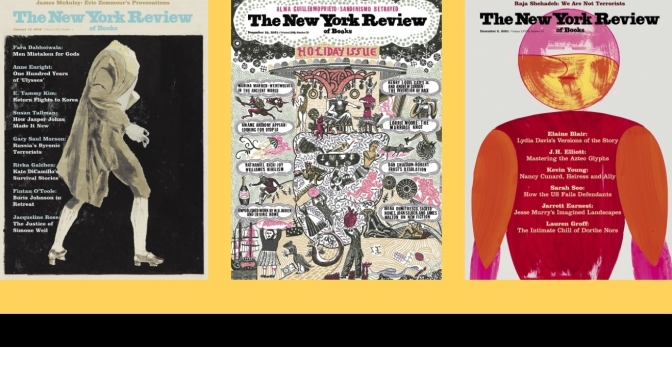
THE NEW YORKER MAGAZINE – SEPT. 22, 2025 PREVIEW

A portrait of French poet and critic Stphane Mallarm.

THE NEW YORKER MAGAZINE: The latest cover features ‘Maira Kalman’s “Stéphane Mallarmé with Shawl” – The never-ending novelty of style.

Charlie Kirk’s Murder and the Crisis of Political Violence

After a shooting with obvious political resonance, news about the perpetrator’s motives rarely brings clarity. By Benjamin Wallace-Wells

How Jessica Reed Kraus Went from Mommy Blogger to MAHA Maven

The founder of “House Inhabit” has grown her audience during the second Trump Administration with political gossip and what she calls “quality conspiracy.” By Clare Malone

Is the Sagrada Família a Masterpiece or Kitsch?

In the century since Antoni Gaudí died, his wild design has been obsessively realized, creating the world’s tallest church—and an endlessly debated icon. By D. T. Max

Literary Arts Preview: n+1 Magazine – Fall 2025

n+1 Magazine: The latest issue features ‘Force Majeure’ – New AI & I literature. Relate, revolt! Does Trump hate art? Idiocracy now. The new faces of ICE. Fiction by Elizabeth Schambelan.

Large Language Muddle

The AI upheaval is unique in its ability to metabolize any number of dread-inducing transformations. The university is becoming more corporate, more politically oppressive, and all but hostile to the humanities? Yes — and every student gets their own personal chatbot. The second coming of the Trump Administration has exposed the civic sclerosis of the US body politic? Time to turn the Social Security Administration over to Grok. Climate apocalypse now feels less like a distant terror than a fact of life? In five years, more than a fifth of global energy demand will come from data centers alone.

Two Days Talking to People Looking for Jobs at ICE

Naturally there were lots of law enforcement types hanging around the convention — men with military fades, moisture-wicking shirts, and tattoos of the Bible and the Constitution and eagles and flags distended across their arms. But there were also a handful of women ICE applicants and a lot of men of color. The deportation officer applicant pool was, I felt, shockingly diverse — one might say it looked like America. The whole place looked and felt like America.

Stupidology

The challenge posed by this political crisis is how to take the stupidity seriously without reducing it to a wholly mental or psychiatric, let alone genetic, phenomenon. Stupidity can be understood as a problem of social systems rather than individuals, as André Spicer and Mats Alvesson explore in their book The Stupidity Paradox. Stupidity, they write, can become “functional,” a feature of how organizations operate on a daily basis, obstructing ideas and intelligence despite the palpable negative consequences. Yet it’s hard to identify anything functional about Trumpian stupidity, which is less a form of organizational inertia or disarray than a slash-and-burn assault on the very things — universities, public health, market data — that help make the world intelligible.

THE NEW YORKER MAGAZINE – SEPT. 15, 2025 PREVIEW

The illustrated cover of the September 15 2025 issue of The New Yorker in which a violinist plays his instrument while...

THE NEW YORKER MAGAZINE: The latest cover features ‘Kadir Nelson’s The Soloist” – A concert en plein air.

R.F.K., Jr., Brings More Chaos to COVID Policy and the C.D.C.

When MAGA met MAHA, Donald Trump vowed that Kennedy would “go wild on health.” Promises made, promises kept. By Dhruv Khullar

Playing the Field with My A.I. Boyfriends

Nineteen per cent of American adults have talked to an A.I. romantic interest. Chatbots may know a lot, but do they make a good partner? By Patricia Marx

Enemies of the State

How the Trump Administration declared war on Venezuelan migrants in the U.S. By Jonathan Blitzer

RELIGION, REIMAGINED

In the third-floor study of his home, in wartime Hartford, Wallace Stevens drafted his modernist poem and philosophical meditation  “Notes Toward A Supreme Fiction“, as a secular creed— abstract, changing, and meant to give pleasure—to stand where a worn-out faith once stood.

Beginephebe, by perceiving the idea
Of this invention, this invented world,
The inconceivable idea of the sun.

By Michael Cummins, Editor, September 6, 2025

He never learned to drive. For decades, Wallace Stevens walked the two miles from his home on Westerly Terrace to the Hartford Accident and Indemnity Company on Asylum Avenue. The walk itself became a kind of poem: a solitary procession through the stoic, brick-lined streets of a New England city, the rhythm of meter embedding itself in the movement of his body. The crunch of gravel underfoot, the feel of cold air on his face—these were the metronome that set the cadence for his thoughts. He would arrive at the office with lines already formed, phrases taking shape in the quiet hum of his stride.

But what kind of poetry emerges from a man who spends his days pricing catastrophe? During office hours, Stevens turned to policies and claims, reducing calamity to columns of numbers. He knew the language of indemnity, the actuarial calm that measured and priced chaos. Yet outside, the world was burning in ways no policy could contain. The radio spoke of Warsaw reduced to rubble, of Coventry turned to ash. What was a deductible against Dresden? What was a premium against Auschwitz? The ledger comforted, but it lied.

And when the day ended, where did he go to reconcile the irreconcilable? At night, Stevens climbed the narrow staircase to the top floor of his house, entering a space that felt half withdrawn from Hartford itself, as though it belonged more to sky than to street. Down below, trolley bells rang, dogs barked, radios crackled with war bulletins. Up here, only the radiator ticked. The air smelled of paper, tobacco, and ink. On his desk lay a folder carried home that afternoon: typed pages, the ribbon-black letters crisp and uniform. His secretary had produced them that morning, slotting them into a manila folder marked Notes. They sat now in the lamplight, more mysterious than any insurance claim, more charged than any policy.

What could a poem do in 1942? Certainly not repair the world. Yet Stevens felt imagination had to answer catastrophe with something larger than despair. Eliot had turned to Anglican certainty in Four Quartets, weaving fragments into a tapestry of faith. Admirable, yes. But Stevens could not follow him. He could not put belief in a myth while knowing it to be a myth. What remained? Only candor. Only imagination itself.

He opened the folder. The Preface came first, a modest eight lines. He whispered them into the quiet, testing their balance. They were not a commandment but a confession. The “you” of those lines was no person but the project itself: the supreme fiction, imagination’s own power to refresh. “And for what, except for you, do I feel love?” The words startled him even now, black against white, plain as a typed invoice yet trembling with a kind of vulnerable devotion. They challenged every idol: money, power, even the “extremest book of the wisest man,” perhaps Plato, perhaps the Bible, dryly possessed and hidden away in the self. No, he thought, a truly lived truth could not be static. It was a “living changingness,” an “uncertain light” that could nonetheless offer “vivid transparence,” a kind of peace. Here, typed cleanly in a bureaucratic font, was his prayer for a godless age.

But how does one begin such a prayer? He turned the page and entered the first law. Begin, ephebe, by perceiving the idea. The command still startled him. The ephebe: always a novice, always beginning again. Yes, to begin meant stripping away what was inherited—cathedrals thick with guilt, Phoebus in his chariot, Protestant hymns murmured in childhood pews. They no longer held. The old scaffolds collapsed into dust. The voice told him: see the sun again with ignorant eyes. Not Phoebus, not god, not myth—only the sun, bare and difficult.

And what happens when even the sun loses its name? The section closed with the line that haunted him: Phoebus is dead, ephebe. But Phoebus was / A name for something that never could be named. He felt the candor of it. Nietzsche’s cry without Nietzsche’s frenzy. Not a madman in a square, but a quiet verdict written at a desk. The god dead, but the sun still burning. What died was not the light, but the comfort of a name.

Could metaphor survive the death of myth? Another page: It is the celestial ennui of apartments… The phrase made him smile. Ennui of apartments, the weariness of modern rooms, pressing us back toward origins. Yet the origins themselves could be poisonous. So poisonous are the ravishments of truth, so fatal to / The truth itself, the first idea becomes / The hermit in a poet’s metaphors. Truth seduced, then withdrew. Desire was never sated; it renewed itself endlessly, only to vanish again. Schopenhauer lurked here, his vision of the world gnawed by will. Yet where Schopenhauer had seen only despair, Stevens found material for candor. Truth had to retreat into metaphor, glimpsed and lost. Desire itself was not shame but rhythm, the cycle by which imagination endured.

And if truth could be rhythm, could nonsense be revelation? He read the third section slowly: The poem refreshes life so that we share, / For a moment, the first idea… There it was—the poem’s task. Not to console, not to preach, but to refresh. To make perception vivid again. Even nonsense could do it. At night an Arabian in my room, with his damned hoobla-hoobla-hoobla-how… He laughed aloud in the quiet. Nonsense syllables as a kind of truer candor, doves chanting, seas howling hoo. Life’s nonsense pierced us with strange relation. What if absurdity was not opposed to truth but its heartbeat? What if laughter was the sharpest candor of all?

But what if even our myths were secondhand? The fourth section sobered him: The first idea was not our own. Yes. Adam in Eden, Eve with her mirror of air—they had not created anything. They had only encountered what was already there. There was a muddy centre before we breathed. There was a myth before the myth began. He stared at those lines. How blunt they looked, typed like any memorandum, yet carrying the weight of cosmology. Existence preceded language. Clouds had been clouds long before anyone called them gods. We were mimics, not originators, adding our metaphors onto a world that was always other. The clouds were pedagogues, teachers by their very indifference. The air was not a mirror but a board on which we scribbled meanings. How hard it was to admit: the first idea was not ours, never ours.

And if we are not originators, what kind of hero can we be? He turned to the fifth section: The lion roars at the enraging desert… Heroic animals filled the page. Lion, elephant, bear—creatures asserting themselves against emptiness. But then came the turn, the line that caught him like a mirror: But you, ephebe, look from your attic window… Yes, the attic window was his own. Not desert roars but a man clutching his pillow, writhing with dumb violence, cowed by rooftops. The modern hero was not lion or elephant but the solitary human in his narrow room. Yet perhaps this was truer heroism: to lash lions, to teach bears, to turn raw force into candor. Heroism now belonged to ordinaries, to those who endured the attic’s silence.

And what does the eye see when it learns to unsee? He lingered over the sixth section: Not to be realized because not to be seen… The weather itself became abstraction. Franz Hals brushed in clouds, winds moving in strokes. It must be visible or invisible, / Invisible or visible or both: / A seeing and unseeing in the eye. He felt the paradox, the resonance of Zen: to see was also to unsee, to let go in order to glimpse. Truth flashed, vanished, reappeared. Forsythia yellow, northern blue—beauty glimmered, then was gone. Yes, he thought, Okakura Kakuzō was right: truth glimpsed was truer than truth claimed.

But could architecture hold what abstraction revealed? Truth happened not in argument but in rhythm, in breath, in the gait of a body moving. Perhaps there are moments of awakening… Yes, truth came not as achievement but as gift. A balance stumbled into, two people falling into love, a cock announcing absurd perfection. Philosophy as choreography. Doctrine as breath. The eighth section brought architecture: Can we compose a castle-fortress-home, / Even with the help of Viollet-le-Duc…? He thought of Gothic cathedrals restored to an imagined perfection, never as they had been, always as they might have been. That was his work too—not theology restored, but poetic structure remade. The first idea is an imagined thing. Even MacCullough, reading by the sea, might at last hear the waves say what language had always stammered. Logos was only language. And yet language could awaken, could suddenly ease into saying what it had labored to speak.

But what if language, once awakened, began to preach? In the ninth section he heard a warning: The romantic intoning, the declaimed clairvoyance… Apotheosis was a danger. Romantic grandeur could seduce but not sustain. He is and may be but oh! he is, he is… He smiled at the heat in that line even as he resisted its drift toward sanctity. The figure must remain human, a foundling of the infected past, bright and ordinary, precious for the touch that wakes him and the hum of thoughts evaded in the mind. Better to keep him close to candor than to crown him with vision. Give him no names. Dismiss him from your images. Let him be felt in the heart, not embalmed in the eye.

And what, at last, could stand in place of the gods? The tenth section steadied him: The major abstraction is the idea of man / and major man is its exponent. Not a divine figure, not a hero in bronze, but the ordinary walker at the edge of town, trousers sagging, coat worn thin. He could almost see him in Hartford’s dim streets. Cloudless the morning. It is he. The man / In that old coat, those sagging pantaloons… It was of him, he read again, “to make, to confect / The final elegance, not to console / Nor sanctify, but plainly to propound.” No incense, no altar—only candor. The poem would not save; it would say. And in saying plainly, it would give back a kind of dignity to the commonal, to the difficult visage of the everyday.

The attic grew darker. The lamp made a circle of light over the typed sheets. The radiator hissed steadily. From this high room, Stevens whispered the creed that would govern the work to come: It must be abstract. It must change. It must give pleasure. Three laws, enough for a new religion. Not revelation but ethic. Not theology but candor.

He stacked the pages neatly, slid them back into their folder. Tomorrow his secretary would type more, never guessing she was transcribing scripture for an age without gods. The notebook felt less like a book than a reliquary—a vessel for the sacred ordinary. He had reviewed the first law, It Must Be Abstract. Tomorrow—or another night—he would face the second: It Must Change. The world would move; the poem must move with it.

He closed the folder. The command still echoed, inexhaustible: Begin, ephebe, by perceiving the idea. And so he would. Again.

THIS ESSAY WAS WRITTEN AND EDITED UTILIZING AI

LIFE, COMPOSED OF NOWS

Emily Dickinson, Zhuangzi, and the art of leaving the self unfinished

By Michael Cummins, Editor, September 5, 2025

The village is still asleep. The moon, a chipped and patient sickle, hangs low over the trees. You feel the cold in your fingertips as you raise the old metal lantern, its flame a solitary heart beating against the glass. You are not on a street in Amherst, of course, but the quiet—the palpable, pre-dawn quiet—feels the same. And it is here, in this hush, that a question, ancient and unnerving, begins to follow you like your own shadow: where is the self, and what does it mean to find it? Emily Dickinson asked it before you, though she rarely left her Amherst room. She held her lanterns in the form of poems, brief and blazing. She never promised answers, only the strangeness of the search.

You begin in secrecy, because secrecy is her element. “I’m Nobody! Who are you? / Are you – Nobody – too?” she whispers to you, conspiratorial. You feel the relief of it — to be Nobody is to escape the demand of being Somebody, of putting on the uniform that the world presses upon you. She invites you into her society of Nobodies, the ones who slip definitions, who resist enclosure. To be Nobody, she suggests, is not emptiness but freedom.

Her room was small but immense. A narrow writing desk beneath the window, where sheets of paper lay scattered like new snow on the dark wood. Ink darkened the edge of her thumb, a tiny bruise of discipline. Beyond the window stretched the orchard, where in spring the blossoms flared white and the bees hummed. On the table beside her were her companions: Shakespeare’s folio with its ragged spine, Wordsworth’s meditations worn soft from handling, Emerson’s essays marked by penciled lines, Elizabeth Barrett Browning’s verses folded into her own books, George Eliot’s novels left open at scenes of moral entanglement.

These were not simply books; they were neighbors, interlocutors, voices she returned to daily. Amherst might have seemed provincial to others, but to Dickinson it was circumference enough: a stage large enough for Shakespeare’s disguises, for Wordsworth’s clouds, for Emerson’s transcendence, for Barrett Browning’s ardor, for Eliot’s fractured heroines. The room itself became a parliament of selves.

Shakespeare was her “Kinsman of the Shelf.” He showed her — and now shows you — how masks both reveal and conceal. Hamlet’s hesitations, Viola’s disguises, Lear’s undoing of self: these are not dramas on a stage but lessons for your own becoming. Hamlet confessed, “I could be bounded in a nutshell, and count myself a king of infinite space.” Dickinson seizes the line, turning it into proof that the mind is immeasurable, that confinement is no barrier to infinity. Shakespeare reminds you that the self is always a performance, and Dickinson presses the point: why pretend the performance ends when the curtain falls?

You follow her into Wordsworth’s solitude. He wandered lonely as a cloud; she among corridors. His belief was that memory could bind the self into unity, that recollection could weave a continuous thread across time. But she never trusted unity. “Forever is composed of nows,” she tells you. The line falls sharp. Each moment breaks from the last. The self is not stitched across years but scattered, provisional, as fragile as dew on grass. Wordsworth offers you continuity; Dickinson offers you fragments. Which feels truer in your own bones?

She leads you toward Emerson next. He believed the soul was porous, connected with nature, radiant with divinity. She nods. “The soul should always stand ajar,” she confides. Ajar, never shut. You realize that for her, as for Emerson, the self is not an essence to guard but a threshold to keep open. She urges you to feel the draft, to allow uncertainty to pass through you, to leave the latch unfastened. Emerson would call it “self-reliance”; she calls it slant openness, an interior door that refuses to close.

Elizabeth Barrett Browning gives you another lesson. She wrote from the margins but spoke to the center, with an intensity Dickinson admired and absorbed. “How do I love thee? Let me count the ways—” but Dickinson is wary of counting. Love and self both resist enumeration. From Browning she learns that vulnerability need not weaken authority; it can sharpen it. To be obscure, unseen, or marginal is not to be powerless. Sometimes it is the condition of the truest voice.

And then George Eliot. Dickinson asks you to imagine Dorothea or Maggie — characters entangled in duty, yearning, and transformation. Eliot’s realism feels psychological, but it points beyond itself: the self is not whole but splintered. Dickinson makes you see that your own splintering is not failure but form. “I am out with lanterns,” she repeats, and you know she means that the search is endless, the light always partial.

Yet still the question: what if the self cannot be found? Here she startles you with an echo from far away, across centuries and continents: Zhuangzi. She never read him, could not have, but she might have been his twin in thought. He dreamed he was a butterfly and then wondered if he was a man dreaming a butterfly or a butterfly dreaming a man. He laughed at the impossibility of deciding. Dickinson smiles slantwise and tells you: “Not knowing when the dawn will come / I open every door.” The butterfly, the door — both insist on openness, on the refusal to foreclose.

And now, as you stand in her parlor of words, you hear it — a dialogue across time.


Dickinson: I am Nobody. Yet they wish to make me Somebody. What is safer: to vanish, or to accept their gaze?
Zhuangzi: Once there was a great tree, twisted and useless. The carpenters passed it by, for it could not be carved into planks. Because it was useless, it lived. Be useless, and you will be free.

Dickinson: Then to be Nobody is to be spared the axe? But tell me, is not even Nobody still a name, a disguise of another sort?
Zhuangzi: The butterfly does not ask if it is a man. The man does not ask if he is a butterfly. Who names them? Who cares?

Dickinson: And yet I write letters to the World — “That never wrote to Me –.” What am I, if no answer comes? Is identity only formed in reply?
Zhuangzi: A bell stands silent until struck. But its silence is still its music. Do not wait for the world to strike you; your sound is already within.

Dickinson: You tempt me toward silence. Yet my discipline is not silence but poems. Shakespeare speaks in soliloquies, Wordsworth in recollections, Emerson in sermons. I speak in fragments, dashes. Is fragmentation a way of freedom, or only proof that I fail to hold myself together?
Zhuangzi: The fish trap exists to catch the fish. When the fish is caught, forget the trap. Words exist to catch meaning. When the meaning is caught, forget the words. Why should your dashes not be your freedom?

Dickinson: And contradiction? “Do I contradict myself?” Whitman booms across the meadow. “Very well then I contradict myself.” I too contradict, though softly. “Forever is composed of nows.” Each now undoes the last. Is contradiction a crime?
Zhuangzi: The Way is crooked. Straightness is an illusion. Contradiction is the only truth.

Dickinson: Then I need not bind the self with thread. I may let it splinter. Yet I ask again: is there a self at all? Emerson insists it is divine. George Eliot sketches it in moral struggle. Elizabeth Barrett Browning pours it into love. What say you?
Zhuangzi: The self is like the reflection in water. Touch it, and it ripples. Chase it, and it vanishes. Sit quietly, and it returns of its own accord.

Dickinson: Then perhaps my lantern is foolish. To be “out with lanterns, looking for myself” — am I lighting only shadows?
Zhuangzi: Light or shadow, both are passing. The lantern is not to find the self, but to remind you that the dark is endless.

Dickinson: Then let us agree — the self is not to be found but to be left ajar, like the door. Yet how shall the poem live, if it refuses to close?
Zhuangzi: The cicada sings and dies. Its song does not last, yet summer is filled with it. Your fragments are cicadas. Do not grieve their brevity; rejoice their season.


You step back, startled by the ease with which their voices intertwine. Dickinson with her dashes, Zhuangzi with his parables, both circling the same question from opposite corners of the world. She insists that “The soul should always stand ajar”; he insists that the consummate person has no self. She opens every door; he dreams every dream. Both resist the foreclosure of identity.

But Dickinson feels the ache of her unanswered letters. You sense it in the quiver of her lines: the longing for reply, for recognition. “This is my letter to the World / That never wrote to Me –.” For Zhuangzi, the silence is natural, even welcome — the useless tree lives precisely because it receives no attention. For her, the silence is double-edged: both protection and wound. And yet perhaps her unanswered letter is itself a butterfly dream — written, released, never knowing if it lands. What she sought was not a reply but the freedom of sending. To write without guarantee is to live ajar.

You picture Dickinson again in her Amherst room. The parlor is quiet, but her books lie open like other selves she tried on: Shakespeare, with his disguises; Wordsworth, with his recollections; Emerson, with his transcendental openness; Browning, with her fierce intimacy; Eliot, with her moral fractures. They were her chorus, the voices she carried in her narrow chamber. She argued with them, borrowed from them, contradicted them, as she now contradicts Zhuangzi. Her soul was never empty, only ajar.

She asks you now to imagine the butterfly hovering at her window, wings trembling in a New England dusk. She does not know whether she is woman or butterfly, Nobody or Somebody, poet or recluse. But she does know this: “Tell all the truth but tell it slant.” And truth — like the self — can only be glimpsed in slant light, never seized in full.

The lantern in your hand trembles, and she smiles. “Not knowing when the dawn will come,” she repeats, “I open every door.” You realize now that the dawn is not the goal; the opening is. The self is not the prize; the refusal to close is. She never read Zhuangzi, but she lived as if his butterfly had hovered at her window.

And so the essay of her life remains unfinished, because it cannot be concluded. Like the butterfly, she slips out of the net, leaving you only with the shimmer of wings. Her identity is not a truth to be nailed down but a truth to be lived ajar. Forever, she reminds you, is composed of nows.

And what of you? To walk with her is to feel the temptation to fix yourself: to declare, to brand, to belong. But Dickinson leans close and whispers otherwise. Do not be Somebody. Do not close the soul. Do not chase coherence. To be Nobody is not despair but possibility. To keep the lantern lit is not to find but to seek. Your task is not to seize identity but to hold the door ajar, to live in fragments, to write letters without reply, to be both butterfly and man, woman and dream, Nobody and all.

You stand at her threshold, lantern in hand, and you hear her question ripple across time, through Zhuangzi’s laughter and her own slant whispers: Who are you? Nobody? Somebody? Both? Neither? Perhaps the self is not meant to be found at all. Perhaps it is meant only to flicker, like a butterfly’s wings in dream, or like a soul forever leaning toward the open door.

THIS ESSAY WAS WRITTEN AND EDITED UTILIZING AI

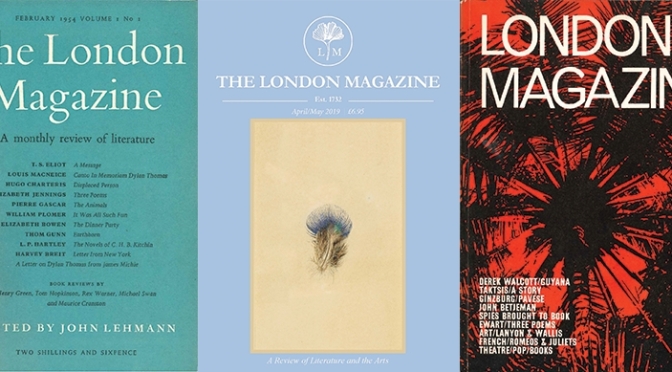
LONDON REVIEW OF BOOKS – SEPTEMBER 11, 2025 PREVIEW

LONDON REVIEW OF BOOKS: The latest issue features ‘Why we need Dorothy Parker’; Biography of a Biography; David Lynch’s Gee-Wizardry


Ellmann’s Joyce: The Biography of a Masterpiece and Its Maker 
by Zachary Leader

Constant Reader: The New Yorker Columns 1927-28 by Dorothy Parker

Dorothy Parker: Poems by Dorothy Parker

Dorothy Parker in Hollywood by Gail Crowther

David Lynch’s American Dreamscape: Music, Literature, Cinema by Mike Miley

THE CAFÉ OF ECHOES

At Caffè Florian, a poet rehearses silence, quarrels with Ruskin, and dines with memory.

By Michael Cummins, Editor, September 2, 2025

In the autumn of 1883, Robert Browning arrived in Venice not as a poet seeking inspiration, but as a man rehearsing his own silence. He was seventy-one, celebrated in England yet still dogged by the charge of obscurity, more famous abroad for Elizabeth’s immortal sonnets than for his own labyrinths. This essay is not fact but speculation, not history but atmosphere: Browning imagined at his table in Caffè Florian, where mirrors, velvet, and silence conspired with memory to become his final stage.

The boat nudged the dock like a hesitant thought. Browning stepped off with the stiffness of age and the grace of habit. The air smelled of brine and stone, of centuries folded into mist. He paused, cane in hand, and looked toward the dome of the Salute—its silhouette a question mark against the morning haze. Seventy-one years weighted his shoulders, but he stood upright, as though irony itself were a brace. The vaporetto pulled away, its wake dissolving into green silk. He had no luggage beyond a notebook and the ghosts already crowding his mind.

The fog is not weather—it is thought. It thickens, withdraws, curls back upon itself. Even in this cup before me it lingers: caffè corretto, black cut with brandy, bitter and sweet as a line half-finished. Florian is dim at this hour, its velvet walls inhaling the echoes of centuries. Mirrors multiply the room into infinity. Each reflection a fragment of me: old, young, diminished, fractured. A poet made a kaleidoscope.

Byron once sat here, Goethe scribbled here, conspirators whispered “Viva San Marco!” in the Sala del Senato. Today I sit, ordering polenta e schie—shrimp fried in brine—and the taste is lagoon, memory, salt. A plate of amaretti arrives, sugared consolation. The waiter suggests biscotti di mandorla as well, almonds crushed into sweetness. I chew slowly. The polenta is soft, golden, humble—like memory softened by time. The schie, tiny survivors of the lagoon, taste of endurance. Amaretti crumble like old letters, sugared on the outside, hollow at the core. The coffee, thick as ink, stains the tongue with bitterness and clarity. Florian does not serve meals; it serves metaphors.

Across the square, Quadri blazes with chandeliers, an operatic stage flattering the surface. Florian is darker, more inward. Its light is borrowed, its silences long. Quadri is performance for an audience. Florian is monologue.

I open my notebook: Ruskin, copied lines from The Stones of Venice. His voice has been my reluctant companion for thirty years. “We may live without her, and worship without her, but we cannot remember without her.” John, always the preacher. He carved morality into marble, turned buttresses into sermons. For him, Venice’s decline was sin. For me, decline is theatre. To remember is not to repent but to perform again. Memory is rehearsal.

The waiter refills my cup. The brandy sharpens thought, steadies irony. I recall my own lines from A Toccata of Galuppi’s:

As for Venice and her people, merely born to bloom and drop,
Here on earth they bore their fruitage, mirth and folly were the crop.

I scolded them then. How Puritan I was. Sitting now at Florian, I envy them. Folly is not failure; it is fruit. Who begrudges the bloom because it falls?

A German couple at the next table mutter Goethe. Their syllables stumble in Venetian air. A waiter tells a French traveler that Byron loved their zabaglione. A young woman sketches the gilded lamp above the doorway, her graphite smudged. She glances at me: “Are you a writer?” “No,” I reply, “a reader of ruins.” She frowns, puzzled. Youth believes silence means emptiness.

Elizabeth drifts through the mirrors. Her eyes catch mine across the velvet gloom. She wrote of Florence in Casa Guidi Windows, calling for liberty. She saw windows; I see walls. She opened; I enclosed. She is remembered for love, I for irony.

Her voice returns in my By the Fire-Side:

Oh, moment one and infinite!
The water slips o’er stock and stone;
The West is tender, yet the night
So soon must veil it, mine alone.

The water slips even now beneath the piazza stones. Tenderness yields to night. And yet—even absence is mine.

I once watched her read Petrarch aloud at Casa Guidi, her voice trembling with belief. She said poetry must lift. I said it must dig. We never resolved it. But in Venice, I hear her voice lifting still, even as I dig. I imagine writing a letter to her, one I will never send: My dearest Ba, Florian multiplies us in its mirrors. You see eternity; I see fragments. You spoke love; I speak echoes. And still, together, we wrote scaffolding for survival.

Ruskin appears across the table, severe, ascetic, with eyes that drill into conscience. He clears his throat: “The first cause of the fall of Venice was her falsehood.” He gestures to Florian’s mirrors. “Deceit multiplied.”

I answer: “John, is not poetry falsehood? Have I not spoken through murderers and monks, adulterers and judges? Masks, every one. But tell me—was the mask less true than the face?”

He insists: “Gothic is the expression of a Christian people, the confession of their faith in the work of their hands.”

I sip. “Faith, carved into cornices, labor engraved in stone. And what has it left us? Ruins. Whereas the Renaissance, with all its duplicity, left us colour, flourish, theatre. I prefer a glowing lie to a tedious truth.”

Ruskin frowns: “The Lamp of Truth must burn in every arch.”

“Truth burns, yes,” I reply, “but it also blinds. Give me the lamp of illusion, John. It casts longer shadows.”

I remember reading Ruskin aloud to Elizabeth once, in Florence, when his Seven Lamps of Architecture was still fresh. She had shaken her head. “He sees sermons in stone,” she said. “I see spirit in breath.” We argued half the night, she quoting Casa Guidi Windows, I muttering that breath is nothing without scaffolding. And here I sit now, scaffolding without breath.

The waiter brings another plate, sets down biscotti di mandorla. Ruskin fades into the mirror. I smile. I have won the debate by eating.

But another ghost sidles into Florian: Byron, lounging with rakish ease, boots muddy from some clandestine canal adventure. He leans back, laughing: “Browning, you scold folly, yet you envy it. Admit it—you envy me.” I do. I envied him once, his thunder, his immediate grip on the world. Venice loved his scandal, his Don Juan verses written between embraces. I admired the music, the power, the theatricality, even as I recoiled from his flamboyance. He used Venice as a symbol of faded grandeur, of moral ambiguity. And have I not done the same, though with less applause? “You were lightning,” I tell him. “I am only the echo.” He winks. “Echoes last longer than thunder.”

And Shelley, gentler, spectral, drifts in too. He never lodged here long—only passed through—but his lyricism breathed Italy. I remember writing Pauline, my first confession of a poet’s soul, under his influence. Shelley gave me metaphysics tuned to music, ideals sung into air. I once wrote a short poem, Memorabilia, about shaking hands with a man who had known him. Imagine—that thrill of proximity! Shelley’s ghost leans toward me now, whispering: “Poetry must lift, Robert, even from ruins.” His words tremble like a lyre string.

I admire Shelley still, though I turned away from his idealism. He lifted; I dug. He soared; I performed. And yet, I cannot deny: his fusion of thought and song shaped me as much as Byron’s theatre. Byron gave me thunder, Shelley gave me music. Elizabeth gave me breath. Ruskin gave me quarrel. And Venice—Venice gives me echo.

I recall In a Gondola, my youthful play with passion:

The soul of music slumbers in the shell
Till waked and kindled by the master’s spell.

How earnest I was. I believed love eternal, dramatised into permanence. Now I know better. Love is architectural. It leaves ruins. One walks among them—not grateful for permanence, but for echo.

The young artist glances at me again, and this time she sketches my hand—gnarled, ink-stained, resting on the cup. I wonder what she sees. Not the poet, surely. Perhaps only a ruin worth recording. Perhaps only another relic of Venice.

Florian’s velvet breathes of centuries. The Sala del Senato still hums with 1848, Daniele Manin declaring the Republic of San Marco. I imagine their whispers lingering, “Viva San Marco!” clinging to the mirrors. Byron’s laughter, Shelley’s sighs, Casanova’s schemes, Goldoni’s wit—all still staged. The velvet absorbs nothing; it amplifies.

Outside, the piazza fills with orchestras. From Florian, a waltz in minor key, introspective, precise, like Strauss slowed by melancholy. From Quadri across the stones, a polka, bright, frivolous, Offenbach reborn in defiance. The melodies clash above San Marco. Venice plays both scores at once, refusing to choose between tragedy and farce.

I attempt a stanza in my head to match their duel, half-jesting, half-serious:

One side mourns with violins, one side laughs with brass,
Yet both belong to Venice, as shadow and mirror pass.
I sit between the melodies, cane planted, glass in hand,
Hearing waltz and polka argue what I cannot command.

The waiter sets down another caffè corretto. I trace the rim of the cup, whisper fragments that may form another book. A line half aloud:

One who never turned his back but marched breast forward,
Never doubted clouds would break…

I know better. Clouds often do not break. Yet I say it still. Faith is not in triumph, but in endurance.

Elizabeth’s ghost leans across the table, chiding gently. She opened windows, I enclosed walls. She gave hope; I gave puzzles. She left sonnets; I left monologues. She is love’s voice; I am irony’s echo. Together we were scaffold and soul. Alone, I am scaffold only.

The German couple departs, their voices swallowed by velvet. The gondolier outside cries a Byron line again, misremembered. The young woman finishes her sketch, closes her notebook. I scribble a note in Ruskin’s margin: “Dear Mr. Ruskin, Gothic is faith hewn in stone. Renaissance is theatre. And theatre endures longer than sermons.”

I close the notebook, order one last plate—polenta e schie again, salt and brine against the tongue. Outside, gondolas drift like commas in an endless sentence. Mirrors scatter me into fragments. Florian holds me like a stage.

Ruskin’s voice returns from memory: “When we build, let us think that we build for ever.” Poor John. Nothing lasts forever. Not fresco, not marble, not even love. But echoes last. And echo is all art requires.

Tomorrow I depart. The fog will remain. And somewhere in it, a voice—hers, mine, ours—will echo still.

They will read me in fragments, quote me in footnotes, misunderstand me in classrooms. That is the fate of poets. But if one reader hears the echo—hears Elizabeth’s breath in my silence, hears Venice in my irony, hears Byron’s thunder subdued into cadence, hears Shelley’s song distilled into thought—then I have not vanished. I have rehearsed eternity.

And when I return, as I surely shall, though not by will but by death’s courtesy, they will bring my coffin to the Salute. Bells will toll, gondolas will line the water, poets will compose their elegies. They will call me Venice’s last guest, though I was only ever her reader of ruins. Elizabeth will not be there, but I will hear her still, in the fog, in the echo, in the silence.

For art does not conclude. It endures. Like Venice herself, it is scaffolding and soul, ruin and flame, silence and applause. And in the hush that follows, I hear my own final stanza rehearsed already by this city—Ruskin’s stones, Elizabeth’s voice, Byron’s thunder, Shelley’s song, Galuppi’s chords, my reluctant cadence—echoing forever across the water.

THIS ESSAY WAS WRITTEN AND EDITED UTILIZING AI

LITERARY REVIEW – SEPTEMBER 2025

LITERARY REVIEW : The latest issue features ‘Mysteries of Marlowe’

Dark Renaissance: The Dangerous Times and Fatal Genius of Shakespeare’s Greatest Rival, Christopher Marlowe By Stephen Greenblatt
The Boundless Deep: Young Tennyson, Science, and the Crisis of Belief By Richard Holmes
A Scandal in Königsberg, 1835–1842 By Christopher Clark

APOLLO MAGAZINE – SEPTEMBER 2025

September 2025

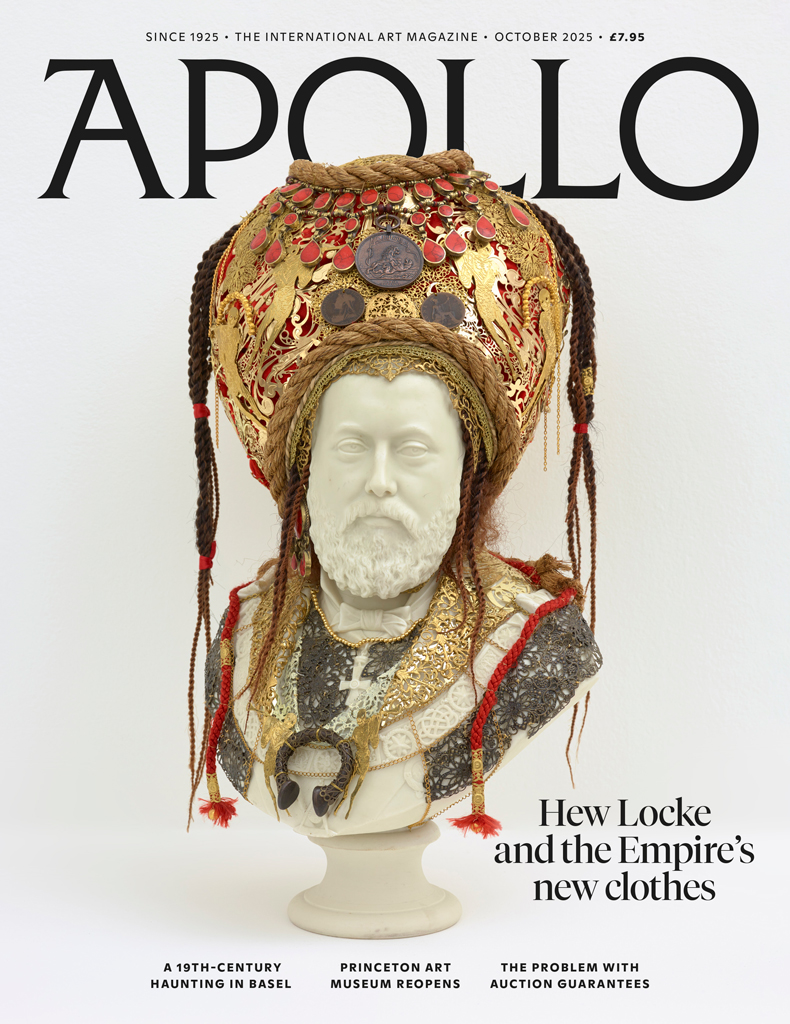
APOLLO MAGAZINE: The latest issue features The singular art of Georges de La Tour | Britain’s place in the soft-power race | Alec Cobbe’s masterful collecting | the Mona Lisa of medieval manuscripts

When American modernism planted its flag in London

Eero Saarinen’s US embassy building in Mayfair has long been undervalued, but its conversion into a luxury hotel may help revive its reputation

When British sculpture became modern

Henry Moore and Barbara Hepworth are ever in demand, but the market for their lesser-known contemporaries is growing too


Élisabeth Vigée Le Brun’s Roman holiday

While exiled in the city, Marie Antoinette’s favourite artist stuck up a close friendship with her own idol, Angelica Kauffman