

Anyone who has ever been to Portugal will probably know them: the small, mostly blue square ceramic tiles, the so-called ‘azulejos’. Especially in the capital of Lisbon they decorate many houses. Even today, the decorative tiles are still made by hand. The word azulejos does not come from the Portuguese word “azul” for blue – as one might think. It comes from Arabic and means something like “polished little stone”.
Category Archives: Arts & Literature

The Arts: ‘The Underwater Museum Of Cannes’ (Video)
Six large sculptures of fractured human faces form the underwater museum that British sculptor Jason deCaires Taylor has created off the coast of Cannes, France. The Underwater Museum of Cannes is a permanent installation beside the island of Sainte-Marguerite that is intended to “draw more people underwater” to engage with marine life. It is designed by deCaires Taylor to be highly accessible by either snorkelling or diving, positioned two and three metres below sea level. The goal is that visitors will “foster a sense of care” for marine life and better appreciate its value, while oceans environments are continually threatened by human activity.
Read more on Dezeen: https://www.dezeen.com/?p=1619810
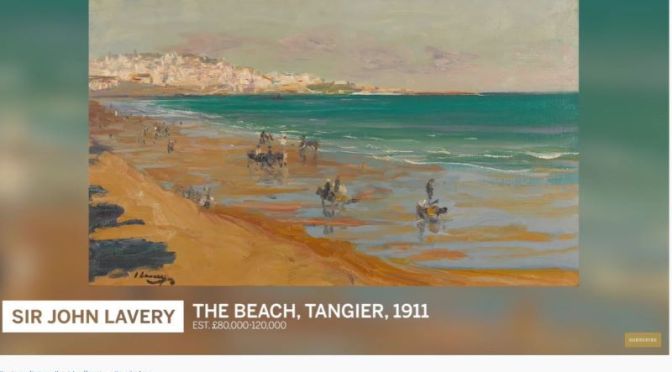
Art History: ‘Orientalism’ – Visionary Delights (Video)
Orientalist art transports and immerses the viewer into a place in time. 100 and more years after it was painted, it beguiles us even now. Sotheby’s upcoming Orientalist sale (22 – 30 March) which includes works from the celebrated Najd Collection, features fascinating landscapes from John Lavery’s depictions of Tangier to Edward Lear’s View of the Pyramids Road. As well as stunning scenery, artists captured the lives of water sellers, musicians and soldiers, providing valuable documentary evidence of how the Orient looked at a time when the region was still an elusive dream to many.
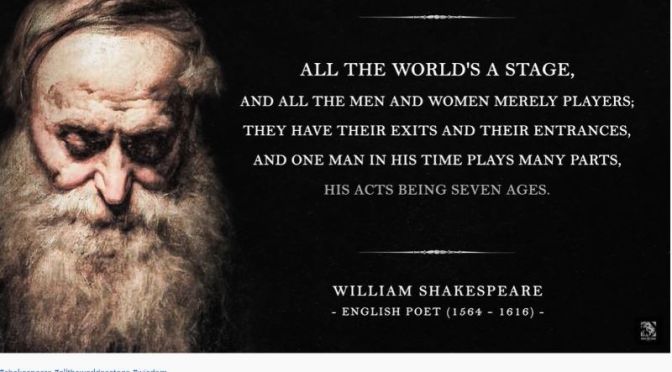
World’s Greatest Quotes: ‘The Seven Ages Of Man’ – William Shakespeare (1599)
Read by James Smillie
The Seven Ages of Man by William Shakespeare
All the world’s a stage,
And all the men and women merely players;
They have their exits and their entrances;
And one man in his time plays many parts,
His acts being seven ages. At first the infant,
Mewling and puking in the nurse’s arms;
And then the whining school-boy, with his satchel
And shining morning face, creeping like snail
Unwillingly to school. And then the lover,
Sighing like furnace, with a woeful ballad
Made to his mistress’ eyebrow. Then a soldier,
Full of strange oaths, and bearded like the pard,
Jealous in honour, sudden and quick in quarrel,
Seeking the bubble reputation
Even in the cannon’s mouth. And then the justice,
In fair round belly with good capon lin’d,
With eyes severe and beard of formal cut,
Full of wise saws and modern instances;
And so he plays his part. The sixth age shifts
Into the lean and slipper’d pantaloon,
With spectacles on nose and pouch on side;
His youthful hose, well sav’d, a world too wide
For his shrunk shank; and his big manly voice,
Turning again toward childish treble, pipes
And whistles in his sound. Last scene of all,
That ends this strange eventful history,
Is second childishness and mere oblivion;
Sans teeth, sans eyes, sans taste, sans everything.
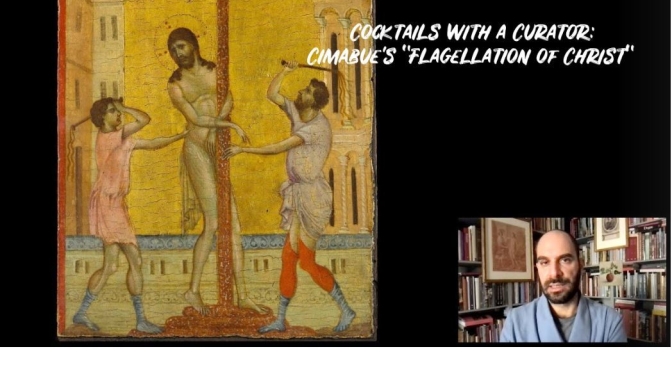
Cocktails With A Curator: Cimabue’s “Flagellation of Christ” (Frick Video)
In this week’s episode of “Cocktails with a Curator,” Deputy Director and Peter Jay Sharp Chief Curator Xavier F. Salomon examines the only work by Cimabue in a public collection in the United States, a small panel depicting “The Flagellation of Christ.” Acquired by the Frick in 1950, the attribution of this work was a topic of debate until a sister panel was discovered in 2000, establishing that they once belonged to a larger ensemble by the 13th-century Florentine. (In 2019, a third fragment was discovered.) As a nod to the gold background, this week’s complementary cocktail is the Gold Rush, a drink invented in New York in the 1920s.
Cimabue, also known as Cenni di Pepo or Cenni di Pepi, was an Italian painter and designer of mosaics from Florence. Although heavily influenced by Byzantine models, Cimabue is generally regarded as one of the first great Italian painters to break from the Italo-Byzantine style.
To view this painting in detail, please visit our website: https://www.frick.org/cimabuechrist

The Arts: ‘Technology & The Future of Theatre’
Art and technology are often seen as distinct disciplines. But combining them results in magic. Sarah Ellis, the Director of Digital Development at the Royal Shakespeare Company, teaches us how technology is reimagining the experience of theatre, taking it beyond the stage and into our living rooms. As an award-winning producer, Sarah Ellis currently works as Director of Digital Development for the Royal Shakespeare Company to explore new artistic initiatives and partnerships.
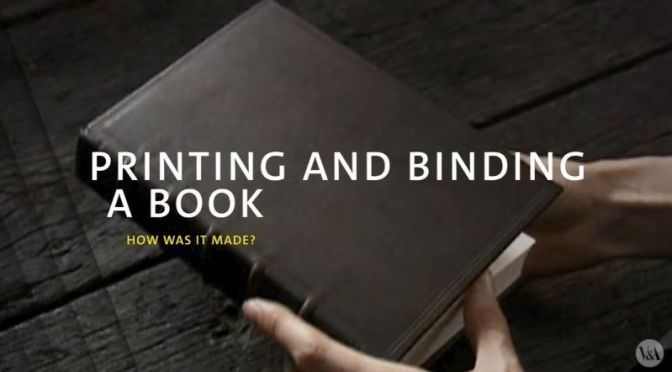
Literature: ‘Printing And Binding A Book’ (Video)
Discover the stages involved in creating a hand-printed and hand-bound book. This is an example of octavo size, meaning it’s made up of pages that were printed eight to a sheet of paper.
Video timeline: Process at the printers: Arranging metal letters: 00:09 Preparing type: 00:25 Applying ink to the type: 00:32 Pressing paper onto the inked type: 00:40 Process at the binders: Sheets folded and cut: 01:07 Folds hammered: 01:24 Sheets sewn onto bands: 01:28 Rounding the spine: 01:43 Attaching cover boards: 01:56 Clamping the book and trimming pages: 02:20 Endbands sewn: 02:29 Leather cover stuck on: 02:41 Decoration added with hot metal tools: 03:11

International Art: ‘Apollo Magazine – March 2021’
FEATURES | Stephen Patience explores the glamourous world of Noël Coward; Gillian Wearing interviewed by Martin Herbert; Daisy Hildyard on the beasts of Francis Bacon; Kirsten Tambling on Queen Mary’s contributions to the Royal Collection; Phillip Prodger considers the merits of colourising early photographs and film

| REVIEWS | Linda Wolk-Simon on a new look for the Met’s Old Masters; Mark Pimlott on a survey of post-war museum design in Rotterdam; Morgan Falconer on Soviet ad men at MoMA; Peter Parker on 18th-century paintings of Udaipur; David Ekserdjian on five centuries of Raphael; Tanya Harrod on the letter-cutting of Ralph Beyer; Thomas Marks watches the Uffizi’s new cooking show |
| MARKET | Susan Moore previews March sales in London and New York and looks back at the winter season; Emma Crichton-Miller on collecting Judaica; Jo Lawson-Tancred on Art Dubai and other events not to miss |
| PLUS | Ed Vaizey and Charlotte Higgins on whether the government should be doing more for the arts; Sophie Barling visits the tent-tomb of Richard and Isabel Burton; Timothy Brittain-Catlin on Louis Kahn’s concrete castles; Dora Thornton on the golden age of brooch design; Robert O’Byrne on Georgian waxworks |

Documentaries: Behind The Scenes Of ‘Hemingway’
Ken Burns, Lynn Novick and Sarah Botstein give us a behind-the-scenes look at the production of Hemingway. We explore where Ernest Hemingway lived and traveled as the team visits his home in Cuba, learn about his writing process through manuscripts housed at the JFK Library, and the impact of fame on his art. Hemingway from Ken Burns and Lynn Novick premieres April 5, 2021 on PBS.
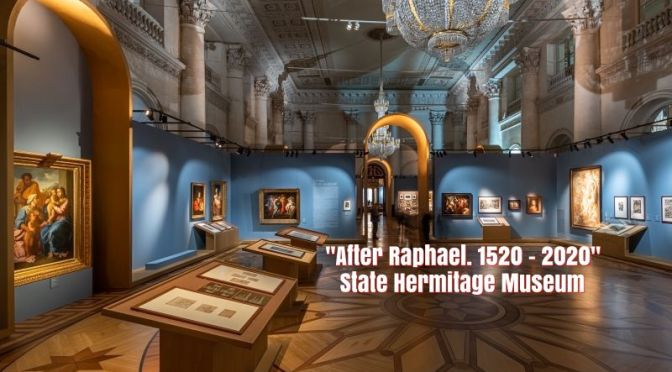
Art: ‘After Raphael. 1520 -2020’ – State Hermitage Museum, Russia (Video)
A film about the Exhibition “After Raphael. 1520 – 2020” at the State Hermitage Museum. Director of the film – Manas Sirakanyan. The film was made with the support of the U.S. Ambassadors Fund for Cultural Preservation, U.S. Embassy Moscow and the Hermitage Museum Foundation (USA)
Raphael is the most influential artist of the Modern Era. Over the course of five centuries, exponents of Mannerism and Academicism, Caravaggisti and masters of the Baroque, Romantics and Modernists have invariably compared their own work with Raphael’s legacy. What is the cause of such fame? What did his name represent in this or that historical period, and what does it represent today? What connects the artist’s followers in different centuries? The exhibition in the Hermitage is an attempt to answer those questions and to look at the art of the past 500 years through the lens of Raphael’s influence.
The large-scale display includes more than 300 exhibits – paintings, graphic art, sculpture and applied art from the Hermitage’s own stocks and twelve other collections in Russia and Western Europe. They include both famous masterpieces and previously unknown works. Dozens of paintings and pieces of graphic art are leaving the museum’s storerooms and being presented to the public for the first time, while a whole number of the exhibits are going on show after painstaking restoration in the Hermitage’s workshops.
The display opens with works by the master himself: a painting and drawings from European collections. Without claiming to be a full representation of the artist’s oeuvre, they serve to set the tone, as it were, and after viewers have “tuned themselves in” it will be easier for them to identify echoes of Raphaelesque harmony in the works from later centuries. The choice of graphic art for this purpose reveals another dimension to the main metaphor: it is specifically the beauty of the clear, precise line, so evident in the drawings made by the master’s own hand, that lies at the foundation of the aesthetics of Raphael himself and many of his followers.
 Boomers Daily