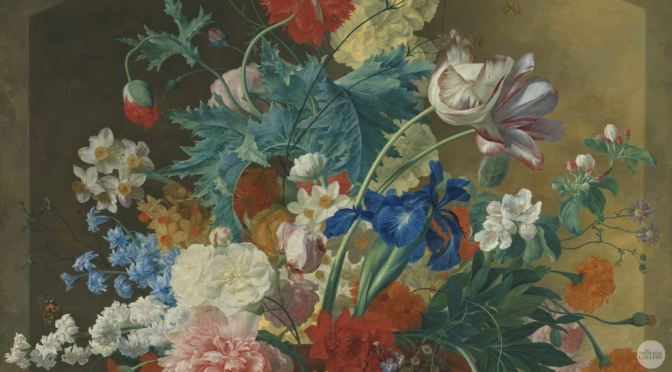
Lucy Chiswell, the Dorset Curatorial Fellow, explores Van Huysum’s ‘Flowers in a Terracotta Vase’ in ten minutes.
Jan van Huysum, also spelled Huijsum (15 April 1682 – 8 February 1749), was a Dutch painter.

Date of Video: May 19, 2021
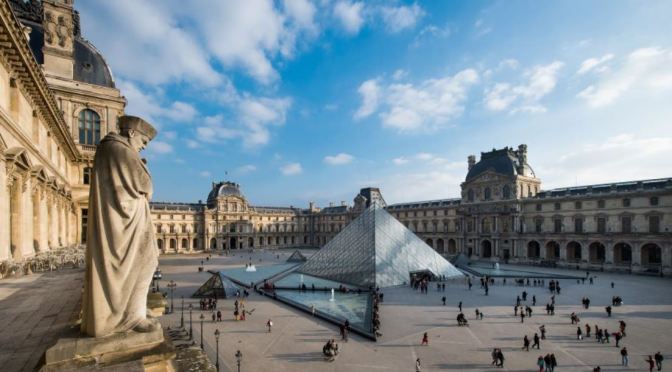
The Louvre, or the Louvre Museum, is the world’s largest art museum and a historic monument in Paris, France, and is best known for being the home of the Mona Lisa. A central landmark of the city, it is located on the Right Bank of the Seine in the city’s 1st arrondissement.
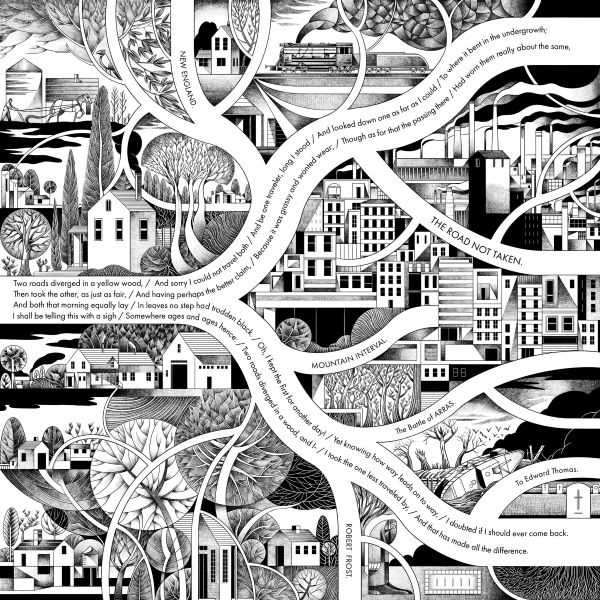
Sergio García Sánchez is a cartoonist, illustrator and professor at the University of Granada, as well as co-author of the graphic novel “Lost in NYC: A Subway Adventure.”

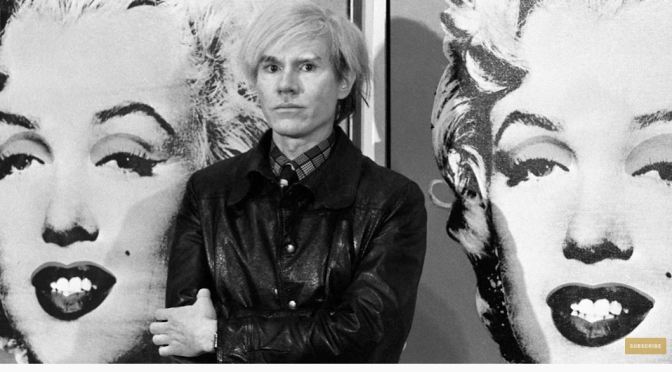
Andy Warhol created his first painting of Marilyn Monroe in 1962, in the wake of the American movie star’s sudden death at the age of 36. Tragedy, and its portrayal in modern mass media, fascinated Warhol; at the time of Monroe’s death, the artist was enmeshed in his Death and Disaster series, an exploration of gruesome images found in newspapers and magazines. Monroe’s death pushed the narrative of tragedy and celebrity one step further, and in it Warhol found inspiration for arguably the most important suite in his oeuvre. Dating from 1967, Marilyn Monroe is a complete portfolio of ten screen prints, each produced in a different combination of intense, flat colors. This portfolio, which comes from the estate of Barbara Spiegel Linhart, who purchased the works from David Whitney in 1969, is the best possible example of this important set of screenprints, and is a highlight of Sotheby’s Contemporary Art Evening Sale this May.
Painted in 1919 after the artist fled Paris for the south of France, ‘Jeune Fille en Bleu’ is one of the finest works from the penultimate year of Amedeo Modigliani’s life. In this episode of Expert Voices, Sotheby’s Senior Specialist Simon Stock explains how the search for new subjects in this new location saw Modigliani depicting informal models found in local bars and shops. This portrait captures the serenity of the young girl sitter and we see all the recognisable traits of Modigliani’s late work: the simplified human form, the elongated neck and the vacant eyes.
Amedeo Clemente Modigliani was an Italian Jewish painter and sculptor who worked mainly in France. He is known for portraits and nudes in a modern style characterized by a surreal elongation of faces, necks, and figures that were not received well during his lifetime, but later became much sought-after.
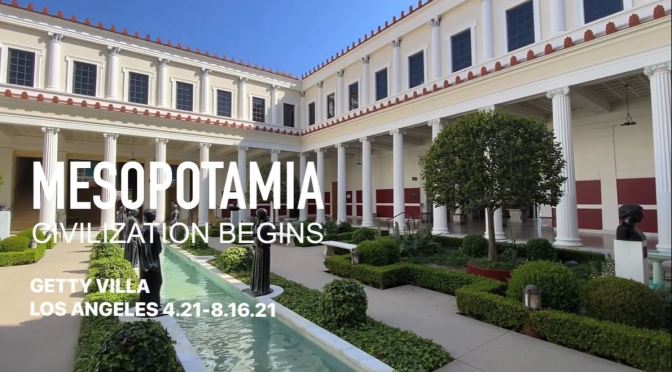
Mesopotamia—the land “between the rivers” in modern-day Iraq—was home to the ancient Sumerians, Babylonians, and Assyrians. Among their many achievements are the creation of the earliest known script (cuneiform), the formation of the first cities, the development of advanced astronomical and mathematical knowledge, and spectacular artistic and literary accomplishments. The exhibition covers three millennia, from the first cities in about 3200 BC to Alexander the Great’s conquest of Babylon in 331 BC.
Exhibition organized by the Musée du Louvre, Paris, and the J. Paul Getty Museum, Los Angeles.
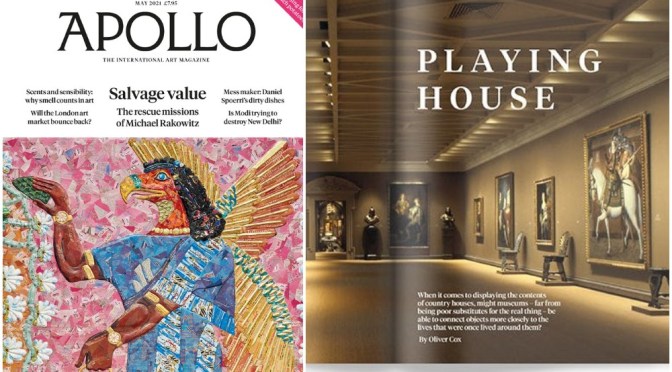
| INSIDE THE ISSUE |
| FEATURES | Michael Rakowitz interviewed by Daniel Trilling; Jon Day on smell and the visual arts; Susan Moore catches up with art collector and former Louvre director Pierre Rosenberg; Oliver Cox on country-house exhibitions in museums; Debika Ray assesses Narendra Modi’s architectural shake-up of New Delhi |

| REVIEWS | Kitty Hauser on new Australian art in Sydney; Matt Stromberg evaluates LACMA’s experimental rehang; Tom Fleming on the life of John Craxton; Clare Bucknell on a study of women’s self-portraits; Glenn Adamson on a history of Western ceramics; Mark Francis on Richard Hamilton, Pop pioneer |
| MARKET | Stephen Ongpin, Thomas Dane and François Chantala consider the future of London’s galleries and fairs; and the latest art market columns from Susan Moore, Emma Crichton-Miller and Samuel Reilly |
| PLUS | Xavier F. Salomon finds a lost Valadier masterpiece in Nicaragua; Isabella Smith visits imperial China through her TV screen; Samuel Reilly on Joan Eardley in Glasgow; Charles Holland on the post-war buildings of Raymond Erith; Thomas Marks on Daniel Spoerri’s tableaux of tables; and Robert O’Byrne picks over Apollo’s wartime diet |
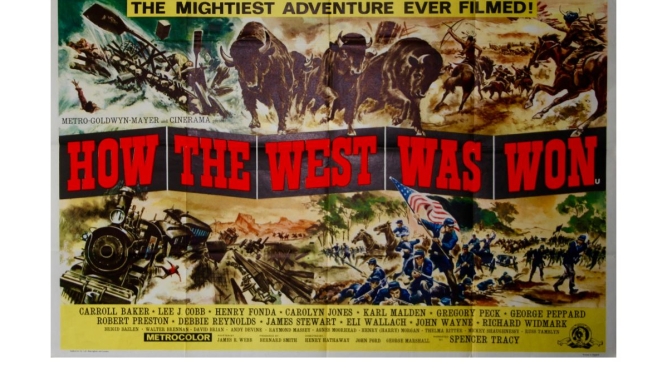
How the West Was Won is a 1962 American epic Western adventure film directed by Henry Hathaway (who directs three out of the five chapters involving the same family), John Ford, and George Marshall, produced by Bernard Smith, written by James R. Webb, and narrated by Spencer Tracy. Originally filmed in true three-lens Cinerama with the according three-panel panorama projected onto an enormous curved screen, the film stars an ensemble cast consisting of (in alphabetical order) Carroll Baker, Lee J. Cobb, Henry Fonda, Carolyn Jones, Karl Malden, Gregory Peck, George Peppard, Robert Preston, Debbie Reynolds, James Stewart, Eli Wallach, John Wayne, and Richard Widmark. The supporting cast features Brigid Bazlen, Walter Brennan, David Brian, Ken Curtis, Andy Devine, Jack Lambert, Raymond Massey as Abraham Lincoln, Agnes Moorehead, Harry Morgan as Ulysses S. Grant, Thelma Ritter, Mickey Shaughnessy, Harry Dean Stanton, Russ Tamblyn and Lee Van Cleef.
How the West Was Won is widely considered one of Hollywood‘s greatest epics.[1] The film received widespread critical acclaim and was a box office success, grossing $50 million on a budget of $15 million.[2] At the 36th Academy Awards, it earned eight nominations, including Best Picture, and won three, for Best Story and Screenplay Written Directly for the Screen, Best Sound, and Best Film Editing. In 1997, it was selected for preservation in the National Film Registry by the Library of Congress as being “culturally, historically, or aesthetically significant”.
During a three month journey travelling and working on organic farms in Japan, filmmaker Steve Atkins often found himself distracted by the beauty around him. As sunlight filtered through the trees that towered over him, their silhouette gracing the surface beneath or ahead him, he felt repeatedly drawn and connected with the Natural world — an effect of Komorebi performing itself on the peripheries.
There is a magical quality to the animate expression of Nature; a mutual puppet-show hosted between trees, light and wind. “When I paused long enough to take it all in, to share in a humble celebration of Nature’s playfulness, I was gifted with a potent ease,” Atkins shares…
Continue reading: https://www.nowness.asia/story/komore…
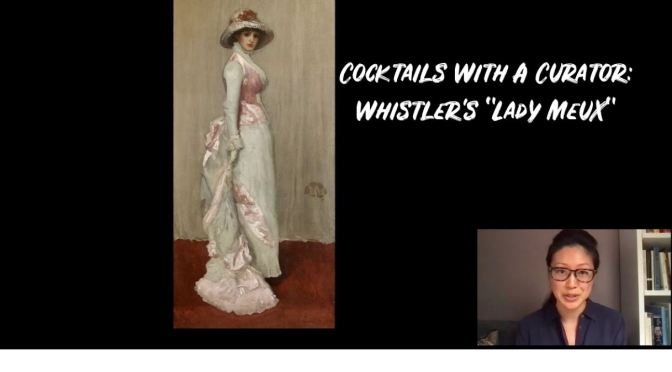
In this week’s episode of “Cocktails with a Curator,” Curator Aimee Ng explores the turbulent life of the woman portrayed in James McNeill Whistler’s serene “Harmony in Pink and Gray: Portrait of Lady Meux,” currently on view on the fourth floor of Frick Madison. A former bartender and actress, Lady Meux was shunned by London polite society even after she married Sir Henry Bruce Meux, heir to a huge brewery fortune. This week’s complementary cocktail is a refreshing Mummy, a nod to her extensive collection of some 1,800 Egyptian and Assyrian objects, including an infamous mummy of Nesmin.
To view this painting in detail, please visit our website: https://www.frick.org/ladymeux

 Boomers Daily