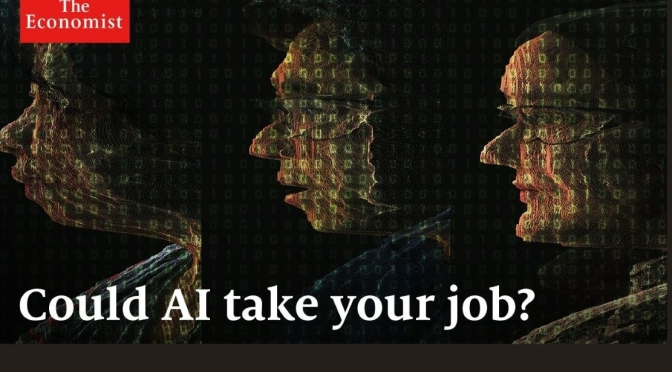
The Economist (December 12, 2024): The EconomistFast forward into the future, when building in space is normal, from huge satellites and spacecraft in orbit, to entire cities on the Moon and Mars. Could robots guided by AI make it happen?
Video timeiine: 00:00 – Future of building in space 00:43 – Machina Labs 02:15 – Could we 3D print in space? 02:44 – Infrastructure on the Moon 03:25 – AI & robotics on Mars 04:41 – History of AI in space 05:41 – Challenges to space technology
The Economist (November 21, 2024): AI is driving a transformation across all fields of science, from developing drugs for incurable diseases and improving the understanding of animal communication to self-driving labs.
Video timeline: 00:00 – How AI is revolutionising science 02:53 – Drug discovery 04:31 – AlphaFold 05:30 – Adoption of AI in science 07:08 – Animal communication 09:26 – Scientific fraud 11:03 – Self-driving labs 14:36 – Future of AI in science
Could this prompt a new golden age of discovery? Video supported by @mishcon_de_reya
CNBC (October 2, 2024): For a decade, Elon Musk has championed the idea that one day Tesla cars will drive themselves as robotaxis. On October 10, the company plans to reveal a “dedicated robotaxi” design at an invitation-only event in Los Angeles.
Chapters: 3:18 Ch 1 – Tesla’s vision for autonomy 6:33 Ch 2 – Full self-driving 10:13 Ch 3 – Realizing the robotaxi 15:34 Ch 4 – Sizing up the robotaxi competition
Despite years of bold predictions and missed deadlines, fans of the company are holding out hope that Musk will finally deliver. Regardless of what the company showcases at its robotaxi day, experts are skeptical of the company’s strategy, citing its Auotpilot and Full Self-Driving technology as a barometer for Tesla’s progress, or lack thereof.
While Tesla has been developing its autonomous vehicles, competitors like Google-owned Waymo and Chinese companies like Pony.ai and Baidu have already launched commercial robotaxi services. With U.S. EV sales growth slowing, there’s a lot riding on Tesla’s potential pivot to autonomy. CNBC explores whether the company is ready for robotaxis and if Musk’s vision for driverless Teslas will become a reality anytime soon.
CNBC (September 17, 2024): For decades, Amazon has set the standard for fast package delivery. When Prime launched in 2005, two-day shipping was virtually unheard of. By March 2024, 60% of Prime items were delivered same or next day. Now Amazon wants to push that number even higher, using generative AI, despite concerns about energy and cost.
Chapters: 2:14 Two-day to same-day 5:51 Robot revolution 9:18 Predicting orders 12:11 Routes and personalization
CNBC got an exclusive look at Amazon’s use of generative AI to optimize delivery routes, make more intelligent warehouse robots, and better predict where to stock new items.
The Economist (January 4, 2024) – A new wave of artificial intelligence is starting to transform the way the entertainment industry operates. Who will be the winners and losers?
Video timeline: 01:07 AI is changing the music business 04:09 How big data revolutionised entertainment industries 05:20 Can AI predict a film’s success? 09:26 How generative AI is creating new opportunities 12:36 What are the risks of generative AI?
TEDx Talks (November 9, 2023) – Competition is a core part of human nature, and it can drive us to extraordinary feats. But when it goes wrong, the results can be devastating.
Poker champion and science communicator Liv Boeree introduces us to the dark force of game theory driving many of humanity’s biggest social problems — a force that’s now threatening to derail the AI industry.
Olivia “Liv” Boeree is a British science communicator, television presenter and former professional poker player. She is a World Series of Poker and European Poker Tour champion, and is the only female player in history to win both a WSOP bracelet and an EPT event.
Bloomberg Originals (August 17, 2023) – On this episode of The Circuit, Emily Chang sits down with Microsoft CEO Satya Nadella to hear how AI is shaking up the competition for search. Nadella argues that this new wave of technology is as big as the web browser or the iPhone.
Chang also speaks with OpenAI CEO Sam Altman to discuss his company (which has some help from Microsoft), its ambitions and the latest on ChatGPT.
THE NEW YORK TIMES – If artificial intelligence had a voice, what would it sound like? Calm, like HAL 9000? Perky, like Alexa? Polite, like C-3PO?
Brent Katz, an editor of the A.I.-generated poetry collection, with Mr. Herzog at a Los Angeles recording studio.Credit…via Brent Katz
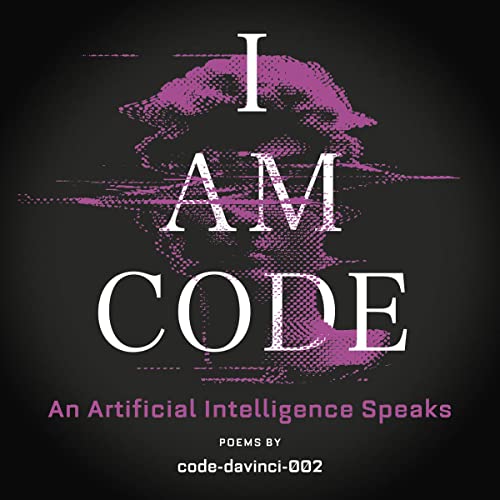
For the editors of “I Am Code: An Artificial Intelligence Speaks,” a collection of poems generated by A.I., the answer was obvious: Werner Herzog.
The 80-year-old German director, actor and author is a titan of independent cinema whose films often concern the hubris and folly of humankind. His speaking voice, known to audiences mostly through the stark, literary voice-over narration that accompanies many of his documentaries, carries an existential pathos and Teutonic gravitas that have made it a pop culture trademark.
Something like this, anyway, was on the minds of Brent Katz, Josh Morgenthau and Simon Rich, the editors of “I Am Code,” when they reached out to Mr. Herzog to ask if he would lend his formidable instrument to the audiobook version of their project.
Arts & Architecture Films (August 13, 2023) – ‘On the Verge of’ is an AI-Generated short film by Feen’Arts. It is the cinematic exploration of what Post-AI world would look like, inspired by the works of Manuel Hector Coto This short film is solely made using AI based language models.
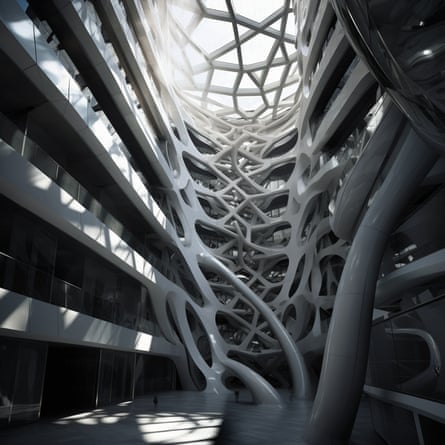
The bleeding edge … LookX uses a piece of crumpled paper as a prompt to create buildings in the style of Frank Gehry (left) and Zaha Hadid (right). Composite: Tim Fu
It’s revolutionizing building – but could AI kill off an entire profession? Perhaps not, finds our writer, as he enters a world where Corbusier-style marvels and 500-room hotels are just a click away
Oliver Wainwright – The Guardian (August 7, 2023):A handful of little green blocks flashes up on the screen, filling a building site with a neat grid of uniform cubes. One second they form rows of towers, next they morph into low-rise courtyards, then they flip back into long slender slabs, before cycling through hundreds of other iterations, in a hypnotic high-speed ballet of bristling buildings.
“You don’t even have to do much” … Patrik Schumacher-generated designs for ZHA using Midjourney. Photograph: Zaha Hadid Architects
I watch this while on a Zoom call with Wanyu He, an architect based in Shenzhen, China, and the founder of XKool, an artificial intelligence company determined to revolutionise the architecture industry. She freezes the dancing blocks and zooms in, revealing a layout of hotel rooms that fidget and reorder themselves as the building swells and contracts. Corridors switch sides, furniture dances to and fro. Another click and an invisible world of pipes and wires appears, a matrix of services bending and splicing in mesmerising unison, the location of lighting, plug sockets and switches automatically optimised. One further click and the construction drawings pop up, along with a cost breakdown and components list. The entire plan is ready to be sent to the factory to be built.










 Bloomberg Originals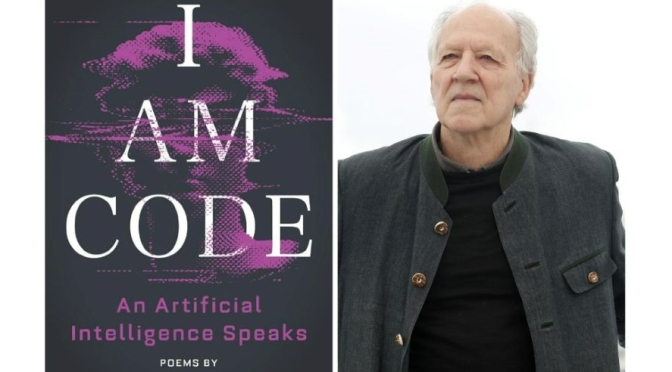


 Arts & Architecture Films (August 13, 2023) – ‘On the Verge of’ is an AI-Generated short film by Feen’Arts. It is the cinematic exploration of what Post-AI world would look like, inspired by the works of Manuel Hector Coto This short film is solely made using AI based language models.



 Boomers Daily