

A selection of three essential articles read aloud from the latest issue of The Economist. This week, Europe’s crisis of energy and geopolitics, how crypto goes to zero (10:19) and the consequences of America’s success against organised crime (16:32).
Category Archives: Analysis
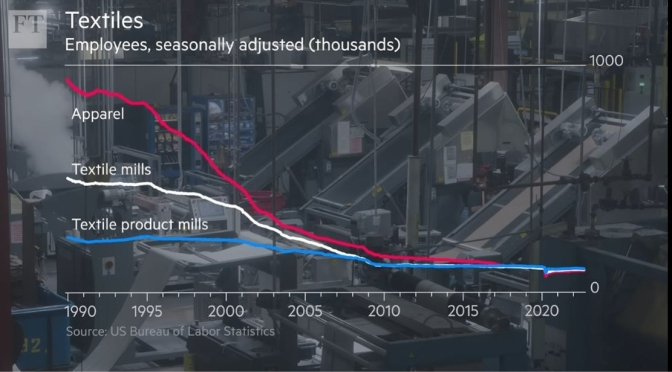
Analysis: ‘Made In America’ Is Changing In 2022 (FT)

Video timeline: 00:00 Made in America, Again 01:20 An all-American supply chain starts here 03:17 What went wrong with globalization? 07:00 The cotton gin – a risky business 09:53 Automation at a high-tech mill 13:16 Why manufacturing is important 19:59 The family-run finishing factory 23:21 Worker innovation at the sewing factory 27:33 Education, training and community 29:07 A moment for change?
Analysis & Opinion: Is It The End Of Crypto?, Indonesia Matters, A New Trumpist
A selection of three essential articles read aloud from the latest issue of The Economist. This week, is this the end of crypto? Also, why Indonesia matters (11:00) and Glenn Youngkin’s unique approach to Trumpism (19:40).

Politics: Trump Special Counsel, Congress In 2023
Washington Post columnists Jonathan Capehart and Gary Abernathy join Amna Nawaz to discuss the week in politics, including a special counsel appointed to investigate former President Trump, the balance of power in Washington and the battle for leadership on Capitol Hill.

Qatar 2022 World Cup: Why It Spent $300 Billion

Video timeline: 00:00 – Why is Qatar hosting the World Cup? 00:57 – World Cups are expensive competitions 01:56 – Qatar’s human rights violations 02:36 – Qatar’s place in the Gulf 04:43 – Qatar distinguishes itself from its neighbours 05:50 – Qatar bids to host the World Cup 07:18 – Qatar’s neighbours issue a blockade 10:12 – What might happen after the World Cup?
Read our defence of Qatar’s hosting of the World Cup: https://econ.st/3XcOC5A
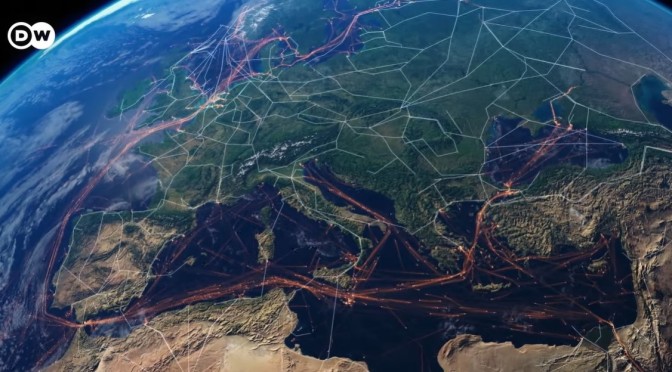
Analysis: The Future Of Energy Policies In Europe

Energy is essential — and it is a major problem. The war in Ukraine has shown just how dependent Europe is on fossil fuels. This has weakened Europe and given export countries – frequently governed by authoritarian rule – a geopolitical means of leverage. Now, war on the European continent has eclipsed concerns over the climate Crisis. The increased consumption of harmful fuels is creating economic and political problems.
Yet, against the odds, decarbonizing Europe remains a widespread priority, and alternative solutions are already available. In France, Denmark and Ukraine, civil initiatives are taking energy supplies into their own hands and investing in the joint production of their own solar energy. In some cases, privately produced solar energy has proven much cheaper than what national solar energy providers offer.
These initiatives show that decentralizing energy production could be the key to transforming our energy supply. Poland still depends heavily on coal, but is offering re-training programs for employees in the mining business to help them transition to green jobs. An estimated one million such green jobs are expected to be created in Europe by 2030. Green hydrogen, currently still in the development stages, could be a sustainable and profitable alternative for industries in the future.
Across the continent, workable alternatives are emerging. The current quick succession of political crises has now joined the ongoing climate crisis to show just how important it is to act now.
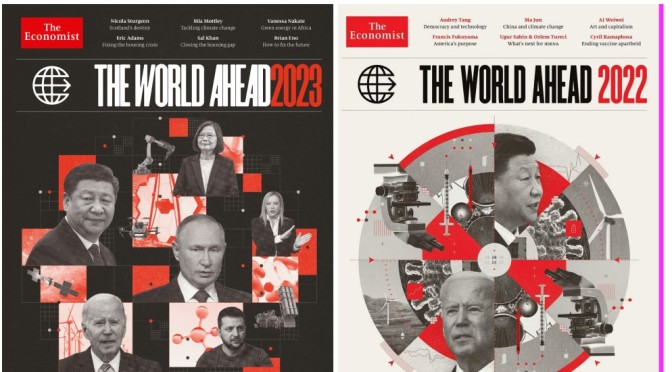
Analysis: The World Ahead 2023 – The Economist
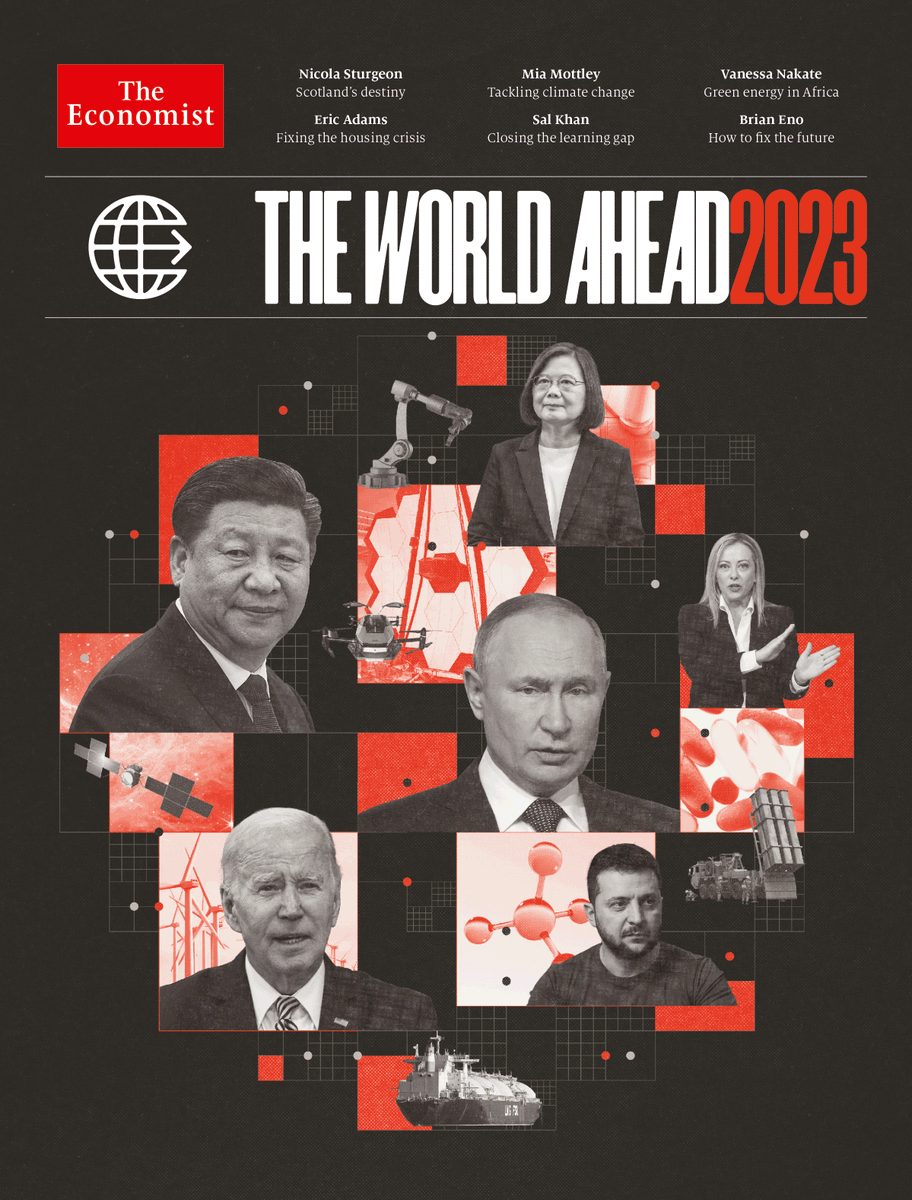
Ten trends to watch in the coming year
A letter from Tom Standage, editor of “The World Ahead 2023”
1. All eyes on Ukraine. Energy prices, inflation, interest rates, economic growth, food shortages—all depend on how the conflict plays out in the coming months. Rapid progress by Ukraine could threaten Vladimir Putin, but a grinding stalemate seems the most likely outcome. Russia will try to string out the conflict in the hope that energy shortages, and political shifts in America, will undermine Western support for Ukraine.
2. Recessions loom. Major economies will go into recession as central banks raise interest rates to stifle inflation, an after-effect of the pandemic since inflamed by high energy prices. America’s recession should be relatively mild; Europe’s will be more brutal. The pain will be global as the strong dollar hurts poor countries already hit by soaring food prices.
3. Climate silver lining. As countries rush to secure their energy supplies, they are turning back to dirty fossil fuels. But in the medium term the war will accelerate the switch to renewables as a safer alternative to hydrocarbons supplied by autocrats. As well as wind and solar, nuclear and hydrogen will benefit too.
4. Peak China? Some time in April China’s population will be overtaken by India’s, at around 1.43bn. With China’s population in decline, and its economy facing headwinds, expect much discussion of whether China has peaked. Slower growth means its economy may never overtake America’s in size.
5. Divided America. Although Republicans did worse than expected in the midterm elections, social and cultural divides on abortion, guns and other hot-button issues continue to widen after a string of contentious Supreme Court rulings. Donald Trump’s formal entry into the 2024 presidential race will pour fuel on the fire.
6. Flashpoints to watch. The intense focus on the war in Ukraine heightens the risk of conflict elsewhere. With Russia distracted, conflicts are breaking out in its backyard. China may decide that there will never be a better time to make a move on Taiwan. India-China tensions could flare in the Himalayas. And might Turkey try to nab a Greek island in the Aegean?
7. Shifting alliances. Amid geopolitical shifts, alliances are responding. nato, revitalised by the war in Ukraine, will welcome two new members. Will Saudi Arabia join the Abraham accords, an emerging bloc? Other groupings of growing importance include the Quad and aukus (two American-led clubs intended to deal with China’s rise) and i2u2—not a rock band, but a sustainability forum linking India, Israel, the United Arab Emirates and the United States.
8. Revenge tourism. Take that, covid! As travellers engage in post-lockdown “revenge” tourism, traveller spending will almost regain its 2019 level of $1.4trn, but only because inflation has pushed up prices. The actual number of international tourist trips, at 1.6bn, will still be below the pre-pandemic level of 1.8bn in 2019. Business travel will remain weak as firms cut costs.
9. Metaverse reality check. Will the idea of working and playing in virtual worlds catch on beyond video games? 2023 will provide some answers as Apple launches its first headset and Meta decides whether to change its strategy as its share price languishes. Meanwhile, a less complicated and more immediately useful shift may be the rise of “passkeys” to replace passwords.
10. New year, new jargon. Never heard of a passkey? Fear not! Turn to our special section, “Understand This”, which rounds up the vital vocabulary that will be useful to know in 2023. nimbys are out and yimbys are in; cryptocurrencies are uncool and post-quantum cryptography is hot; but can you define a frozen conflict, or synfuel? We’ve got you covered.
Political Analysis: Trump’s Effect, Imagine Peace In Ukraine, Qatar World Cup
A selection of three essential articles read aloud from the latest issue of The Economist. This week, the Trump effect, (10:30) imagining peace in Ukraine and (18:00) should fans watch the World Cup in Qatar?
Health Plans: Pros & Cons Of Medicare Advantage



For More Information
When you’re ready to start reviewing plans, check out the Medicare plan finder tool, which will let you compare Medicare Advantage and Part D prescription drug plans available in your area. You can also get this information by calling Medicare at 800-633-4227.
If you’re looking for a Medigap plan, you can also start at medicare.gov, where you can compare the different types of coverage, as well as find the policies available in your ZIP code.
Another good resource is the State Health Insurance Assistance Program (SHIP), which provides free guidance over the phone. To find your state’s program, go to shiphelp.org or call 877-839-2675.
Analysis: Election Results, Trump & Republican Party

 Boomers Daily