All posts by She Seeks Serene

My Journey of Reimagining Life, Love and Education

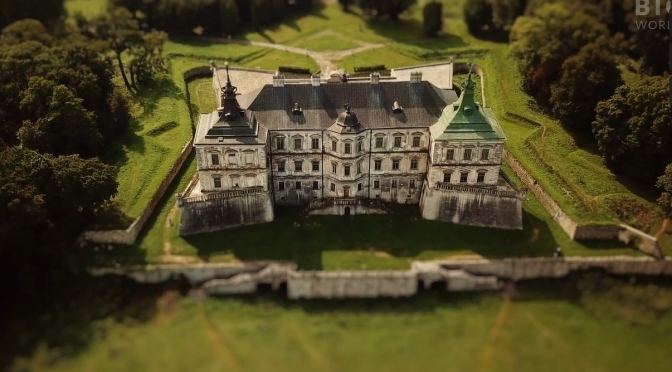
Tributes: The ‘Unreal Beauty’ Of Ukraine (4K)

A time lapse & tilt shift & aerial video by Joerg Daiber.

I was visiting Ukraine by the end of last summer and finished this edit a few weeks back. This was about the time when the news started reporting about Putin deploying his troops around the border of Ukraine. Ever since then I was hesitant to publish this film and it got worse every day with events proceeding.

So I know it’s a very difficult time to post a film that shows a beautiful and picturesque Ukraine, that looks like it’s straight out of a magical fairytale, while there are currently tanks surrounding the major cities, residential areas being shelled and millions of refugees trying to get out of the country.

It’s heartbreaking to think about all the lovely people there and the suffering that they have to endure now. Something like this was unthinkable just a few months back. Of course the Donbas war was ongoing and everybody was still mad about Crimea, but regular and daily life was as normal as it could possibly be.
I spoke with many people about their opinion on Russia and none of them was in favour of Russian politics and literally everybody felt much closer to Europe than to Russia. Most of them didn’t even want their kids to learn Russian in school. I felt that the public mood towards Russian politics was even more negative as in many other former Soviet countries like Georgia, Moldova or Armenia. At least among younger people that I ran into.

I know its difficult to enjoy these images from another time, but it’s a reminder how fragile and precious peace is and that we should not take it for granted.

This film was shot mainly around the Carpathian Mountain area.
Shooting locations: Lviv, Lutsk, Tarakaniv Fort, Olesko Castle, Pidhirtsi Castle, Tunnel of Love, Dovbush rocks, Kamianets-Podilskyi Castle, Chernivtsi, Yaremche, Vorokhta, Yasinya, Drahobrat, Hoverla
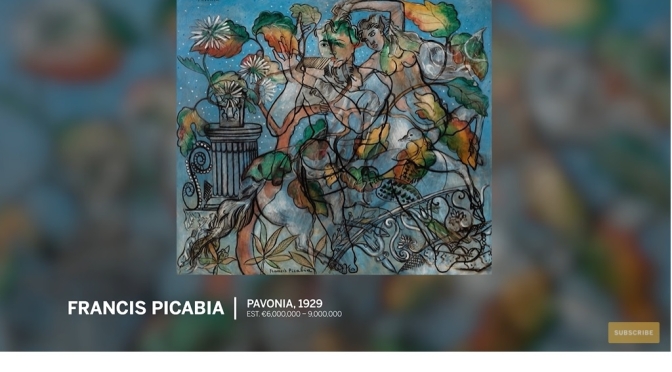
Profiles: French Painter Francis Picabia (1879-1953)

Sotheby’s explores two Picabia masterpieces: ‘Pavonia’, a cinematic example from his ‘Transparencies’ series, and ‘Nu de Dos’, a striking and controversial female nude.

Francis Picabia, (born January 22, 1879, Paris, France—died November 30, 1953, Paris), French painter, illustrator, designer, writer, and editor, who was successively involved with the art movements CubismDada, and Surrealism.

Picabia was the son of a Cuban diplomat father and a French mother. After studying at the École des Arts Décoratifs (1895–97), he painted for nearly six years in an Impressionist mode akin to that of Alfred Sisley. In 1909 he adopted a Cubist style, and, along with Marcel Duchamp, he helped found in 1911 the Section d’Or, a group of Cubist artists. Picabia went on to combine the Cubist style with its more lyrical variation known as Orphism in such paintings as I See Again in Memory My Dear Udnie (1913–14) and Edtaonisl (1913). In these early paintings he portrayed assemblages of closely fitted, metallic-looking abstract shapes. As Picabia moved away from Cubism to Orphism, his colours and shapes became softer.

Morning News: Ukraine Hospital Bombed, Voting System Stress, Vaccines

Russia has bombed a children’s hospital in Ukraine’s port city of Mariupol. Election professionals cite threats, stress, and political attacks on the voting system among the forces pushing them from their jobs. And how eager will parents of the youngest kids in the U.S. be to have their children vaccinated against COVID?

Preview: New Scientist Magazine – March 12

COVER STORIES

  • FEATURES Martin Rees interview: Elon Musk could spawn the first post-humans
  • FEATURES Creatures living in our cities are evolving in some surprising ways
  • FEATURES Middle-age spread isn’t down to metabolism, but we know how to beat it

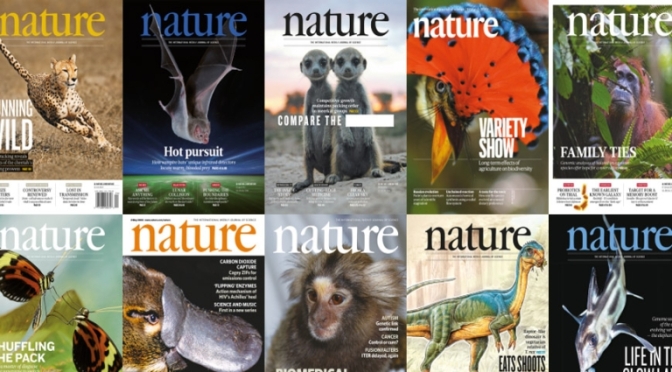
Cover Preview: Nature Magazine – March 10

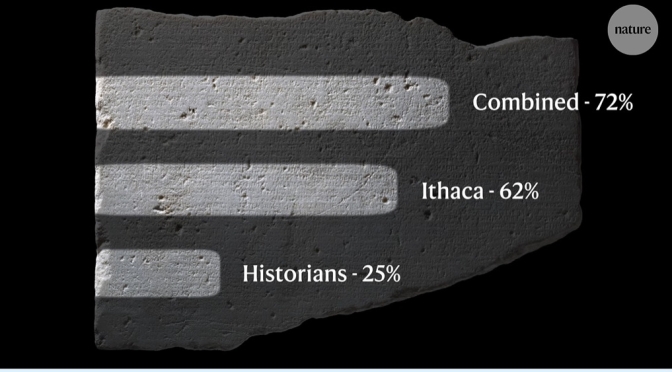
History & Science: Ancient Texts Deciphered With AI

The origins of ancient inscriptions are often shrouded in mystery. Writing carved into stone millennia ago can be hard to read and is often missing entire sections of the text. Now a neural network, trained on thousands of existing inscriptions, could help historians figure out when and where a piece of writing comes from – as well as fill in missing words and characters.

Read the paper: https://www.nature.com/articles/s4158…

Preview: Times Literary Supplement – March 11

Africa Views: Ivory Coast Agriculture Goes Digital

Climate change, land degradation and deforestation have severely damaged Côte d’Ivoire’s natural surroundings. Many farmers are worried about their future. But Digitalization is bringing new hope.

Côte d’Ivoire is a West African country with beach resorts, rainforests and a French-colonial legacy. Abidjan, on the Atlantic coast, is the country’s major urban center. Its modern landmarks include zigguratlike, concrete La Pyramide and St. Paul’s Cathedral, a swooping structure tethered to a massive cross. North of the central business district, Banco National Park is a rainforest preserve with hiking trails.