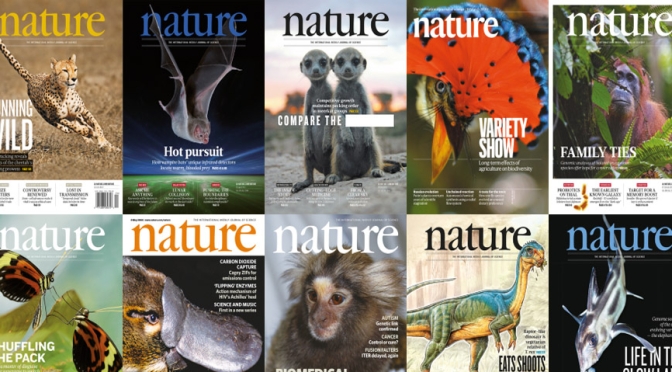
At COP26 countries made a host of promises and commitments to tackle global warming. Now, a new analysis suggests these pledges could limit warming to below 2˚C — if countries stick to them.
03:48 Efficiency boost for energy storage solution
Storing excess energy is a key obstacle preventing wider adoption of renewable power. One potential solution has been to store this energy as heat before converting it back into electricity, but to date this process has been inefficient. Last week, a team reported the development of a new type of ‘photothermovoltaic’ that increases the efficiency of converting stored heat back into electricity, potentially making the process economically viable.
07:56 Leeches’ lunches help ecologists count wildlife
Blood ingested by leeches may be a way to track wildlife, suggests new research. Using DNA from the blood, researchers were able to detect 86 different species in China’s Ailaoshan Nature Reserve. Their results also suggest that biodiversity was highest in the high-altitude interior of the reserve, suggesting that human activity had pushed wildlife away from other areas.
11:05 How communication evolved in underground cave fish
Research has revealed that Mexican tetra fish are very chatty, and capable of making six distinct sounds. They also showed that fish populations living in underground caves in north-eastern Mexico have distinct accents.
14:36 Declassified data hints at interstellar meteorite strike
In 2014 a meteorite hit the Earth’s atmosphere that may have come from far outside the solar system, making it the first interstellar object to be detected. However, as some of the data needed to confirm this was classified by the US Government, the study wasn never published. Now the United States Space Command have confirmed the researchers’ findings, although the work has yet to be peer reviewed.
The strong inverse correlation between lifespan and mutation rate: we accrue mutations at a slower pace than many mammals but have roughly the same number of mutations by the end of our respective lifespans https://t.co/MBgFMkEeUn@Naturepic.twitter.com/H9kXAXXwjs
Cells acquire mutations throughout life, a process that is known to give rise to cancer and has been proposed to contribute to ageing. There is little knowledge, however, about the rate at which mutations accumulate in species other than humans, and whether this rate is influenced by biological traits such as lifespan or body size. In this week’s issue, Alex Cagan, Adrian Baez-Ortega and colleagues address these questions. The researchers studied the speed at which mutations accumulate during life in 16 mammalian species and found that the number of mutations increases by a roughly constant amount each year. They also observed that the molecular processes causing mutations are broadly similar across species. Crucially, the team identified a strong anticorrelation between lifespan and mutation rate: longer-lived species accrue mutations at a slower pace than shorter-lived ones, such that different species have roughly the same number of mutations by the end of their respective lifespans.
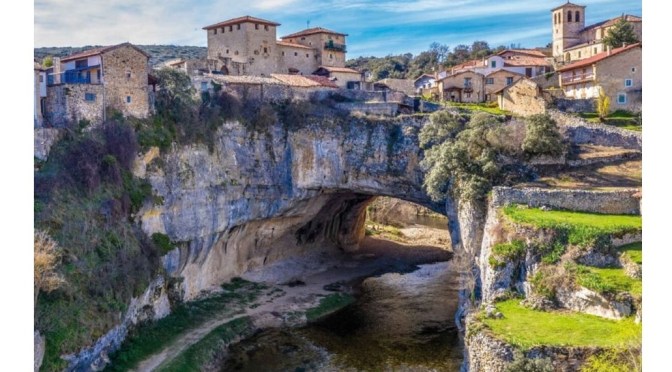
Puentedey in northern Spain was named the most beautiful village in Spain in 2022. One reason is its 15-meter-high natural stone arch, carved by the Nela River and nicknamed God’s Bridge.
Puentedey stands out, a place in Burgos that, as its name indicates, is defined by a structure that was considered divine for a long time. It is a rock arch that the river Nela has been carving for millions of years on which a town has been built.
Diving into some of the most innovative ideas across retail, city planning, policy, technology and construction. Ideas that will truly change the way we think about sustainability in 2022
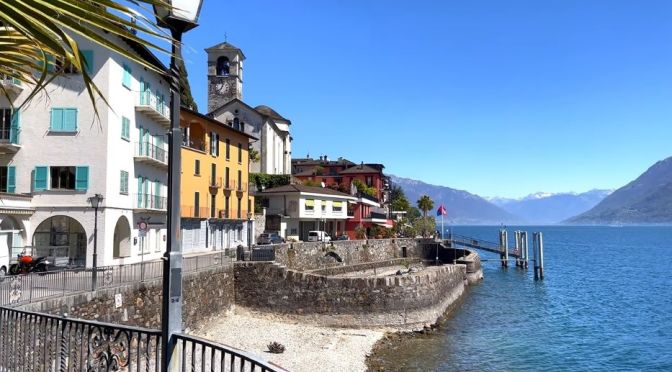
Brissago is a municipality in the district of Locarno in the canton of Ticino in Switzerland. A wonder swiss town, lying at the lowest point in Switzerland, just 197 metres above sea level, and perched between the shores of Lake Maggiore and the steep mountains behind, Brissago is a small town on the Italian frontier.
The lowest and oldest part of the village is clustered around the beautiful Renaissance church of St. Peter and Paul, surrounded by centuries-old cypresses. In the narrow lanes leading down to the lake you will find some picturesque spots to admire: gardens where lemons, oranges and cedars grow in the open air, as well as beautiful mansions. Brissago is famous not only for its tobacco and cigar factory, but also for its islands, which seen from above look like bright green spots in the blue of the lake.
Between 1885 and 1928 Baroness Antonietta Saint-Léger, a Russian of German origin, planted a botanical garden designed as an earthly paradise, and her successor, the department store king Max Emden, continued her work. Today the neo-classical villa contains a restaurant and the administration offices of the Botanical Park of Canton Ticino. Their plants are still there, together with the Himalayan cinnamon with its scent of camphor, the Madagascar gladiolus, the bald cypress from the swamps of North America with its trunk under water, and numerous other exotic species.
Gambling in the digital age; Russian literature after Bucha; repackaging the Bard; Hollywood, Israel and China; how Derrida was haunted by Freud – and much more.
The latest on Russia’s all-out assault on east Ukraine. Plus: Sri Lanka’s debt crisis, Pakistan’s new prime minister and Australia’s new blue plaque scheme.









 Boomers Daily