

Monthly Archives: August 2021
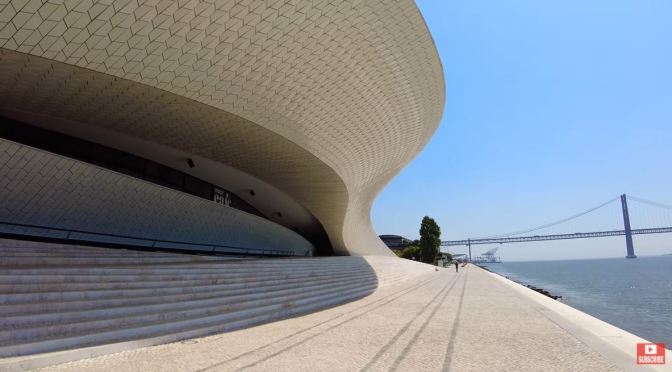
Architectural Views: MAAT Museum In Lisbon
MAAT – Museum of Art, Architecture and Technology is the new cultural centre for Lisbon. It’s a museum where these three areas intertwine within a space of debate, discovery, critical thinking and international dialogue.
It’s an innovative project which establishes a connection between the new building, designed by Amanda Levete Architects’ studio, and Central Tejo Power Station, one of Portugal’s most prominent examples of industrial architecture from the first half of the 20th century, and one of the most visited museums in the country.
MAAT’s ambition is to present national and international exhibitions by contemporary artists, architects and thinkers. The programme will also include various curatorial perspectives on EDP Foundation’s private Art Collection, reflecting current subject matters and trends.

Front Page Views: Wall Street Journal – Aug 30

Morning News: Hurricane Ida Hits Louisiana, Safe Stocks, Remote Work
A.M. Edition for Aug. 30. New Orleans is without electricity after Hurricane Ida slams the region 16 years after Hurricane Katrina.
WSJ markets reporter Caitlin Ostroff explains why utilities and healthcare are among the S&P 500’s top-performing groups this quarter. Plus, WSJ’s Chip Cutter discusses the concern among bosses as remote work may now last two years.
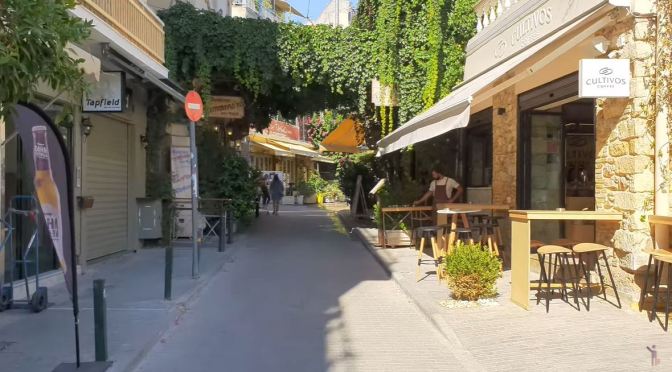
Walking Tours: Athens – Southeastern Greece (4K)
Athens is the capital of Greece. It was also at the heart of Ancient Greece, a powerful civilization and empire. The city is still dominated by 5th-century BC landmarks, including the Acropolis, a hilltop citadel topped with ancient buildings like the colonnaded Parthenon temple. The Acropolis Museum, along with the National Archaeological Museum, preserves sculptures, vases, jewelry and more from Ancient Greece.

Reviews: Global Jihad, Fundamental Physics, Britain’s Pheasant Revolt
A selection of three essential articles read aloud from the latest issue of The Economist. This week, after Afghanistan, where next for global jihad?, Why Fundamental physics is humanity’s most extraordinary achievement (9:33) And pheasants revolt in Britain (14:51)
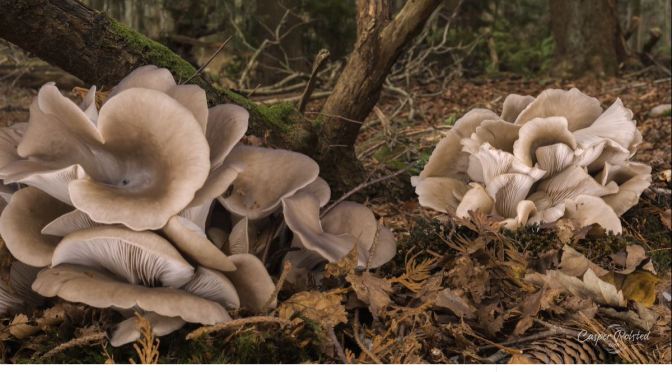
Timelapse Views: ‘Oyster Mushrooms’ In Denmark
Filmed and Edited by: Casper Rolsted
Immerse yourself in the exciting world of mushrooms. Shot in the most beautiful forests in Denmark. See and listen to this timelapse film in a quiet place where you will not be disturbed. Headphones are highly recommended.
Only in silence can we hear the song of nature.
FUNGI
Fungi are living organisms that are made up of larger cells with a cell nucleus which contains all the genetic material. Fungi are thus what we call eukaryotic organisms, which is one of the three domains of biology: animals (Animalia), plants (Plantae) and fungi (Fungi). The rest of the eukaryotic organisms, which do not fit into these three kingdoms, are called protists.
Fungi is a kingdom with about 144,000 known and described species of organisms. But it is estimated that there may be between 2.2 million and 3.8 million total species. They can be single celled or very complex multicellular organisms. The fungi kingdom includes yeasts, rusts, smuts, mildews, molds, and mushrooms. Fungi are among the most widely distributed organisms on Earth and they are of very big environmental and medical importance.
MUSHROOMS
Mushrooms are the fruiting bodies that some fungi produce – typically above ground on the soil or on decaying wood or other food sources. Mushroom varies in size, shape, color, and longevity. Some mushrooms are microscopic and completely invisible to the unaided eye while others are gigantic structures.
The fine threads under-ground that makes up the main body of the fungi is called mycelium. The mycelium stretches out beneath the mushroom in search of water and food.
Unlike a plant, a fungus can’t make its own food by using energy from the sun. Instead, the fungus produces enzymes which are released by the mycelium and break down dead plants and animals. This organic matter is then absorbed through the mycelium and used by the fungus for growth.
The mushrooms, because of their size, are easily seen in fields and forests and consequently were the only fungi known before the invention of the microscope.
OYSTER MUSHROOMS
Oyster mushrooms is the common name for the species Pleurotus ostreatus. The funghi normally grow naturally on and near trees in temperate and subtropic forests. They are found around the world including in the UK and Ireland, most of mainland Europe, Asia, and parts of North America. Unlike many fungi, these mushrooms are not seasonal and can be found all year round.
Oyster mushrooms are one of the most widely consumed mushrooms in the world and are grown commercially in many countries. They aren’t just tasty; they can be really healthy to eat. They contain antioxidants and are high in several vitamins and minerals. They even have the potential to lower cholesterol levels, slow the spread of cancer and decrease inflammation in the body.
Oyster mushrooms get their name from their oyster or shell shaped cap that grow in tiers or clusters. They have a very short or non-existent stem. The color is typically light grey or greyish-brown. Oyster mushrooms are medium to large in size with caps averaging from 5 to 25 centimeters in diameter.
Oyster mushrooms use powerful enzymes to break down and eat hardwood. Oyster mushrooms are one of the few carnivorous mushrooms. The mycelia of oyster mushrooms secrete a powerful toxin to stuns passing microscopic nematode, which are small roundworms. The fungi use their sprawling fibers to seek out and enter the mouths of these microscopic nematodes and suck out their guts. This gives the fungi nitrogen for growth.
FOLLOW MY WORK
YouTube.com/CasperRolsted?sub_confirmation=1
Instagram.com/CasperRolsted
Facebook.com/CasperRolsted
Photographer, Editor and Sound Designer: Casper Rolsted
Terralapse.com
Timelapsefilm.dk
Naturalsilence.org
CasperRolsted.com

Front Page Views: The Financial Times – Aug 30

Views: The World’s Most Beautiful Libraries

Tours: The Alhambra Palace, Granada, Spain (4K)
Alhambra, palace and fortress of the Moorish monarchs of Granada, Spain. The name Alhambra, signifying in Arabic “the red,” is probably derived from the reddish colour of the tapia (rammed earth) of which the outer walls were built.
Constructed on a plateau that overlooks the city of Granada, the Alhambra was built chiefly between 1238 and 1358, in the reigns of Ibn al-Aḥmar, founder of the Naṣrid dynasty, and his successors. The splendid decorations of the interior are ascribed to Yūsuf I (died 1354). After the expulsion of the Moors in 1492, much of the interior was effaced and the furniture was ruined or removed. Charles V, who ruled in Spain as Charles I (1516–56), rebuilt portions in the Renaissance style and destroyed part of the Alhambra in order to build an Italianate palace designed by Pedro Machuca in 1526. In 1812 some of the towers were blown up by a French force under Horace-François-Bastien Sébastiani during the Peninsular War (War of Independence), and the rest of the buildings narrowly escaped the same fate.
 Boomers Daily