
Filmed and Edited by: Timo Oksanen
Visited this idyllic place again on February 21st 2020 and shot the snow covered fairytale sceneries with my DJI Mavic 2 Pro drone.
Music: Runar Blesvik – Hidden World

Filmed and Edited by: Timo Oksanen
Visited this idyllic place again on February 21st 2020 and shot the snow covered fairytale sceneries with my DJI Mavic 2 Pro drone.
Music: Runar Blesvik – Hidden World
 Eat less, live longer- If you want to reduce levels of inflammation throughout your body, delay the onset of age-related diseases and live longer—eat less food. That’s the conclusion of a new study by scientists from the US and China that provides the most detailed report to date of the cellular effects of a calorie-restricted diet in rats.
(Salk News, February 27, 2020)
While the benefits of caloric restriction have long been known, the new results show how this restriction can protect against aging in cellular pathways, as detailed in Cell on February 27, 2020.
Aging is the highest risk factor for many human diseases, including cancer, dementia, diabetes and metabolic syndrome. Caloric restriction has been shown in animal models to be one of the most effective interventions against these age-related diseases. And although researchers know that individual cells undergo many changes as an organism ages, they have not known how caloric restriction might influence these changes.
In the new paper, Belmonte and his collaborators—including three alumni of his Salk lab who are now professors running their own research programs in China—compared rats who ate 30 percent fewer calories with rats on normal diets. The animals’ diets were controlled from age 18 months through 27 months. (In humans, this would be roughly equivalent to someone following a calorie-restricted diet from age 50 through 70.)
SNL musical guest David Byrne reflects on returning to the show 40 years after his first appearance with Talking Heads.
On the Mayo Clinic Radio podcast, Dr. Sophie Bakri, a Mayo Clinic ophthalmologist and retina specialist, discusses macular degeneration, a common eye disorder with age. This interview originally aired Feb. 29, 2020.
Dry macular degeneration is a common eye disorder among people over 50. It causes blurred or reduced central vision, due to thinning of the macula (MAK-u-luh). The macula is the part of the retina responsible for clear vision in your direct line of sight.
Dry macular degeneration may first develop in one eye and then affect both. Over time your vision may worsen and affect your ability to do things such as read, drive and recognize faces. But this doesn’t mean you’ll lose all of your sight.
Early detection and self-care measures may delay vision loss due to dry macular degeneration.
Joe Biden wins his first primary of the 2020 campaign, securing victory in South Carolina. The former vice-president achieved a much needed primary win and told supporters: ‘We just won and we won big’.
It’s a leap year which means there’s an extra day in the calendar – 29 February 2020. But why do we need it? The answer is a little more complicated than you may think.
Syndicated columnist Mark Shields and New York Times columnist David Brooks join Judy Woodruff to discuss the week in politics, including whether former Vice President Joe Biden will have a decisive win in the South Carolina Democratic primary, what’s at stake for 2020 Democrats on Super Tuesday and how the Trump administration is responding to the threat of novel coronavirus.
A film by Eric Minh Swenson.
Michelangelo was one of the most creative and influential artists in the history of Western art. This exhibition explores the full range of his work as a painter, sculptor, and architect through more than two dozen of his extraordinary drawings, including designs for celebrated projects such as the Sistine Chapel ceiling, the Medici Chapel tombs, and The Last Judgment. These studies and sketches enable us to witness Michelangelo at work, and to experience firsthand his boundless creativity and his pioneering representation of the human form.
This exhibition has been organized by the Teylers Museum, Haarlem in collaboration with the J. Paul Getty Museum and The Cleveland Museum of Art. It is supported by an indemnity from the Federal Council on the Arts and the Humanities.
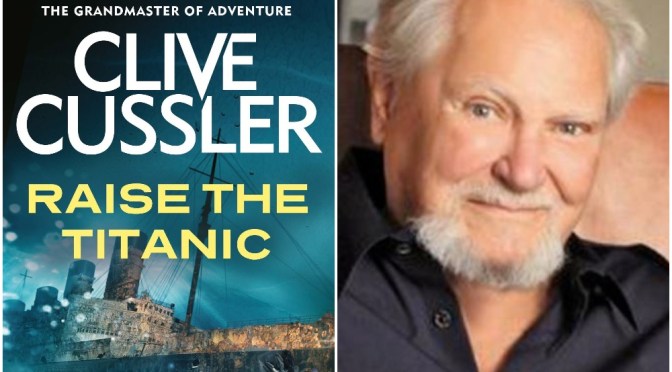
Novelist Clive Cussler, the man whose maritime alter-ego, adventurer Dirk Pitt, raised the Titanic and explored countless shipwrecks, has himself located more than 60 sunken ships and submarines. Cussler (who died on February 24, 2020, at age 88) talked to correspondent Anthony Mason in this interview that originally aired on “Sunday Morning” on January 25, 1998, in which he discussed his passion for vintage cars, and for going beneath the ocean’s surface to find the answers to naval history’s perplexing questions.









 Boomers Daily