

The Canary Islands, a Spanish archipelago off the coast of northwestern Africa, are rugged volcanic isles known for their black- and white-sand beaches. Tenerife, the largest island, is dominated by the sometimes-snowy active volcano Mt. Teide, which has its own astronomical observatory and is part of Teide National Park. Tenerife hosts a huge pre-Lent Carnival in the capital, Santa Cruz de Tenerife.
Videos

News: China’s Communist Party At 100 – What’s Next?
At the Chinese Communist Party’s centennial celebration, President Xi Jinping called for defiance against foreign pressure. As China challenges the U.S.’s leadership – from AI to defense – WSJ’s Jonathan Cheng looks at what’s next for the country. Photo: Wang Zhao/AFP

Views: Flying ‘AirCar’ Is Tested In Slovakia (Video)
A flying car has successfully completed its first intercity flight between two airports in Slovakia. The prototype, called AirCar, took off from Nitra and landed in Bratislava 35 minutes later. Using wings that fold away in less than three minutes and a propeller at its rear, the dual-transportation vehicle has now completed more than 40 hours of test flight.
Walks: Petrified Forest National Park, Arizona
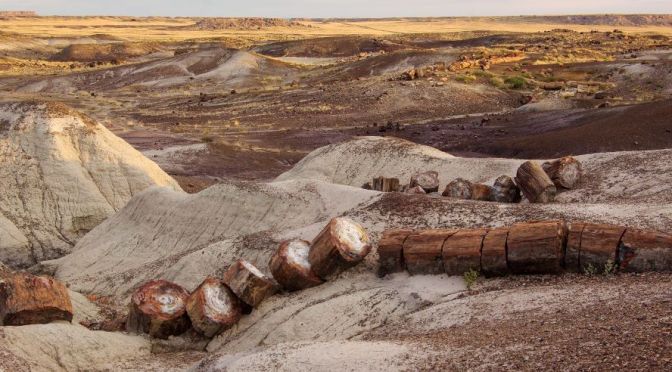
Petrified Forest National Park is in northeastern Arizona. In its south, the Rainbow Forest is full of colorful petrified wood. It’s home to the Rainbow Forest Museum, with its paleontology exhibits and many trail access points. In the park’s center are the petroglyphs of Newspaper Rock and the ruined village of Puerco Pueblo. To the north, the Painted Desert Inn, a 1930s adobe building, is a museum with Hopi murals.
Petrified Forest National Park contains the petrified remains of 225 million-year-old trees from the Late Triassic Period. Surrounding the petrified wood are millions of years of deposition, uplift, and erosion, creating the Chinle Formation. This rock formation creates the red hues of the Painted Desert and the blue tones of the Blue Mesa region. Petrified Forest is situated near the southern edge of the Colorado Plateau with elevations ranging from 5300 feet to 6235 feet. It was the uplift of the Colorado Plateau, starting about 60 million years ago, and the erosion that followed and continues today, which carved the present landscape.

Garden Walks: Kamakura Hydrangea Temple, Japan
Kamakura is one of the most popular day trip destinations for both Tokyoites and tourists, uniting the beauty of nature with the majesty of history. It’s a stunning place to explore no matter the time of year, but Japan’s rainy season clads the ancient city in a breathtaking dress of blossoming hydrangea flowers. The elegant flowers can be admired at various sites, including the famous Hase-dera Temple. However, there’s only one place so stunning, it earned the nickname “hydrangea temple:” Meigetsu-in. Come with us on a journey to a world full of petals, raindrops, and little discoveries.
Boat Tours: Sea Caves Of Vieste, Puglia, Italy (4K)
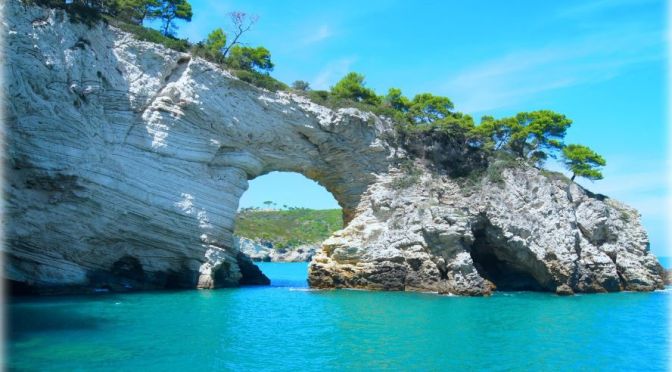
The erosion of the Gargano coast cut through many karst cave systems, which are now sea caves. The caves are eroded by the mechanical forces of the waves, the result are sea caves like any other sea cave on earth, except for some remaining stalactites on the ceiling probably.
Timeline: 0:00 Vieste Lighthouse 0:15 Vieste Old Town 1:01 Arco di San Felice 1:52 Testa del Gargano 2:33 Grotta Sfondata 3:55 Grotta dei Due Occhi 4:44 Grotta dei Pomodori 6:25 More views of the rocky coast 8:37 Grotta delle Due Stanze 10:45 Grotta della Tavolozza
Vieste is a coastal town in Gargano National Park, in southeast Italy. It’s known for its beaches, like Scialara, home to the imposing Pizzomunno limestone monolith, and the broad Spiaggia di San Lorenzo. Marine fossils and rare shells are on display at the Museum of Malacology. Nearby are the Castello Svevo, a medieval fortress, and the 11th-century Vieste Cathedral, with its baroque bell tower and painted ceiling.

Top Quotations: ’21 Rules Of The Samurai’ (Video)
Hagakure By Yamamoto Tsunetomo

Views: ‘Sea Lions – Life By A Whisker’ (Video Trailer)
A heartwarming journey about a sea lion pup and the man who devoted his life to saving the Australian sea lion.
Filmmakers: Amelia McCarten & Paul Phelan (Australië, 2020, 42 min 41 sec)
Collections: Viewing Rare Birds In Digital 3-D (Video)
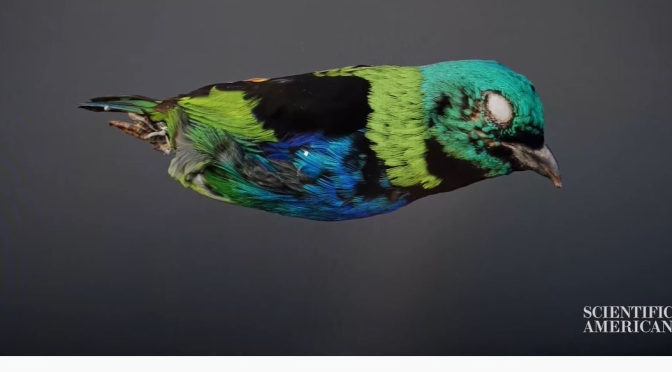
How close have you ever gotten to a wild bird? Can you remember the details of its plumage or the curvature of its beak? Did it sit in one place long enough for you to really study all of its colors and other characteristics? Probably not—at least if it was alive. The avid birders among us sometimes search their whole life for a glimpse of a particularly rare species. But if you are just a casual observer of the winged creatures around us, the ones you do see likely come and go as flashes of color and sound. For ornithologists, the elusive nature of birds is just part of the job. Beyond fieldwork, though, access to rare or extinct species or those with a limited range can be especially difficult to get. If you were, say, hoping to study the green-headed tanager (a riotously multicolored songbird native to South America) and unable to travel to the northeastern region of the continent where it can be found, you would have to ask a museum to send you a specimen in the mail. Access to rare specimens, such as those of extinct birds, can be especially difficult to get.
Water Sports: Hydrofoil Windsurfing In Spain
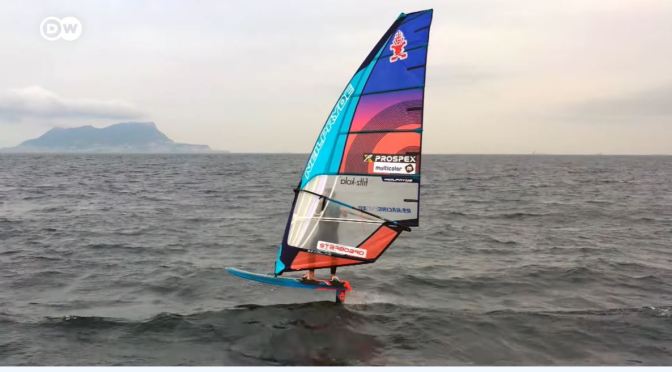
In the southern Spanish windsurfing paradise of Tarifa, top German athlete Nico Prien demonstrates his trick to ‘fly’ across the water; hydrofoiling. With the support of a fin-like foil, the board is held up above the waterline – and it’s said to feel as if you were flying above the surface. Is foiling the future of water sports?
 Boomers Daily