
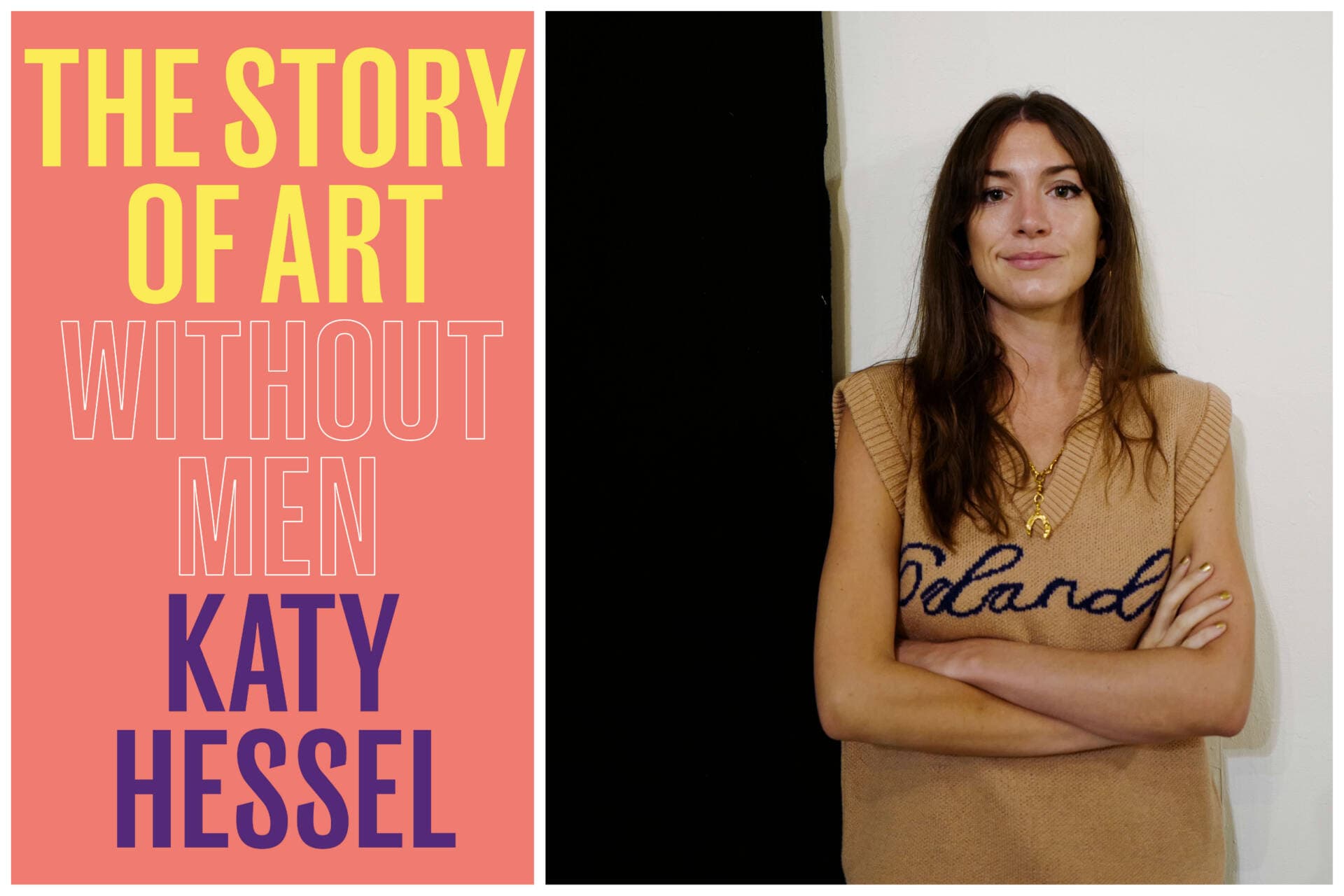
That resulted in her new book, “The Story of Art Without Men.” Jeffrey Brown discussed the book with Hessel for our arts and culture series, CANVAS.

That resulted in her new book, “The Story of Art Without Men.” Jeffrey Brown discussed the book with Hessel for our arts and culture series, CANVAS.

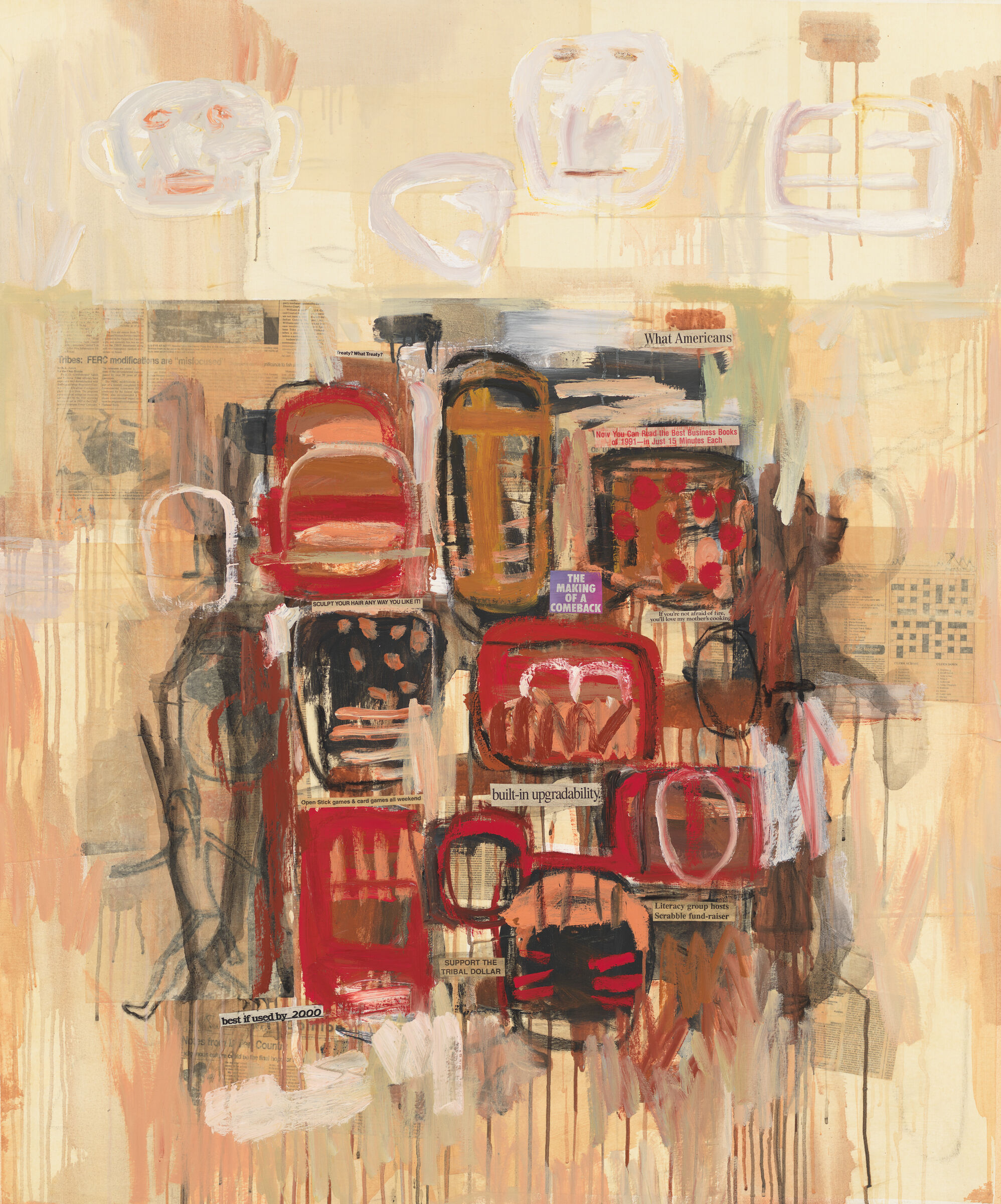
This exhibition is the first New York retrospective of Jaune Quick-to-See Smith (b. 1940, citizen of the Confederated Salish and Kootenai Nation), an overdue but timely look at the work of a groundbreaking artist. Jaune Quick-to-See Smith: Memory Map brings together nearly five decades of Smith’s drawings, prints, paintings, and sculptures in the largest and most comprehensive showing of her career to date.
Smith’s work engages with contemporary modes of making, from her idiosyncratic adoption of abstraction to her reflections on American Pop art and neo-expressionism. These artistic traditions are incorporated and reimagined with concepts rooted in Smith’s own cultural practice, reflecting her belief that her “life’s work involves examining contemporary life in America and interpreting it through Native ideology.” Employing satire and humor, Smith’s art tells stories that flip commonly held conceptions of historical narratives and illuminate absurdities in the formation of dominant culture. Smith’s approach importantly blurs categories and questions why certain visual languages attain recognition, historical privilege, and value.
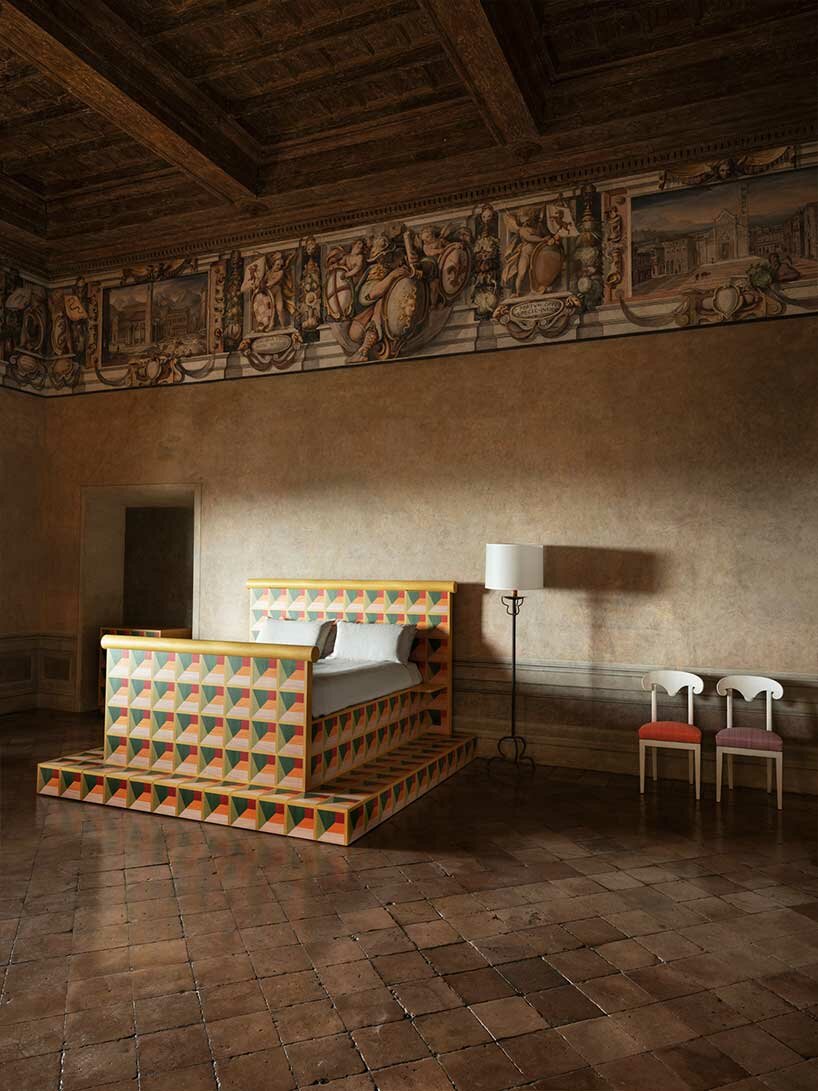
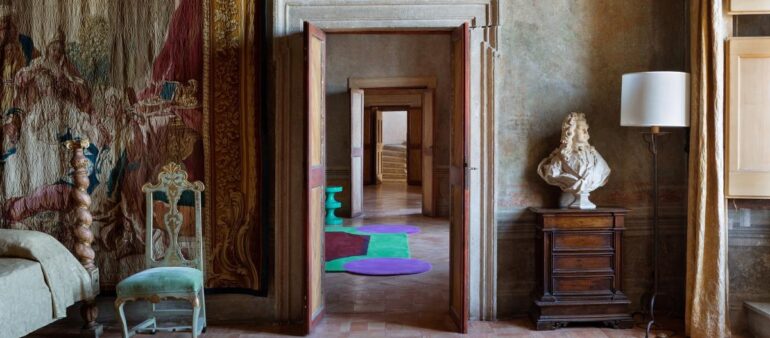
Villa Medicis, Rome (April 18, 2023) – The piano nobile of Villa Medici consists of the former rooms of Cardinal Ferdinando de’ Medici with three rooms in a row – the Room of the Elements, the Room of the Muses and the Room of the Lovers of Jupiter – with 16th century frescoes by the Mannerist painter Jacopo Zucchi. These rooms, which are open to the public on guided tours throughout the year, are located next to two private rooms from the same period which complete the complex.
As part of the project Reenchanting Villa Medici, the interior refurbishment of these emblematic spaces of Villa Medici has been entrusted to India Mahdavi, an internationally renowned French architect, designer and scenographer, who will be responsible for the artistic direction of the project in association with craftsmen (more information to come). This transformation is being carried out with respect for the period décor and previous architectural interventions, in order to revisit the premises by adding a touch of colour and modernity. The rooms will be equipped by Maison Tréca, a French manufacturer of high quality bedding.


YUVUZ GALLERY, Singapore – Deep Symmetry is New Zealand-artist Grace Wright’s first solo exhibition in Asia.
Grace Wright’s atmospheric paintings are all-consuming, inviting the viewer into a baroque world of tangled gestures. Markings on the canvas twist and convulse about themselves to build an anarchic structure before unravelling to moments of repose. While Wright’s gestures may be abstract, she views her paintings as representational narratives, evoking the tempestuous rhythm of the natural world, while alluding to 17th-century religious paintings.

Deep Symmetry explores a recent evolution of Wright’s practice as a result of her time in Europe in the latter half of 2022. Its title was inspired by the architectural geometries of the Sainte Chapelle in Paris, France, and a quote by writer Karl Ove Knausgaard: “Life is irregularity, death is geometry”.
Wright has been long fascinated with the deeper, universal connections that exist beyond our normal comprehension. Marrying alluring, harmonious colour with visceral imagery to monumental standing, Wright’s paintings are a reflection of this deep connectedness; her coiling energetic brush marks echoing the universal ‘rhythmic, cyclical nature’ forms in our world, to emotion and the force of life itself.

The exhibition at the Kunstmuseum Basel presents 113 works, from Shirley Jaffe’s early abstract expressionist works to the geometric paintings that are characteristic of her late oeuvre.
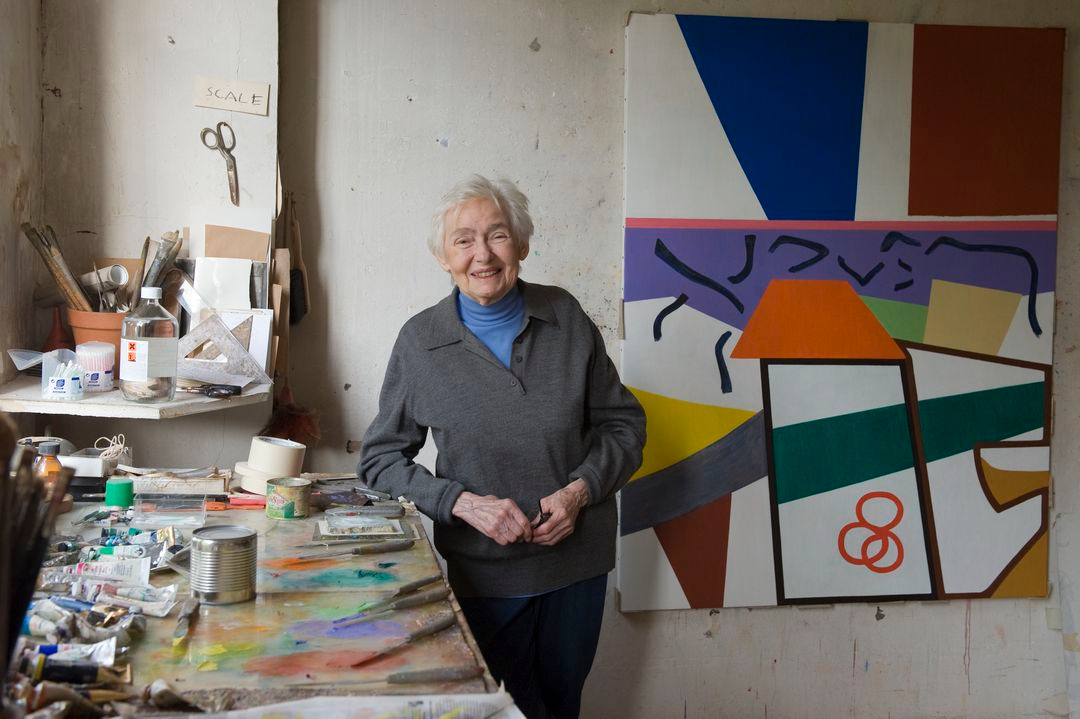
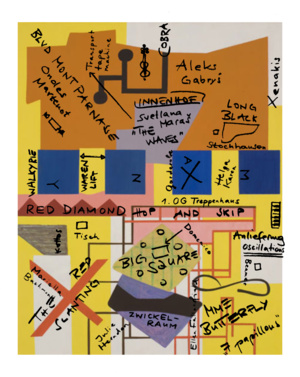
Born in New Jersey in 1923 as Shirley Sternstein, in 1949, the artist, now Mrs Jaffe, moved to Paris. Following her short-lived her marriage to the journalist Irving Jaffe, the painter decided to remain in France. Having soon established herself in the city, she held regular contact with the American “art expats” Norman Bluhm, Sam Francis, and Joan Mitchell, who had relocated to Paris somewhat later.
Her work dating from this period may be attributed to Abstract Expressionism, a form that sought to draw exclusively from its own resources and which consisted primarily of wildly applied fields of colour and gestures. Although, for the art market at the time, this amounted to a success formula Jaffe nevertheless decided to strike out in a different direction.

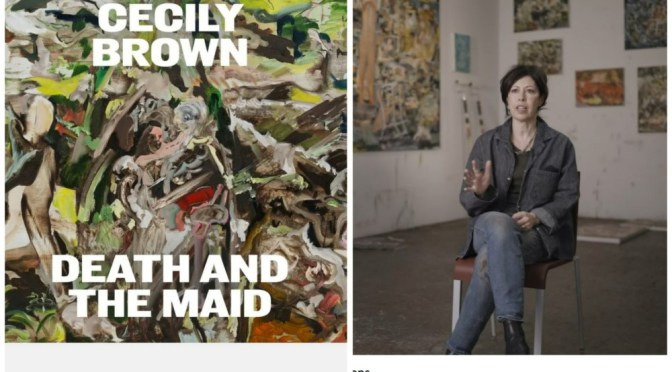
Cecily Brown: Death and the Maid assembles a select group of some fifty paintings, drawings, sketchbooks, and monotypes from across her career to explore the intertwined themes of still life, memento mori, mirroring, and vanitas—symbolic depictions of human vanity or life’s brevity—that have propelled her dynamic and impactful practice for decades. On view April 4th, 2023 through December 3rd, 2023.
Learn more about the exhibition: https://www.metmuseum.org/exhibitions…

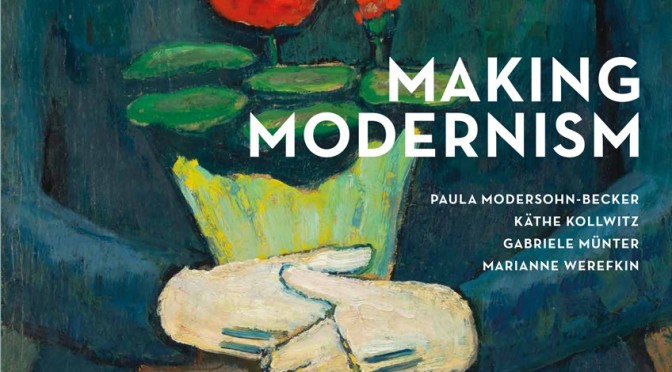
Watch Royal Academy curators Sarah Lea and Professor Dorothy Price discuss the pioneering work of four women making art on their own terms: Paula Modersohn-Becker, Kӓthe Kollwitz, Gabriele Münter and Marianne Werefkin.
Join Jane Panetta, the Nancy and Fred Poses Curator and Director of the Collection, as she discusses key works from Jennifer Packer’s exhibition of paintings and drawings.
Jennifer Packer is an American painter living and working in New York City. In 2020, she won the Hermitage Greenfield Prize and the Rome Prize. Packer won the Rome Prize at the American Academy in Rome 2020-2021.
Jennifer Packer: The Eye Is Not Satisfied With Seeing was initiated by Serpentine and curated by Melissa Blanchflower, Curator, Exhibitions and Public Art with Natalia Grabowska, Assistant Curator. The presentation at the Whitney is organized by Rujeko Hockley, Arnhold Associate Curator, and Jane Panetta, Nancy and Fred Poses Curator and Director of the Collection, with Ambika Trasi, Curatorial Assistant.
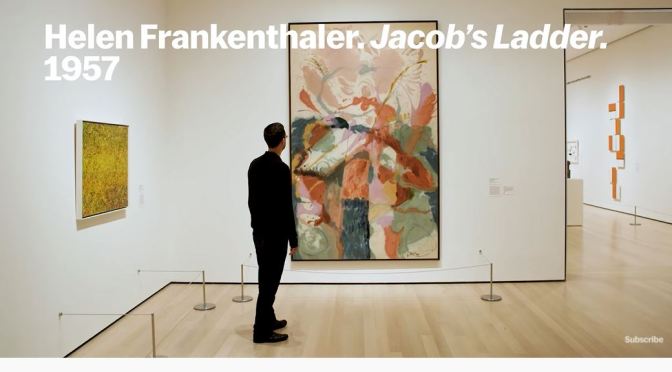
Alex Roediger, MoMA’s senior information coordinator, looks at Helen Frankenthaler’s “Jacob’s Ladder” (1957) with a painter’s eye, and finds that “more paint” isn’t always the key to making a dramatic statement—even in Abstract Expressionism.
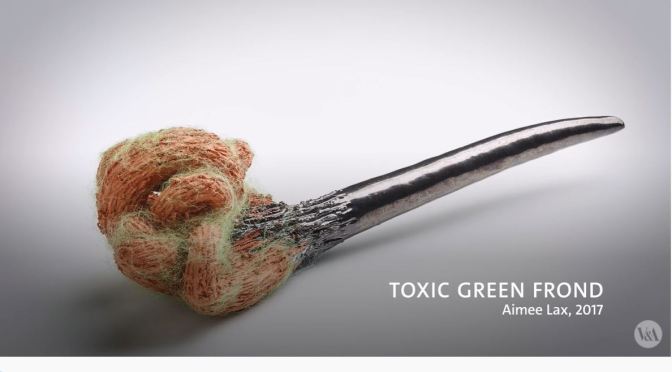
Aimee Lax is an artist whose work examines the fragility and strength of the natural world, showing how it can be simultaneously threatening and beautiful. During her residency she has focussed on the question of the Anthropocene, looking at the burial of nuclear waste and the strange morphological effects on organisms in areas exposed to nuclear radiation. Creating works which convey a sense of otherworldliness and the uncanny, she uses clay to illustrate the dangers of the past, present and future. Engaging Ceramics Artist in Residence October 2019 – July 2020.

 Boomers Daily