Villalago, located 25 km south of Sulmona, in the Abruzzo region of L’Aquila, arose in the 11th century for Christian and Benedictine inspiration, finding in San Domenico Abate the founder of the monastery of San Pietro il Lago, in the upper Sagittario valley. At its foundation the monastery was endowed by the Lords of those lands, the counts of Valva, with goods and privileges and attracted settlers from all over, who settled, under the monks, in several villas in the Valle de Lacu, so called for the its five lakes. Over time, to ensure a valid defense, they perched on Mount Argoneta, where some Lombard towers already stood, and the new village took the name of Villalago. In 1479 the monastery was abandoned by the Benedictines and the Villalaghesi “no longer colonists, they became a body of the University, with independent possessions” (Antinori, chorography of Villalago). And under the motto of “Universitas contra omnes”, they fought victoriously against the Belprato Counts of Antwerp and against others who aimed to take over the entire Valle de Lacu.
Video timeline: 0:00 – [Drone intro] 2:00 – [Walking tour begins / Piazza Celestino Lupi] 3:28 – [St.Mary of Loreto church☀️] 5:09 – […walking in the old town…] 10:36 – [Via Buccini] 16:44 – [Church of St.Michael – closed☀️] 18:00 – [Brief history of the town☀️] 24:00 – [Via Iafolla] 33:25 – [Old Castle of Villalago] 38:42 – [Church of the Madonna Addolorata – tour inside☀️] 41:00 – […descending…] 48:00 – [Via Ernesto Grossi] 50:30 – [Piazza Celestino Lupi]
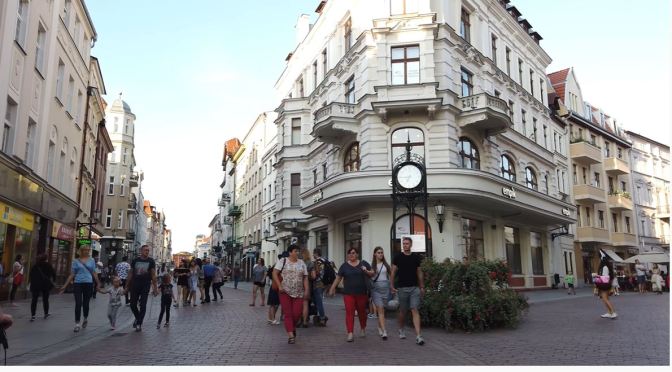
Toruń is a historical city on the Vistula River in north-central Poland and a UNESCO World Heritage Site. Its population was 201,447 as of December 2019. Previously, it was the capital of the Toruń Voivodeship and the Pomeranian Voivodeship.
The deep sea is rife with competition and conflict. Deep sea biodiversity relies on the scattered organisms interacting in order to survive, whether they’re working together in symbiosis, scavenging, being predated, or parasitising a host animal. But there is one ecological interaction that does more than any other to influence organisms to change and diversify, and thus plays an important role in the success of deep sea communities. The limited resources mean only a small number of niches can exist. Thus, there is greater competition between different species trying to fill the same niches. This explains why the deep sea has so much competition, for animals must share the ecosystem with other competing species all trying to consume the same limited resources.
Video timeline: 00:00 – An Introduction to Deep Sea Competition 01:31 – Chapter 1: A World of Quiet Conflict – The Reasons for Competition 02:22 – Chapter 1: A World of Quiet Conflict – The Trophic Levels 03:48 – Chapter 1: A World of Quiet Conflict – The Ecological Niches 05:21 – Chapter 2: Competition Between Species – Sea Floor Ecosystems 08:12 – Chapter 2: Competition Between Species – The Competitive Exclusion Principle 09:06 – Chapter 2: Competition Between Species – Resource Partitioning at Vents 11:48 – Chapter 3: Competition Within Species – Intraspecific Competition 12:63 – Chapter 3: Competition Within Species – Group Hunting Techniques 14:25 – Conclusion: The Importance of Ecological Competition
Bayeux is a town on the Aure river in the Normandy region of northwestern France, 10 kilometers from the Channel coast. Its medieval center contains cobbled streets, half-timbered houses and the towering, Norman-Gothic Cathédrale Notre-Dame. The famed 68-meter Tapisserie de Bayeux, an 11th-century tapestry depicting the 1066 Norman invasion of England, is on display in an 18th-century seminary.
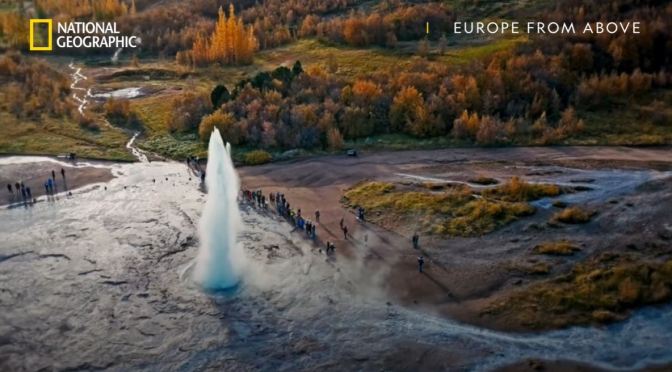
Europe From Above takes you on an unforgettable journey, full of unique adventures, to explore the spectacular features of six European countries: Norway, Croatia, Portugal, Switzerland, Ireland, and Iceland. Not only does this series show you the beautiful landscapes of each nation, but unravels the magical landmarks that each location has to offer.
From visiting Ireland’s precious grey seals, the magical Northern Lights of Norway and Croatia’s floating village, to exploring the Douro vineyard in Portugal, Iceland’s famous hot springs and stargazing from Swiss mountains, each adventure more exciting than the next. Come along on this trip and discover an amazing new perspectives on counties you thought you knew.
According to Rakuten Intelligence, the cost of a ride from a ride-sharing app like Uber or Lyft increased 92% between January of 2018 and July of 2021. Many riders have also noticed increased wait times for rides, and a recent driver shortage is likely to blame. In early July 2021, Uber and Lyft drivers were about 40% below capacity. The companies have taken notice of this driver shortage, and are investing millions worth of bonuses and base rates to convince drivers to return. But will it be enough to get drivers back on the roads?
Vernazza is one of the 5 centuries-old villages that make up the Cinque Terre, on northwest Italy’s rugged Ligurian coast. Colorful houses surround its small marina. The Santa Margherita di Antiochia Church has a bell tower topped by an elegant cupola. Clinging to the rocks, Doria Castle is a medieval defensive structure with a cylindrical tower. The Belforte bastion is just below it.
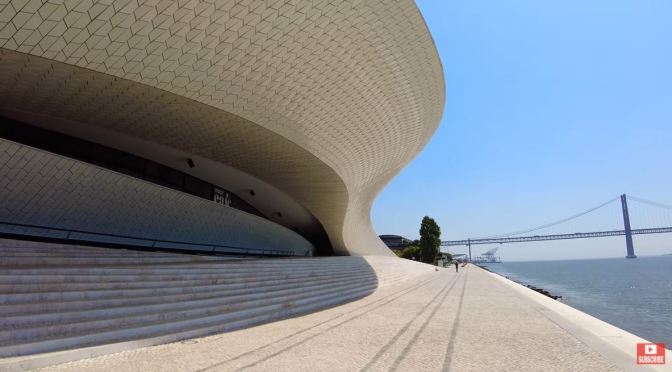
MAAT – Museum of Art, Architecture and Technology is the new cultural centre for Lisbon. It’s a museum where these three areas intertwine within a space of debate, discovery, critical thinking and international dialogue.
It’s an innovative project which establishes a connection between the new building, designed by Amanda Levete Architects’ studio, and Central Tejo Power Station, one of Portugal’s most prominent examples of industrial architecture from the first half of the 20th century, and one of the most visited museums in the country.
MAAT’s ambition is to present national and international exhibitions by contemporary artists, architects and thinkers. The programme will also include various curatorial perspectives on EDP Foundation’s private Art Collection, reflecting current subject matters and trends.
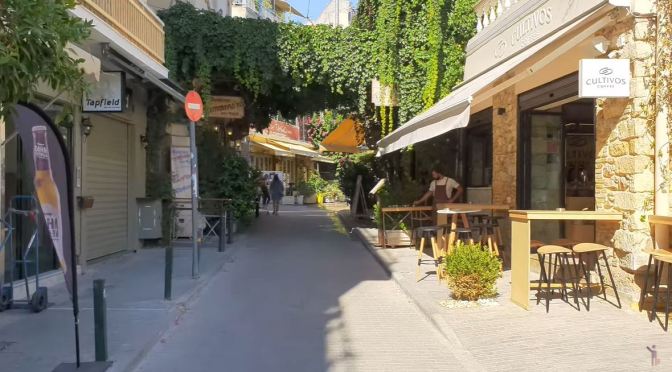
Athens is the capital of Greece. It was also at the heart of Ancient Greece, a powerful civilization and empire. The city is still dominated by 5th-century BC landmarks, including the Acropolis, a hilltop citadel topped with ancient buildings like the colonnaded Parthenon temple. The Acropolis Museum, along with the National Archaeological Museum, preserves sculptures, vases, jewelry and more from Ancient Greece.
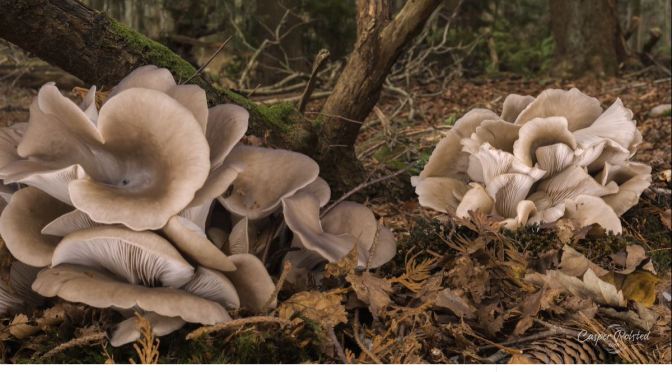
Immerse yourself in the exciting world of mushrooms. Shot in the most beautiful forests in Denmark. See and listen to this timelapse film in a quiet place where you will not be disturbed. Headphones are highly recommended.
Only in silence can we hear the song of nature.
FUNGI Fungi are living organisms that are made up of larger cells with a cell nucleus which contains all the genetic material. Fungi are thus what we call eukaryotic organisms, which is one of the three domains of biology: animals (Animalia), plants (Plantae) and fungi (Fungi). The rest of the eukaryotic organisms, which do not fit into these three kingdoms, are called protists.
Fungi is a kingdom with about 144,000 known and described species of organisms. But it is estimated that there may be between 2.2 million and 3.8 million total species. They can be single celled or very complex multicellular organisms. The fungi kingdom includes yeasts, rusts, smuts, mildews, molds, and mushrooms. Fungi are among the most widely distributed organisms on Earth and they are of very big environmental and medical importance.
MUSHROOMS Mushrooms are the fruiting bodies that some fungi produce – typically above ground on the soil or on decaying wood or other food sources. Mushroom varies in size, shape, color, and longevity. Some mushrooms are microscopic and completely invisible to the unaided eye while others are gigantic structures. The fine threads under-ground that makes up the main body of the fungi is called mycelium. The mycelium stretches out beneath the mushroom in search of water and food. Unlike a plant, a fungus can’t make its own food by using energy from the sun. Instead, the fungus produces enzymes which are released by the mycelium and break down dead plants and animals. This organic matter is then absorbed through the mycelium and used by the fungus for growth. The mushrooms, because of their size, are easily seen in fields and forests and consequently were the only fungi known before the invention of the microscope.
OYSTER MUSHROOMS Oyster mushrooms is the common name for the species Pleurotus ostreatus. The funghi normally grow naturally on and near trees in temperate and subtropic forests. They are found around the world including in the UK and Ireland, most of mainland Europe, Asia, and parts of North America. Unlike many fungi, these mushrooms are not seasonal and can be found all year round. Oyster mushrooms are one of the most widely consumed mushrooms in the world and are grown commercially in many countries. They aren’t just tasty; they can be really healthy to eat. They contain antioxidants and are high in several vitamins and minerals. They even have the potential to lower cholesterol levels, slow the spread of cancer and decrease inflammation in the body. Oyster mushrooms get their name from their oyster or shell shaped cap that grow in tiers or clusters. They have a very short or non-existent stem. The color is typically light grey or greyish-brown. Oyster mushrooms are medium to large in size with caps averaging from 5 to 25 centimeters in diameter. Oyster mushrooms use powerful enzymes to break down and eat hardwood. Oyster mushrooms are one of the few carnivorous mushrooms. The mycelia of oyster mushrooms secrete a powerful toxin to stuns passing microscopic nematode, which are small roundworms. The fungi use their sprawling fibers to seek out and enter the mouths of these microscopic nematodes and suck out their guts. This gives the fungi nitrogen for growth.






 Boomers Daily