
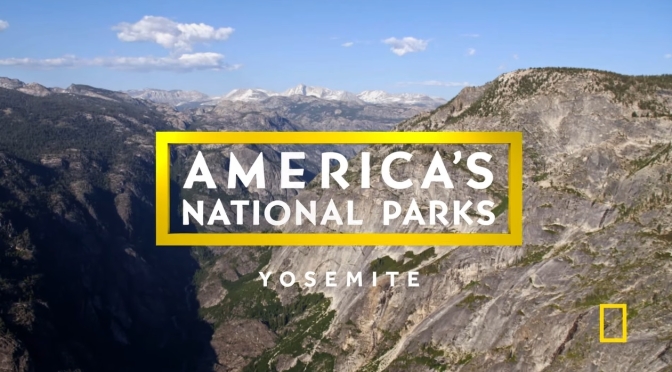
Yosemite National Park, scenic mountain region in east-central California, U.S. It is situated about 140 miles (225 km) east of the city of San Francisco and some 100 miles (160 km) southeast of Sacramento. Devils Postpile National Monument lies about 15 miles (25 km) to the east, and Kings Canyon National Park is about 40 miles (65 km) to the southeast. The park, surrounded on all sides by national forest lands, encompasses 1,189 square miles (3,080 square km). It was designated a UNESCO World Heritage site in 1984. Park headquarters are located at Yosemite Village in Yosemite Valley, in the west-central part of the park.
Tag Archives: Videos
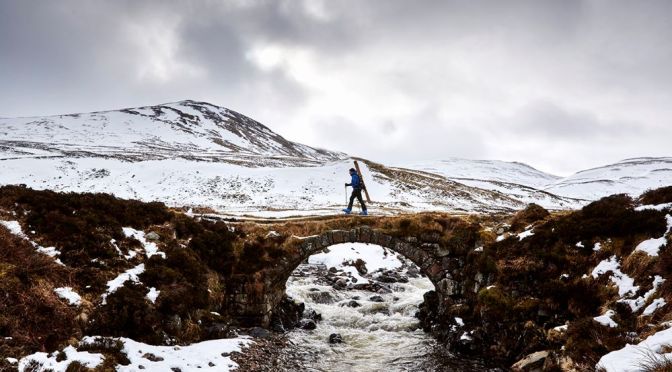
Short Films: ‘The Last Ski Maker In Scotland’ (2022)
The uncertain future of skiing in Scotland has inspired Jamie Kunka to make sustainable skis out of wood. Based in his cabin in the Scottish Highlands, Jamie is the last ski maker in Scotland.
Jamie began teaching himself how to make his wooden skis after watching a Vimeo Staff Pick about a wooden-surfboard maker in Vancouver Island, Canada. vimeo.com/27702618. Ten years on, The Last Ski Maker in Scotland is part homage to this original film and part a celebration of the power of film to inspire us all.
Jamie is still the only ski-maker in Scotland. Find him at lonelymountain.ski
Director / DP / Editor – Euan Wilding
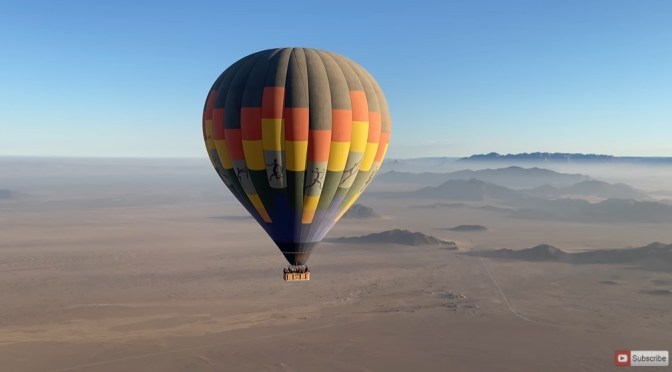
Desert Views: A Hot Air Balloon Flight In Namibia
The Namib is a coastal desert in Southern Africa. The name Namib is of Khoekhoegowab origin and means “vast place”.
Namibia, a country in southwest Africa, is distinguished by the Namib Desert along its Atlantic Ocean coast. The country is home to diverse wildlife, including a significant cheetah population. The capital, Windhoek, and coastal town Swakopmund contain German colonial-era buildings such as Windhoek’s Christuskirche, built in 1907. In the north, Etosha National Park’s salt pan draws game including rhinos and giraffes.

Village Walks: Cetara On The Amalfi Coast, Italy (4K)
Cetara is a cozy fishermen’s village nested along the Amalfi Coast among verdant citrus groves. The road that leads along the coast from Vietri sul Mare continues the length of the shoreline, overlooked by rugged hills and rocky seashore, past the fascinating villages of Raito and Albori, before continuing on almost straight to reach the ancient charming basin of Cetara.
Cetara’s name is derived from the Latin, Cetaria (meaning tuna-fishing nets), indicating its importance through the ages as a fishing settlement. It was under the political rule of the Republic of Amalfi for centuries. In 1551, Turkish armies raided and enslaved the Cetaresi, killing all those who did not embark with them. After this tragic episode, the survivors built a magnificent watch tower (nowadays used as private residence, but still standing and overlooking the tiny beach), while the majority escaped to Naples.
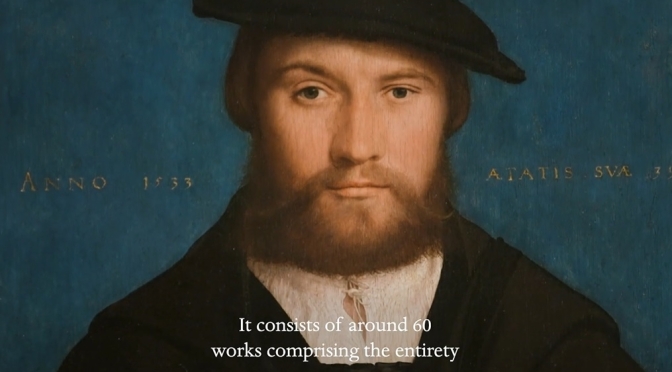
Morgan Library: ‘Holbein – Capturing Character’
Hans Holbein the Younger (1497/98–1543) was among the most skilled, versatile, and inventive artists of the early 1500s. He created captivating portraits of courtiers, merchants, scholars, and statesmen in Basel, Switzerland, and later in England, and served as a court painter to Tudor King Henry VIII (1491–1547). Enriched by inscriptions, insignia, and evocative attributes, his portraits comprise eloquent visual statements of personal identity and illuminate the Renaissance culture of erudition, self-fashioning, luxury, and wit. February 11 through May 15, 2022
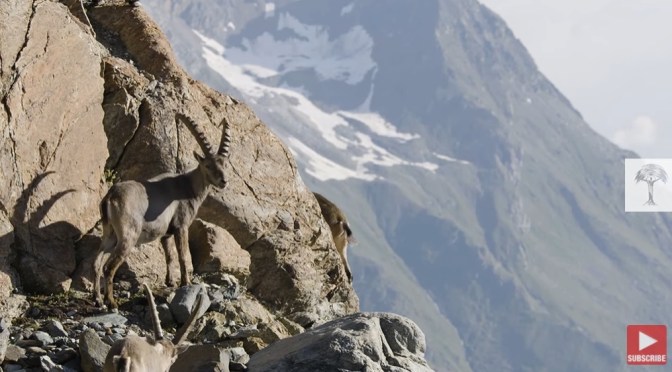
Wildlife: The Alpine Ibex – Return From Extinction
The ibex is the king of the Alps, famed for its curved horns and extreme climbing skills. But for centuries, these mountain goats were hunted by humans – to the very brink of extinction. A royal hunting reserve in Italy saved the Alpine ibex, but is climate change now threatening them all over again? We tell the story of their remarkable comeback and ask what the future might hold.
The Alpine ibex, also known as the steinbock, bouquetin, or simply ibex, is a species of wild goat that lives in the mountains of the European Alps. It is a sexually dimorphic species: males are larger and carry longer, curved horns than females. Its coat colour is typically brownish grey.
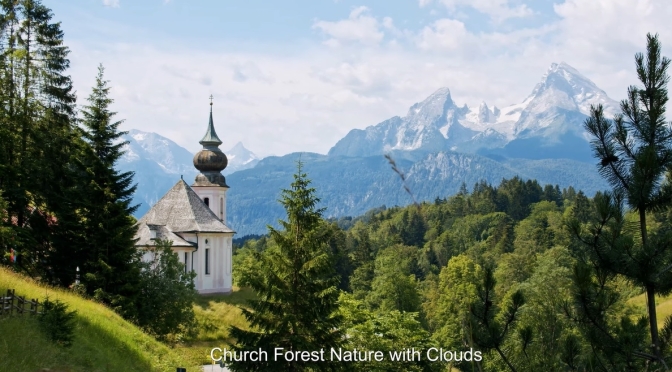
8K Views: The Palaces & Landscapes Of Germany
Germany is a Western European country with a landscape of forests, rivers, mountain ranges and North Sea beaches. It has over 2 millennia of history. Berlin, its capital, is home to art and nightlife scenes, the Brandenburg Gate and many sites relating to WWII. Munich is known for its Oktoberfest and beer halls, including the 16th-century Hofbräuhaus. Frankfurt, with its skyscrapers, houses the European Central Bank.

Mountain Views: Säntis In Eastern Switzerland (4K)
Säntis, Switzerland, a mountain peak with an extraordinary panorama of the Swiss Alps and stunning mountains views, the most beautiful scenery on top of the mountain. At 2,501.9 metres above sea level, Säntis is the highest mountain in the Alpstein massif of northeastern Switzerland.
It is also the culminating point of the whole Appenzell Alps, between Lake Walen and Lake Constance. Shared by three cantons, the mountain is a highly visible landmark thanks to its exposed northerly position within the Alpstein massif. As a consequence, houses called Säntisblick can be found in regions as far away as the Black Forest in Germany.
Säntis is among the most prominent summits in the Alps and the most prominent summit in Europe with an observation deck on the top. The panorama from the summit is spectacular. Six countries can be seen if the weather allows: Switzerland, Germany, Austria, Liechtenstein, France, and Italy.
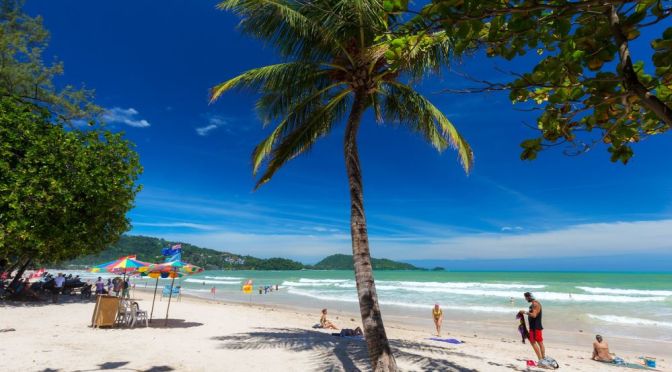
Walks: Patong Beach On Phuket Island, Thailand
Patong is a beach resort town on the west coast of Phuket Island, facing the Andaman Sea in the southwest of Thailand. Its sandy, crescent beach is lined with cafes, restaurants and bars. The famously raucous nightlife scene features beer bars, go-go bars, nightclubs, massage parlors and cabarets that overflow into the street along neon-lit Bangla Road and in the Patong OTOP Shopping Paradise complex.
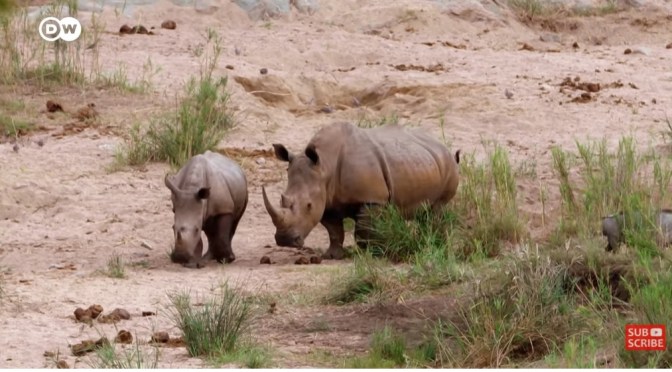
Views: Saving The White Rhinos Of South Africa
Poachers kill at least one rhino a day in South Africa. Their horns are in huge demand on the black market, and are worth more than gold. Anti-poaching squads are now increasingly better equipped: with night-vision equipment, drones and thermal imaging cameras.
Covering some 20,000 km2, Kruger National Park is one of the largest game reserves in Africa. It’s home to the biggest population of white rhinos in South Africa – and also the highest number of rhinos killed by poachers. One major problem for ranger teams is their small size in comparison to the vast area of territory involved. Another is the widespread poverty in the many villagers bordering the park – and it’s here that you ultimately have to begin if you want to win the battle to save the rhinos.
Vince Barkas has 30 years’ experience working in wildlife conservation, and little confidence in the current system’s effectiveness in protecting rhinos. In 1992 he founded the anti-poaching unit “Protrack”. Its teams operate in the Greater Kruger, which includes private wildlife reserves neighboring the national park.
Over the decades he says he’s seen no change, despite rangers being better armed and equipped, and wants to see new options: “We’ve shot poachers, arrested poachers, beaten up poachers. Everything. But we’ve never sat down and spoken.” Vince Barkas believes in the power of dialog rather than violence. He and his son Dylan made their way to Mozambique – where many of the poachers who kill rhinos in the Kruger National Park hail from.
Their journey takes them to the town of Massingir, where Barkas Snr. first began talking to poachers a number of years ago. The problem, he says, is rooted in the very concept of wildlife conservation: “We’ve made wildlife a rich white man’s thing – where white people hunt and benefit from it, and go to lodges etc. And we’ve kept black people out of it – behind a fence. We’ve got to change that approach.”
 Boomers Daily