Tag Archives: Sleep

Society: Sleep Industry Helps Consumers “Sleep Less, More Productively” As Their Health Worsens

From a The Architectural Review online article (April 9, 2020):

The Long Sleep by Briton RiviereThe sleep industry caters to a working consumer’s wish to sleep less, yet sleep more productively, and accommodates transnational industry which has joined the state as a custodian of biopolitics. Jonathan Crary’s 24/7 spells out in detail how the state and a capitalist economy are encroaching stupendously on the private sphere, in which sleep was one of the last vestiges of unfettered time.

About 15 years ago, someone calculated the financial loss US companies incurred through workers’ illicit practice of sleeping on the job. Indeed, the trope of the lazy sleeper is an old one, resignified at present in our more than callous attitude towards the homeless, whose sleeping bodies punctuate many a journey to and from work.

Even in this most passive stance – someone simply disregarding normative codes and regulations by giving in to a physical need – sleep seems suspiciously subversive. Less an act than a way of being, the sleeper, by sleeping when and where it is not condoned, challenges everyone else, who is doing/working/functioning/functionalised. Contrary to the tree falling in the forest, the sleeper in the workplace or in public space affects and thus ever so slightly transforms those around them.
Read more

Survey: Most Americans “Feel Sleepy” 3+ Days Per Week, With Negative Impact On Daily Life (NSF)

National Sleep Foundation logo

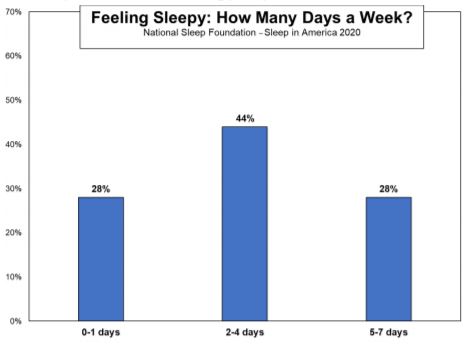
Just 16 percent say they don’t feel sleepy at all in a typical week (this excludes sleepiness at bedtime and when waking up). About half, by contrast, feel sleepy anywhere from three to seven days a week. That includes a big gender gap: Women report feeling sleepy 3.4 days a week, on average; men, 2.7 days. 

Feeling Sleepy How Many Days A Week National Sleep Foundation Poll March 2020


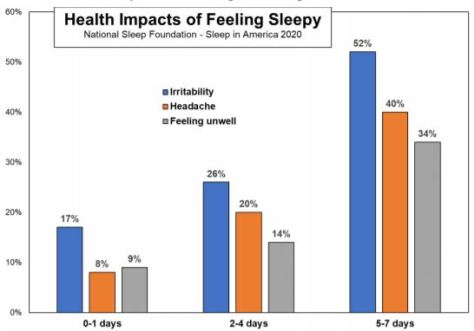
Among the approximately three in 10 Americans who have feelings of sleepiness on five to seven days a week, 52 percent report often or sometimes experiencing irritability when sleepy; 40 percent, headaches; and 34 percent, feeling unwell apart from headaches. Each is far higher than among those with fewer experiences of sleepiness.

Health Impacts of Feeling Sleepy - 2020 Sleep Foundation Study March 2020

Read full study

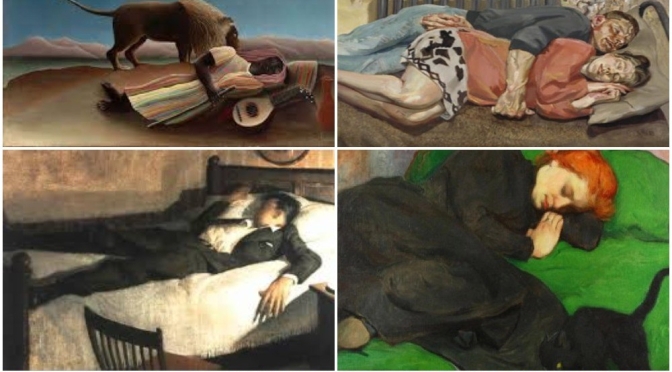
Health Lecture: “Sleep Medicine, Art & Literature” By Professor Meir Kryger

Sleep medicine, art and literature – ars longa, vita brevis. Organised by the Sleep Medicine Section 4 February 2020.

Professor Meir Kryger, Author and Professor, Yale School of Medicine – Sleep Disorders & Effective Treatments.

Lecture: Sleep in art: A 7000 year odyssey

Website

Study: “Dysfunctional And Variable Sleep” Increases Risks Of Cardiovascular Disease

From a MedPageToday.com online article (March 2, 2020):

Journal of the American College of CardiologyDysfunctional sleep likely is by far the most prevalent comorbidity in CVD. This makes it essential to explore the nature of sleep, but this is reliant on the enthusiasm of clinician scientists,” according to the editorialists.

“In modern society, both the quantity and quality of sleep are negatively influenced by factors such as longer hours of work, more shift work, artificial light and cell phones, all leading to self-reported daytime symptoms such as fatigue, tiredness, and sleepiness,”

A larger range in individual sleep duration and sleep timing across 7 days of wrist actigraphy was associated with significantly more CVD events over a median 4.9 years of follow-up (P=0.002 for both trends).

Read abstract of Study

Read full article

“2020 Philips Sleep Survey”: 50% Of People Sleep Poorly, With Decrease In Those Trying To Improve It

From a Philips “2020 Sleep Survey” online release (Mar 2, 2020):

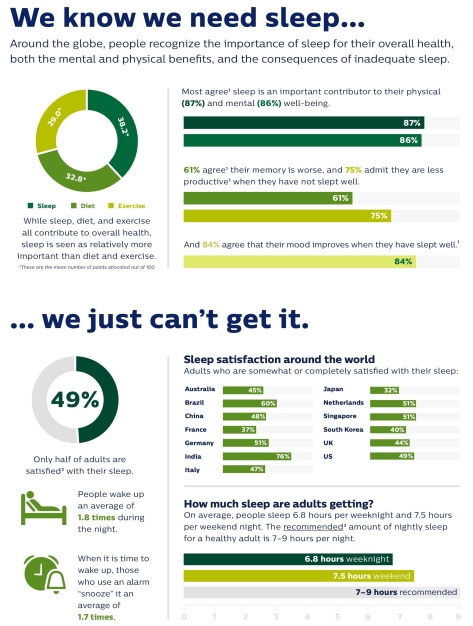
Philips Global Sleep Survey 2020“The decrease in people taking action to improve sleep is alarming, especially when it is clear people around the world deeply value sleep. Sleep deficit impacts people both mentally and physically, so we need to educate people on available sleep resources and empower them with the confidence that their efforts will pay off,” said Mark Aloia, PhD, Global Lead for Behavior Change, Sleep & Respiratory Care at Philips.

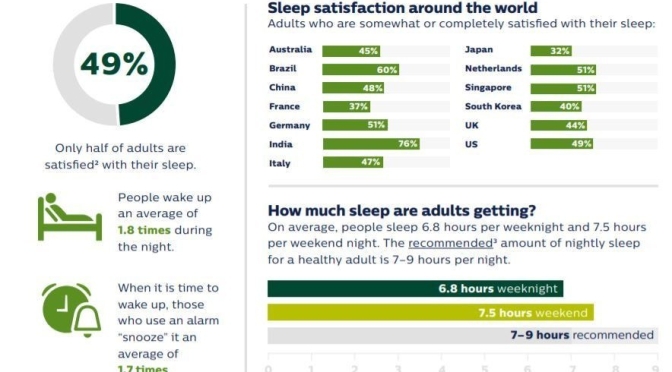
2020-Philips-WSD-Report-page-3

Only 49% of people are satisfied with their sleep, with worry/stress reported as the most limiting factor to a good night’s sleep (33%). Interestingly, fewer people in 2020 are taking action to improve sleep compared to 2019, with nearly all listed strategies to improve sleep lower or consistent in 2020 when compared to 2019 results. For example, reading before bed was the most popular strategy used to improve sleep in 2019 (39%), but only 28% of people report reading to improve sleep in 2020. Other notable distinctions in sleep-related behavior appeared across age and gender differences.
.

Study: Added Sugars In Diet Lowers Sleep Quality For Women, Increasing Heart Disease Risks (AHA)

Journal of the American Heart Association study (Feb 17, 2020):

American Heart Association AHA logoThe association between poor overall sleep quality and greater consumption of added sugars observed in the current study aligns with previous findings that intakes of confectionary and sugar‐sweetened beverages were higher in middle‐aged Japanese women reporting poor, compared with good, sleep quality.
Background – Poor sleep increases cardiovascular disease risk, and diet likely contributes to this relationship. However, there are limited epidemiological data on the relationship between measures of sleep quality and habitual dietary patterns. This study examined these associations in a diverse sample of women.

Both short sleep duration and poor sleep quality are associated with the development of obesity, type 2 diabetes mellitus, and cardiovascular disease (CVD), and it is likely that the relationship between sleep and cardiometabolic disease risk is partially mediated by diet.5 Indeed, experimental studies demonstrate that restricting sleep duration leads to increases in energy intake, confirming associations of short sleep with higher energy intakes in observational population‐based studies.

Read full study

Sleep Studies: Even Low-Levels Of Light At Night Causes Diabetes In Elderly

From a Sleep Medicine online release (January 2020):

Sleep Medicine January 2020Our findings suggest that LAN (low-level light at night) exposure increases the incidence of diabetes in a general elderly population. Further research involving a large cohort with new-onset diabetes is warranted to elucidate these findings.

Highlights

  • Humans are commonly exposed to light at night.
  • Higher light exposure at night was significantly associated with higher incidence rate of diabetes.
  • The association was consistent in the analysis using the cut-off values of LAN as 3 and 5 lux.
  • Strengths include large samples adjusting a number of confounders.

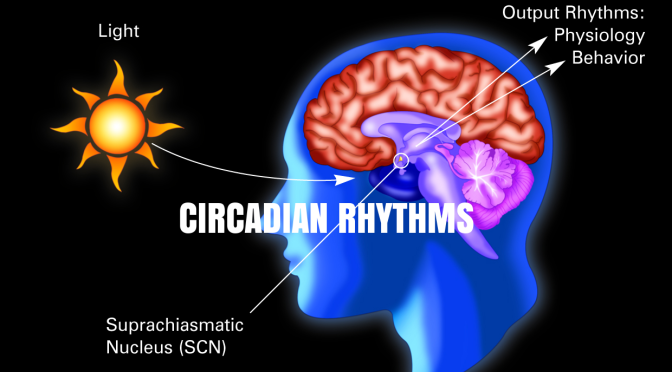
The circadian timing system, located within the suprachiasmatic nucleus of the hypothalamus, controls fundamental energy homeostasis. Clock gene mutations induce obesity in mice, and the disruption of internal circadian rhythms decreases daily energy expenditures and leptin levels in humans. Light information received by the brain influences human circadian timing and metabolism; low-level light at night (LAN) significantly increased body mass and led to prediabetes in mice. In humans, bedroom LAN affected obesity parameters; however, the association between LAN and the incidence of diabetes in humans has not been studied.

Read more

Studies: Irregular Sleep Disrupts Pancreatic “Circadian Rhythms”, Leading To Type 2 Diabetes

From a Technology Networks online article:

Technology NetworksBy comparing the pancreatic cells of type 2 diabetic human donors with those of healthy people, researchers at the University of Geneva (UNIGE) and at the University Hospitals of Geneva (HUG), Switzerland, were able to demonstrate, for the first time, that the pancreatic islet cells derived from the Type 2 Diabetic human donors bear compromised circadian oscillators.
The disruption of the circadian clocks was concomitant with the perturbation of hormone secretion. Moreover, using clock modulator molecule dubbed Nobiletin, extracted from lemon peel, the researchers succeeded in “repairing” the disrupted cellular clocks and in partial restoring of the islet cell function. These results, published in the Proceedings of the National Academy of Sciences of the United States, provide a first insight into innovative approach for diabetes care.

PNAS Pancreatic Islets from type 2 diabetes

Read full study

The circadian clock system (from Latin “circa diem”, about a day) allows the organisms to anticipate periodical changes of geophysical time, and to adjust to these changes. Nearly all the cells in our body comprise molecular clocks that regulate and synchronize metabolic functions to a 24-hour cycle of day-night changes.

Today, increasing evidence show that disturbances in our internal clocks stemming from frequent time zone changes, irregular working schedules or ageing, have a significant impact on the development of metabolic diseases in human beings, including type-2 diabetes. Such disturbances seem to prevent the proper functioning of the cells in the pancreatic islet that secrete insulin and glucagon, the hormones that regulate blood sugar levels.

To read more

Sleep Health: “The Neurology And Psychology Of Insomnia”

From a Psychology Today online article:

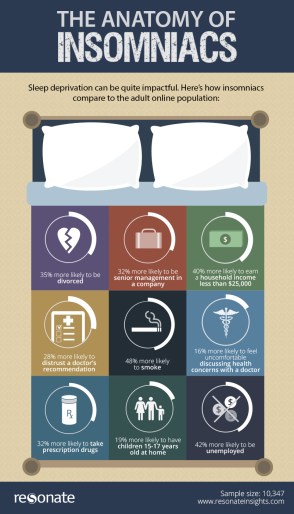
For those with insomnia, however, the stressor appears to be the lack of sleep, and the desire for sleep becomes a stressor in itself. In other words, the fixation on getting sleep leads to feelings of stress over not falling asleep, which begins a vicious loop. According to a model first proposed by Kales et al. in 1976, patients The Anatomy of Insomniacs infograpiccan develop a conditioned fear of not being able to sleep, which puts them in a state of hyperarousal when they attempt to fall asleep. This makes their inability to sleep a self-fulfilling prophecy.

Insomnia is the most common sleep condition in the world, with half of adults globally reporting occasional episodes. Chronic insomnia, though far less prevalent, affects as many as 10 to 15 percent of the adult population.

Though these sleep problems are extremely common, the neurobiological mechanisms behind insomnia are not entirely understood. Research suggests that emotional stressors do play an outsized role in contributing to sleep problems, and it is well documented that mood and anxiety disorders are common comorbidities with insomnia. This seems like common sense. Emotional arousal, whether due to a state of anxiety or because of intrusive thoughts, makes it difficult to relax, thereby inhibiting one’s ability to either initiate sleep or get back to sleep after waking.

To read more

Studies: Alzheimer’s Disease Linked To Poor Sleep In Older Adults

From a MedPageToday online article:

Science Translational Medicine“Amyloid is important in initiating disease, but the actual damage in the brain is probably due to the accumulation of tau,” Holtzman told MedPage Today. “Normally, tau protein is inside cells, but there is more and more evidence suggesting that its spread to different parts of the brain is responsible for the progression of Alzheimer’s disease.”

Two studies in January explored how sleep might be associated with Alzheimer’s tau pathology. The first, led by Brendan Lucey, MD, and David Holtzman, MD, both of Washington University in St. Louis, found that older adults who had less slow-wave sleep had higher levels of brain tau.

The findings, published in Science Translational Medicine, suggested that poor quality sleep in late life may signal deteriorating brain health.

Sleep patterns predicted amyloid and tau burden, reported Matthew Walker, PhD, of the University of California Berkeley, and co-authors, in June.

To read more