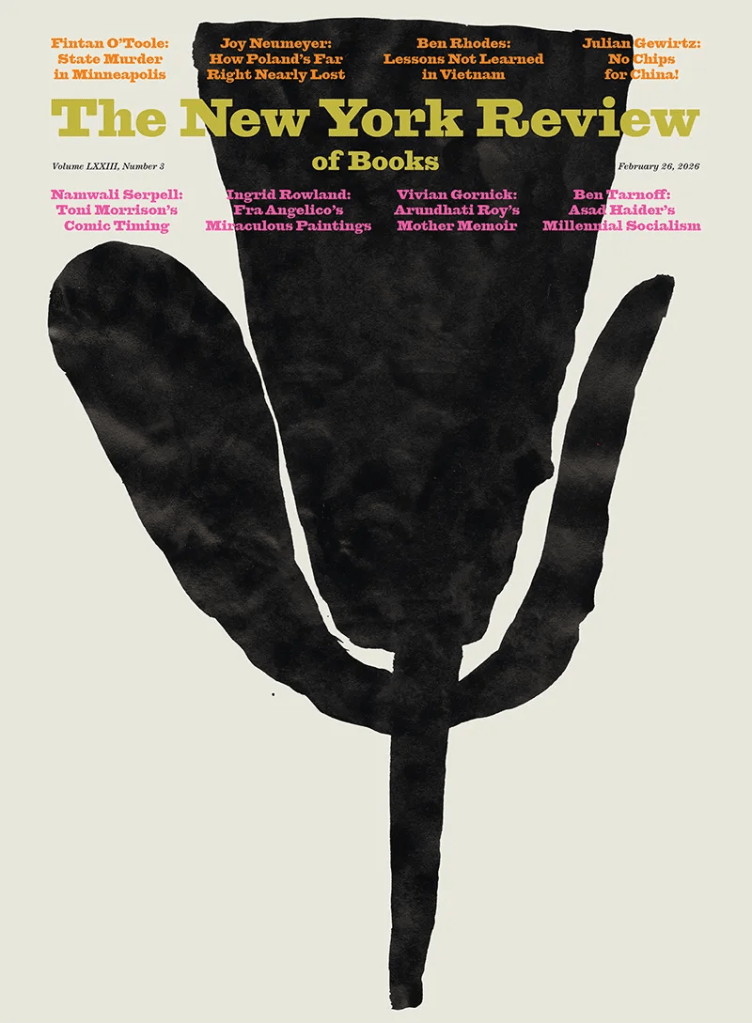
President Trump’s reversal of a ban on sales of advanced semiconductors to China undercut the strategic logic behind years of American policy that was meant to keep the US ahead in the race to develop AI systems.
The Gilded Cage: Technology, Development, and State Capitalism in China by Ya-Wen Lei
The Thinking Machine: Jensen Huang, Nvidia, and the World’s Most Coveted Microchip by Stephen Witt
The Nvidia Way: Jensen Huang and the Making of a Tech Giant by Tae Kim
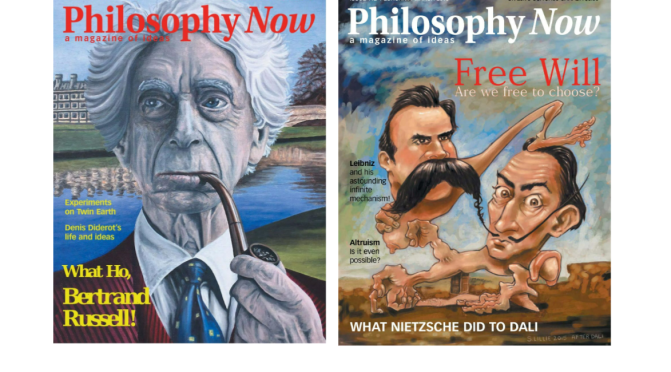
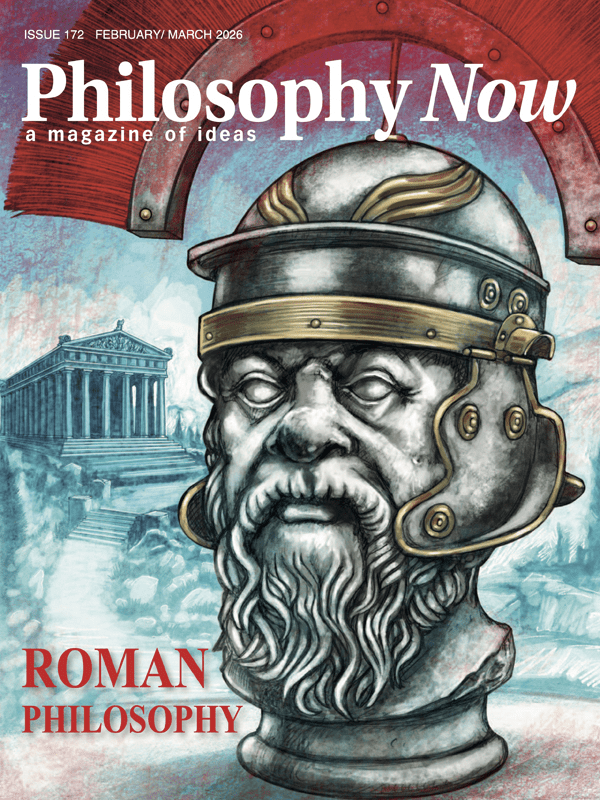
Texas Prof Banned from Teaching Plato • Chatbots Have Favourite Philosophers • Singer Fears AI Doesn’t ‘Get’ Animal Rights — News reports by Anja Steinbauer
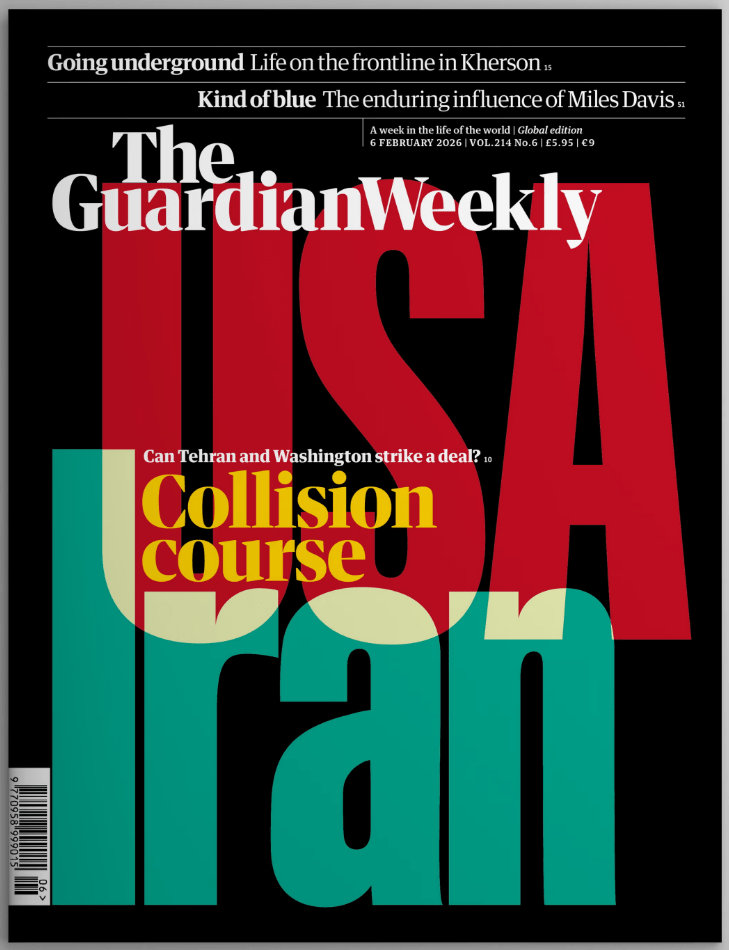
Have Donald Trump’s hard talk and the arrival of a strike-ready flotilla finally made Tehran blink? It certainly seemed so by Monday evening, when Iran said it was willing to talk. A week of trading threats turned to strong indications that Steve Witkoff, Trump’s envoy, and Abbas Araghchi, Iran’s minister for foreign affairs, were readying to meet in Istanbul on Friday. In this week’s big story, Ashifa Kassam and Andrew Roth chart how momentum to war slowed and fears of a wider regional conflict eased, albeit marginally.
The background to Trump’s war of words against Tehran was the huge protests that rocked Iran last month, until they were brutally repressed by the regime. Analysts suggest a fragile domestic security situation prompted the Iranian government’s softening towards US demands. Our diplomatic editor and longtime Iran watcher, Patrick Wintour, explains that while the streets are now quiet, a shift in the balance of power between the people and the government has emboldened domestic demands for a full investigation of the killing and imprisonment of protesters.
Spotlight | The Epstein files, part two Daniel Boffey details the biggest bombshell among the 3m newly released documents: disgraced former minister Peter Mandelson’s deep and compromising relationship with the convicted paedophile
Environment | Nature runs wild in Fukushima Free of human habitation after the 2011 earthquake, tsunami and nuclear meltdown, Fukushima is now teeming with wildlife. But this haven could vanish if people come back, finds Justin McCurry
Features | From hope to despair The postwar new town of Newton Aycliffe with its boarded up shops is a symbol of the Britain’s economic gloom – and a warning for Labour as it battles the rise of Reform UK, reports Josh Halliday
Opinion | Art, groceries, Greenland – thieves are everywhere Jonathan Liew reflects on how we all seem to live in a world defined by petty theft and no one, whether it’s the pickpocket or the big AI company, seems to get punished
Culture | Small acts of magic Mackenzie Crook tells Zoe Williams how his approach to comedy has mellowed with age. Gone is the nervous, awkward energy of Gareth from The Office, to be replaced by the gentle curiosity that animates his new series Small Prophets
THE NEW YORKER MAGAZINE: The latest issue features Nathan Heller on Gavin Newsom, Joshua Yaffa on Russia’s single-use agents, Michael Schulman on A.I. in film, and more.
California’s governor has been touted as the Democrats’ best shot in 2028. But first he’ll need to convince voters that he’s not just a slick establishment politician. By Nathan Heller
How Russian military intelligence is recruiting young people online to carry out espionage, arson, and other attacks across the Continent. By Joshua Yaffa
Here’s a question I often bat around with graduate students in my International Political Economy seminar: In book 12 of the Odyssey, how do the shipmates know which Ulysses to trust?
You know the story. Ulysses and his crew have been on Circe’s island for a year. They’re finally about to depart when the goddess takes Ulysses aside and warns him of the dangers that await them. The first of these is the “piercing songs” of the Sirens. “So listen,” she says, “I will give you good instructions; another god will make sure you remember.”
Circe tells Ulysses to put wax in his sailors’ ears but that he can listen to the Sirens if he wants to — as long as his shipmates bind him “hand and foot” to the mast: “So bound, you can enjoy the Sirens’ song. But if you beg your men to set you free, they have to tie you down with firmer knots.”
As their ship approaches the Sirens’ sharp rocks, the wind dies down, they pull the sails, and they begin to row. As predicted, Ulysses yells out to his men to set him free. He is still their captain. But instead of obeying his orders, Eurylochus and Perimedes stand up and “tie him down with firmer knots.” How, I ask my students, do they know to trust the first Ulysses over the second? How is it that as readers, we never question their choice?
Albert Kahn has been called “the father of industrial architecture” and “the architect of Detroit.” His firm was certainly prolific: it was responsible for the Ford Motor Company of Canada factory in Toronto, near a laneway that bears his name, and the General Motors assembly plant in Regina, along with nearly 900 buildings in Motor City alone. Kahn’s oeuvre encompassed offices, grand homes for his industrialist clients, and libraries and fraternity houses at the University of Michigan, in Ann Arbor, not to mention a post office, a synagogue, and multiple hospitals and skyscrapers. Many of Kahn’s buildings reflect a pastiche of styles that might be considered a precursor of a postmodern eclectic. Yet this prolific architect is relatively unknown today, especially outside of Michigan.
Albert Kahn Inc.: Architecture, Labor, and Industry, 1905–1961 by Claire Zimmerman
The mood on the Sea Adventurer’s bridge was grim. “She’s only making eight knots,” said our expedition leader. “We need to hit at least fourteen to keep to our itinerary.” We were four days into a two-week sailing and anchored off Ilulissat, near a UNESCO World Heritage site nestled into the crenellated western coast of Greenland.
Earlier that day, I had found myself at the helm of a Zodiac, manoeuvring the rubberized craft through thick fog, near-freezing water, and growlers. The ten high-paying passengers under my care likely had no idea that this was my first trip with the tour operator or my first time north of the Arctic Circle.
THE NEW YORK TIMES MAGAZINE: The 2.1.26 Issue features Emily Bazelon and Rachel Poser on what’s going on inside the F.B.I.; Taffy Brodesser-Akner on “Operation Mincemeat”; Michael Steinberger on the human rights lawyer Philippe Sands; and more.
The state is in a standoff with the federal government over who has the power to investigate the killing of protesters. It’s not a fair fight. By Emily Bazelon
With 300,000 employees gone and collective-bargaining rights eliminated, the administration has hobbled organized labor. Did it also start a movement? By Dan Kaufman
News, Views and Reviews For The Intellectually Curious











 Boomers Daily