

Join #PrincetonUPress author, @martin_puchner at the @bostonathenaeum for an in-person discussion of his latest book, Literature for a Changing Planet on January 18, 2022 at 12:00PM ET. For more information and registration, see below: https://t.co/A0eM7ACv7C pic.twitter.com/8YspTw6yDT
— Princeton University Press @princetonupress.bsky.s (@PrincetonUPress) January 11, 2022
Tag Archives: Reviews
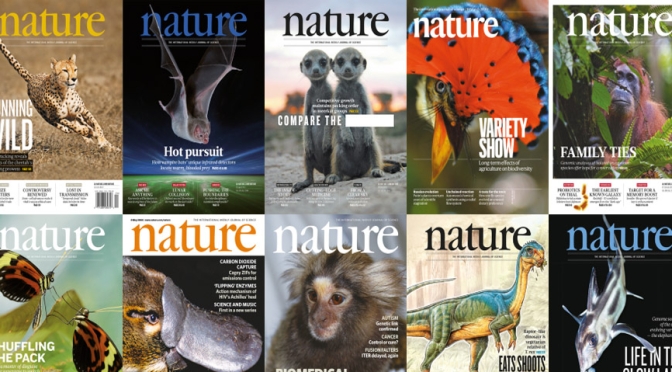
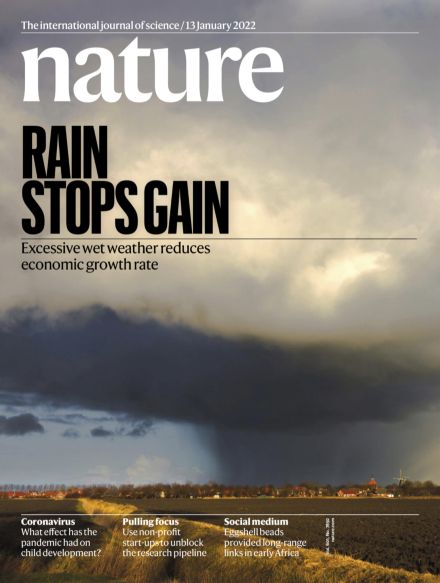
Front Covers: Nature Magazine – January 13

Preview: Times Literary Supplement – January 14

Previews: New Scientist Magazine – January 8

Reviews: ‘Greek Myths’ By Gustav Schwab (Taschen)
This collection of 47 tales from Gustav Schwab’s seminal anthology of Greek myths stages the illustrious exploits of Heracles, Jason, Odysseus, and a host of heroes.

Through the masterful drawings of Clifford Harper and artworks from the leading figures of the Golden Age of Illustration, including Walter Crane, Arthur Rackham, and Virginia Frances Sterrett, the world of Greek mythology is reimagined into life.
The Greek myths are timeless classics, whose scenes and figures have captivated us since ancient times. The gods and heroes of these legends hold up a mirror to the human condition, embodying universal characteristics and truths – whether it be the courage of Perseus, the greed of Midas, the vaulting ambition of Icarus, the vengeance of Medea, or the hubris of Niobe. These traits are the basis for immortal dramas and rich narratives, as profound as they are entertaining, which form the bedrock of our culture and literature today and remain relevant and fascinating for all readers, young and old alike.
Gustav Schwab (1792–1850) was a German author, teacher, and professor. From 1828, Schwab worked at Johann Friedrich Cotta’s eponymous publishing house in Stuttgart, where he was a patron and mentor of young authors. After issuing a collection of his own poetry, he composed the seminal Sagen des klassischen Altertums (Gods and Heroes: Myths and Epics of Ancient Greece, 1838–1840), an indispensable standard work of Greek mythology that has popularized its tales in Germany and across the globe.
Previews: New Scientist Magazine – January 1, 2022

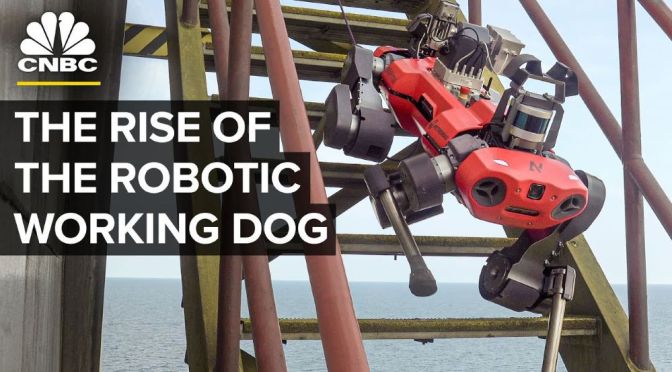
Technology: The Rise Of Robotic Working Dogs
A number of four-legged robot dogs made by companies like Boston Dynamics, Anybotics and Ghost Robotics have been deployed in the workforce already for applications like inspections, security and public safety among others. At their core, these four-legged robots are mobility platforms that can be equipped with different payloads depending on the type of information that companies want to gather.
Experts predict the insurance industry alone will spend $1.7 billion on robotics systems in 2025. And other industries may follow suit. Amid the pandemic, a tight job market is forcing many companies to turn to automation. A survey done in December of 2020 by McKinsey, showed that 51 percent of respondents in North America and Europe said they had increased investment in new technologies during 2020, not including remote-work technologies.
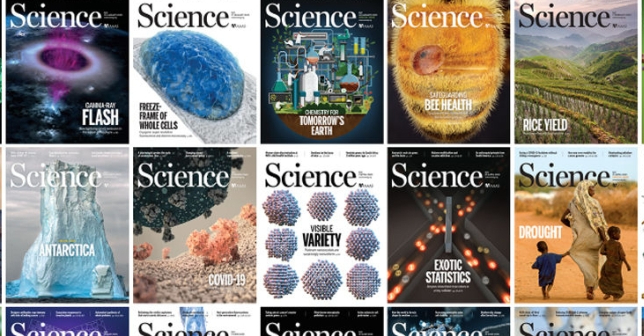
Cover Preview: Science Magazine – December 24

Review: Math & Computer Science Discoveries (2021)
It was a big year. Researchers found a way to idealize deep neural networks using kernel machines—an important step toward opening these black boxes. There were major developments toward an answer about the nature of infinity. And a mathematician finally managed to model quantum gravity. Read the articles in full at Quanta Magazine: https://www.quantamagazine.org/the-ye…

2021 In Review: National Geographic’s Top Images
ABC News’ Linsey Davis speaks with Pulitzer Prize-winning photographer Lynsey Addario about some of the top images from National Geographic’s “Year in Pictures” issue.
 Boomers Daily