The Sahara has cycled between eons of bountiful life and arid desolation. What will it mean when the world’s largest desert turns green once again? By Henry Wismayer | Photographs by Marcus Westberg
Choreography that changed the language of dance, avant-garde costumes by runway designers, music that defined a new American sound. As her company turns 100, an inside look at the enduring world of Martha Graham. Photographs by ioulex | Text by Jacoba Urist
She was known as Vicky With Three Kisses—a German radio star whose singing and sweet talk comforted weary Nazi soldiers. She was actually a secret weapon in a little-known Allied propaganda effort. By April White
In central Texas, ranchers are beset by threats, from coyotes to drought and foreign competition. To protect their flocks from predators and help preserve their own way of life, they’re turning to the ancient know-how of man’s best friend. By Chris Pomorski | Photographs by Jordan Vonderhaar
In A House for Miss Pauline, the Jamaican novelist Diana McCaulay examines her family’s shadowy history by telling the story of a woman who builds her house with the remains of the manor of a former slave plantation.
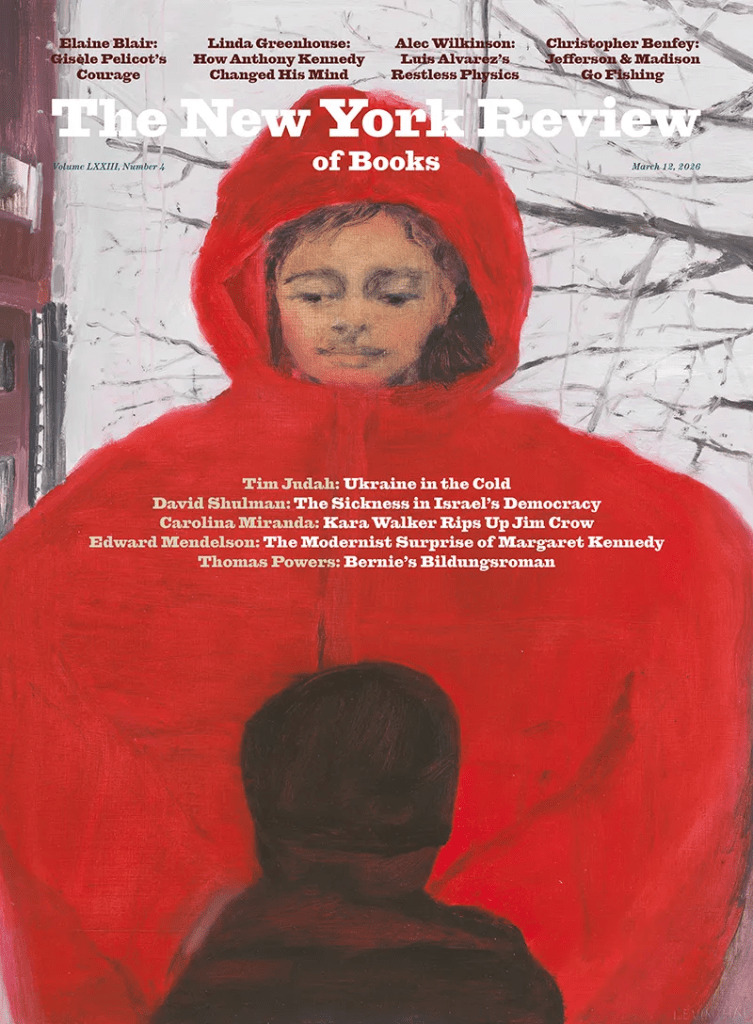
Four years after their full-scale invasion, the Russians are trying to freeze Ukraine into submission by relentlessly attacking the country’s energy grid.
What Bernie Sanders brought to the job of mayor of Burlington and what he did with it help explain what matters to him and how he fits into American political argument.
Bernie for Burlington: The Rise of the People’s Politician and the Transformation of One American Place by Dan Chiasson
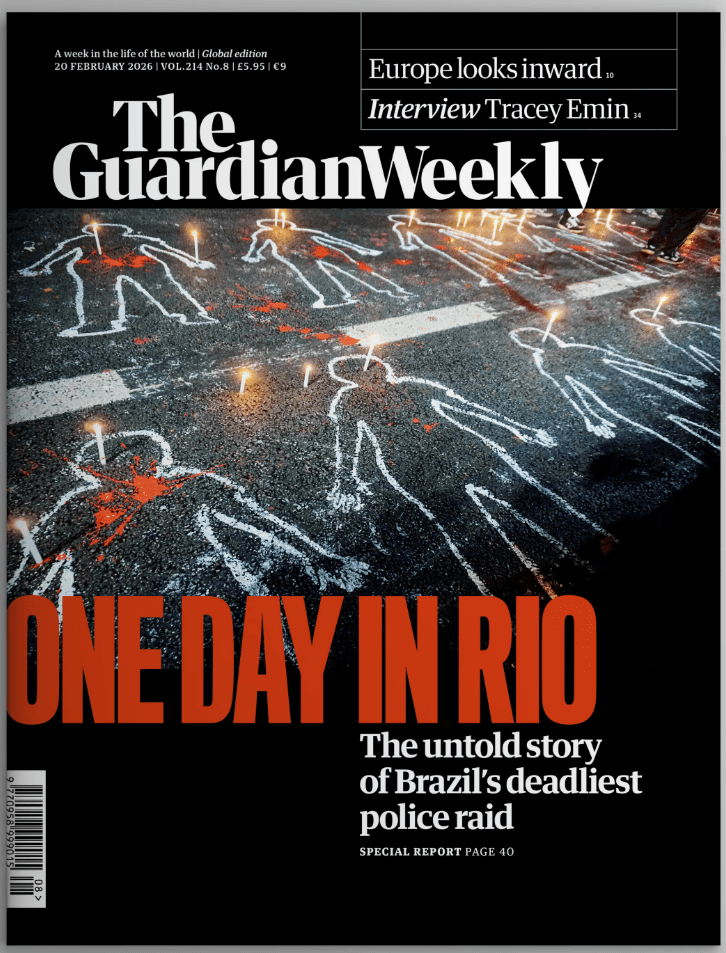
The first shots of an infamous day were fired in Rio’s Complexo da Penha favela at 4.30am. It was 28 October 2025 and the deadliest police raid in Brazil’s history had just begun. By the end of the day, 122 people, including five police, were dead.
The raid, nicknamed Operation Containment, was intended to apprehend members of one of the country’s most powerful organised crime groups, the Red Command – and in particular its kingpin, Edgar Alves de Andrade, who is also known as “the Bear”.
But the list of 100 arrest warrants justifying the operation featured none of the 117 people killed, and at least one of the dead was not involved in organised crime at all. The Bear, meanwhile, remains at large. Activists, security experts and even Brazil’s president, Luiz Inácio Lula da Silva, have described the operation as a futile massacre.
Now, in a forensic investigation encompassing interviews with community leaders, lawyers, security specialists and bereaved relatives, the Guardian’s South America correspondents Tom Phillips and Thiago Rogero have pieced together the full, previously untold story of what happened.
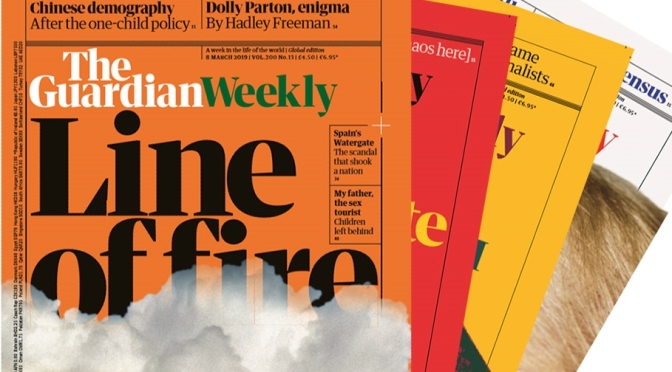
The big story | Continental drift in Munich Europe’s leaders met to discuss the continent’s future safety at the Munich Security Conference, a gathering characterised by mistrust of the US Trump administration and divisions over Ukraine. Patrick Wintour was there
Spotlight | Pressure mounts for Andrew to talk to police As calls for the former prince to cooperate with the investigation become deafening, this may be the reckoning the British king’s brother cannot escape. Caroline DaviesandAlexandra Topping investigate
Interview | Tracey Emin on reputation and radical honesty She scandalised the art world in the 1990s with her unmade bed, partied hard in the 2000s – then a brush with death turned the artist’s life upside down. Now Tracey Emin is as frank as ever, as Charlotte Higgins discovered
Opinion | Iran’s 1979 revolution offers some present-day pointers The similarities between Iran’s current crisis and events preceding the shah’s exile are striking. The radical clerics benefited then – but, asks Jason Burke, who would prevail this time?
Culture | Thundercat on funk, lost friends and being fired by Snoop Dogg The genre-hopping bass virtuoso has backed Ariana Grande and Herbie Hancock, appeared in Star Wars and become a boxer. Stephen Bruner explains his polymath mindset to Alexis Petridis
The latest tranche of the Jeffrey Epstein files have been in the public domain for less than two weeks, but already their contents have sent shock waves around the world.
Nowhere is this more true than in Britain, where the fallout has come to the door of Keir Starmer over his appointment of Peter Mandelson as UK ambassador to Washington, amid questions about how much the prime minister knew of his former envoy’s links to Epstein.
Starmer looks to have weathered the immediate pressure to resign this week, despite having lost his influential chief of staff, Morgan McSweeney, over the scandal. But the vultures are still circling and it seems a matter of when, rather than if, the prime minister will go. Kiran Stacey weighs up the possible challengers from within the Labour party, while Oliver Holmes and Chris Michael consider why the scandal hit home so hard in the UK.
Spotlight | The last post for press freedom in the US? Jeff Bezos’s axing of more than 300 jobs at the Washington Post has renewed fears about the resilience of America’s democracy to withstand Donald Trump’s attacks. Ed Pilkington and Jeremy Barr report
Technology | The continuing risks and rewards of AI As policymakers and tech executives prepare for the next global AI summit in India, an annual safety report highlights the issues that will be at stake, writes Dan Milmo
Interview | Can Zack Polanski pull off a green revolution in the UK? With polls and membership at an all-time high, the UK Green party is having a moment – and it’s largely down to the party’s charismatic (if slightly cheesy) new leader. Simon Hattenstone went on the road with him
Opinion | What links UK politics and Epstein? A thick seam of contempt We’re often told the British prime minister, Keir Starmer, is a ‘decent’ man. But in appointing Peter Mandelson he chose political convenience over doing right, argues Nesrine Malik
Culture | The sign language of Margaret Calvert Airports, road signs, typefaces … the design legend revolutionised how Britain looked and her brilliantly clear designs are still used today. Catherine Slessor met her
THE NEW YORKER MAGAZINE: The latest issue features The Anniversary Issue: Dhruv Khullar on Ozempic, David Remnick on Joe Rogan, Ava Kofman on a surrogacy scandal, and more.
Until now, Trump always seemed unembarrassed to crow about his side hustles. But, if the Emirati payment was kept secret, what else might be? By David D. Kirkpatrick
Can Ozempic Cure Addiction?
GLP-1 drugs, which have helped some people curb drug and alcohol use, may unlock a pathway to moderation. By Dhruv Khullar
What Is Claude? Anthropic Doesn’t Know, Either
Researchers at the company are trying to understand their A.I. system’s mind—examining its neurons, running it through psychology experiments, and putting it on the therapy couch. By Gideon Lewis-Kraus
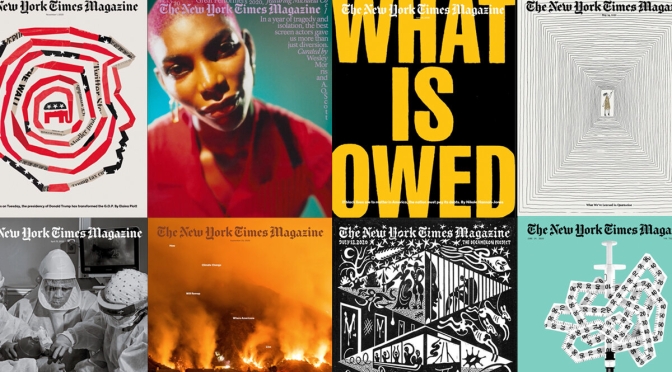
THE NEW YORK TIMES MAGAZINE:The 2.8.26 Issue features Charles Homans on Minneapolis under siege; Dan Kaufman on Trump’s war on federal workers; Hugo Lindgren on the intersection of Wall Street strategies and golf; and more.
What I saw, as federal agents stormed the city and residents banded together to protect themselves, was a dark, dystopian future becoming reality. By Charles Homans and Philip Montgomery
With 300,000 employees gone and collective-bargaining rights eliminated, the administration has hobbled organized labor. Did it also start a movement? By Dan Kaufman


/https://tf-cmsv2-smithsonianmag-media.s3.amazonaws.com/filer_public/a7/1c/a71c9558-35c5-4b65-94a4-0f5fa0df7c8c/mar26_-_web_cover_720.jpg)








 Boomers Daily