

Tag Archives: Research
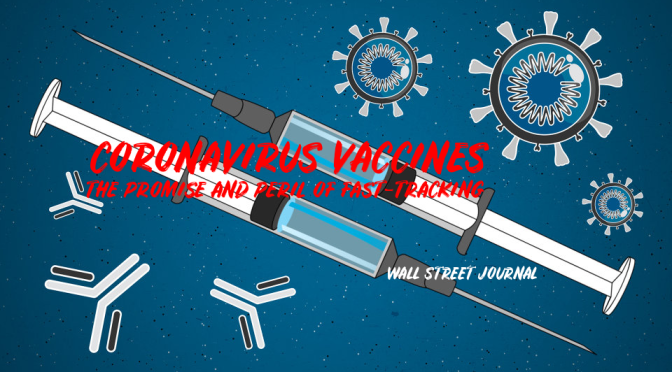
Coronavirus Vaccines: The Promise And Peril In Fast-Tracking (WSJ Video)
As the coronavirus continues to spread around the globe, companies and academic labs are racing to develop a vaccine that would help society get back to normal. But there could also be costs to moving too quickly.
WSJ’s Daniela Hernandez explains. Photo illustration: Laura Kammermann

New Research Podcasts: “Human Brains Are Wired To Enjoy Musical Pitch”
 In this month’s episode, we learn that human brains differentiate musical pitch a way that macaque monkeys do not. In fact, speech and music shaped the human brain’s hearing circuits. Researchers are studying these circuits with an eye on developing treatments for neurological disorders.
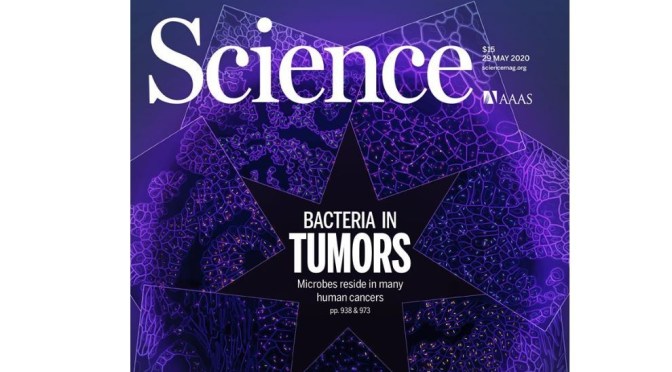
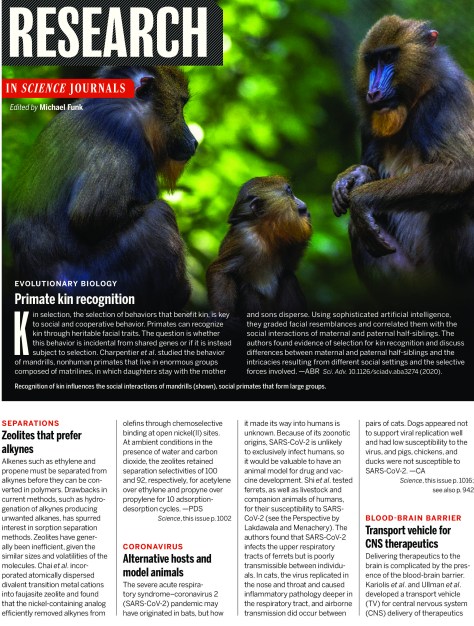
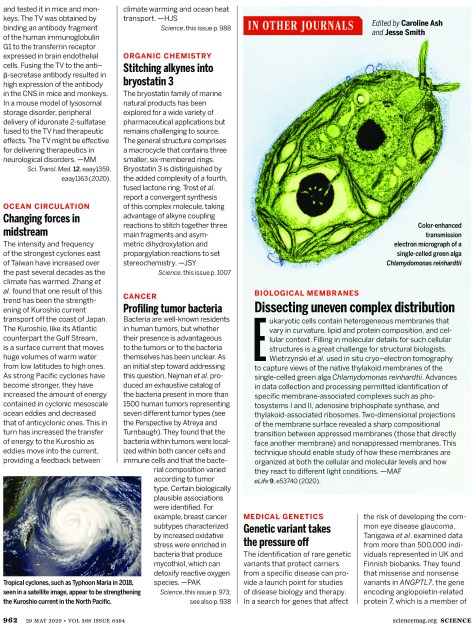
TOP JOURNALS: RESEARCH HIGHLIGHTS FROM SCIENCE MAGAZINE (MAY 29, 2020)
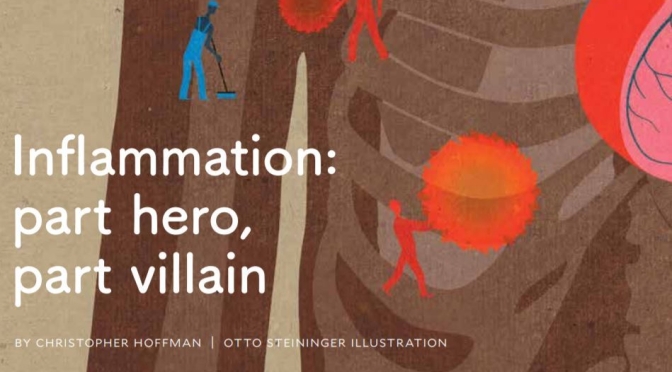
Health: “Inflammation – Part Hero, Part Villain” (Yale Medicine Magazine)

Top Science Podcasts: Latest Update On Covid-19 Vaccines, WHO Ultimatum
 The first results from vaccine trials are in and they are encouraging, but scientists are still urging caution. We hear the lowdown on the types of vaccines being developed and what hope there is of rolling them out any time soon.
01:38 Trump vs the WHO
President Trump has given the WHO an ultimatum in a tweet, threatening to pull out of the organisation within 30 days unless unclear demands are met. We discuss what this means for the pandemic, the USA and the future of international health cooperation
12:06 Where are we with vaccines?
The first results from vaccine trials are in and they are encouraging, but scientists are still urging caution. We hear the lowdown on the types of vaccines being developed and what hope there is of rolling them out any time soon.
News: Coronavirus vaccine trials have delivered their first results — but their promise is still unclear
News: The race for coronavirus vaccines: a graphical guide
News: If a coronavirus vaccine arrives, can the world make enough?
25:20 One good thing
Our hosts pick out things that have made them smile in the last week, including hopeful antibody research, at-home sketch comedy and printable board games.
News: Potent human antibodies could inspire a vaccine
Video: Whiskers R we – SNL
Video:The wild affordable world of 1 Player Print’n’Play Games
Video:MORE of the Very Best Solitaire Print’n’Play Games
Video: Marble run league
Video: BBC goals at home (Only available in the UK)
30:04 The latest coronavirus research papers
Noah Baker takes a look through some of the key coronavirus papers of the last few weeks.
News: Coronavirus research updates
medRxiv: Saliva is more sensitive for SARS-CoV-2 detection in COVID-19 patients than nasopharangel swabs
Nature: Effect of non-pharmaceutical interventions to contain COVID-19 in China
Science: Changes in contact patterns shape the dynamics of the COVID-19 outbreak in China
New England Journal of Medicine:
Top New Science Podcasts: The Struggle To Reopen Labs After Covid-19 And Arsenic In Drinking Water
 Online News Editor David Grimm talks with producer Joel Goldberg about the unique challenges of reopening labs amid the coronavirus pandemic. Though the chance to resume research may instill a sense of hope, new policies around physical distancing and access to facilities threaten to derail studies—and even careers.
Despite all the uncertainty, the crisis could result in new approaches that ultimately benefit the scientific community and the world. Also this week, Joel Podgorski, a senior scientist in the Water Resources and Drinking Water Department at the Swiss Federal Institute of Aquatic Science and Technology, joins host Sarah Crespi to discuss the global threat of arsenic in drinking water. Arsenic is basically present in all rocks in minute amounts. Under the right conditions it can leach into groundwater and poison drinking water. Without a noticeable taste or smell, arsenic contamination can go undetected for years. The paper, published in Science, estimates that more than 100 million people are at risk of drinking arsenic-contaminated water and provides a guide for the most important places to test.
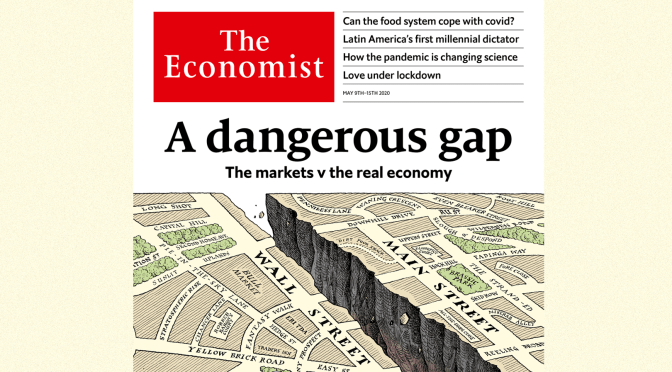
GLOBAL NEWS: A Dangerous Gap, Covid-19 Research & Companionship (Podcast)
 A selection of three essential articles read aloud from the latest issue of The Economist. This week, the dangerous gap between Wall Street and Main Street in America, (10:22) high-speed science—new research on the coronavirus is being released in a torrent. (21:00) And, casual sex is out, companionship is in.
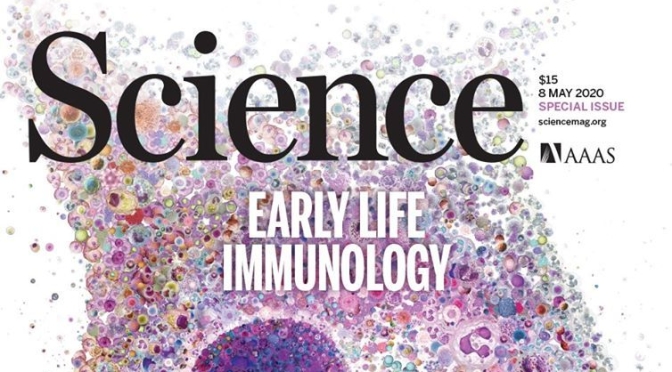
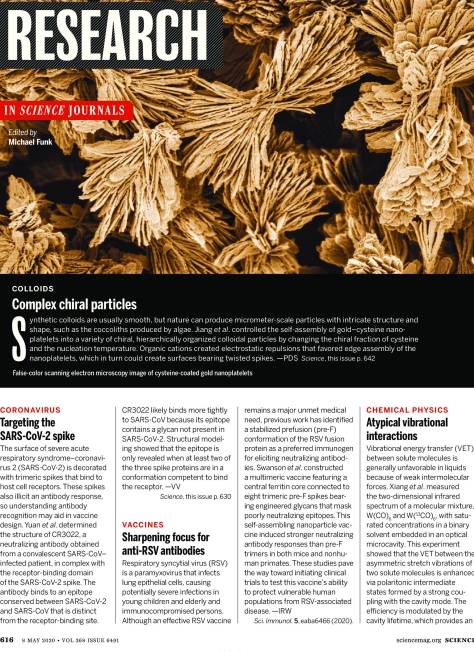
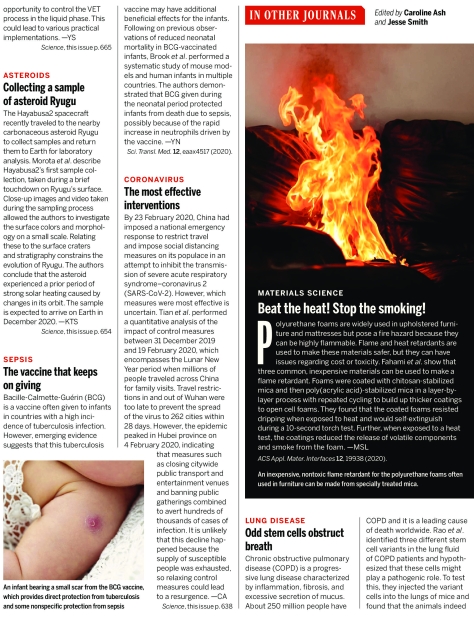
TOP JOURNALS: RESEARCH HIGHLIGHTS FROM SCIENCE MAGAZINE (MAY 8, 2020)
Top New Science Podcasts: Blood Tests For Multiple Cancers, Our Quiet Sun
 Staff Writer Jocelyn Kaiser joins Sarah to talk about a recent Science paper describing the results of a large study on a blood test for multiple types of cancer. The trial’s results suggest such a blood test combined with follow-up scans may help detect cancers early, but there is a danger of too many false positives.
And postdoctoral researcher Timo Reinhold of the Max Planck Institute for Solar System Research joins Sarah to talk about his paper on how the Sun is a lot less variable in its magnetic activity compared with similar stars—what does it mean that our Sun is a little bit boring?
 Boomers Daily