Tag Archives: Painters

Profiles: 55-Year Old Canadian Artist Mark Laguë – “Painter Of Light”

Painter of Light

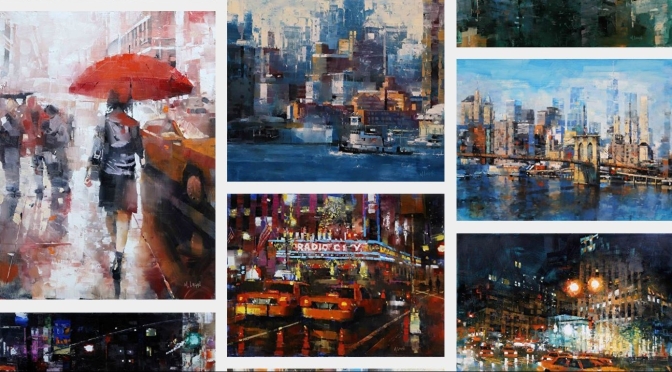
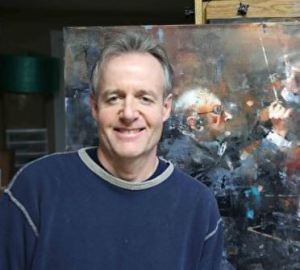
Canadian Artist MARK LAGUËMark has developed an international reputation and has won numerous awards, both in his native Canada and in the United States. A dedicated painter, Mark Lague was born in Lachine Quebec in 1964 and he has had a fascination with drawing since childhood, a skill he practices constantly, even to this day.

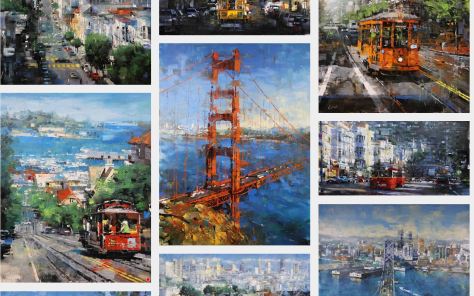
Mark Laguë Artist website collage

Upon graduation from Montreal’s Concordia University in Design, Mark embarked on a 13-year career in the animation industry, working primarily as a background designer and art director. During this time, despite working full time, he began receiving international acclaim for his watercolour paintings through competitions, juried shows, and solo exhibitions.

In 2000, Mark switched to oil as his primary medium, and in 2002 made the jump to full time painter. As an artist he is a realist, who is open to virtually all subject matter. What keeps him excited about painting is his endless quest to simplify and get to the essence of whatever he paints. Mark has been featured in numerous national art magazines, and continues to receive international recognition for his distinctive style of painting.

Website

Interviews: 72-Year Old Artist James Wrayge

Excerpts from a NextAvenue.org online article interview:

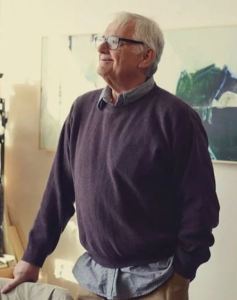
While Wrayge’s work has appeared in galleries and been bought across the globe, he prefers to focus on creating, not selling Photo by Elle Moulin in NextAvenue

“I don’t like the word ‘evolve,’” he says. “Art means the same thing today as it always has. Styles change, but art doesn’t.”

Hesitant to put too defining a label on his work, Wrayge claims his paintings have “a landscape feel.” He doesn’t consider them to be abstract. “That’s a word invented by the press, not by painters,” he says. “What I prefer to say [about my paintings] is that they are a visual manifestation of my values.”

James Wrayge Fine Artist website pageIn James Wrayge’s quiet studio on an early winter afternoon, there is a tangible sense of  purpose. Wrayge’s paintings line the walls along the portion of the space he shares with another artist at the Northrup King Building in Minneapolis. There are also some paintings on the floor propped up against the same walls. And there is one — in progress — set on an easel in the corner.

James Wrayge website

NextAvenue logo

To read more

New Exhibitions: Painter Andrew Wyeth (1917-2009) – The Forum Gallery NYC

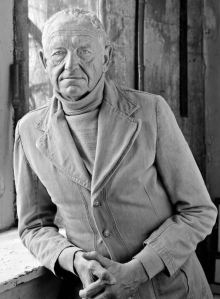
Photo of Andrew Wyeth by Peter Ralston In the Studio Courtesy of Ralston Gallery

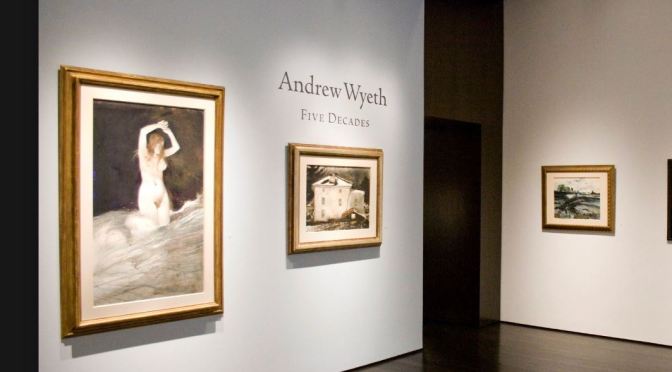
Forum Gallery, New York, presents an exhibition of works by Andrew Wyeth (1917-2009), who set the standard for American figurative art in the second half of the Twentieth Century. Working in pencil, watercolor, egg tempera and his much-beloved personal medium of drybrush, Wyeth, throughout his life, was a resolute champion of the universal life force of each person he chose to paint, and of the unique, difficult, ever-changing rural American world in which he chose to live. His art was controversial as it was popular, and he remains one of very few living artists to be celebrated by important single-person exhibitions at The Metropolitan Museum of Art in New York (1976) and the National Gallery of Art, Washington, DC (1987).

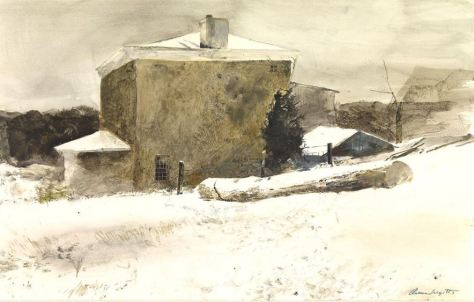
Firewood Study for Groundhog Day 1959 Andrew Wyeth
Firewood Study for Groundhog Day 1959 Andrew Wyeth (The Forum Gallery NYC)

“Andrew Wyeth: Five Decades” at Forum Gallery features paintings dated from 1940 through 1994, including landscapes that imply personal struggle and portray great beauty; and provocative figurative works, including examples from The Helga Pictures.

Forum Gallery NYC LogoWebsite


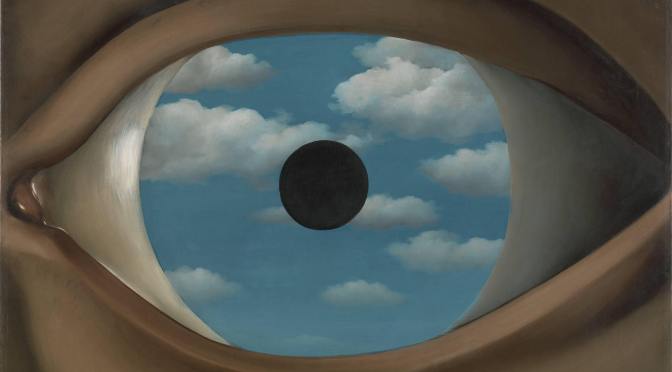
Artists: Belgian Surrealist Painter René Magritte Linked “Consciousness And The External World”

From a Christies.com online article:

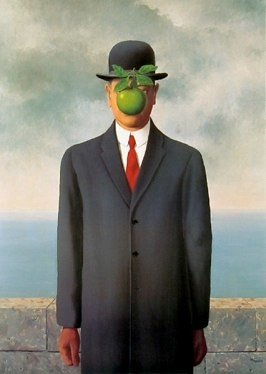
René Magritte, The Son of Man, 1964

‘The creation of new objects, the transformation of known objects; a change of substance in the case of certain objects: a wooden sky, for instance; the use of words in association with images; the misnaming of an object… the use of certain visions glimpsed between sleeping and waking, such in general were the means devised to force objects out of the ordinary, to become sensational, and so establish a profound link between consciousness and the external world.’

René François Ghislain Magritte (1898-1967) was born in Lessines, Belgium. His father was a tailor and textile merchant; his mother committed suicide in 1912, drowning herself in the River Sambre.

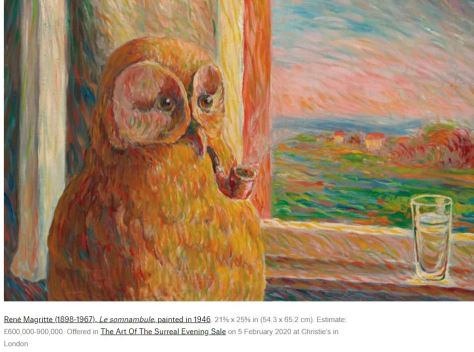
René Magritte 1898 - 1967 Le Somnambule 1946

From the 1930s, Magritte sought to find ‘solutions’ to particular ‘problems’ posed by different types of objects, a method that enabled him to challenge and reconfigure the most ubiquitous and commonplace elements of everyday life. These problems obsessed him until he was able to conceive of an image to solve them.

This philosophical method had come to him after waking from a dream in 1932. In his semi-conscious state, he looked over at a birdcage that was in his room but saw not the bird that inhabited the cage, but instead an egg. This ‘splendid misapprehension’ allowed him to grasp, in his own words, ‘a new and astonishing poetic secret.’

Read full article

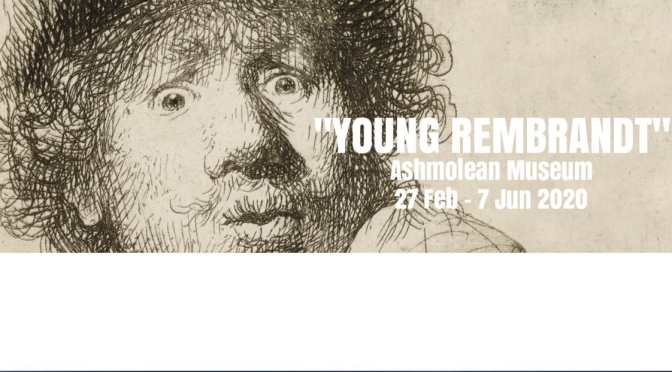
Top New Museum Exhibits: “Young Rembrandt” At The Ashmolean (Feb 27 – Jun 7)

Witness the meteoric rise of Rembrandt, from his first tentative works as a teenager in his home town of Leiden, to the sublime masterpieces he produced in Amsterdam ten years later.

This landmark show explores the early years of the career of the most famous of all Dutch artists, Rembrandt van Rijn (1606–1669). Beginning with his earliest known paintings, prints and drawings made in the mid-1620s, and ending at the moment he rockets to stardom in Amsterdam in the mid-1630s, this exhibition charts an astonishing transformation.

ashmolean-logo-with-text-12x3.25

This is the largest collection of works devoted to the young Rembrandt and includes over 30 of his paintings, and 90 drawings and prints from international and private collections. On display for the first time is the newly discovered painting Let the Little Children Come to Me.

Don’t miss this unprecedented opportunity to examine young Rembrandt’s work and observe his remarkable metamorphosis from insecure teenager to the greatest Dutch painter of all time.

Website

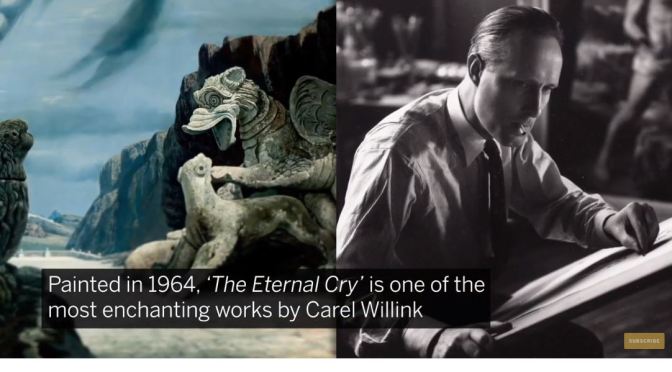
Fine Art: Magic Realism In The Work Of Dutch Painter Carel Willink

Sotheby's LogoCarel Willink was a pioneer of Magic Realism, an avant-garde movement of Dutch modernism closely associated with Surrealism. In this episode of Anatomy of an Artwork, discover how a visit to Italy’s Bomarzo Gardens following the death of his wife inspired a series of paintings featuring monsters, see how Willink drew further inspiration from dream-like images and illusions, and learn how his near-photographic style exudes a sense of mystery and enchantment.

Website

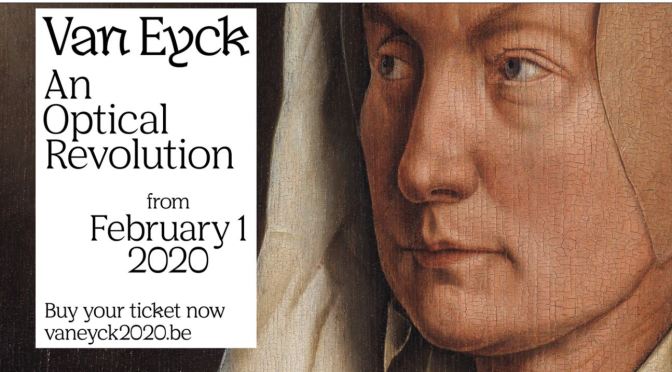
New Museum Exhibitions: “Van Eyck – An Optical Revolution” At MSK Ghent

Worldwide, only approximately twenty works by Van Eyck have been preserved. Quite exceptionally, over half of these will travel to Ghent in 2020 for the exhibition ‘Van Eyck. An optical revolution’ at the Museum of Fine Arts (MSK). In what promises to be an unmissable, tour de force of an exhibition, the world of Van Eyck and his revolutionary gaze will be brought to life like never before.

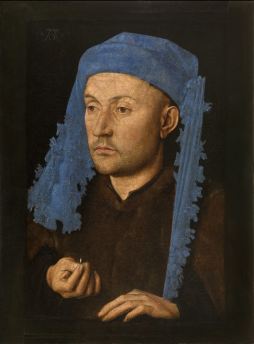
Jan van Eyck, Portrait of a Man with a Blue Chaperon, c. 1428-30 (Muzeul National Brukenthal, Sibiu, Romania)

The pinnacle of Late Medieval art
Van Eyck distinguished himself from his peers and triggered an optical revolution. With his matchless technique, scientific knowledge and unrivalled observational skills, he elevated oil painting to unprecedented heights and determined the future course of Western art. Never before had a painter made reality so tangible: all that seems to be missing from his portraits is his subjects’ breath, while his landscapes reveal the world in all its facets. Van Eyck trained his eye on the tiniest details before casting it wide again to create unforgettable panoramas.

His masterpiece, ‘The Adoration of the Mystic Lamb’ (1432, St Bavo’s Cathedral, Ghent), bears witness to all three of these qualities. The restoration of the outer wings of the altarpiece will play a central role in the exhibition. Undertaken by the Royal Institute for Cultural Heritage (KIK), the project commenced at the Museum of Fine Arts Ghent in 2012. Visitors will have the opportunity to get close to the work and admire the spectacular results.


MSK Kent LogoIn dialogue with Van Eyck’s contemporaries
In order to contextualise Van Eyck’s optical revolution, his paintings will be shown alongside works by his most talented contemporaries from Germany, France, Italy and Spain. These artists also moved in exalted circles and received prestigious commissions. The exhibition focuses on the artistic similarities and differences between their works, thus delving deeper into the historical context in which they were created.

‘Van Eyck. An optical revolution’ unravels the myths about the artist and considers his technique, his oeuvre and his influence from a fresh perspective. This exhibition will awaken a sense of wonder among visitors, comparable to that which people would have felt when they saw his works for the first time: a once-in-a-lifetime experience.

Read more

New Art Books: “Caspar David Friedrich – Nature And The Self” (Yale)

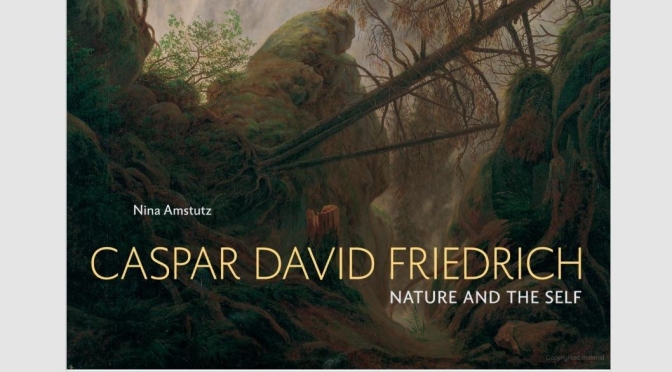
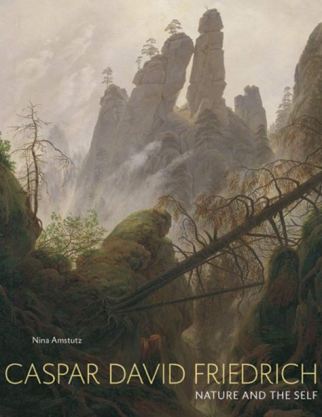
Caspar David Friedrich Nature and the Self Nina Amstutz February 2020In this revelatory book, Nina Amstutz combines fresh visual analysis with broad interdisciplinary research to investigate the intersection of landscape painting, self-exploration, and the life sciences in Friedrich’s mature work. Drawing connections between the artist’s anthropomorphic landscape forms and contemporary discussions of biology, anatomy, morphology, death, and decomposition, Amstutz brings Friedrich’s work into the larger discourse surrounding art, nature, and life in the 19th century.

Best known for his atmospheric landscapes featuring contemplative figures silhouetted against night skies and morning mists, Caspar David Friedrich (1774–1840) came of age alongside a German Romantic philosophical movement that saw nature as an organic and interconnected whole. The naturalists in his circle believed that observations about the animal, vegetable, and mineral kingdoms could lead to conclusions about human life. Many of Friedrich’s often-overlooked later paintings reflect his engagement with these philosophical ideas through a focus on isolated shrubs, trees, and rocks. Others revisit earlier compositions or iconographic motifs but subtly metamorphose the previously distinct human figures into the natural landscape.

Nina Amstutz is assistant professor in the history of art and architecture at the University of Oregon.

To read more or purchase

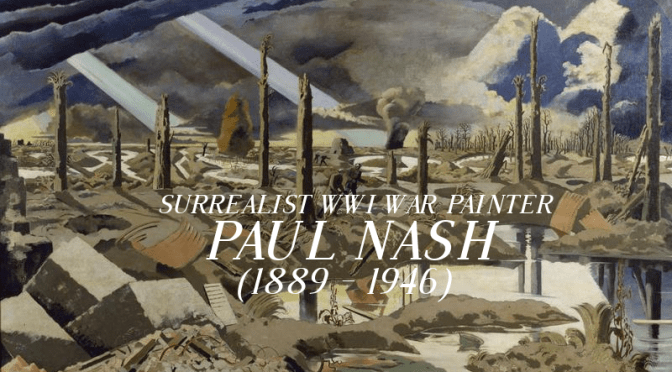
Art History: World War I Surrealist War Artist Paul Nash (1889 – 1946)

Paul Nash (11 May 1889 – 11 July 1946) was a British Surrealist painter and war artist, as well as a photographer, writer and designer of applied art. Nash was among the most important landscape artists of the first half of the twentieth century. He played a key role in the development of Modernism in English art.

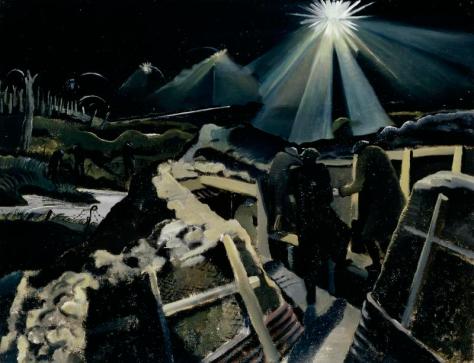
Paul Nash The Ypres Salient at Night, 1918.
Paul Nash: The Ypres Salient at Night, 1918.
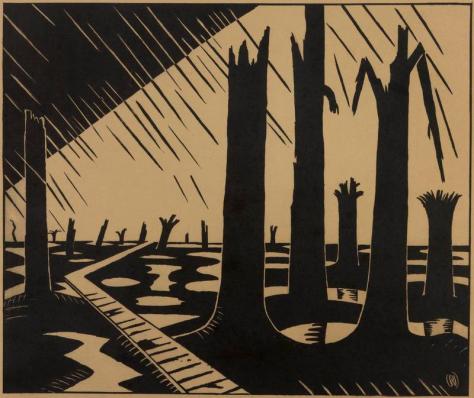
Paul_Nash_woodcut_CONTEMPORARY_BRITISH_ARTISTS_1923 Wikipedia
PAUL NASH in a woodcut self-portrait (1923)

Born in London, Nash grew up in Buckinghamshire where he developed a love of the landscape. He entered the Slade School of Art but was poor at figure drawing and concentrated on landscape painting. Nash found much inspiration in landscapes with elements of ancient history, such as burial mounds, Iron Age hill forts such as Wittenham Clumps and the standing stones at Avebury in Wiltshire. The artworks he produced during World War I are among the most iconic images of the conflict. After the war Nash continued to focus on landscape painting, originally in a formalized, decorative style but, throughout the 1930s, in an increasingly abstract and surreal manner. In his paintings he often placed everyday objects into a landscape to give them a new identity and symbolism.

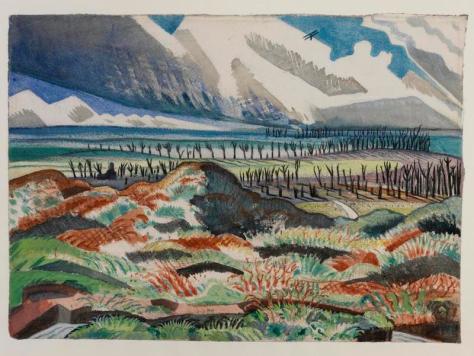
Paul Nash:  Ruined Country - Old Battlefield, Vimy, near La Folie Wood, 1918.
Paul Nash: Ruined Country – Old Battlefield, Vimy, near La Folie Wood, 1918.

Official World War I Artist – In November 1917 Nash returned to the Ypres Salient as a uniformed observer with a batman and chauffeur. At this point the Third Battle of Ypres was three months old and Nash himself frequently came under shellfire after arriving in Flanders. The winter landscape he found was very different from the one he had last seen in spring. The system of ditches, small canals and dykes which usually drained the Ypres landscape had been all but destroyed by the constant shellfire. Months of incessant rain had led to widespread flooding and mile upon mile of deep mud. Nash was outraged at this desecration of nature. He believed the landscape was no longer capable of supporting life nor could it recover when spring came. Nash quickly grew angry and disillusioned with the war and made this clear in letters written to his wife. One such written, after a pointless meeting at Brigade HQ, on 16 November 1917 stands out,

I have just returned, last night from a visit to Brigade Headquarters up the line and I shall not forget it as long as I live. I have seen the most frightful nightmere of a country more conceived by Dante or Poe than by nature, unspeakable, utterly indescribable. In the fifteen drawings I have made I may give you some idea of its horror, but only being in it and of it can ever make you sensible of its dreadful nature and of what our men in France have to face. We all have a vague notion of the terrors of a battle, and can conjure up with the aid of some of the more inspired war correspondents and the pictures in the Daily Mirror some vision of battlefield; but no pen or drawing can convey this country—the normal setting of the battles taking place day and night, month after month. Evil and the incarnate fiend alone can be master of this war, and no glimmer of God’s hand is seen anywhere. Sunset and sunrise are blasphemous, they are mockeries to man, only the black rain out of the bruised and swollen clouds all though the bitter black night is fit atmosphere in such a land. The rain drives on, the stinking mud becomes more evilly yellow, the shell holes fill up with green-white water, the roads and tracks are covered in inches of slime, the black dying trees ooze and sweat and the shells never cease. They alone plunge overhead, tearing away the rotting tree stumps, breaking the plank roads, striking down horses and mules, annihilating, maiming, maddening, they plunge into the grave, and cast up on it the poor dead. It is unspeakable, godless, hopeless. I am no longer an artist interested and curious, I am a messenger who will bring back word from the men who are fighting to those who want the war to go on for ever. Feeble, inarticulate, will be my message, but it will have a bitter truth, and may it burn their lousy souls.”

Paul Nash  Void of War, 1918.
Paul Nash: Void of War, 1918.

Nash’s anger was a great creative stimulus which led him to produce up to a dozen drawings a day. He worked in a frenzy of activity and took great risks to get as close as possible to the frontline trenches. Despite the dangers and hardship, when the opportunity came to extend his visit by a week and work for the Canadians in the Vimy sector, Nash jumped at the chance. He eventually returned to England on 7 December 1917.

From Wikipedia

Exhibitions: 74-Year Old Artist John Alexander – “Landscape And Memory” (Berggruen Gallery)

JANUARY 9 – FEBRUARY 15, 2020
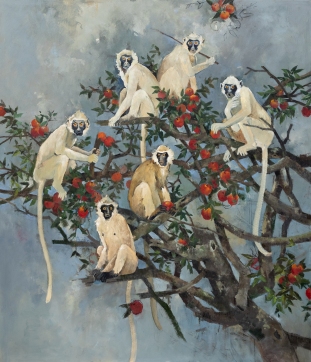
 

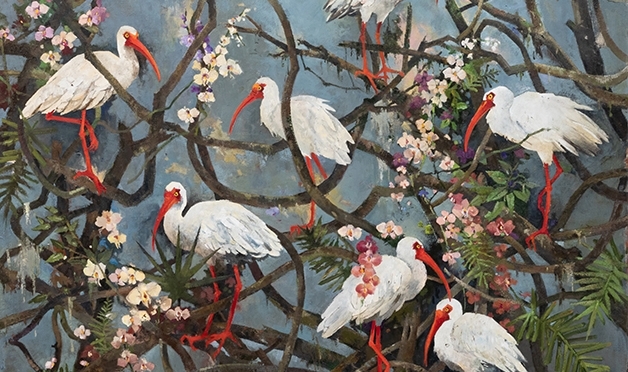
John Alexander The Temptation 2019 Landscape and Memory Berggruen Gallery January 2020Berggruen Gallery is proud to present John Alexander: Landscape and Memory, an exhibition of recent paintings and drawings by Texas-born, New York-based artist John Alexander. This show marks Alexander’s second solo exhibition with the gallery and will be on view January 9 through February 15, 2020. The gallery will host an opening reception for the artist on Thursday, January 16 from 5:00 to 7:00pm.

John Alexander’s most recent body of work presents a detailed collection of landscapes, botanicals, sea life, and animals – each subject an emblem of the artist’s own mind and memory. Alexander grew up between the bayous and the wooded wilderness of East Texas, enjoying camping and fishing trips within the lush, diverse landscape that would ultimately become so influential to him. Moreover, Alexander’s understanding and appreciation for the natural world was fortified by his father’s environmentalism. For Alexander, developing an environmental acuity, especially for his native Texas, was familial. Today, the artist creates work in reference to the nature-based consciousness he developed in his youth.
Berggruen Gallery San FranciscoThe introspective nature of Alexander’s work is revealed through the artist’s keen observations of his surrounding environment and the vivid way in which he paints it. Employing bold, painterly strokes, Alexander maintains an acute sensibility of his subject matter – whether it be the detailed rendering of the spiny lobster, an expressive portrayal of grackles and ibises perched in branches, or more expansive, floating florals. The artist also injects elements of whimsy; the playful monkeys he paints peer out of their canvases to almost directly engage the viewer. And thus each work is imbued with an authentic, raggedly pristine, emotional sense of the earth we all inhabit. In this way, Alexander creates scenes that are deeply personal, yet also shared…nostalgic yet ongoing…exotic yet familiar…of the world yet otherworldly. Saturating his landscapes with humor, sentimentality, and veneration, Alexander reveals as much about himself as he does about nature.

John Alexander: Landscape and Memory is comprised of nine paintings and four drawings, work that comes together in reverence for the formal tradition of landscape painting. Paying homage to an Impressionist Master, Claude Monet, Alexander paints dreamy hollyhocks. Invoking the more recent Hudson River School, Alexander carefully creates bucolic scenes of both reality and idealization. Perhaps most unexpectedly, Alexander also nods to the Abstract Expressionists, applying thick strokes of paint in a gestural, emotional meditation. In turn, Alexander’s work pays tribute to the long and varied legacy of landscape painting before him while simultaneously remaining true to his own, very personal, connection to nature. Through the amalgamation of art historical context, environmental conservation, and the integration of a more intimate narrative, Alexander produces a body of work that is raw, compelling, and perhaps above all else, natural.

John Alexander was born in Beaumont, Texas, in 1945. He received his B.F.A. from Lamar University in Beaumont in 1968 and his M.F.A. from the Southern Methodist University in Dallas in 1970. Following graduate school, Alexander taught at the University of Houston. Though the artist’s Texas roots influence much of his work, to solely categorize Alexander as a “Texas” artist would be inaccurate. In 1979, having established himself in Houston as a prominent local artist, Alexander moved to New York City. Today the artist divides his time between his SoHo studio loft and home in Amagansett, East Hampton. Alexander’s work has been widely exhibited at such prestigious institutions as the Corcoran Gallery of Art and the Smithsonian American Art Museum, both in Washington, D.C., and the Museum of Fine Arts, Houston. His work is featured in the permanent collections of several leading institutions, including The Metropolitan Museum of Art, New York; the Dallas Museum of Art; and the Museum of Contemporary Art, Los Angeles; as well as many other public and private collections worldwide.

Website