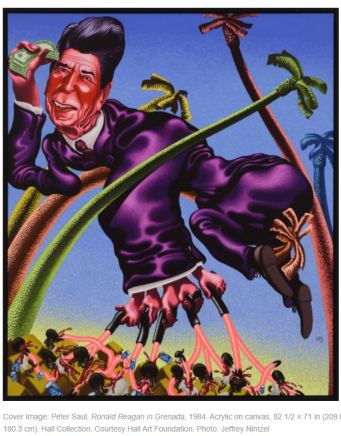
 Beginning in the early 1960s, Peter Saul began to incorporate imagery borrowed from a range of pop-cultural sources into his exuberant, brightly colored paintings, adopting a style that has proven to be far ahead of its time. His work developed independently from concurrent art historical movements like Pop art, with which it shares some superficially similar concerns. Instead of the cool detachment of Andy Warhol and Roy Lichtenstein, however, Saul crafted his own unique blend of Surrealism, history painting, vernacular illustration, and the real-life shock and horror of current events.
Marking the artist’s first New York museum survey, this exhibition will bring together approximately sixty paintings from across his long career.
Saul’s earliest paintings, which he created in Paris, demonstrate a loose, gestural style of abstraction, yet he began to incorporate text, recognizable characters, and consumer products into his works as early as 1960. Around this time, he plucked figures like Donald Duck and Superman from the pages of comic books and deposited them into chaotic scenes representative of the avarice and violence of America. In the late 1960s and early 1970s, Saul created some of his most shocking and indelible works in response to the Vietnam War, with a series that captured the conflict’s grotesque brutality, racism, and destruction. A later group of paintings, which examines the chaotic sociopolitical fabric of urban life in California, reflects the dissolution of 1960s counterculture and the corruption, racism, and greed of US politics.
Saul extended his interrogation of American history in his portraits of infamous criminals like John Wayne Gacy, archetypes like cowboys and businessmen, and US presidents such as Ronald Reagan, George W. Bush, and Donald Trump, whom Saul depicts with disdain and condemnation. He has also looked further back to reimagine supposedly triumphant scenes from America’s past—including Columbus’s arrival in America, Washington crossing the Delaware, and Custer’s Last Stand—as moments of comical failure or disgrace. With a caustic sense of humor, Saul has continuously skewered America’s leaders, rendering their stretched, distorted bodies in Day-Glo colors. His disparate influences range from MAD magazine comics to Surrealist fantasies and American social realist painting from the 1930s.
Peter Saul is an American painter. His work has connections with Pop Art, Surrealism, and Expressionism. His early use of pop culture cartoon references in the late 1950s and very early 1960s situates him as one of the fathers of the Pop Art movement. He realised about 800 paintings during his career.
Website

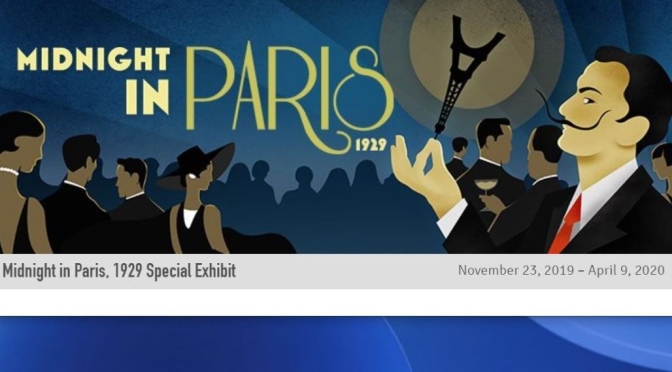
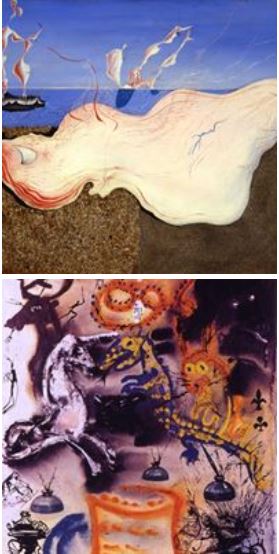 Masson, a founding Surrealist, saw the movement as an immersion “into what the German romantics call the night side of things.” However, “towards 1930,” Masson wrote, “a formidable disaster appeared in its midst: the demagogy of the irrational.” “Midnight in Paris” touches on Surrealism’s highs and lows, its darkness, poetry, beauty and banalities, reminding viewers—at the heart of the Dalí Museum, no less—that the movement is much, much more than melting watches.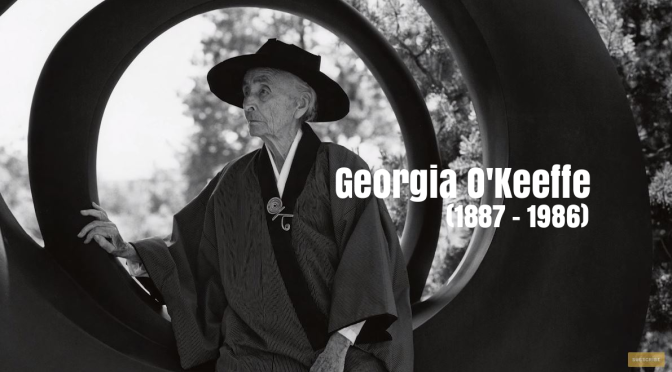
 In the final years of Georgia O’Keeffe’s nearly century-long life, she employed and befriended the young sculptor Juan Hamilton. The two would become inseparable, and upon her death in 1986, Hamilton inherited fine art and personal affects from the artist’s estate, including rarely seen pieces from the estate of O’Keeffe’s late husband, Joseph Stieglitz.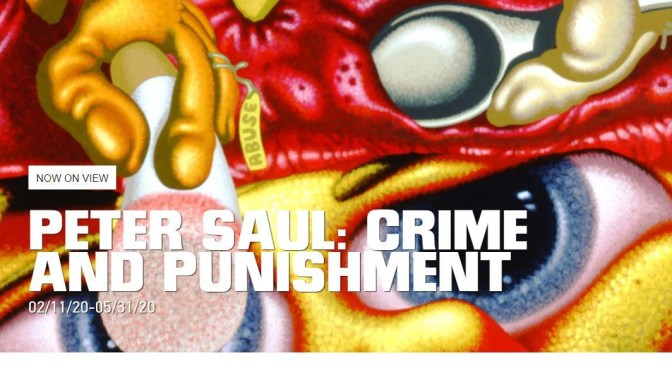
 ‘The sports stars of today are the movie stars of yesterday,’ proclaimed the artist. It was true; thanks to rapid advances in TV broadcasting, sporting champions in the 1970s were starting to achieve the same level of popularity as other entertainers.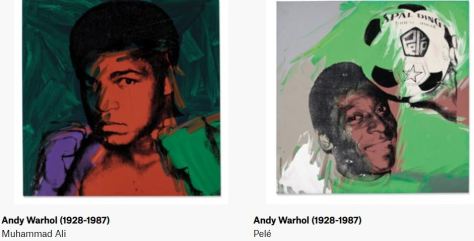

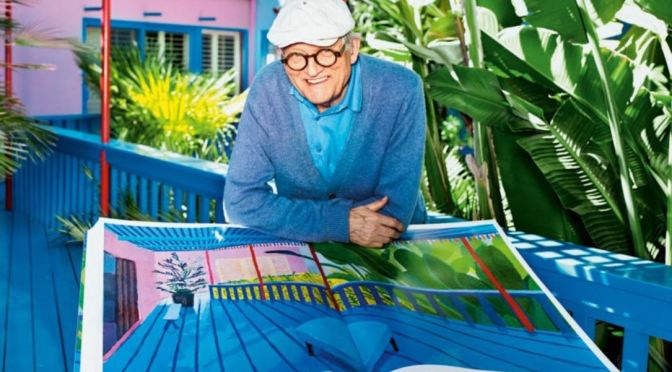
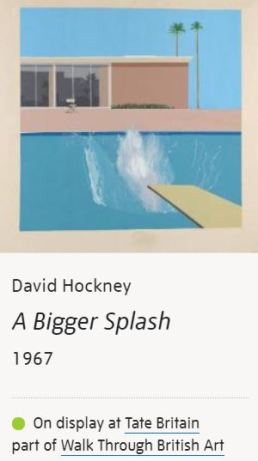 David Hockney, (born 9 July 1937) is a British painter, draftsman, printmaker, stage designer, and photographer. As an important contributor to the pop art movement of the 1960s, he is considered one of the most influential British artists of the 20th century.
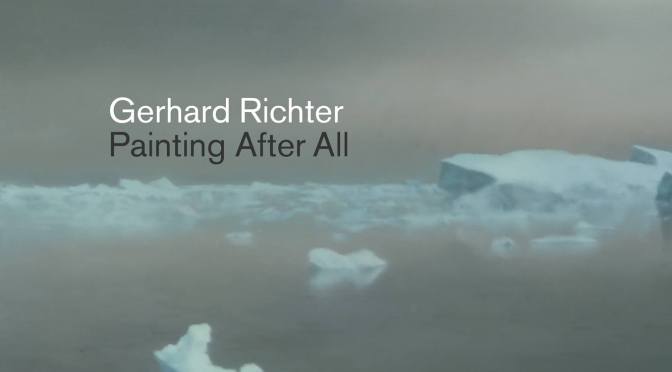
 Over the course of his acclaimed 60-year career, Gerhard Richter (b. 1932) has employed both representation and abstraction as a means of reckoning with the legacy, collective memory, and national sensibility of post–Second World War Germany, in both broad and very personal terms.
 New essays by eminent scholars address a variety of themes: Sheena Wagstaff evaluates the conceptual import of the artist’s technique; Benjamin H. D. Buchloh discusses the poignant Birkenau paintings (2014); Peter Geimer explores the artist’s enduring interest in photographic imagery; Briony Fer looks at Richter’s family pictures against traditional painting genres and conventions; Brinda Kumar investigates the artist’s engagement with landscape as a site of memory; André Rottmann considers the impact of randomization and chance on Richter’s abstract works; and Hal Foster examines the glass and mirror works. As this book demonstrates, Richter’s rich and varied oeuvre is a testament to the continued relevance of painting in contemporary art.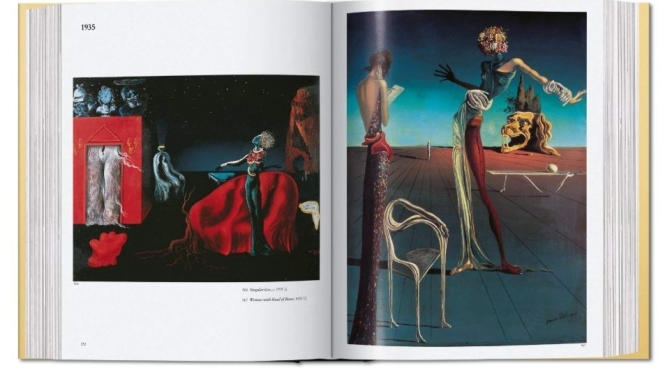
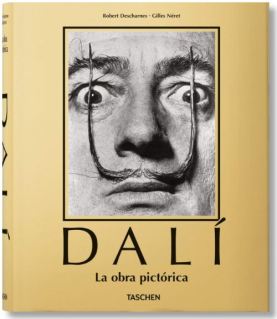 The study is divided into two parts: the first examines Dalí’s beginnings as an unknown artist. We witness how the young Dalí deployed all the isms―Impressionism, Pointillism, Cubism, Fauvism, Purism and Futurism―with playful mastery, and how he would borrow from prevailing trends before ridiculing and abandoning them. The second part unveils the conclusions of Dalí’s lifelong inquiries, as well as the great legacy he left in works such as Tuna Fishing (1966/67) or Hallucinogenic Toreador (1970). It includes previously unpublished homages to Velázquez or Michelangelo, painted to the same end as the variations on past masters done by his contemporary, Picasso.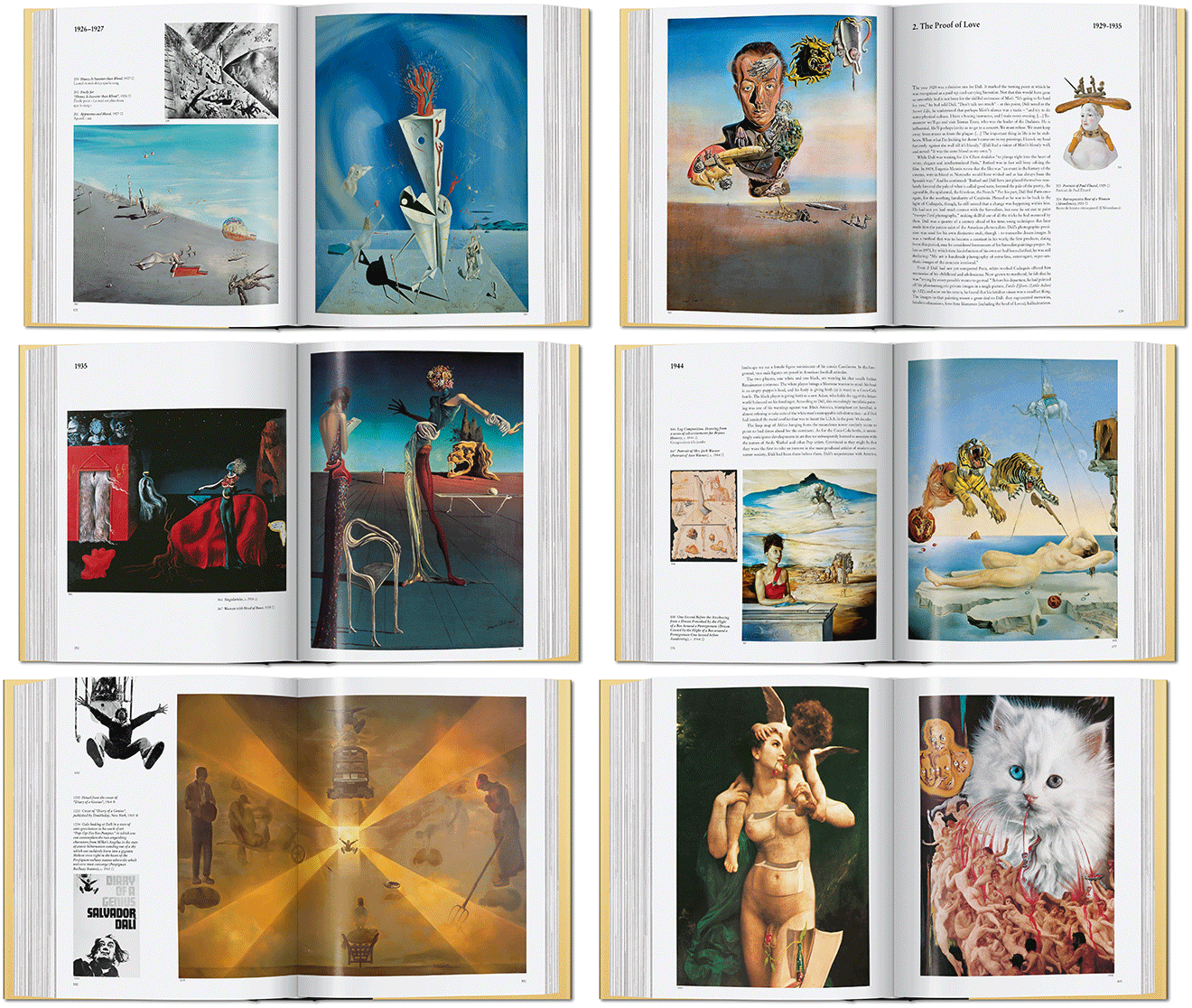
 Boomers Daily