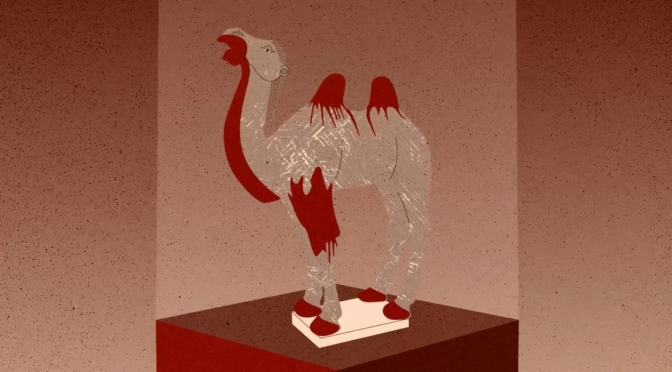
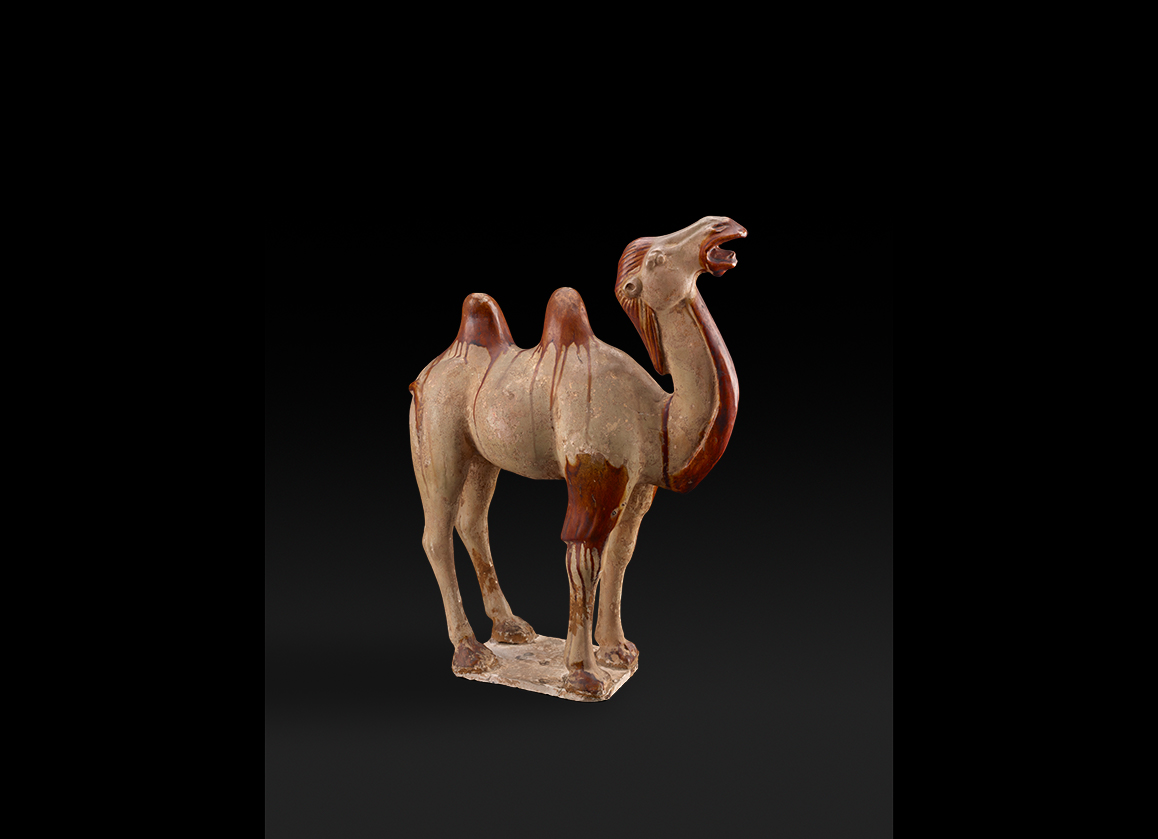
Ashmolean Museum (June 26, 2023): This short film by Carina Hanslik shares an insight into the incredible story behind an ancient ceramic camel.
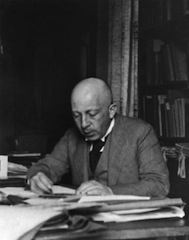
The object that inspired this animation, a ceramic camel dating back to the Tang Dynasty (AD 618–907), helps us to tell the story of Paul Jacobsthal, a Jewish professor of Archaeology at the University of Marburg in the 1930s, who was forced to leave Germany.
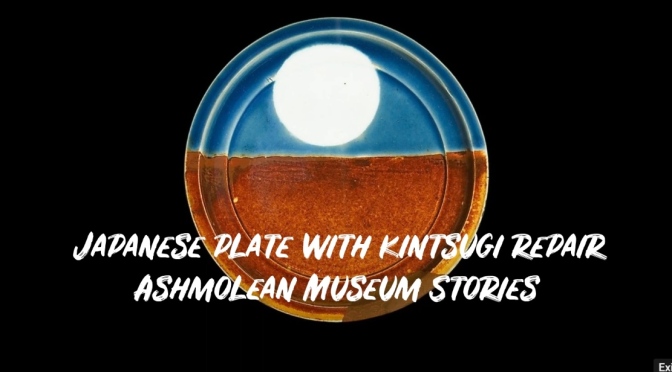
Ashmolean Museum (June 7, 2023): Here, animator Charlie Black brings the poetic story behind this beautifully broken 17th-century Japanese plate to life.
The Japanese collection is now best known for its ceramics, in particular the collection of seventeenth- and eighteenth-century export porcelain which is one of the most comprehensive collections in the world. Ceramics for the Japanese market are also well represented, including fine examples of Arita, Nabeshima and Hirado porcelain, tea ceremony wares and Kyoto earthenwares.
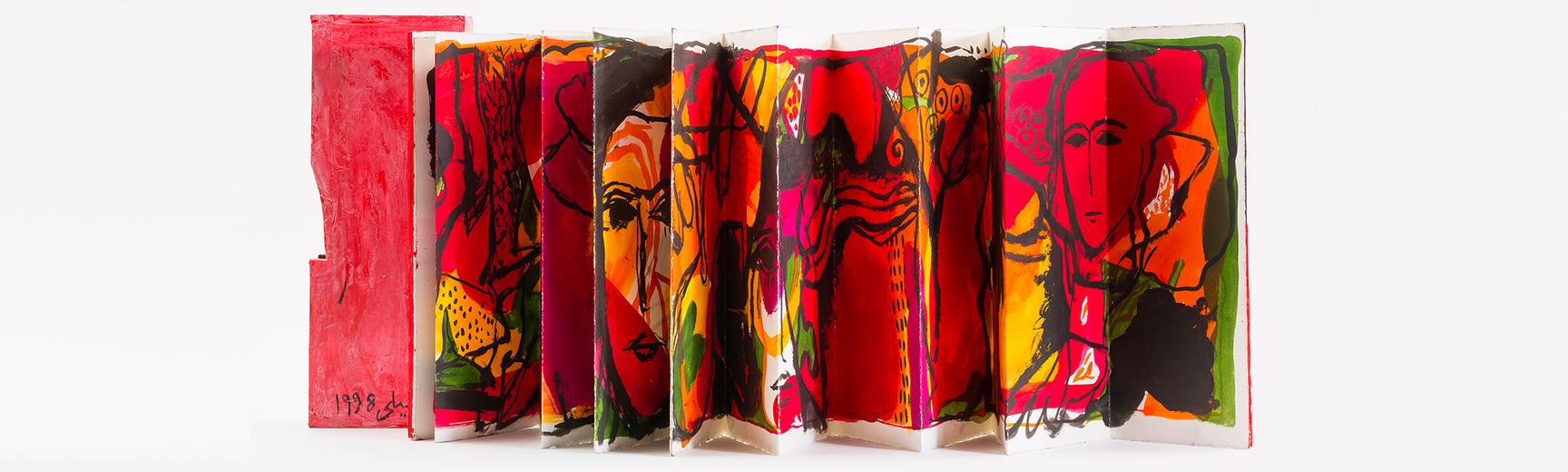
Ashmolean Museum (April 26, 2023): ‘The Arab world’s most influential living artist’, Dia al-Azzawi is best known for monumental and colourful canvasses. His work spans many genres, including a type of artist books known in Arabic as ‘dafatir’.
Here Francesca Leoni, curator of Dia al-Azzawi: Painting Poetry at the Ashmolean, introduces us to the work of this important contemporary artist and takes us through the exhibition currently on display at the Ashmolean Museum.
Dia Al-Azzawi is an Iraqi painter and sculptor, now living and working in London, and one of the pioneers of modern Arab art. He is noted for incorporating Arabic script into his paintings.
Dia al-Azzawi: Painting Poetry is open and free to visit until 10 June 2023.
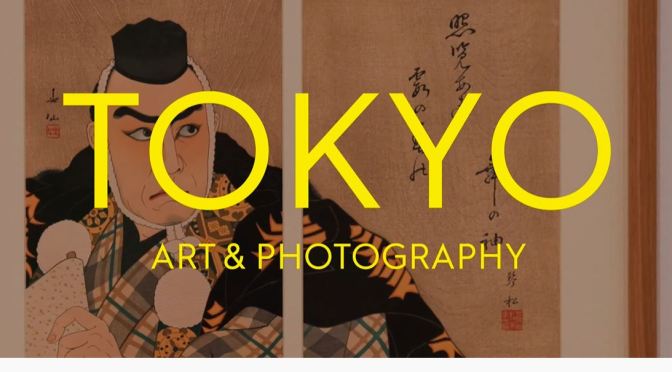
Explore Japan’s capital city through the vibrant arts it has generated over 400 years as you enjoy a virtual behind-the-scenes tour of the Ashmolean’s 2021 Tokyo: Art & Photography exhibition with curators Lena Fritsch and Clare Pollard. The film also features a conversation with visual artist Enrico Isamu Oyama, who was commissioned to create a work for the exhibition. Tokyo is one of the world’s most creative, dynamic and thrilling cities. This major exhibition features a wide variety of artworks created in a metropolis that has constantly reinvented itself. Highlights include historic folding screens and iconic woodblock prints, video works, pop art, and contemporary photographs by Moriyama Daido and Ninagawa Mika. With new commissions by contemporary artists, loans from Japan and treasures from the Ashmolean’s own collections, the show provides a fascinating insight into the development of Tokyo into one of the world’s most important cultural hotspots. Tokyo: Art & Photography is open at the Ashmolean Museum until 3 January 2022 http://www.ashmolean.org/tokyo
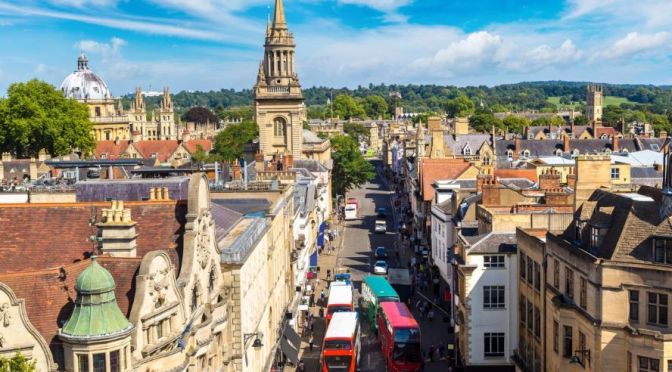
Oxford, a city in central southern England, revolves around its prestigious university, established in the 12th century. The architecture of its 38 colleges in the city’s medieval center led poet Matthew Arnold to nickname it the ‘City of Dreaming Spires’. University College and Magdalen College are off the High Street, which runs from Carfax Tower (with city views) to the Botanic Garden on the River Cherwell.
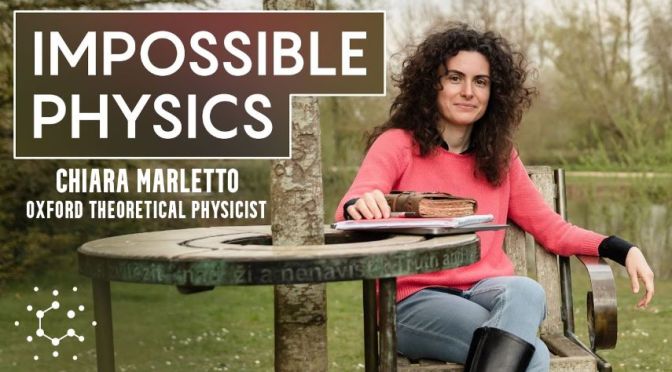
“Declaring something impossible leads to more things being possible,” writes the physicist Chiara Marletto. “Bizarre as it may seem, it is commonplace in quantum physics.”
Chiara Marletto is trying to build a master theory — a set of ideas so fundamental that all other theories would spring from it. Her first step: Invoke the impossible.
Constructor Theory is a new approach to formulating fundamental laws in physics. Instead of describing the world in terms of trajectories, initial conditions and dynamical laws, in constructor theory laws are about which physical transformations are possible and which are impossible, and why. This powerful switch has the potential to bring all sorts of interesting fields, currently regarded as inherently approximative, into fundamental physics. These include the theories of information, knowledge, thermodynamics, and life.
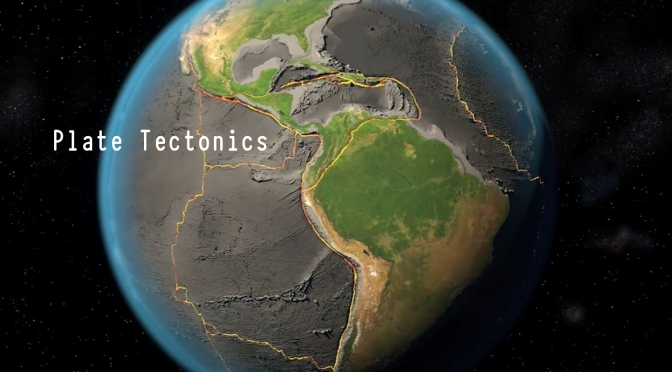
Plate tectonics is the narrative arc that ties every episode in Earth’s geologic history together. Thanks to the magnetic compasses hidden in volcanic rocks, scientists know where each tectonic jigsaw piece has been over eons of time. They can replicate the plates’ odysseys in beautiful and precise simulations that reveal the destruction and creation of Earth’s many faces. Lucía Pérez-Díaz, a geologist at Oxford, studies our planet’s stunning ability to constantly change its face.
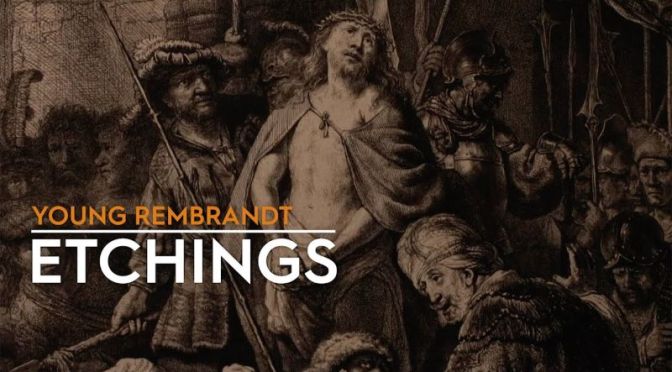
Curator An Van Camp explains Rembrandt’s use of a printmaking technique known as etching, and what his early experiments tell us about the young artist’s working process.
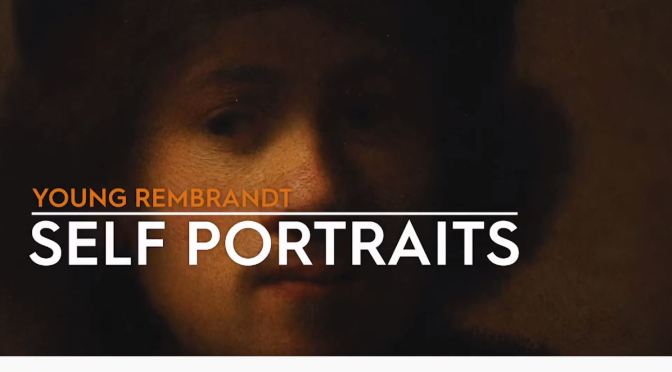
Rembrandt Harmenszoon van Rijn; 15 July 1606 – 4 October 1669) was a Dutch draughtsman, painter, and printmaker. An innovative and prolific master in three media, he is generally considered one of the greatest visual artists in the history of art and the most important in Dutch art history. Unlike most Dutch masters of the 17th century, Rembrandt’s works depict a wide range of style and subject matter, from portraits and self-portraits to landscapes, genre scenes, allegorical and historical scenes, and biblical and mythological themes as well as animal studies. His contributions to art came in a period of great wealth and cultural achievement that historians call the Dutch Golden Age, when Dutch art (especially Dutch painting), although in many ways antithetical to the Baroque style that dominated Europe, was extremely prolific and innovative and gave rise to important new genres. Like many artists of the Dutch Golden Age, such as Jan Vermeer of Delft, Rembrandt was also an avid art collector and dealer.
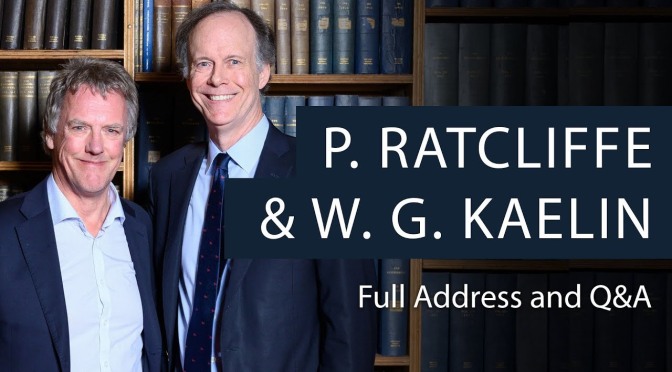
Sir Peter and Prof. Kaelin were awarded the Nobel Prize in Physiology and Medicine last year by the Nobel Assembly at Karolinska Institutet, in recognition of their discoveries of how cells sense and adapt to oxygen availability, an essential adaptive process central to many significant diseases. The professors respectively work for the University of Oxford and Harvard University, and shared the Nobel Prize with Prof. Gregg Semenza, a fellow researcher.
News, Views and Reviews For The Intellectually Curious


 Boomers Daily