Tag Archives: New York Times

Health & Data Trackers: Will “Body Technology” Really Make Us Healthier?

The principle behind these technologies is that collecting more data will help make us healthier. The message from experts I spoke with is that there’s potential in that idea, but it hasn’t been fulfilled yet.

NEW YORK TIMES (August 28, 2020): One big limitation of health devices, though, is that many people don’t know what to do with the data they see about their heart rate or how many hours they slept.

“We’re not doing a very good job of educating people what to do with that information. That’s the piece that’s missing,” said John Jakicic, the director of the Healthy Lifestyle Institute at the University of Pittsburgh. (Side note: For some people, having data on their sleep might actually be counterproductive.)

Read full article

New Travel Books: “New York Times Explorer – 100 Trips Around The World”

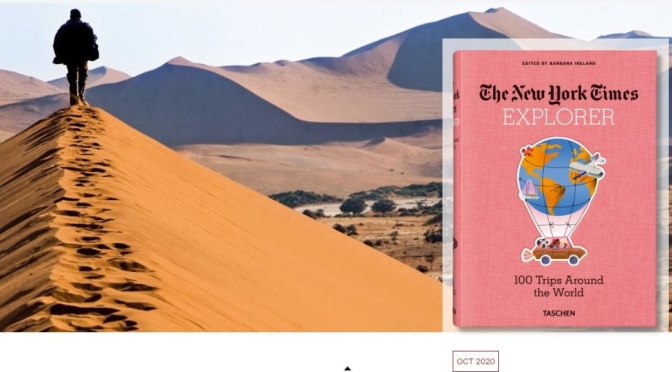
Taschen LogoNYT Explorer. 100 Trips Around the World takes travel beyond the obvious with adventures in exotic places and new perspectives in familiar ones, all based on the distinguished travel journalism of The New York Times. Each journey features a first-person narrative and postcard-perfect photography, capturing the unique personality of the destination—as well as practical information to help get you on your way. 

This slideshow requires JavaScript.

Whether it’s a culinary adventure in vibrant Mexico City, an historic and meditative train ride through Siberia, or a solo trip to Paris, get your bucket lists ready and share in the discoveries of Explorer a collection of 100 dream destinations—four volumes’ worth of adventures in onefrom the Travel pages of The New York Times.

The Times writers offer guidance, from the personal to the practical, along with a wealth of color photographs that capture the catch-your-breath awe of each destination. Motor past pink sands and bougainvillea in Bermuda with Andrew McCarthy, follow Virginia Woolf’s footsteps through the English countryside with Francine Prose, or dare to pilot a boat through the Venice lagoon with Tony Perrottet.

The editor

Barbara Ireland edits the 36 HoursExplorer, and forthcoming Cultured Traveler series of travel books in collaboration with The New York Times and TASCHEN. A writer and editor based in upstate New York, she is a former deputy Travel editor and deputy Op-Ed page editor at The New York Times. She is a graduate of Cornell University and was a John S. Knight journalism fellow at Stanford University.

Read more or purchase

New Book Review Podcast: “Utopia Avenue” And “The Biggest Bluff” (NY Times)

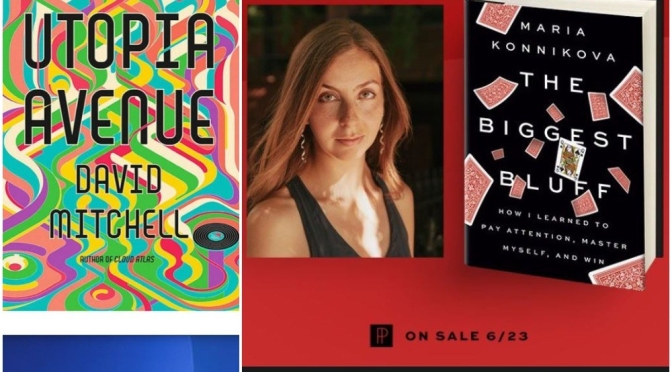
The Book Review - NY TimesDaniel Mendelsohn discusses Mitchell’s career and new novel, “Utopia Avenue,” and Maria Konnikova talks about “The Biggest Bluff.”
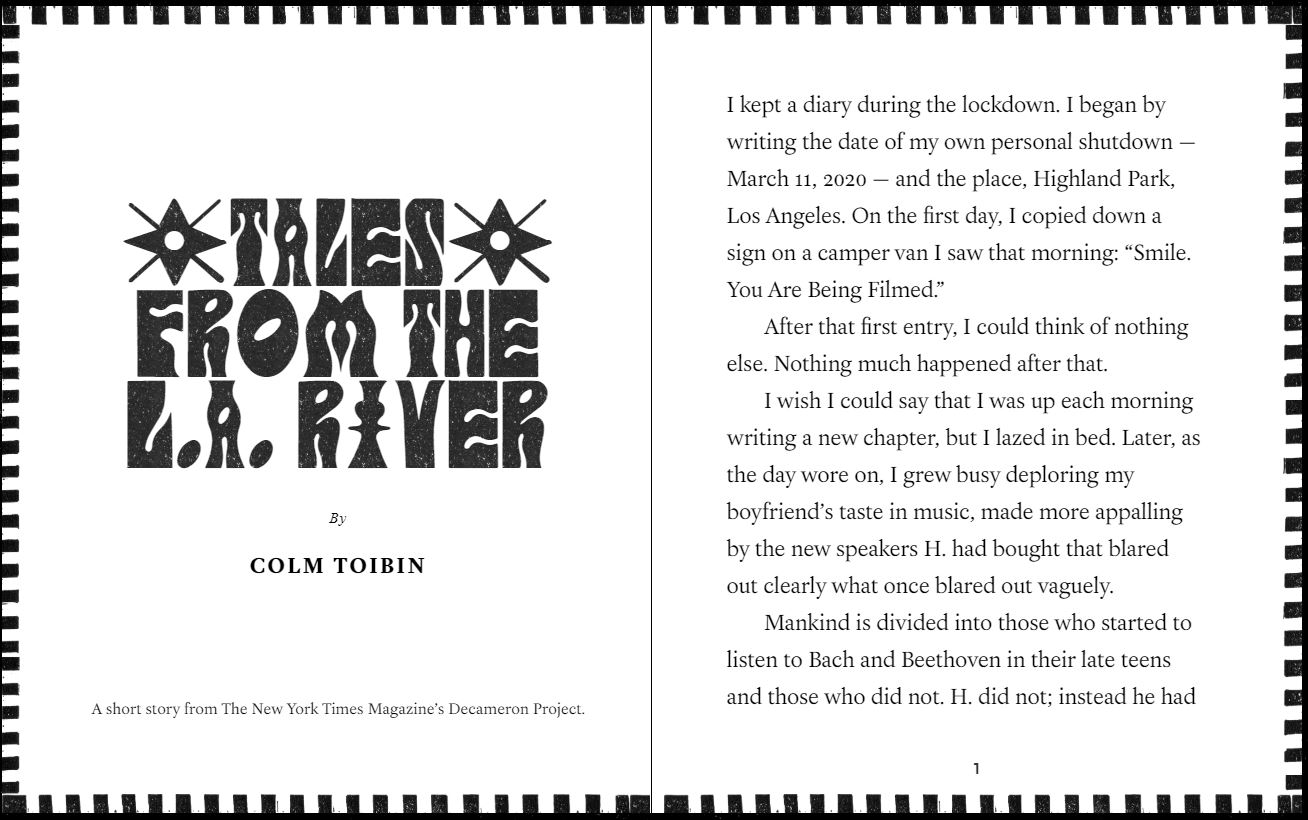
Best New Fiction 2020: “The Decameron Project – The New York Times Magazine”

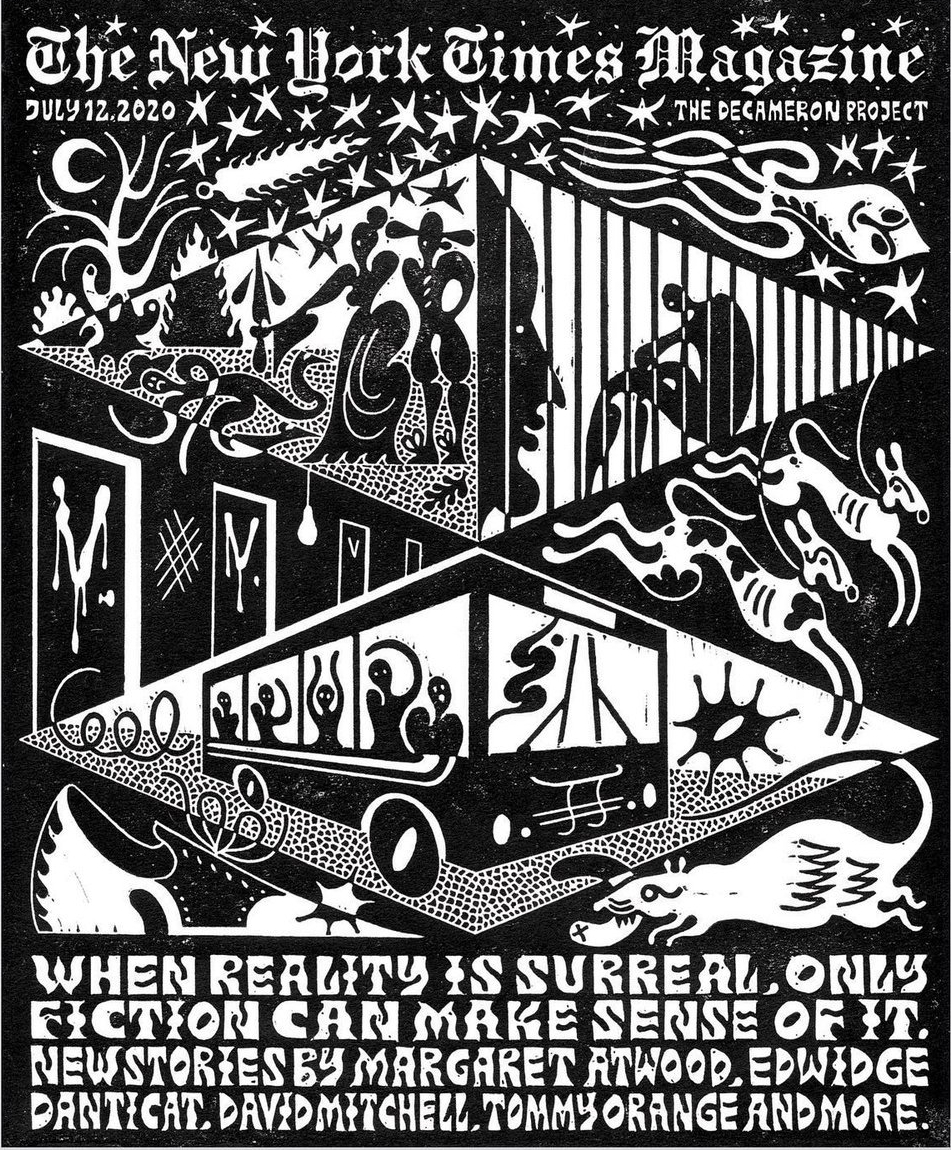
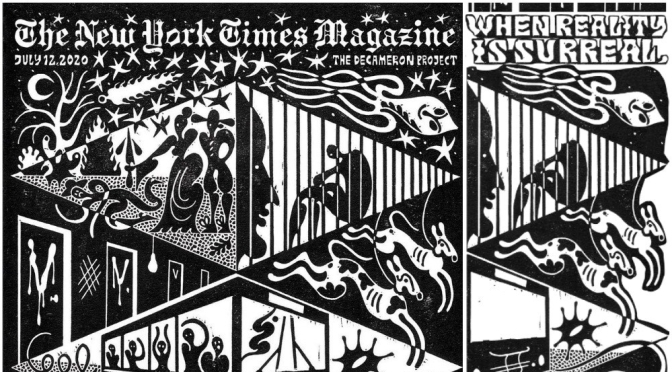
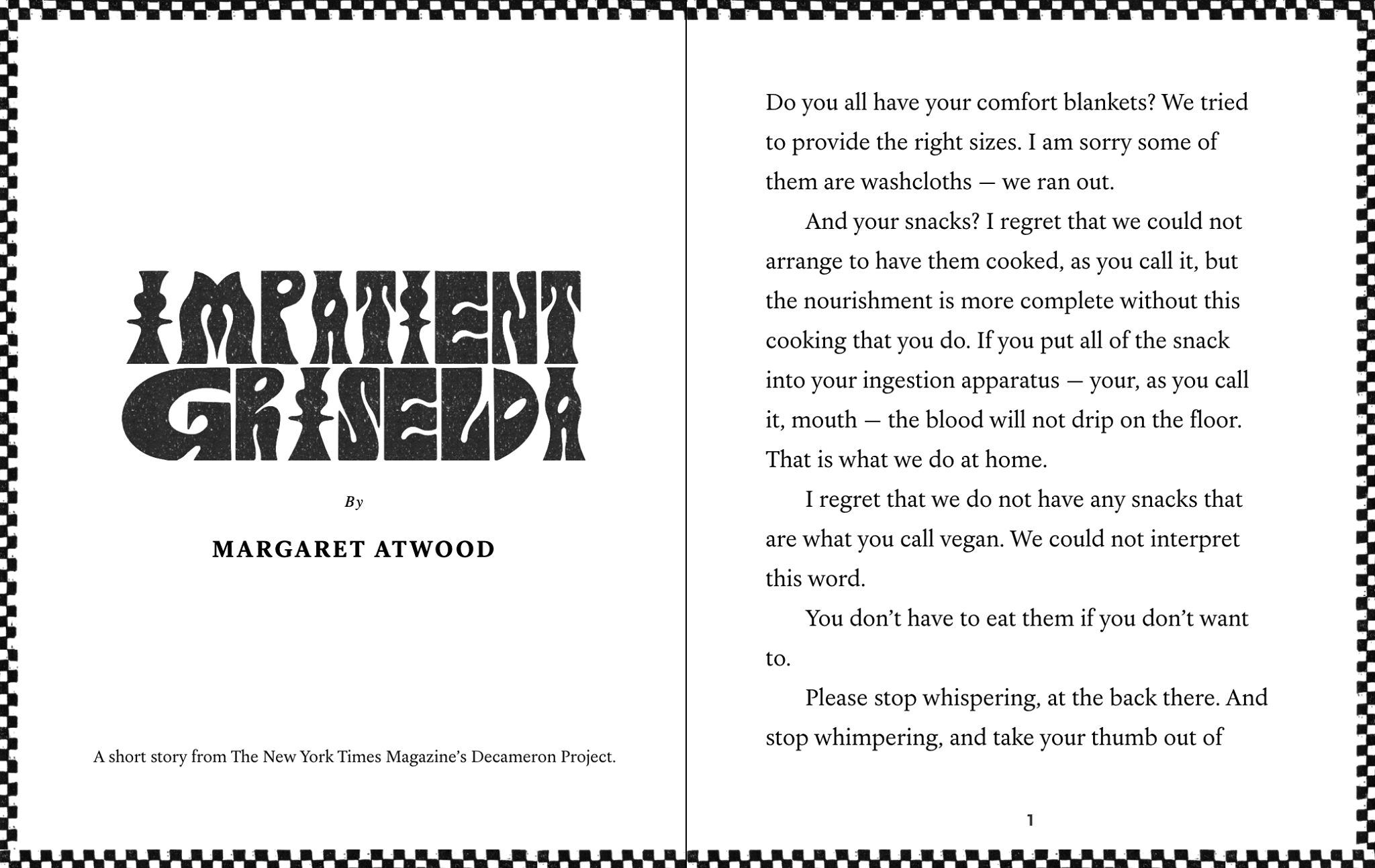
AS THE COVID-19 PANDEMIC SWEPT THE WORLD, WE ASKED 29 AUTHORS TO WRITE NEW SHORT STORIES INSPIRED BY THE MOMENT. WE WERE INSPIRED BY GIOVANNI BOCCACCIO’S “THE DECAMERON,” WRITTEN AS THE PLAGUE RAVAGED FLORENCE IN THE 14TH CENTURY. Margaret Atwood - Impatient Griselda - NY Times - July 8 2020


Colm Toibin - Tales From The L.A. River - New York Times - July 10 2020


The New York Times Magazine - The Decameron Project - New Fiction - July 10 2020

Read “The Decameron Project” online

Interviews: Richard Haass – “The World – A Brief Introduction” (Podcast)

The Book Review Podcast“The whole lesson of this pandemic, and the whole lesson of 9/11, is we can’t ignore the world, or if we do ignore the world, it’s at our peril,” Haass says. “These oceans that surround us are not moats. We’ve got to pay attention to the world and we’ve got to fix things here at home.”

The ambition of Richard Haass’s new book is clear from its title: “The World: A Brief Introduction.” In just 400 pages, Haass, who has been the president of the nonpartisan Council on Foreign Relations since 2003, offers a primer on world affairs. On this week’s podcast, Haass talks about why he wrote it. (Read more)

Richard Nathan Haass is an American diplomat. He has been president of the Council on Foreign Relations since July 2003, prior to which he was Director of Policy Planning for the United States Department of State and a close advisor to Secretary of State Colin Powell.

Podcast Essays: American Western Writer Wallace Stegner (1909-1993) By NY Times Critic A.O. Scott

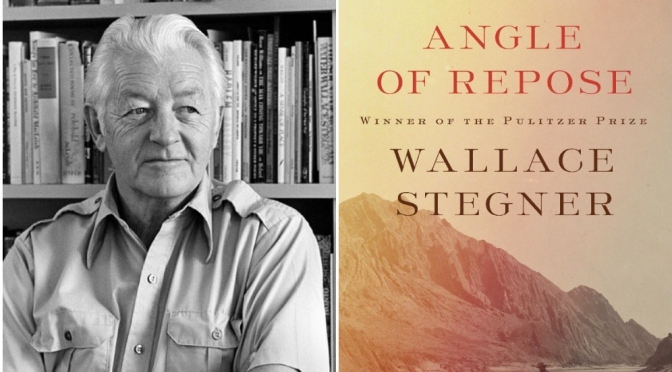
Scott discusses his first in a series of essays about American writers, Wallace Stegner, and David Kamp talks about “Sunny Days: The Children’s Television Revolution That Changed America.”

Wallace Earle Stegner (February 18, 1909 – April 13, 1993) was an American novelist,  short story writer, environmentalist,  and historian, often called “The Dean of Western Writers”. He won the Pulitzer Prize in 1972 and the U.S. National Book Award in 1977.

Food & Travel: “Bangkok’s Fresh Food Markets” (NYT)

From the New York Times (June 1, 2020):

Finding Euphoria in Bangkok's Food Scene - New York Times June 1 2020The aromas here are rich and pungent — smoked, cured, dried and fresh seafood, along with many forms of meat, both raw and cooked. The awnings over the stalls create a shadowy atmosphere that’s punctuated by thin streaks of dancing light.


Finding Euphoria in Bangkok's Food Scene - New York Photographs and Text by Louise PalmbergTimes June 1 2020
Photographs and Text by Louise Palmberg

Early this year, in search of inspiration beyond the food scene in New York (and not yet locked down by the spread of Covid-19), I spent two weeks visiting and documenting life among the fresh markets and street vendors in and around Bangkok.

It made for an unlikely itinerary since tourists in Thailand often spend only a day or two in the capital before heading south toward the country’s many islands.

Read full article

Interviews: Travel Guru “Rick Steves” (NYT Podcast)

NY Times PodcastsRick Steves is a travel evangelist, always in motion, traversing faraway places and inspiring others to do the same. So when the world shuts down, and Rick Steves can no longer travel, then who is Rick Steves?

Sam Anderson, a writer for The Times Magazine, profiled the travel guru last year. Today, Sam asks Rick how he’s been expanding his horizons from home. Dreaming of travel, we learn, is nearly as sweet as the real thing.

New York Times Magazine Rick Steves article

Read article

Reopening The Economy: “What The Year Ahead Might Look Like” (NY Times)

The Daily - New York Times podcastDonald G. McNeil Jr., a science and health reporter for The New York Times, discusses how the Coronavirus lockdown might end what it would look like.

While the economy is likely to reopen slowly, there is hope that society will adapt to manage the uncertainty of our new circumstances. Here’s what experts say the next year (or more) will look like.

Social Distancing: 3-D Simulation Of How Respiratory Droplets Spread Coronavirus

From The New York Times (April 14, 2020):

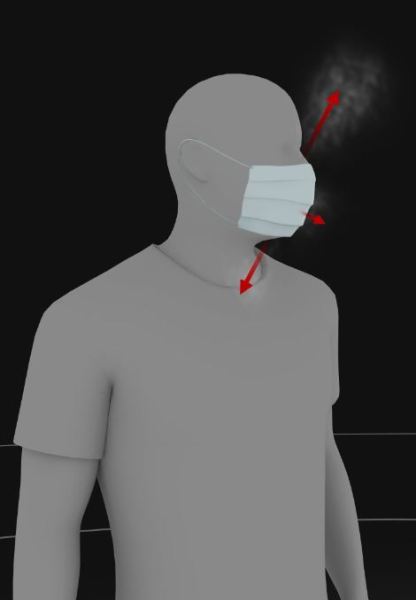
Face Mask Disrupts trajectory of cough New York Times April 14 2020

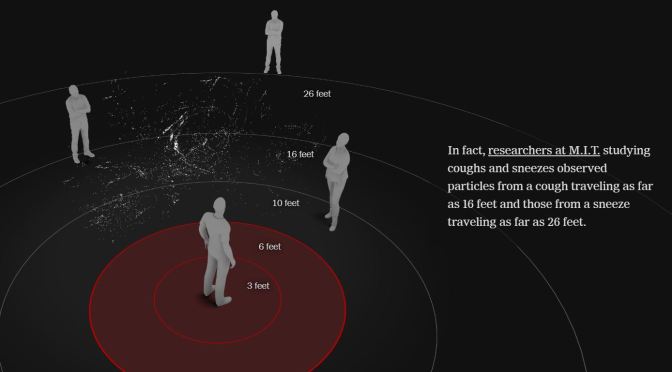
But as this simulation suggests, and scientists have argued, droplets can travel farther than six feet. And small droplets known as aerosols can remain suspended or travel through the air before they eventually settle on surfaces. This is how they could disperse over the next 20 minutes.

The Centers for Disease Control and Prevention encourages people to stay home. If you must venture out, you should stay at least six feet away from others. The World Health Organization recommends a minimum of three feet of separation.

Scientists are learning about the novel coronavirus in real time, and those who study similar respiratory illnesses say that until it is better understood, no guideline is likely to offer perfect safety. Instead, understanding the possible transmission routes for the virus can help us see why keeping our distance is so important.

View 3-D simulation