

Experience the Summer Exhibition like never before with this interactive tour. Visit each gallery with the click of a button and browse or buy the works online.
Tag Archives: Museum Exhibits
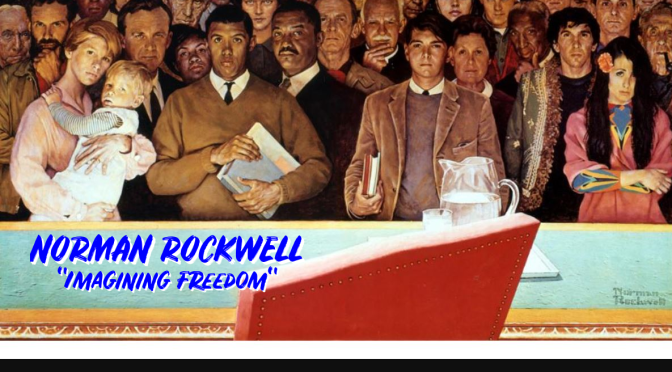
Top Art Exhibits: “Norman Rockwell – Imagining Freedom” (Denver Art)
Norman Rockwell: Imagining Freedom explores themes and events in American history that still resonate today. (On View through September 7, 2020)

Four Freedoms
In the 1940s, Franklin D. Roosevelt developed a concept called the Four Freedoms—Freedom of Speech, Freedom of Worship, Freedom from Want, and Freedom from Fear—to persuade Americans to support the war effort. Not immediately embraced by the American public, the administration turned to the arts to help Americans understand and rally behind these enduring ideals. Artists, writers, actors, designers, and musicians were encouraged to take on the challenge of advancing the Four Freedoms as the U.S. prepared to enter World War II, moving away from its policy of neutrality.
Norman Rockwell, a renowned illustrator, was among those who took on the challenge to communicate visually the notions of freedom in support of the war efforts. The results were Rockwell’s popular Four Freedoms illustrations that depicted everyday community and domestic life that helped Americans rally for the defense of public freedom.
Civil Rights
The exhibition also showcases his post-war artworks from the 1960s, which address civil rights, human rights, and equality for all. One of the most powerful artworks on view in this section is the 1961 Golden Rule, which features people of different religions, races, and ethnicities with the inscription “Do Unto Others as You Would Have Them Do Unto You.” One of Rockwell’s most iconic images of the Civil Rights Movement, The Problem We All Live With, is also on display.
Contemporary Artwork
The exhibition concludes with a section of artworks and social commentary by contemporary artists responding to themes of freedom and American identity. The 2015 painting, Freedom from What? (I Can’t Breathe) by artist Maurice “Pops” Peterson will likely prompt discourse due to its relevance today. Peterson’s take on Rockwell’s Freedom from Fear, explores the idea that not all American families enjoy the privilege of safety, and depicts a newspaper headline with the words “I Can’t Breathe,” spoken by Eric Garner, a Black man killed during an interaction with New York police in 2014.
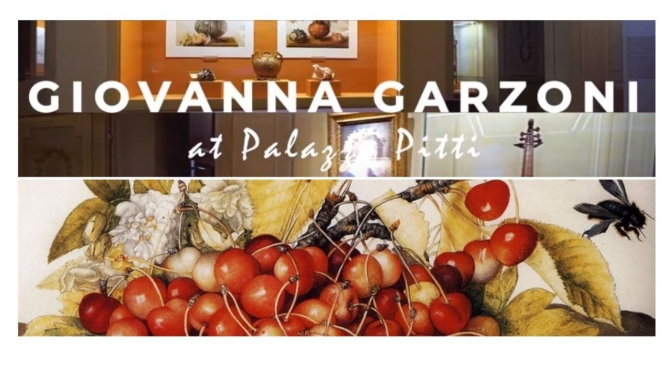
Museum Exhibitions: “Giovanna Garzoni” At Palazzo Pitti In Florence
Hosted in the Andito degli Angiolini space at Palazzo Pitti, “The Immensity of the Universe in the Art of Giovanna Garzoni” exhibition encompasses 100 floral compositions, still lives and miniatures by the Baroque, Marche-born painter friend of Artemisia Gentileschi.
 The show has been curated by Sheila Barker of The Medici Archive Project and the Advancing Women Artists foundation is running a challenge to inspire the creation of contemporary art based on Garzoni’s oeuvre. While her role in the evolution of scientific illustration is widely acknowledged, Giovanna Garzoni is less familiar as an illustrator of geographical fantasy in the age of the Baroque.
In harmonic and often relatively small compositions, the painter combines exotic objects of extremely varied provenance such as Chinese porcelain, Pacific nautili, Mexican marrows and flowers, South American plants and English lapdogs, in an effort both to astonish and to amuse.
Turning her back on the conventional role reserved for women in her day, Garzoni travelled in Italy, and possibly also in France, gaining access to the most important collections of curios of her era. The exhibition showcases her works collected by the Medici and still owned by the Gallerie degli Uffizi, alongside targeted loans illustrating the artist’s field of action and her prowess as a portraitist.
On the basis of a previously untapped inventory, a section of the exhibition reconstructs Vittoria della Rovere’s Wunderkammer, once hosted in the Sala dell’Aurora in the villa of Poggio Imperiale, thus indirectly shedding light also on a leading member of the grand ducal family.
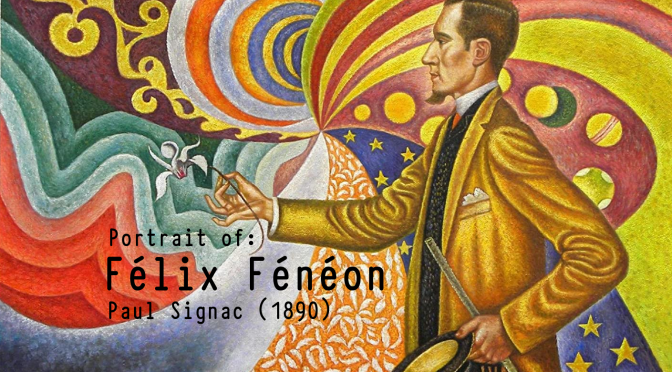
Art History: “Félix Fénéon: The Anarchist And The Avant-Garde” (MoMA)
“It would not be a commonplace portrait at all, but a carefully composed picture, with very carefully arranged colors and lines. A rhythmic and angular pose. A decorative Félix, entering with his hat or a flower in his hand.”
With these words, in 1890, Paul Signac described to Félix Fénéon the extraordinary portrait he was dedicating to him. In it, Signac paid homage to Fénéon’s distinctive appearance, his generous but enigmatic personality, and his innovative approach to modernism.
This painting, a masterpiece in the Museum’s collection, will be the centerpiece of Félix Fénéon, the first exhibition dedicated to Fénéon (1861–1944). An art critic, editor, publisher, dealer, collector, and anarchist, Fénéon had a wide-ranging influence on the development of modernism in the late 19th and early 20th centuries.
In the late 1880s, he played a key role in defining the new movement known as Neo-Impressionism, a term he coined himself, whose artists, including Signac, used tiny dabs of color that would mix in the eye of the viewer. Over the next five decades, he championed the careers of artists from Georges-Pierre Seurat and Signac to Pierre Bonnard, Henri Matisse, and Amedeo Modigliani.
He amassed a renowned collection of paintings by these artists and many others, and he was also a pioneering collector of art from Africa and Oceania. The exhibition will feature some 130 objects, including major works that Fénéon admired, championed, and collected, as well as contemporary photographs, letters, and publications that trace key chapters in his biography. Together these works reveal the profound and lasting legacy of Fénéon’s keen eye and bold, forward-looking vision.
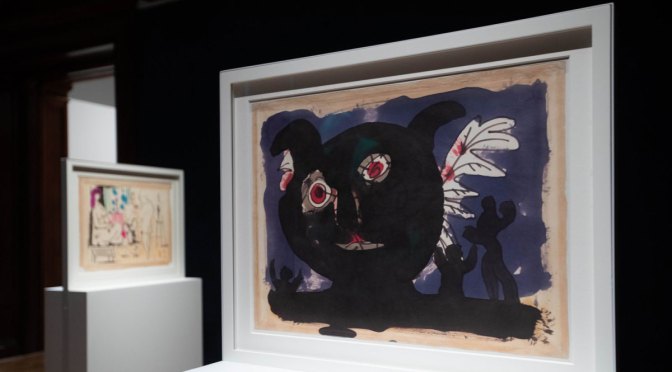
Art: Virtual Exhibition Tour Of “Picasso And Paper” (Royal Academy)
Experience our Picasso and Paper exhibition from your own home in this video tour of the galleries, created before the Royal Academy had to close its doors due to coronavirus.
Picasso didn’t just draw on paper — he tore it, burnt it, and made it three-dimensional. From studies for ‘Guernica’ to a 4.8-metre-wide collage, this exhibition brings together more than 300 works on paper spanning the artist’s 80-year career.
Installation views of the Picasso and Paper exhibition at the Royal Academy of Arts. © Succession Picasso/DACS 2020. Exhibition organised by the Royal Academy of Arts, London and the Cleveland Museum of Art in partnership with the Musée national Picasso-Paris.
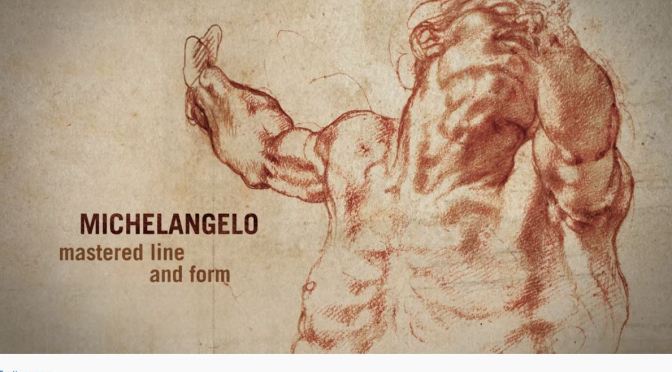
Art History Videos: “Michelangelo – Mind Of The Master” (The Getty)
Take a visual journey into the mind of Michelangelo, a painter, sculptor, architect, draftsman, and one of the most creative and influential artists in the history of Western art. See how he used drawings to create, explore, and prepare for some of his most famous works of art. Produced for the J. Paul Getty Museum’s exhibition, “Michelangelo: Mind of the Master.” https://www.getty.edu/art/exhibitions…
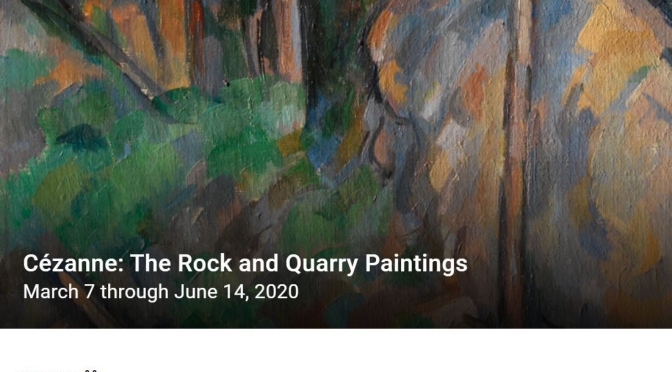
New Exhibitions: “Cézanne – The Rock and Quarry Paintings” (Princeton)
 Cézanne: The Rock and Quarry Paintings is the first major exhibition to examine an essential but understudied aspect of the revolutionary French painter’s work: his profound interest in rock and geological formations.
Throughout his career, Cézanne made canvases that take rock formations as their principal subjects. Although they are among the artist’s most extraordinary landscapes, such paintings of geological forms have never before been the focus of significant scholarship.
Cézanne: The Rock and Quarry Paintings will feature approximately 15 of the most important of these paintings, as well as selected watercolors and related documentary material. Together, they reveal the artist’s fascination with geology, which helped shape the radical innovations of his artistic practice
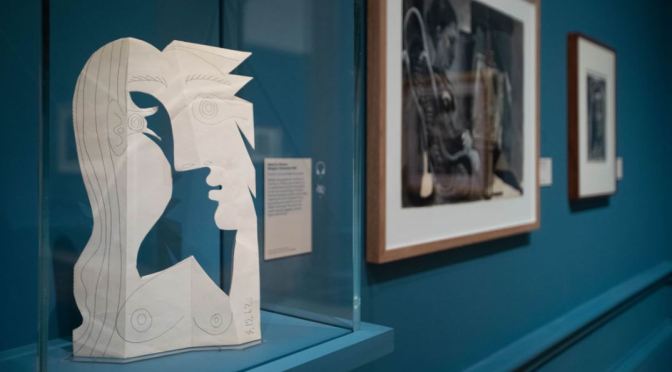
Exhibitions: Inside Look At “Picasso And Paper”, Royal Academy Of Arts (Video)
Join Curator Ann Dumas for a view inside the ‘Picasso and Paper’ exhibition, which features works spanning the artist’s entire career. Can you guess which work the artist made when he was just nine years old?
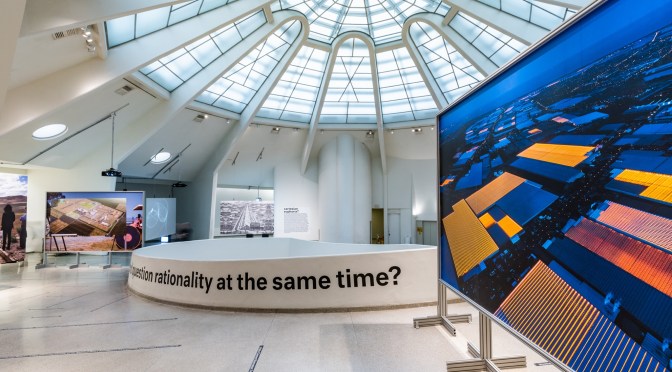
Exhibitions: “Countryside, The Future” Through The Lens Of Architect Rem Koolhaas (Guggenheim)
Countryside, The Future is an exhibition addressing urgent environmental, political, and socioeconomic issues through the lens of architect and urbanist Rem Koolhaas and Samir Bantal, Director of AMO, the think tank of the Office for Metropolitan Architecture (OMA).
A unique exhibition for the Guggenheim Museum, Countryside, The Future will explore radical changes in the rural, remote, and wild territories collectively identified here as “countryside,” or the 98% of the Earth’s surface not occupied by cities, with a full rotunda installation premised on original research. The project presents investigations 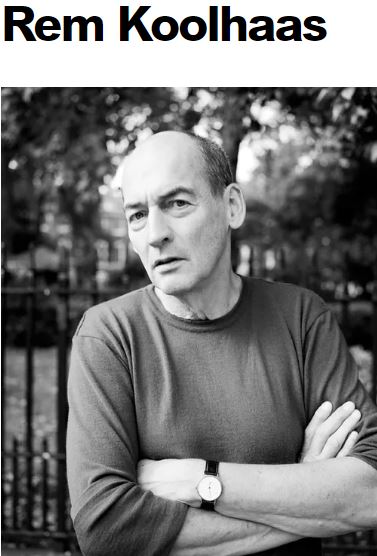 by AMO, Koolhaas, with students at the Harvard Graduate School of Design; the Central Academy of Fine Arts, Beijing; Wageningen University, Netherlands; and the University of Nairobi. The exhibition will examine the modern conception of leisure, large-scale planning by political forces, climate change, migration, human and nonhuman ecosystems, market-driven preservation, artificial and organic coexistence, and other forms of radical experimentation that are altering landscapes across the world.
Rem Koolhaas (Rotterdam, 1944) founded OMA in 1975 together with Elia and Zoe Zenghelis and Madelon Vriesendorp. He graduated from the Architectural Association in London and in 1978 published Delirious New York: A Retroactive Manifesto for Manhattan. In 1995, his book S,M,L,XL summarized the work of OMA in “a novel about architecture”. He co-heads the work of both OMA and AMO, the research branch of OMA, operating in areas beyond the realm of architecture. His built work includes the Qatar National Library and the Qatar Foundation Headquarters (2018), Fondation Galeries Lafayette in Paris (2018), Fondazione Prada in Milan (2015/2018), Garage Museum of Contemporary Art in Moscow (2015), the headquarters for China Central Television (CCTV) in Beijing (2012), Casa da Musica in Porto (2005), Seattle Central Library (2004), and the Netherlands Embassy in Berlin (2003). Current projects include the Taipei Performing Arts Centre, a new building for Axel Springer in Berlin, and the Factory in Manchester. Koolhaas directed the 2014 Venice Architecture Biennale, is a professor at Harvard University, and is preparing a major exhibition for the Guggenheim museum to open in 2019 entitled Countryside: Future of the World.
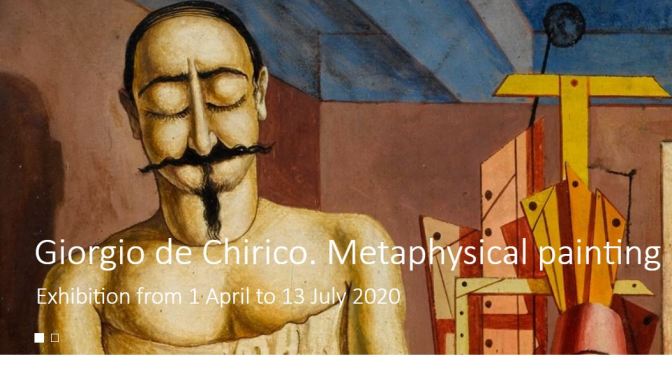
New Exhibitions: “Giorgio De Chirico – Metaphysical Painting” At The Musée de l’Orangerie, Paris (2020)
The exhibition Giorgio de Chirico. Metaphysical painting retraces the career and the artistic and philosophic influences of the artist Giorgio de Chirico from Munich to Turin, then to Paris where he discovered the artistic avant-garde of his era, and lastly Ferrare. The connections between the painter – discovered by Apollinaire and 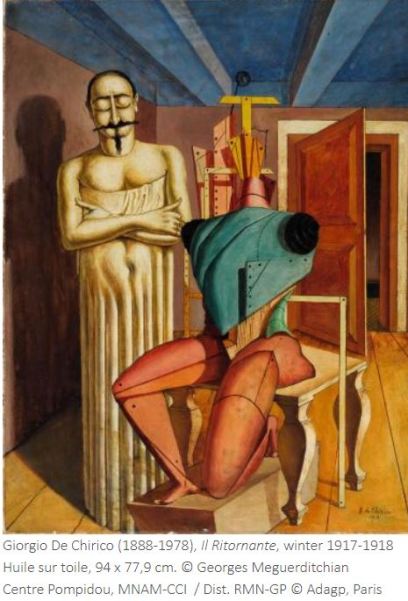 subsequently backed by the art dealer Paul Guillaume – and the Parisian cultural and literary circles will be highlighted as never before.
Born in Greece and trained in the fount of classical culture and late German Romanticism, de Chirico developed the foundations of a new artistic exploration alongside his younger brother Alberto Savinio. A student at the Academy of Fine Arts in Munich as of 1908, he discovered the thinking of Nietzsche and Schopenhauer as well as the works of Böcklin and Klinger. After travelling to Milan then Florence, it was in France, and more specifically Paris, as of autumn 1911, that he established his unique visual vocabulary through contact with the modernist artistic revolutions. He was quickly noticed by numerous artistic celebrities of the time, among whom Guillaume Apollinaire, Maurice Raynal, André Salmon, André Breton, Paul Éluard and Jean Paulhan were the first to take an interest in and promote his work.
 The exhibition thus comes into its own at the Musée de l’Orangerie alongside the figure of Paul Guillaume, the first art dealer to work with Giorgio de Chirico. On his return to Italy in 1915, he and his brother Savinio were sent to Ferrare for military reasons, where he continued his artistic research. This period (June 1915-December 1918) provided an opportunity for painters Carlo Carrà and Giorgio Morandi to get to know the two brothers, thus resulting in the creation of what was later to be known as the “metaphysical movement” which brings the exhibition to a close.
Exhibition organised by the Musée d’Orsay and the Musée de l’Orangerie, Paris and the Hamburger Kunsthalle, Hamburg
 Boomers Daily