Mercedes-Benz and the upcoming “Avatar” films – what at first seemed to be an unexpected global partnership, turned into a unique interdisciplinary experience.
Inspired by the world of “Avatar”, the two partners created the astonishing VISION AVTR. In this exclusive behind-the-scenes feature, key team members from both parties share their thoughts on the cooperation process and provide fascinating insights into the concept vehicle itself.
Robert Conrad, the actor best known for his role in the television show The Wild Wild West, died today in Malibu, Calif. of heart failure. He was 84 and his death was announced by a family spokesman. Born in Chicago, Illinois, Conrad moved to Los Angeles in 1958 and found almost instant success, booking a recurring role on the TV show Hawaiian Eye in 1959.
Robert Conrad (born Conrad Robert Falk; March 1, 1935 – died February 8, 2020) was an American film and television actor, singer, and stuntman. He is best known for his role in the 1965–69 television series The Wild Wild West, playing the sophisticated Secret Service agent James T. West. He portrayed World War II ace Pappy Boyington in the television series Baa Baa Black Sheep (later syndicated as Black Sheep Squadron). In addition to acting, he was a singer, and recorded several pop/rock songs in the late 1950s and early 1960s as Bob Conrad. He hosted a weekly two-hour national radio show (The PM Show with Robert Conrad) on CRN Digital Talk Radio since 2008.
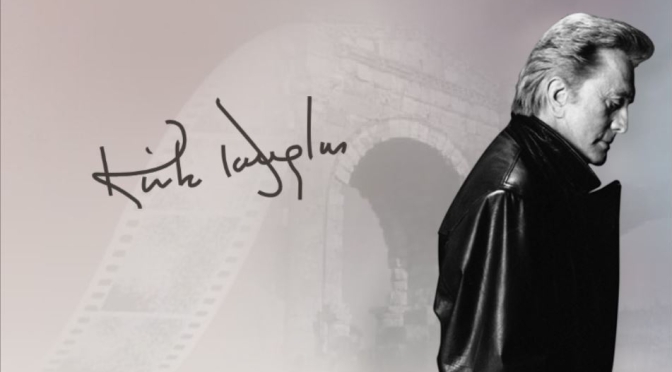
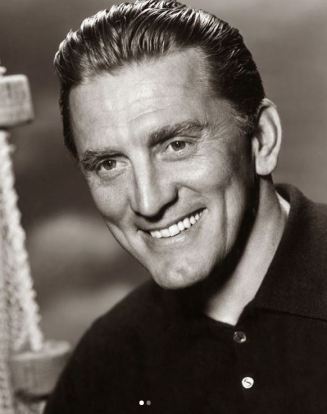
“It is with tremendous sadness that my brothers and I announce that Kirk Douglas left us today at the age of 103. To the world he was a legend, an actor from the golden age of movies who lived well into his golden years, a humanitarian whose commitment to justice and the causes he believed in set a standard for all of us to aspire to.
But to me and my brothers Joel and Peter he was simply Dad, to Catherine, a wonderful father-in-law, to his grandchildren and great grandchild their loving grandfather, and to his wife Anne, a wonderful husband.
Kirk’s life was well lived, and he leaves a legacy in film that will endure for generations to come, and a history as a renowned philanthropist who worked to aid the public and bring peace to the planet.
Let me end with the words I told him on his last birthday and which will always remain true. Dad- I love you so much and I am so proud to be your son.”
Denys Finch (Robert Redford) takes Karen Blixen (Meryl Streep) flying over Kenya’s Great Rift Valley in his Gipsy Moth biplane in this breathtaking sequence from Out of Africa, winner of seven Academy Awards including Best Picture.
The most acclaimed motion picture of 1985 stars Robert Redford and Meryl Streep in one of the screen’s great epic romances. Directed by Oscar® winner Sydney Pollack, Out of Africa is the fascinating true story of Karen Blixen, a strong-willed woman who, with her philandering husband (Klaus Maria Brandauer), runs a coffee plantation in Kenya, circa 1914. To her astonishment, she soon discovers herself falling in love with the land, its people and a mysterious white hunter (Redford). The masterfully crafted, breathtakingly produced story of love and loss earned Oscars® for Best Picture, Director, Screenplay (based on material from another medium), Cinematography, Original Score, Art Direction (Set Decoration) and Sound.
Cast: Meryl Streep, Robert Redford, Klaus Maria Brandauer, Michael Kitchen, Malick Bowens, Michael Gough, Suzanna Hamilton, Rachel Kempson, Graham Crowden, Leslie Phillips, Shane Rimmer
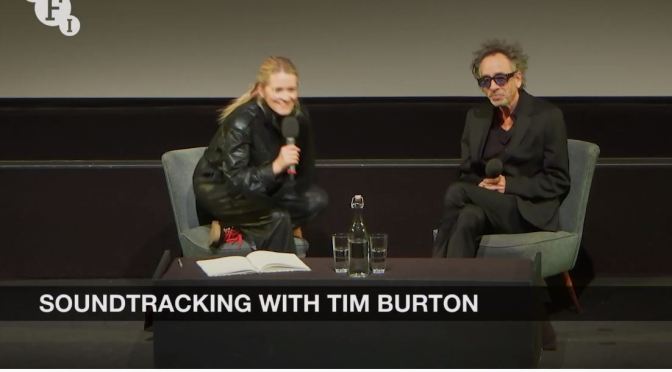
In an interview filmed just before Christmas, Tim Burton joins Soundtracking podcast host Edith Bowman to talk in depth about his work and the importance of music in his films.
In 1985, Pee-wee’s Big Adventure brought together Burton and a then-unknown composer called Danny Elfman, a collaboration that’s produced 16 films – and counting. With classics such as Batman, Beetlejuice and Edward Scissorhands, audiences have grown up with a creative partnership that’s formed an unmistakable and formidable artistic voice, spanning over 30 years.
The film… “is nothing less than a found epic, a real-life environmental allegory and, not least, a stinging comedy about the age-old problem of inconsiderate neighbors.”
“Honeyland” is the first film to be nominated for best documentary and best international feature (the category formerly known as best foreign-language film). It follows Hatidze Muratova, a middle-aged beekeeper whose peaceful life in the North Macedonian countryside is disrupted when a chaotic family moves in next door.
The movie premiered at the Sundance Film Festival last year and came out on top with three awards, including the grand jury prize for documentary in the world cinema showcase.
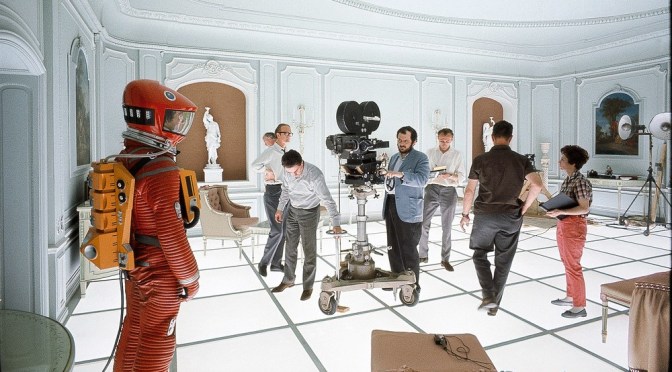
“Envisioning 2001” shows Kubrick as a director in command of all aspects of filmmaking, and it suggests that he and Clarke were no small obsessives when it came to understanding their subject matter. One of the first items in the exhibit is a request form from 1964, with Clarke’s name and address, sent to the United States Air Force. He sought information on a sighting — which turned out to be a satellite — that he and Kubrick, then developing the story for the movie, had seen in the sky over New York.
Some of the first visitors to see the exhibition Envisioning 2001: Stanley Kubrick’s Space Odyssey. Photo by Thanassi Karageorgiou Nas Karas Studios Jan 16, 2020 at Museum of the Moving Image
As it approaches its 52nd birthday, “2001: A Space Odyssey” remains one of the most inventive and enduring of all movies. But from the vantage point of 2020, it can be difficult to appreciate the sheer breadth of imagination involved in its making.
Enter “Envisioning 2001: Stanley Kubrick’s Space Odyssey,” a new exhibit at the Museum of the Moving Image in Astoria, Queens, that runs through July 19. The show brings together original correspondence, sketches, storyboards, props, video clips and much more to illustrate how Kubrick, the film’s director, and Arthur C. Clarke, the science fiction author who collaborated with him on the screenplay, set about bringing the future to the screen.
Terry Jones, Monty Python founder and Life of Brian director, dies aged 77. Jones, who was diagnosed with dementia in 2015, was the main directing force in Python’s films, as well a prolific creator of TV documentaries and children’s books.
In 1969, Palin and Jones joined Cambridge graduates Cleese and Graham Chapman – along with Idle and animator Terry Gilliam – on a BBC comedy sketch show. Eventually broadcast under the title Monty Python’s Flying Circus, it ran until 1974, with Jones largely writing with Palin (complementing Cleese’s partnership with Chapman). Seemingly chaotic, frequently surreal and formally daring, Monty Python’s Flying Circus would became one of the most influential shows in BBC history, revolutionising comedy formats, spawning scores of catchphrases, and inspiring an entire generation of comedians. Jones’s fondness for female impersonation was a key feature of the show, as was his erudite writing.
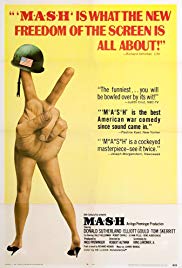
MASH (stylized on-screen as M*A*S*H) is a 1970 American black comedy war film directed by Robert Altman and written by Ring Lardner Jr., based on Richard Hooker’s novel MASH: A Novel About Three Army Doctors. The picture is the only theatrically released feature film in the M*A*S*H franchise, and it became one of the biggest films of the early 1970s for 20th Century Fox.
The film depicts a unit of medical personnel stationed at a Mobile Army Surgical Hospital (MASH) during the Korean War. It stars Donald Sutherland, Tom Skerritt, and Elliott Gould, with Sally Kellerman, Robert Duvall, René Auberjonois, Gary Burghoff, Roger Bowen, Michael Murphy, and in his film debut, professional football player Fred Williamson. Although the Korean War is the film’s storyline setting, the subtext is the Vietnam War — a current event at the time the film was made.[1]
The film won Grand Prix du Festival International du Film, later named Palme d’Or, at 1970 Cannes Film Festival. The film went on to receive five Academy Award nominations, including Best Picture, and won for Best Adapted Screenplay. MASH was deemed “culturally significant” by the Library of Congress and was selected for preservation in the United States National Film Registry. The Academy Film Archive preserved MASH in 2000.[2] The film inspired the television series M*A*S*H, which ran from 1972 to 1983.




 “It is with tremendous sadness that my brothers and I announce that Kirk Douglas left us today at the age of 103. To the world he was a legend, an actor from the golden age of movies who lived well into his golden years, a humanitarian whose commitment to justice and the causes he believed in set a standard for all of us to aspire to.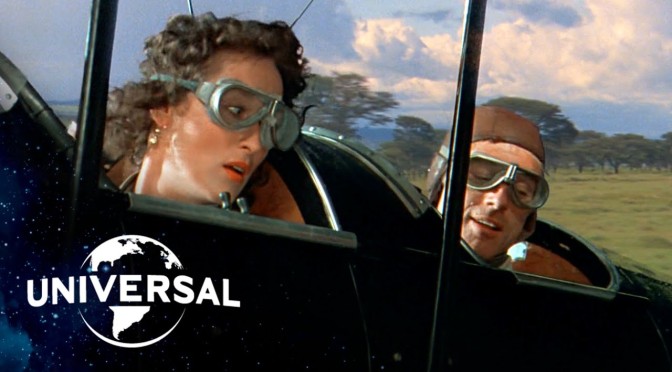
 In an interview filmed just before Christmas, Tim Burton joins Soundtracking podcast host Edith Bowman to talk in depth about his work and the importance of music in his films.


 Hooker’s novel MASH: A Novel About Three Army Doctors. The picture is the only theatrically released feature film in the M*A*S*H franchise, and it became one of the biggest films of the early 1970s for 20th Century Fox.
 Boomers Daily