

Tag Archives: McKinsey & Company

Books: London Review Of Books – December 15, 2022

Laleh Khalili · LRB

London Review of Books (LRB) – December 15, 2022:

In Clover: What does McKinsey do?

When McKinsey Comes to Town: The Hidden Influence of the World’s Most Powerful Consulting Firm by Walt Bogdanich and Michael Forsythe.

The primary product sold by all management consultants – both software developers and strategic organisers – is the theology of capital. This holds that workers are expendable. They can be replaced by machines, or by harder-working employees grateful they weren’t let go in the last round of redundancies. Managers are necessary to the functioning of corporations – or universities, or non-profit organisations – and the more of them the better.

Down among the Press Lords

Writing about the press by Andrew O’Hagan, Ross McKibbin, Jenny Diski, James Meek, Suzanne Moore, Mary-Kay Wilmers, Alan Rusbridger, Thomas Nagel and Raymond Williams.


Future Of Mobility: eVTOL’s & Electric Flying Taxis

Look! Up in the sky! Not a bird … or a plane … it’s an eVTOL! An eVTOL (pronounced “ee-vee-tol”) is an electric vertical takeoff and landing aircraft—and thousands of them could be flying above cities by 2030. 

Air taxi gif

“Flying taxis will happen; it’s a question of ‘when,’ not ‘if’”

What new modes of air transportation will exist in 2030? Could eVTOLs replace cars by then? Will passenger aircraft be piloted or autonomous—or somewhere in between? McKinsey’s Kersten Heineke, Benedikt Kloss, and Robin Riedel imagine the future of advanced air mobility.

Read more

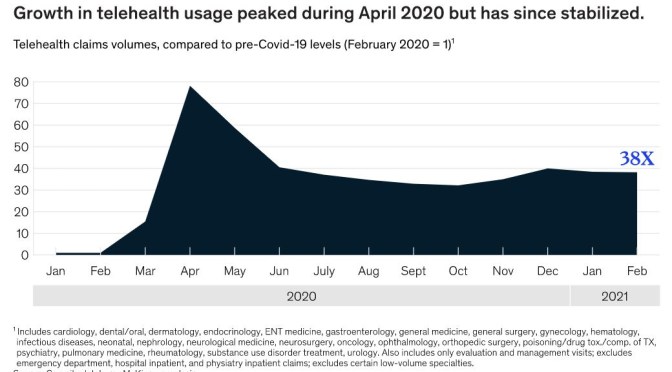
Telemedicine: Growth Rate Peaked In April 2020, Stabilized During 2021

A year ago, we estimated that up to $250 billion of US healthcare spend could potentially be shifted to virtual or virtually enabled care. Approaching this potential level of virtual health is not a foregone conclusion. It would likely require sustained consumer and clinician adoption and accelerated redesign of care pathways to incorporate virtual modalities.

  • Telehealth utilization has stabilized at levels 38X higher than before the pandemic. After an initial spike to more than 32 percent of office and outpatient visits occurring via telehealth in April 2020, utilization levels have largely stabilized, ranging from 13 to 17 percent across all specialties.2 This utilization reflects more than two-thirds of what we anticipated as visits that could be virtualized.3
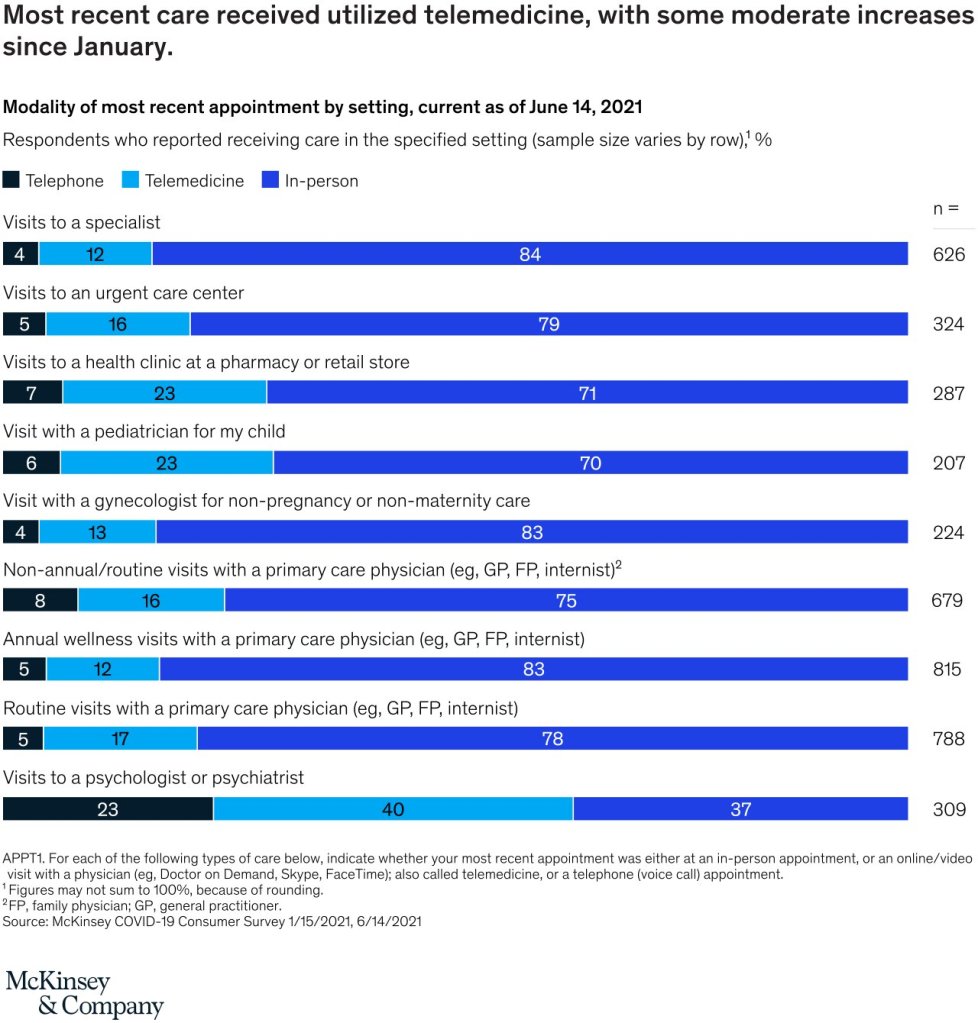
  • Similarly, consumer and provider attitudes toward telehealth have improved since the pre-COVID-19 era. Perceptions and usage have dropped slightly since the peak in spring 2020. Some barriers—such as perceptions of technology security—remain to be addressed to sustain consumer and provider virtual health adoption, and models are likely to evolve to optimize hybrid virtual and in-person care delivery.
  • Some regulatory changes that facilitated expanded use of telehealth have been made permanent, for example, the Centers for Medicare & Medicaid Services’ expansion of reimbursable telehealth codes for the 2021 physician fee schedule. But uncertainty still exists as to the fate of other services that may lose their waiver status when the public health emergency ends.
  • Investment in virtual care and digital health more broadly has skyrocketed, fueling further innovation, with 3X the level of venture capitalist digital health investment in 2020 than it had in 2017.4
  • Virtual healthcare models and business models are evolving and proliferating, moving from purely “virtual urgent care” to a range of services enabling longitudinal virtual care, integration of telehealth with other virtual health solutions, and hybrid virtual/in-person care models, with the potential to improve consumer experience/convenience, access, outcomes, and affordability.

Read more at McKinsey & Company

Morning News Podcast: Opioid Payment, GameStop Profits, Employment Data

A.M. Edition for Feb. 4. A hedge fund made nearly $700 million in the GameStop rally. Consulting giant McKinsey reaches a settlement centering on opioid painkillers.

Plus, WSJ economics reporter Kate Davidson previews coming jobs data. Marc Stewart hosts.

Health Infographics: How “Strong HVAC Airflows Spread Covid-19 Indoors”

From McKinsey & Company (July 9, 2020):

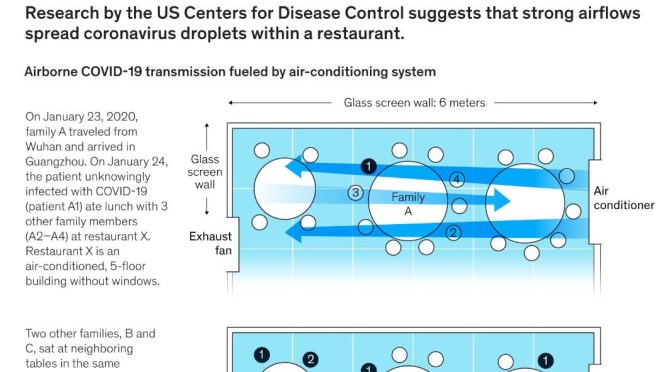
McKinsey & Company logoThe World Health Organization recently acknowledged that some evidence about in-room transmission is worrisome. In addition, after analyzing a transmission event at a restaurant in China, the US Centers for Disease Control and Prevention (CDC) concluded that an asymptomatic patient transmitted the virus to families at two nearby tables.
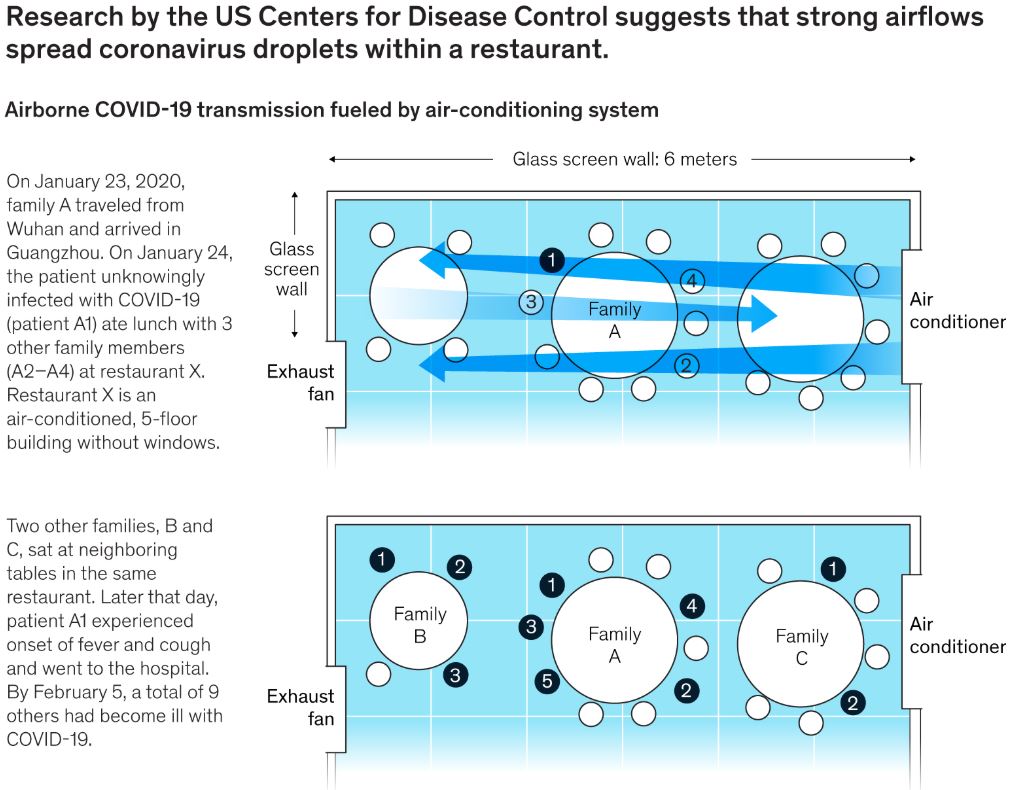
Strong Airflows Spread Coronavirus Droplets Within a Restaurant - McKinsey July 2020

Based on the restaurant layout, seating arrangements, and smear samples from air-conditioning inlets and outlets, the CDC found that the coronavirus was likely transmitted when strong airflows from a nearby air conditioner spread large droplets from the infected person. These droplets traveled more than one meter—further than usual, but less than the distance aerosols can typically travel.

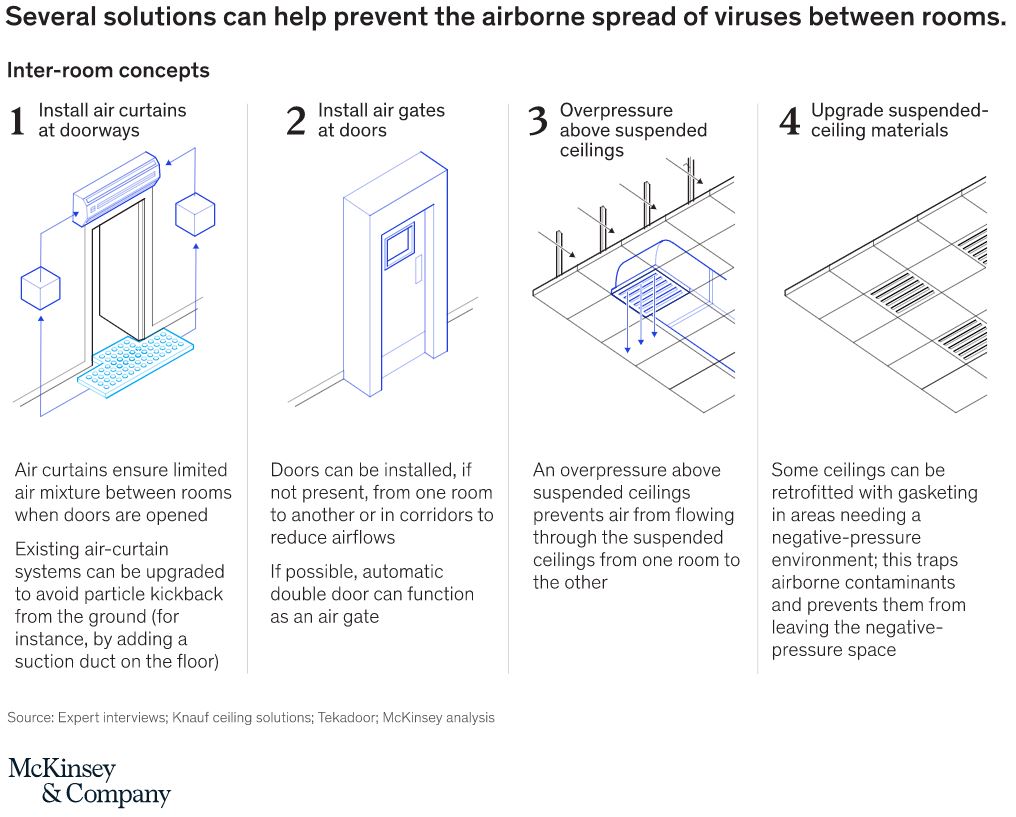
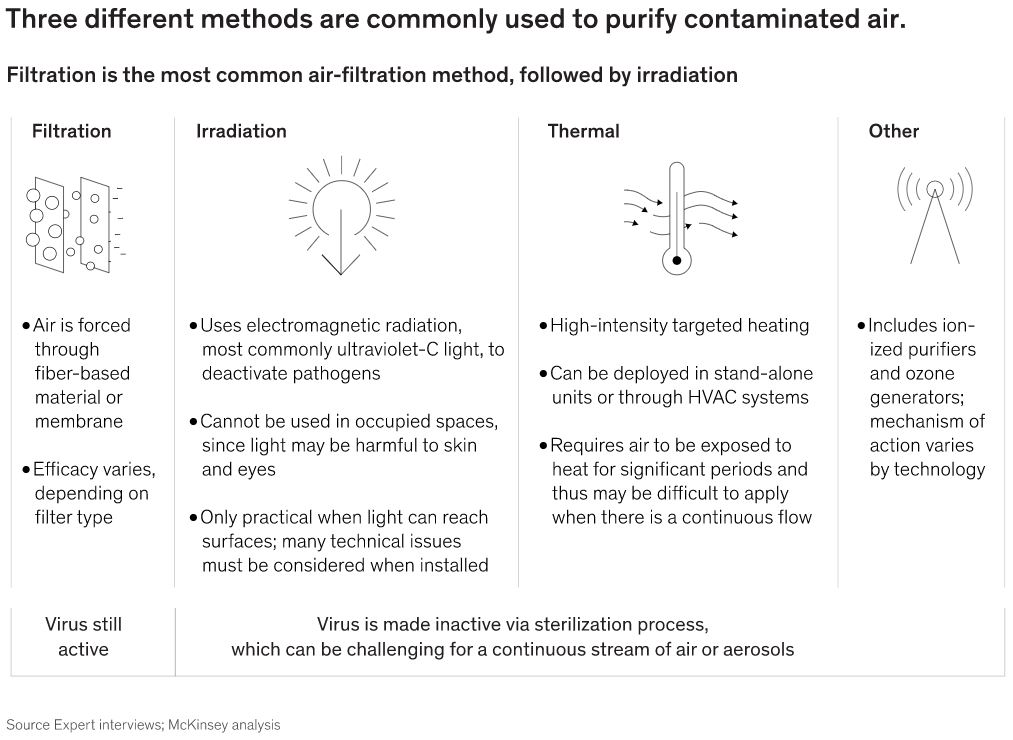
Solutions to Help Prevent Airborne Spread of Viruses between Rooms - McKinsey & Company July 2020

Three Different Common Methods to Purify Contaminated Air - Filtration, Irradiation and Thermal - McKinsey July 2020

Read full article

Leisure Post-Covid: “The Time To Reinvent Travel”

From McKinsey & Company (June 15, 2020):

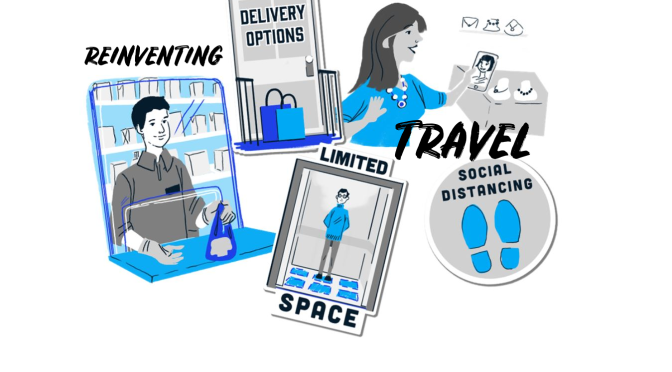
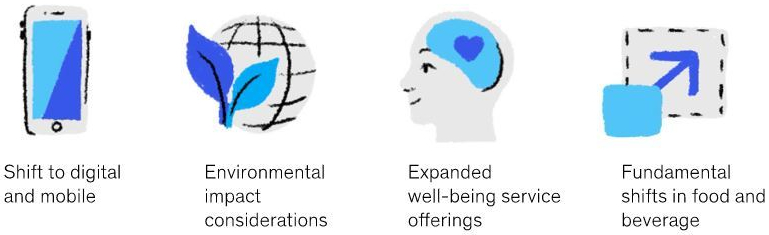
As travel companies redesign their traveler experiences to address risks and anxieties related to COVID-19, they should remember that the pain points and trends that existed before the crisis—such as the shift toward a more digital and personalized journey, and an increased emphasis on wellness and sustainability—have not gone away.

Travel Industry Trends Pre-Covid-19 - McKinsey & Company - June 15 2020

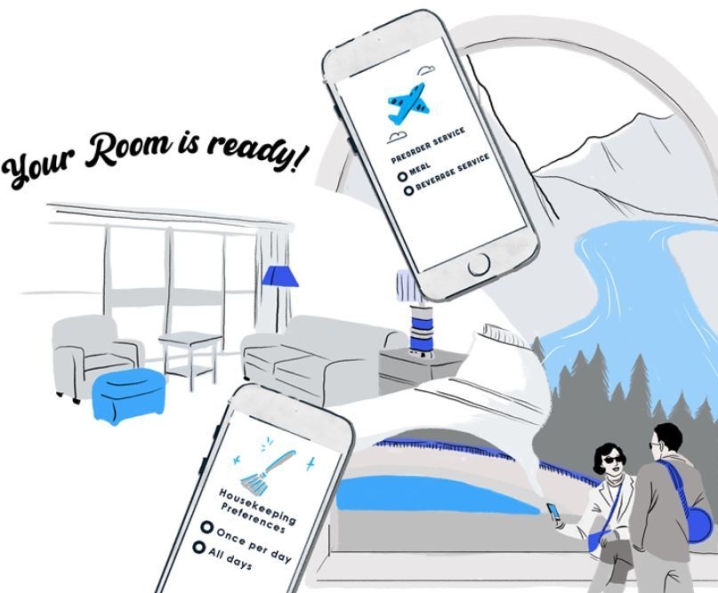
Many initiatives can make the travel experience simultaneously better and safer. Housekeeping services, for instance, will need to adjust for safety concerns, but revised protocols can also reduce environmental impact (such as through less-frequent Digital Technology - Reinventing Travel - McKinsey & Company - June 15, 2020laundering of sheets during each stay), decrease cost, and give guests more flexibility (by letting them choose their own housekeeping schedule).

Companies should empower customers to build their own itinerary using smarter, connected digital tools and make it easier for them to modify or cancel their plans. In addition, companies must recognize that the factors that promote customer loyalty may now have shifted; near-term uncertainty may mean, for example, that the ability to cancel a reservation matters more than brand choice or price.

Read full article

Future Of Healthcare: A Look At “Telemedicine” Growth In Next 5-10 Years

From McKinsey & Company (June 11, 2020)

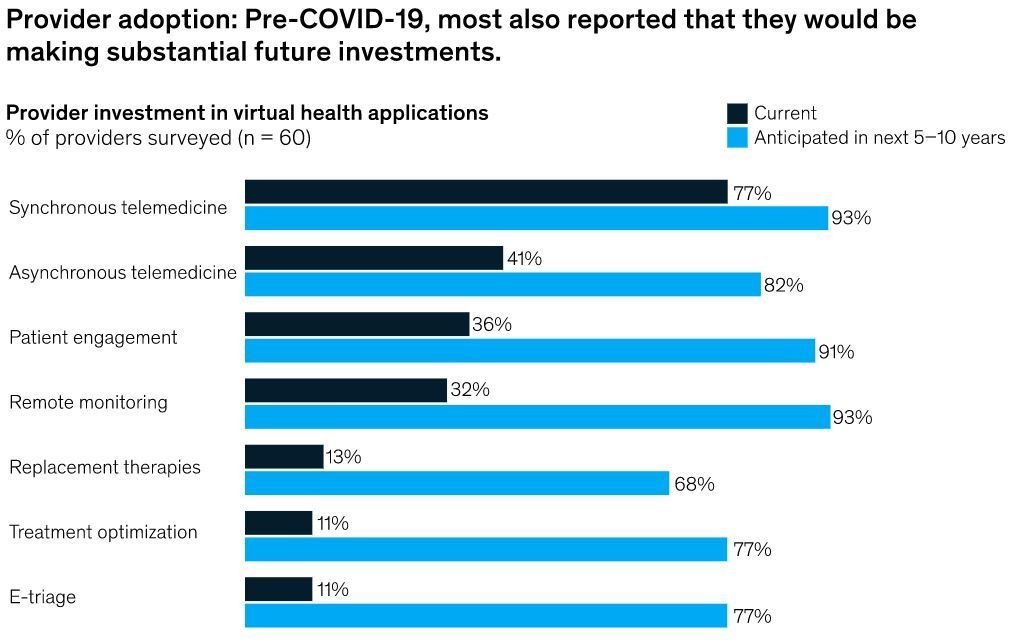
For the past 10 to 15 years, virtual health has been heralded as the next disrupter in the delivery of care, but there has been minimal uptick in adoption. The COVID-19 pandemic is pushing against structural barriers that had previously slowed health system investment in integrated virtual health applications.

Telehealth Adoption Pre-Covid and in 5-10 years - McKinsey & Company

Virtual Health Segments - McKinsey & Company - June 2020

Read full article