
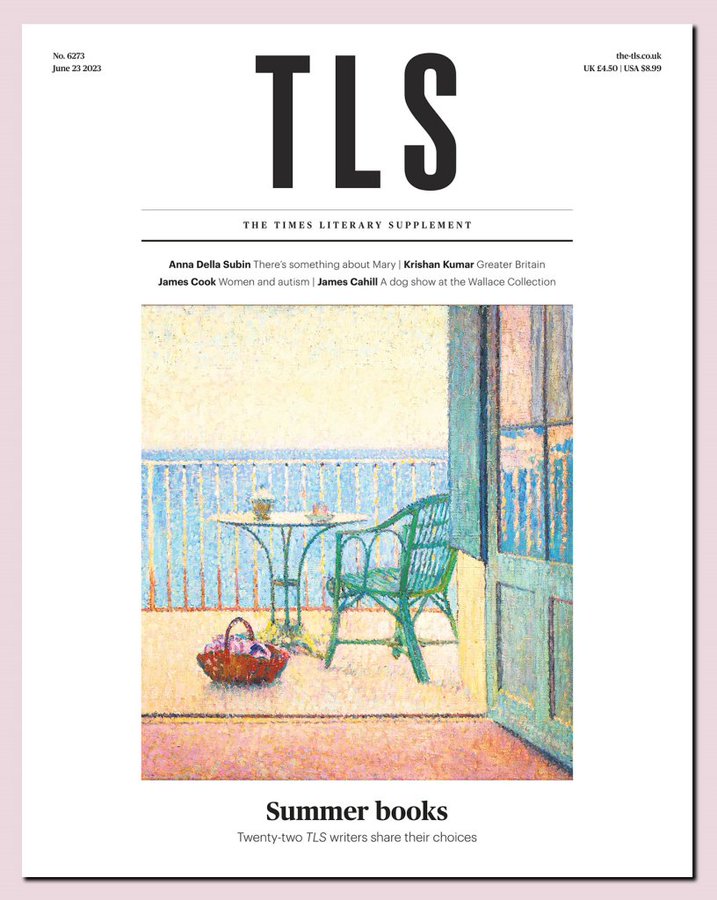

Times Literary Supplement (June 23, 2023): Twenty-two TLS writers’ choices for best Summer 2023 Books, Anna Della Subin on Mary Magdalene; Kojo Koram on global capitalism; Zachary Leader on Joyce and Léon and illustrating Victorian classics

Times Literary Supplement (June 23, 2023): Twenty-two TLS writers’ choices for best Summer 2023 Books, Anna Della Subin on Mary Magdalene; Kojo Koram on global capitalism; Zachary Leader on Joyce and Léon and illustrating Victorian classics
The Globalist Podcast, Wednesday, June 21, 2023: Ukraine’s counteroffensive and the challenges facing NGOs, the latest from the Paris Air Show and illegal Chinese “police stations” in South Korea.
Plus: a spotlight on Copenhagen and the Grammy Awards’ new African category.

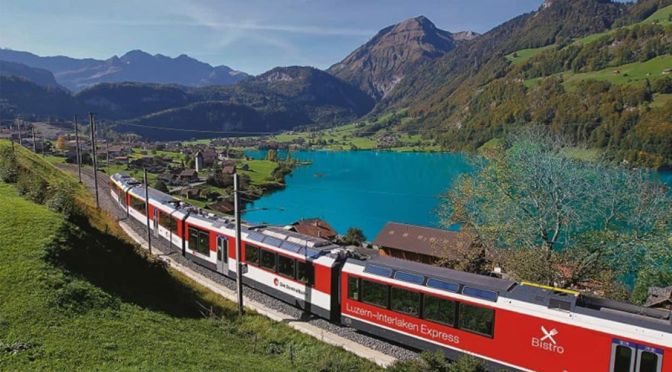
The Montreux Oberland Bernois Railway, is an electrified railway line that operates in southwest Switzerland. It is one of the oldest electric railways in the country. Its main line, 62.4 km in length, is built to the 1,000 mm gauge.


The judge, Aileen M. Cannon, set an aggressive schedule for moving the case forward, though the proceedings are likely to be delayed by pretrial clashes.

Under an agreement with the Justice Department, the president’s son agreed to probation for filing his taxes late, and he can avoid a charge that he lied about his drug use when he bought a gun.

Ukrainian captives released in prisoner exchanges say that beatings were common, and that they suffered from woefully inadequate health care and food.

The case had been closely watched as an important test of whether bans on transition care for minors, enacted by more than a dozen states, could withstand challenges.
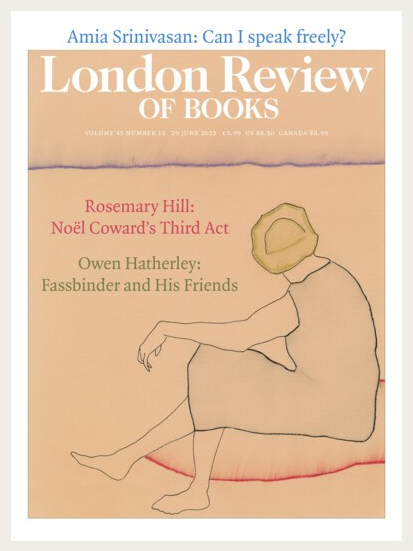

Noël Coward’s Third Act; Fassbinder and His Friends; Marx’s Literary Style by Ludovico Silva, and more…

Marx’s Literary Style
by Ludovico Silva, translated by Paco Brito Núñez.
Working on Capital in the British Museum, plagued by creditors and carbuncles, Karl Marx complained not only that nobody had ever written so much about money and had so little of it, but that ‘this economic crap’ was keeping him from writing his big book on Balzac. His work is studded with allusions to Homer, Sophocles, Rabelais, Shakespeare, Cervantes, Goethe and scores of other authors, though he was less enthralled by ‘Elizabeth’s arse-kissing poet’ Edmund Spenser, an advocate of state terror in Ireland.
Most of us would find it horrible to be told that we aren’t worth engaging with, that our views are socially unacceptable or merely a function of demography. But that it is painful to be on the receiving end of such remarks doesn’t mean that one’s own rights to ‘free speech’ are thereby imperilled; it might simply be a reminder that speech can wound.

Video timeline: 00:00 – Intro to the Super Yacht 00:32 – Situated Rugged Australian Landscape 00:55 – Special of Living on the Water 01:41 – A Walkthrough of the Super Yacht 02:47 – The Change in quality of Light 02:57 – The History Behind The Super Yacht 03:33 – The Intricacies of Designing A Boat 04:08 – A Limited Material Palette 05:00 – The Privilege of Designing and Building A Boat 05:40 – Creating Experiences and Memories
The super yacht thoughtfully interprets its unique context to create an architectural home that offers not just a refuge but an experience – one that allows a deep connection to the elements. Halcyon is a graceful expression of Jolson’s combined interior and architectural expertise, its design seamlessly integrating with elements of the landscape to maximise the unique context.
Living on the water means changing orientations and outlooks are to be celebrated. As such, an open plan ground floor with limited joinery, furniture and walls allows many outlooks, with a full-height wall serving as a division that enables the lounge and outdoor dining area to connect seamlessly. The first floor also houses two master bedrooms and two other guest bedrooms that share an ensuite. In the middle of the super yacht is a staircase that extends to the open rooftop, which houses a woodfired hot tub.
The super yacht takes advantage of its mooring by welcoming the textures of the landscape inside the architecture of the boat, recounting a strong connection between the water and the landscape with the interior design. Floor-to-ceiling windows, an open floor plan with minimal partitions and large, functional outdoor spaces were all incorporated to maximise the indoor-outdoor connection.


A nearly two-mile walk circumnavigating Zadar’s Old Town is a journey across a timeline that spans nearly every stage of Croatian history. And it’s a long history, dating back to the 9th century B.C., when the Liburnians first settled this peninsular spit of land on Croatia’s spectacular Dalmatian coast.

Start your stroll on the northwest corner of the peninsula at the Morske Orgulje, or Sea Organ: a set of 35 pipes spread under a 230-foot section of the city’s seaside promenade, known as the Riva. Awarded the 2006 European Prize for Urban Public Space, the Morske Orgulje plays beautifully discordant melodies as the Adriatic laps the stone and pushes air through the pipes beneath — converting the walkway into an invisible, ethereal orchestra.


The wail of snake charmers’ horns will lead you to your departure point: Jemaa El Fna. This carnivalesque, open-air market in the medina — the ancient neighborhood where Marrakesh was born — brims with juice stands, restaurants and souvenir shops, to say nothing of musicians and performers.

Before you embark on this meandering 2.2-mile walk, you should have water and sunscreen (summer temperatures can pass 100 degrees Fahrenheit in this Moroccan city); outfits that cover most of your skin (doubly useful in Islamic societies, which discourage revealing clothes); and a willingness to lose your bearings. Nearly twice the size of Central Park, the medina enfolds a vast spider web of passageways that seem designed to disorient outsiders.

To walk along the Seoul City Wall is to walk in the footsteps of scholars of bygone centuries, trace scars of war and take in the modern behemoth of a city built around it all. Its history stretches back to 1396, to when present-day Seoul first became the capital of what was then a kingdom called Joseon.

Then, the wall encircled an area that’s but a small fraction of today’s sprawling city, incorporating the slopes of the four mountains that afforded natural fortification. Like Seoul itself, the wall has been destroyed and rebuilt several times — and after restorations in recent decades, it’s become a popular urban walk.



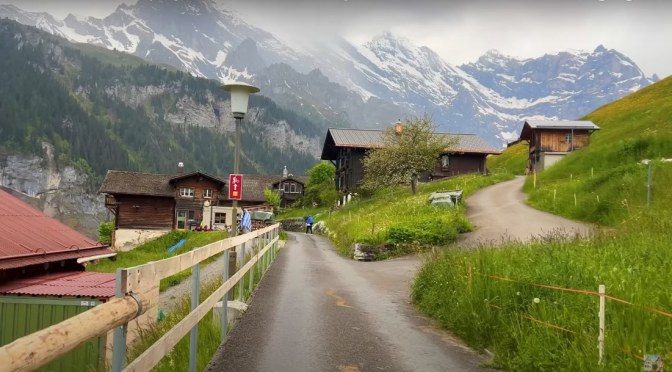
Farming and tourism are the main source of income today. Farmers raise hay on tiny plots of land to feed small herds of cows. In winter, farmers often work as well for the Schilthorn cable car by performing jobs like running ski lifts or ski-slope grooming.
The Globalist Podcast, Tuesday, June 20, 2023: France challenges the ‘Sky Shield initiative’, a new German-led air-defence plan.
Plus: violence breaks out in the West Bank, the rise of Hindu nationalism in Nepal and the latest music news.






 Boomers Daily