From an InsideFestival.com online release:
 “The jury was unanimous in celebrating this inventive solution to reconfiguring a dilapidated Japanese colonial house.
A dynamic whole in constant flux, the house in unusually in tune with the differing and sometimes contradictory needs of a young family. Every space can be negotiated and adapted, encouraging the house to be an incubator for positive difference in the family unit.
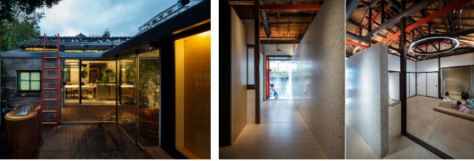
Sensitivity abounds, both in the design process and the outcome. Local craftspeople were drafted in when needed; recycled elements were mixed freely with new. The result has a uniquely sloppy fit for its inhabitants, a fit that can evolve freely over time.
Ladders to the roof level encourage ongoing hide and seek. Internal space leaks into a garden, itself an outdoor room. Light penetrates in unexpected ways, and occasional views of the sky offset the otherwise congested urban setting.
Against the background of rapid development in Taipei, this project has the potential to be a ‘prototype’ that may help reevaluate the existing stock of Japanese houses.”
Website: https://www.insidefestival.com/interior-of-the-year-2019


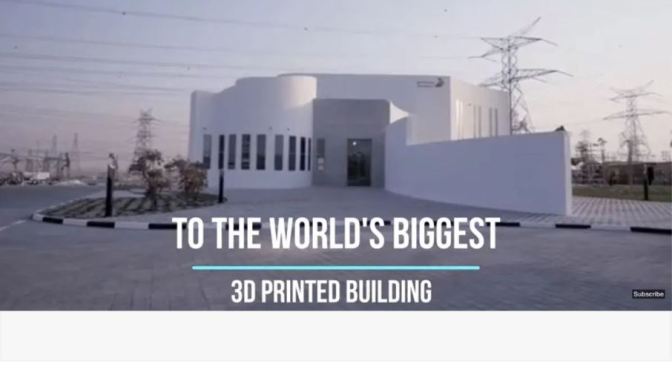
 Robotic construction company Apis Cor has used its technology to build the world’s largest 3D-printed building, a two-storey administrative office in Dubai.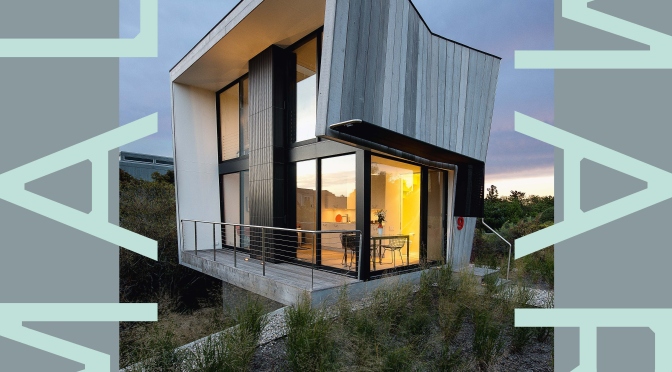
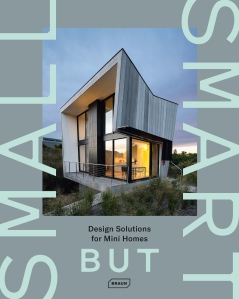 This volume presents a large variety of sophisticated solutions for mini houses in terms of architectural style, construction method and interior design. Whether portable or prefabricated, newly built or reused, rural or urban, they all meet the highest technological and sustainable standards to literally reduce their owners’ ecological footprint.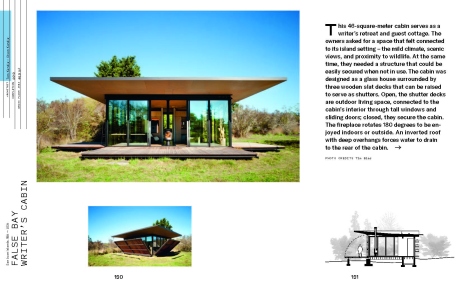
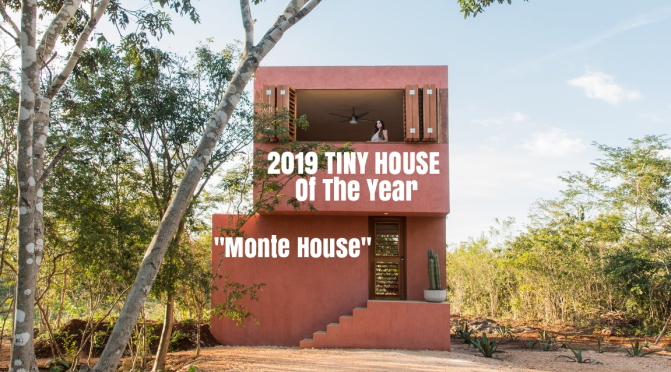
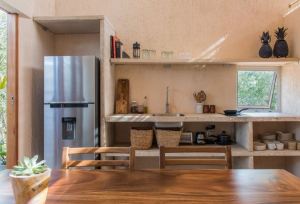 Situated on a sweeping two-acre lot, this 452-square-foot abode is just right for two.
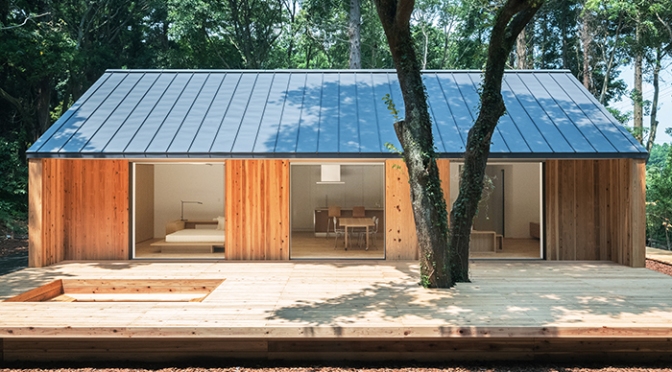
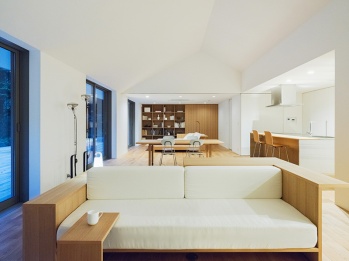 …the Yō no Ie re-imagines a life in suburban-rural areas, rather than urban-suburban. This reflects quiet yet significant social changes – or rather, shifts in life priorities of people and how they define happiness. In the 20th century, when society was excited about economic growth, everyone dreamed of living in cities, working at big companies by navigating a world of fierce competition, either spending an eye-popping amount of money on a small urban condo that quickly became a norm, or traveling hours to commute from a more affordable home in rapidly sprawling suburbs.
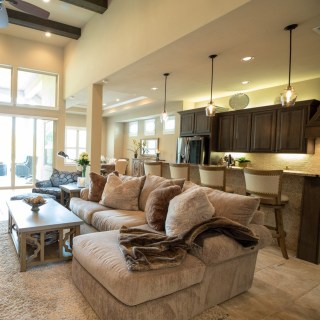
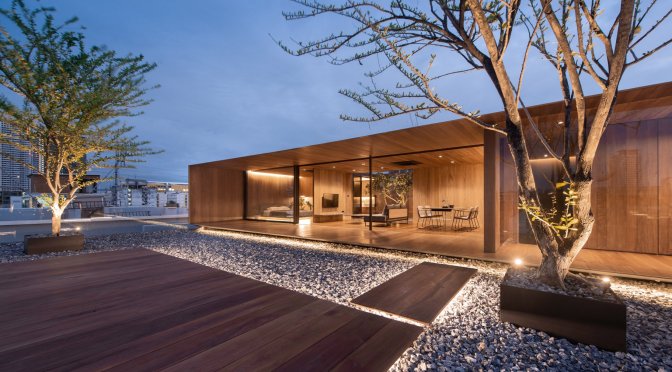
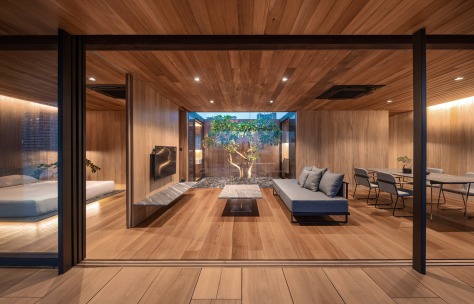
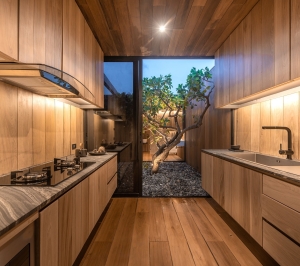 Our idea was not to make this house feel like a building, but to free it from form. We wanted it to be just a borderless box that emerges out of nowhere in the sky, as if the thickness of the wall and roof were non-existent, but still able to make holes in the ceiling to install curtains, air conditioners, and embed lights. Our intention was to give an illusion to onlookers that the entire ceiling was in the same straight line even though we featured a drop ceiling and a slope that was intentionally used to make the wall and ceiling look thin.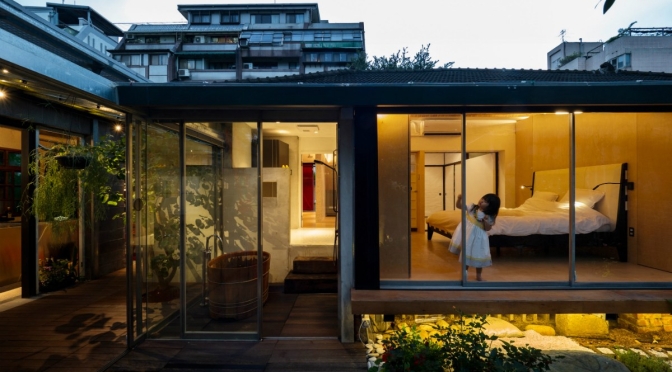
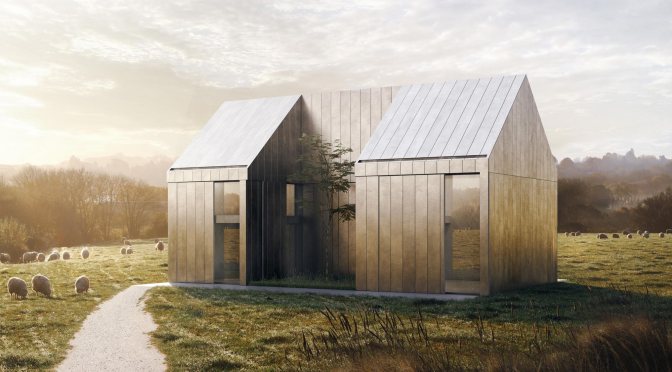
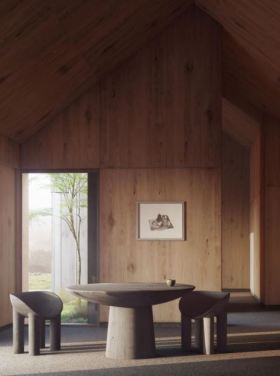 Most notable is Toogood’s sensitive approach to materials. She offers two different, equally alluring solutions to the exterior cladding and the internal finishes. Both external cladding options, raw galvanised steel and dark charred timber, are suggestive of industrial or agricultural structures, making it something of a thrill to see them in a domestic setting. The building clad in raw galvanised steel will have a refined, cream-coloured interior, whilst the structure clad in dark charred timber will have an exposed plywood interior finish.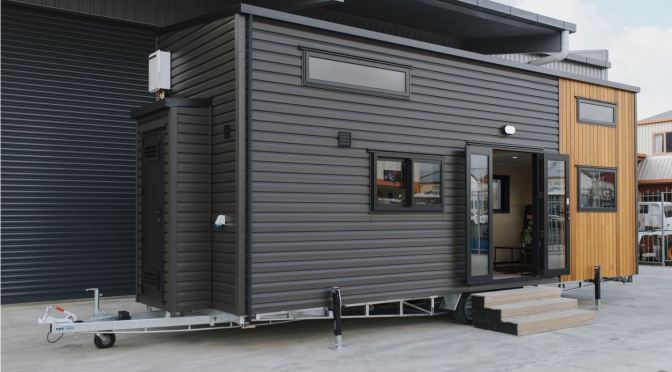
 This model is going to be completely off-grid in its seaside location. On the roof are 6 x Trina 270w Honey Poly Module panels. A storage box over the tow bar stores the inverter and 4 x C&D 12V 192Ah c20 FT Lead Carbon Cyclic Batteries that will power the home. A new feature in this home (requested by the client) was a folding shelf in the bathroom above the toilet.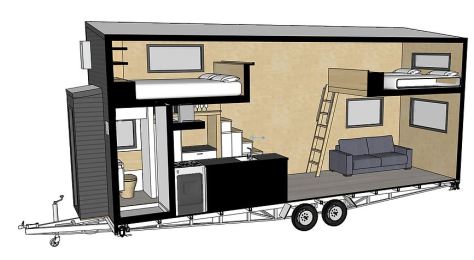
 Boomers Daily