Tag Archives: History

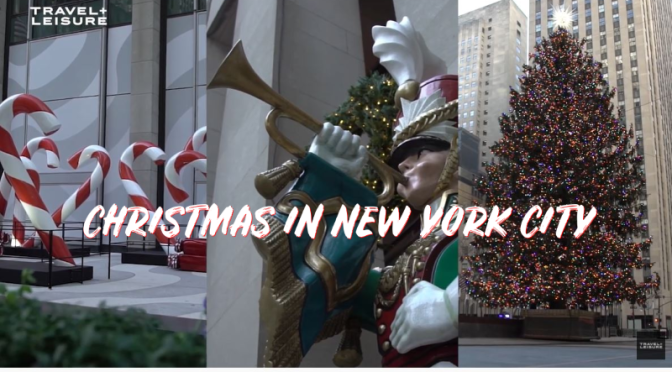
Travel: Christmas Tour Of Midtown Manhattan -2020

Happy Holidays! New York City is known to the world as a Christmas and holiday destination hotspot. Join our guide, Sam, from Top Dog Tours NYC as she takes you on a personal walking tour of all the iconic, must-see sites that put Manhattan on the Christmas map. From Radio City Music Hall to Rockefeller Center and St. Patrick’s Cathedral to Macy’s flagship store, learn the fascinating history of each location, with traditions going back to the early 20th century and beyond.

Video timeline: 0:00 Introduction to New York Holiday Landmarks 0:23 St. Patrick’s Cathedral and the Historical Origins of Christmas 1:34 New York Christmas Firsts 1:54 St. Patrick’s Cathedral Midnight Mass History 2:35 Rockefeller Center Christmas Tree History 4:27 Radio City Music Hall History 4:48 The Rockettes History 5:56 Bryant Park History 6:30 Bryant Park Winter Village 6:57 Macy’s Store History 8:02 Macy’s Day Parade History 9:08 Macy’s Holiday Window Display
City Life: The ‘Vibrant, Artsy & Friendly’ Borough Of Hackney In London

December 2, 2020 Issue

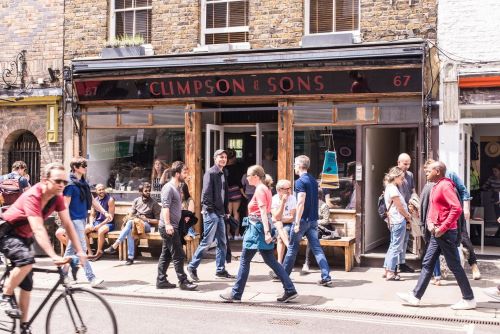
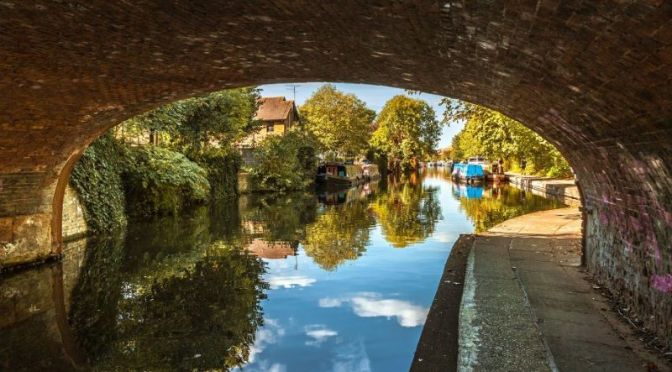
Walking down Mare Street, vibrant even in these days of restrictions, it’s hard to reconcile today’s Hackney with pictures from the past. Shop-lined roads were once babbling streams, pubs were market gardens and this bastion of hip, edgy, urban creativity was a remote village where people retreated for a taste of idyllic countryside. But then, few places have changed more over time than this corner of East London.

According to local lore, the small settlement that sprung up along the Roman roads to Lincoln and Colchester owes its name to a Danish chief called Hacon, whose eye — islet—this was. No trace remains of this early history, but some medieval records indicate that the Knights Templars owned about 110 acres in the Hackney Marshes and built some mills on the River Lea — hence today’s Temple Mills. The village’s first parish church, St Augustine, was named after the Templars’ patron saint.

Read more

American Landmarks: The Modernization Of The ‘Empire State Building’

One of the world’s most famous skyscrapers has just been through a major 10-year modernisation project. See New York City’s 1930s icon has been updated for the modern age.

Full story here – https://www.theb1m.com/video/inside-t…

The Empire State Building is a 102-story Art Deco skyscraper in Midtown Manhattan in New York City. It was designed by Shreve, Lamb & Harmon and built from 1930 to 1931. Its name is derived from “Empire State”, the nickname of the state of New York.

Arctic Wildlife: ‘Polar Bears & Climate Change’

Between 1870 and 1973, the entire polar bear population of Svalbard was almost eradicated through hunting—almost 30,000 were killed. Today, polar bear numbers are climbing, but they face a new threat: climate change. And with the Arctic warming at a rate that’s twice as fast as elsewhere, the situation is becoming critical.

Culture: Merchant Town Of Omi-Hachiman, Japan

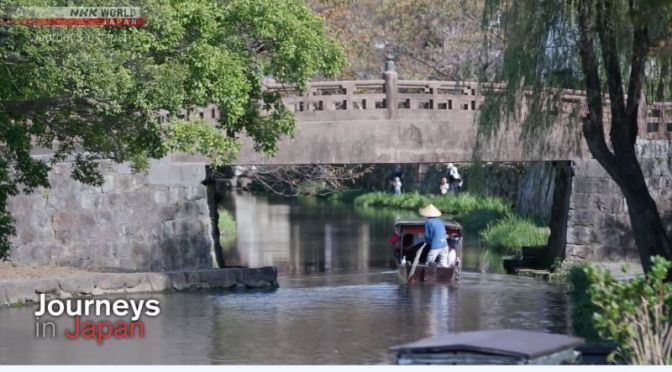
Sail through the network of canals winding their way through Omi-hachiman, a once bustling castle town overlooking Lake Biwa. Retrace the steps of the past surrounded by a unique amalgamation of European and feudal Japanese architecture combined with carefully-preserved historic townscapes.

History: ‘Charge Of The Light Brigade, 1854’ (Video)

The true story of the suicidal mission of British forces to overrun the Imperial Russian fortifications with a courageous but foolhardy mass charge.

The Charge of the Light Brigade was a failed military action involving the British light cavalry led by Lord Cardigan against Russian forces during the Battle of Balaclava on 25 October 1854 in the Crimean War. 

Art & Jewelry: The Ancient Engraving Of The ‘Cameo’

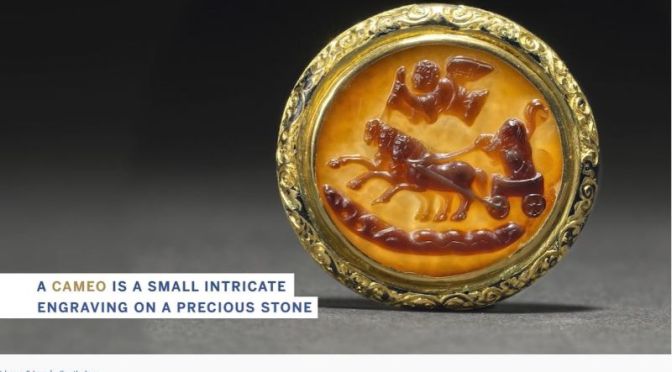
This intricately delicate cameo features a very detailed story of the prophet Elijah ascending to heaven. In this episode of Sotheby’s Stories, discover how this delightful miniature work of art is part of a very small group of rare cameos which feature Hebrew inscriptions. Learn how it was crafted by Jewish artisans in the court of a 13th century Holy Roman Emperor.

History: Planning And Building ‘The Pentagon’

The Pentagon is the headquarters building of the United States Department of Defense. As a symbol of the U.S. military, the phrase The Pentagon is also often used as a metonym for the Department of Defense and its leadership.

Located in Arlington County, Virginia, across the Potomac River from Washington, D.C., the building was designed by American architect George Bergstrom and built by contractor John McShain. Ground was broken on 11 September 1941, and the building was dedicated on 15 January 1943. General Brehon Somervell provided the major motivating power behind the project;[6] Colonel Leslie Groves was responsible for overseeing the project for the U.S. Army.

The Pentagon is the world’s largest office building, with about 6,500,000 square feet (150 acres; 0.60 km2) of floor space, of which 3,700,000 sq ft (85 acres; 0.34 km2) are used as offices.[7][8] Some 23,000 military and civilian employees,[8] and another 3,000 non-defense support personnel, work in the Pentagon. It has five sides, five floors above ground, two basement levels, and five ring corridors per floor with a total of 17.5 miles (28.2 km)[8] of corridors. The central five-acre (2.0 ha) pentagonal plaza is nicknamed “ground zero” on the presumption that it would be a prime target in a nuclear war.

History Of Satellites: NASA’s ‘Landsat’ Program – “Getting Off The Ground”

Every legacy has a compelling origin. The soon-to-be-launched Landsat 9 is the intellectual and technical product of eight generations of Landsat missions, spanning nearly 50 years.

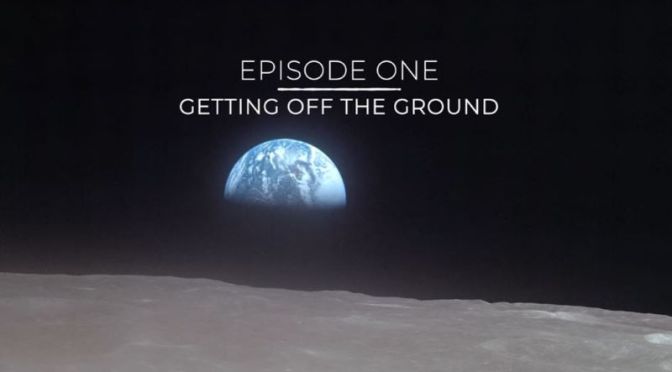
Episode One answers the question “why?” Why did the specific years between 1962 and 1972 call for a such a mission? Why did leadership across agencies commit to its fruition? Why was the knowledge it could reveal important to the advancing study of earth science?

In this episode, we’re introduced to William Pecora and Stewart Udall, two men who propelled the project into reality, as well as Virginia Norwood who breathed life into new technology. Like any worthwhile endeavor, Landsat encountered its fair share of resistance. Episode one explores how those challenges were overcome with the launch of Landsat 1, signifying a bold step into a new paradigm.

Additional footage courtesy of Gordon Wilkinson/Texas Archive of the Moving Image and the US Geological Survey. The Landsat Program is a series of Earth-observing satellite missions jointly managed by NASA and the U.S. Geological Survey (USGS). Landsat satellites have been consistently gathering data about our planet since 1972. They continue to improve and expand this unparalleled record of Earth’s changing landscapes for the benefit of all.

Music: “The Missing Star,” “Brazenly Bashful,” “Light Tense Weight,” “It’s Decision Time,” “Patisserie Pressure,” from Universal Production Music Credit: NASA’s Goddard Space Flight Center Matthew R. Radcliff (USRA): Lead Producer Ryan Fitzgibbons (USRA): Lead Producer Kate Ramsayer (USRA): Lead Producer LK Ward (USRA): Lead Writer Ryan Fitzgibbons (USRA): Lead Editor Jeffrey Masek (NASA/GSFC): Lead Scientist Marc Evan Jackson: Narrator Terry Arvidson (Lockheed Martin): Interviewee Aaron E. Lepsch (ADNET): Technical Support