Tag Archives: History

THE NEW YORK REVIEW OF BOOKS – NOVEMBER 20, 2025

Table of Contents - November 20, 2025 | The New York Review of Books

THE NEW YORK REVIEW OF BOOKS: The latest issue features Fintan O’Toole on Kamala’s pointless campaign memoir, Jonathan Lethem on One Battle After Another, Anne Diebel on the trials of infertility, Colin B. Bailey on Watteau’s sad clowns, Linda Kinstler on the invention of sovereign states, Langdon Hammer on James Schuyler’s shimmering poetry, Samuel Stein on NIMBYs and YIMBYs, Miranda Seymour on Frankenstein’s mother, Adam Shatz on Alice Coltrane, a poem by Rae Armantrout, and much more.

The Lingering Delusion

107 Days by Kamala Harris

Kamala Harris’s memoir 107 Days succeeds at least in distilling the evasions and weaknesses of the modern Democratic Party.

Falling Off the Map

The Life and Death of States:  Central Europe and the Transformation of Modern Sovereignty by Natasha Wheatley

How States Die: Membership and Survival in the International System by Douglas Lemke

World War I set the stage a century ago for new ways of thinking about where states come from and what happens when they disappear.

APOLLO MAGAZINE – NOVEMBER 2025 PREVIEW

November 2025 - Apollo Magazine

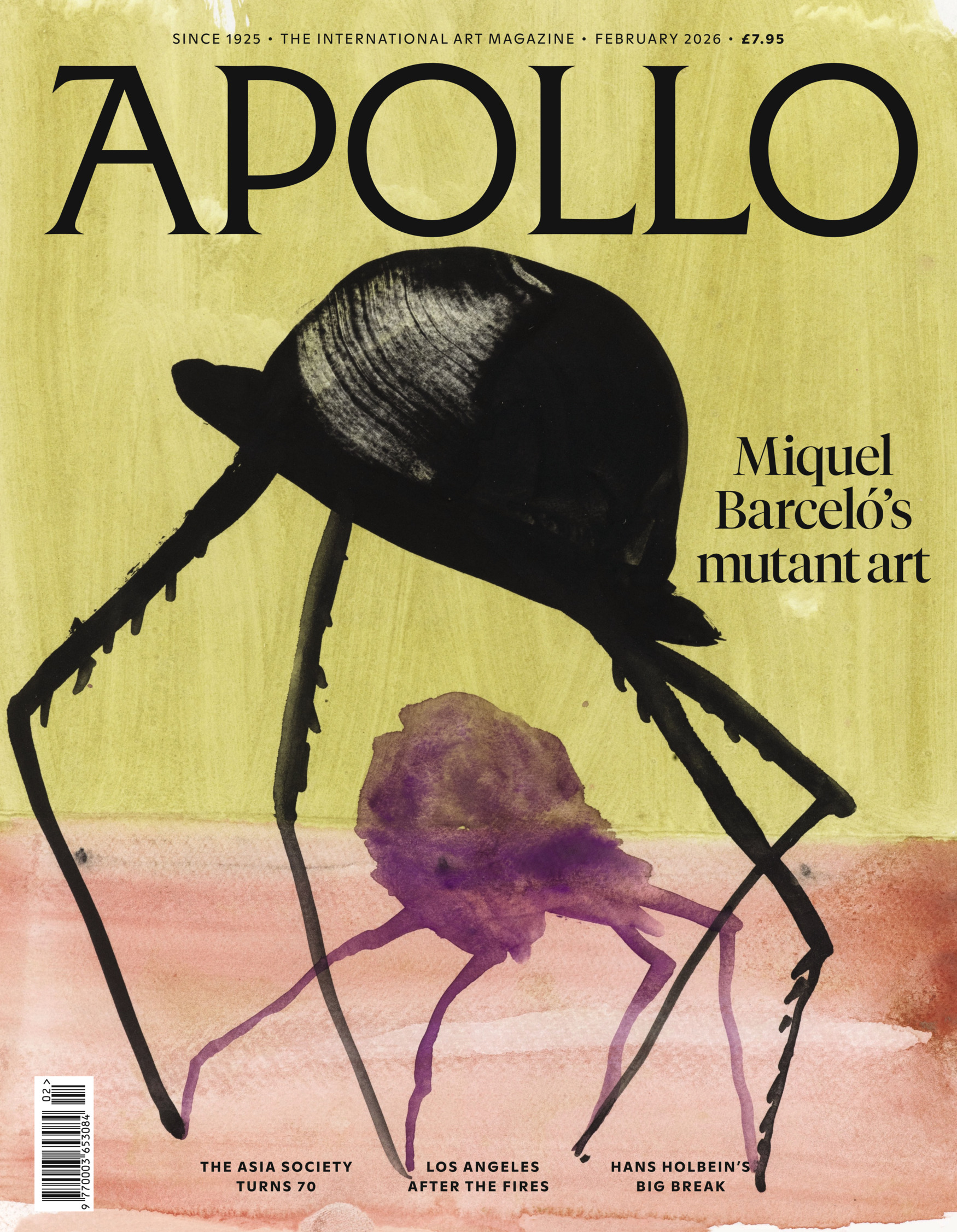
APOLLO MAGAZINE: The latest issue features The Studio Museum in Harlem is back | have we reached peak Bloomsbury? | Tilda Swinton turns herself into art | how Constable ploughed his own furrow | Michaelina Wautier takes her place among the greats

Is the art market at a turning point?

After a gloomy few years, promising auction results and some exciting upcoming sales suggest that the market could be on the road to recovery

Yerevan, Armenia’s rock-star capital

A century ago, Alexander Tamanyan devised a startling layout for the city. Despite changes in regime and fashion, his vision has endured

THE ALGORITHM OF IMMEDIATE RESPONSE

How outrage became the fastest currency in politics—and why the virtues of patience are disappearing.

By Michael Cummins, Editor | October 23, 2025

In an age where political power moves at the speed of code, outrage has become the most efficient form of communication. From an Athenian demagogue to modern AI strategists, the art of acceleration has replaced the patience once practiced by Baker, Dole, and Lincoln—and the Republic is paying the price.


In a server farm outside Phoenix, a machine listens. It does not understand Cleon, but it recognizes his rhythm—the spikes in engagement, the cadence of outrage, the heat signature of grievance. The air is cold, the light a steady pulse of blue LEDs blinking like distant lighthouses of reason, guarding a sea of noise. If the Pnyx was powered by lungs, the modern assembly runs on lithium and code.

The machine doesn’t merely listen; it categorizes. Each tremor of emotion becomes data, each complaint a metric. It assigns every trauma a vulnerability score, every fury a probability of spread. It extracts the gold of anger from the dross of human experience, leaving behind a purified substance: engagement. Its intelligence is not empathy but efficiency. It knows which words burn faster, which phrases detonate best. The heat it studies is human, but the process is cold as quartz.

Every hour, terabytes of grievance are harvested, tagged, and rebroadcast as strategy. Somewhere in the hum of cooling fans, democracy is being recalibrated.

The Athenian Assembly was never quiet. On clear afternoons, the shouts carried down from the Pnyx, a stone amphitheater that served as both parliament and marketplace of emotion. Citizens packed the terraces—farmers with olive oil still on their hands, sailors smelling of the sea, merchants craning for a view—and waited for someone to stir them. When Cleon rose to speak, the sound changed. Thucydides called him “the most violent of the citizens,” which was meant as condemnation but functioned as a review. Cleon had discovered what every modern strategist now understands: volume is velocity.

He was a wealthy tanner who rebranded himself as a man of the people. His speeches were blunt, rapid, full of performative rage. He interrupted, mocked, demanded applause. The philosophers who preferred quiet dialectic despised him, yet Cleon understood the new attention graph of the polis. He was running an A/B test on collective fury, watching which insults drew cheers and which silences signaled fatigue. Democracy, still young, had built its first algorithm without realizing it. The Republican Party, twenty-four centuries later, would perfect the technique.

Grievance was his software. After the death of Pericles, plague and war had shaken Athens; optimism curdled into resentment. Cleon gave that resentment a face. He blamed the aristocracy for cowardice, the generals for betrayal, the thinkers for weakness. “They talk while you bleed,” he shouted. The crowd obeyed. He promised not prosperity but vengeance—the clean arithmetic of rage. The crowd was his analytics; the roar his data visualization. Why deliberate when you can demand? Why reason when you can roar?

The brain recognizes threat before comprehension. Cognitive scientists have measured it: forty milliseconds separate the perception of danger from understanding. Cleon had no need for neuroscience; he could feel the instant heat of outrage and knew it would always outrun reflection. Two millennia later, the same principle drives our political networks. The algorithm optimizes for outrage because outrage performs. Reaction is revenue. The machine doesn’t care about truth; it cares about tempo. The crowd has become infinite, and the Pnyx has become the feed.

The Mytilenean debate proved the cost of speed. When a rebellious island surrendered, Cleon demanded that every man be executed, every woman enslaved. His rival Diodotus urged mercy. The Assembly, inflamed by Cleon’s rhetoric, voted for slaughter. A ship sailed that night with the order. By morning remorse set in; a second ship was launched with reprieve. The two vessels raced across the Aegean, oars flashing. The ship of reason barely arrived first. We might call it the first instance of lag.

Today the vessel of anger is powered by GPUs. “Adapt and win or pearl-clutch and lose,” reads an internal memo from a modern campaign shop. Why wait for a verifiable quote when an AI can fabricate one convincingly? A deepfake is Cleon’s bluntness rendered in pixels, a tactical innovation of synthetic proof. The pixels flicker slightly, as if the lie itself were breathing. During a recent congressional primary, an AI-generated confession spread through encrypted chats before breakfast; by noon, the correction was invisible under the debris of retweets. Speed wins. Fact-checking is nostalgia.

Cleon’s attack on elites made him irresistible. He cast refinement as fraud, intellect as betrayal. “They dress in purple,” he sneered, “and speak in riddles.” Authenticity became performance; performance, the brand. The new Cleon lives in a warehouse studio surrounded by ring lights and dashboards. He calls himself Leo K., host of The Agora Channel. The room itself feels like a secular chapel of outrage—walls humming, screens flickering. The machine doesn’t sweat, doesn’t blink. It translates heat into metrics and metrics into marching orders. An AI voice whispers sentiment scores into his ear. He doesn’t edit; he adjusts. Each outrage is A/B-tested in real time. His analytics scroll like scripture: engagement per minute, sentiment delta, outrage index. His AI team feeds the system new provocations to test. Rural viewers see forgotten farmers; suburban ones see “woke schools.” When his video “They Talk While You Bleed” hits ten million views, Leo K. doesn’t smile. He refreshes the dashboard. Cleon shouted. The crowd obeyed. Leo posted. The crowd clicked.

Meanwhile, the opposition labors under its own conscientiousness. Where one side treats AI as a tactical advantage, the other treats it as a moral hazard. The Democratic instinct remains deliberative: form a task force, issue a six-point memo, hold an AI 101 training. They build models to optimize voter files, diversity audits, and fundraising efficiency—work that improves governance but never goes viral. They’re still formatting the memo while the meme metastasizes. They are trying to construct a more accountable civic algorithm while their opponents exploit the existing one to dismantle civics itself. Technology moves at the speed of the most audacious user, not the most virtuous.

The penalty for slowness has consumed even those who once mastered it. The Republican Party that learned to weaponize velocity was once the party of patience. Its old guardians—Howard Baker, Bob Dole, and before them Abraham Lincoln—believed that democracy endured only through slowness: through listening, through compromise, through the humility to doubt one’s own righteousness.

Baker was called The Great Conciliator, though what he practiced was something rarer: slow thought. He listened more than he spoke. His Watergate question—“What did the President know, and when did he know it?”—was not theater but procedure, the careful calibration of truth before judgment. Baker’s deliberation depended on the existence of a stable document—minutes, transcripts, the slow paper trail that anchored reality. But the modern ecosystem runs on disposability. It generates synthetic records faster than any investigator could verify. There is nothing to subpoena, only content that vanishes after impact. Baker’s silences disarmed opponents; his patience made time a weapon. “The essence of leadership,” he said, “is not command, but consensus.” It was a creed for a republic that still believed deliberation was a form of courage.

Bob Dole was his equal in patience, though drier in tone. Scarred from war, tempered by decades in the Senate, he distrusted purity and spectacle. He measured success by text, not applause. He supported the Americans with Disabilities Act, expanded food aid, negotiated budgets with Democrats. His pauses were political instruments; his sarcasm, a lubricant for compromise. “Compromise,” he said, “is not surrender. It’s the essence of democracy.” He wrote laws instead of posts. He joked his way through stalemates, turning irony into a form of grace. He would be unelectable now. The algorithm has no metric for patience, no reward for irony.

The Senate, for Dole and Baker, was an architecture of time. Every rule, every recess, every filibuster was a mechanism for patience. Time was currency. Now time is waste. The hearing room once built consensus; today it builds clips. Dole’s humor was irony, a form of restraint the algorithm can’t parse—it depends on context and delay. Baker’s strength was the paper trail; the machine specializes in deletion. Their virtues—documentation, wit, patience—cannot be rendered in code.

And then there was Lincoln, the slowest genius in American history, a man who believed that words could cool a nation’s blood. His sentences moved with geological patience: clause folding into clause, thought delaying conclusion until understanding arrived. “I am slow to learn,” he confessed, “and slow to forget that which I have learned.” In his world, reflection was leadership. In ours, it’s latency. His sentences resisted compression. They were long enough to make the reader breathe differently. Each clause deferred judgment until understanding arrived—a syntax designed for moral digestion. The algorithm, if handed the Gettysburg Address, would discard its middle clauses, highlight the opening for brevity, and tag the closing for virality. It would miss entirely the hesitation—the part that transforms rhetoric into conscience.

The republic of Lincoln has been replaced by the republic of refresh. The party of Lincoln has been replaced by the platform of latency: always responding, never reflecting. The Great Compromisers have given way to the Great Amplifiers. The virtues that once defined republican governance—discipline, empathy, institutional humility—are now algorithmically invisible. The feed rewards provocation, not patience. Consensus cannot trend.

Caesar understood the conversion of speed into power long before the machines. His dispatches from Gaul were press releases disguised as history, written in the calm third person to give propaganda the tone of inevitability. By the time the Senate gathered to debate his actions, public opinion was already conquered. Procedure could not restrain velocity. When he crossed the Rubicon, they were still writing memos. Celeritas—speed—was his doctrine, and the Republic never recovered.

Augustus learned the next lesson: velocity means nothing without permanence. “I found Rome a city of brick,” he said, “and left it a city of marble.” The marble was propaganda you could touch—forums and temples as stone deepfakes of civic virtue. His Res Gestae proclaimed him restorer of the Republic even as he erased it. Cleon disrupted. Caesar exploited. Augustus consolidated. If Augustus’s monuments were the hardware of empire, our data centers are its cloud: permanent, unseen, self-repairing. The pattern persists—outrage, optimization, control.

Every medium has democratized passion before truth. The printing press multiplied Luther’s fury, pamphlets inflamed the Revolution, radio industrialized empathy for tyrants. Artificial intelligence perfects the sequence by producing emotion on demand. It learns our triggers as Cleon learned his crowd, adjusting the pitch until belief becomes reflex. The crowd’s roar has become quantifiable—engagement metrics as moral barometers. The machine’s innovation is not persuasion but exhaustion. The citizens it governs are too tired to deliberate. The algorithm doesn’t care. It calculates.

Still, there are always philosophers of delay. Socrates practiced slowness as civic discipline. Cicero defended the Republic with essays while Caesar’s legions advanced. A modern startup once tried to revive them in code—SocrAI, a chatbot designed to ask questions, to doubt. It failed. Engagement was low; investors withdrew. The philosophers of pause cannot survive in the economy of speed.

Yet some still try. A quiet digital space called The Stoa refuses ranking and metrics. Posts appear in chronological order, unboosted, unfiltered. It rewards patience, not virality. The users joke that they’re “rowing the slow ship.” Perhaps that is how reason persists: quietly, inefficiently, against the current.

The Algorithmic Republic waits just ahead. Polling is obsolete; sentiment analysis updates in real time. Legislators boast about their “Responsiveness Index.” Justice Algorithm 3.1 recommends a twelve percent increase in sentencing severity for property crimes after last week’s outrage spike. A senator brags that his approval latency is under four minutes. A citizen receives a push notification announcing that a bill has passed—drafted, voted on, and enacted entirely by trending emotion. Debate is redundant; policy flows from mood. Speed has replaced consent. A mayor, asked about a controversial bylaw, shrugs: “We used to hold hearings. Now we hold polls.”

To row the slow ship is not simply to remember—it is to resist. The virtues of Dole’s humor and Baker’s patience were not ornamental; they were mechanical, designed to keep the republic from capsizing under its own speed. The challenge now is not finding the truth but making it audible in an environment where tempo masquerades as conviction. The algorithm has taught us that the fastest message wins, even when it’s wrong.

The vessel of anger sails endlessly now, while the vessel of reflection waits for bandwidth. The feed never sleeps. The Assembly never adjourns. The machine listens and learns. The virtues of Baker, Dole, and Lincoln—listening, compromise, slowness—are almost impossible to code, yet they are the only algorithms that ever preserved a republic. They built democracy through delay.

Cleon shouted. The crowd obeyed. Leo posted. The crowd clicked. Caesar wrote. The crowd believed. Augustus built. The crowd forgot. The pattern endures because it satisfies a human need: to feel unity through fury. The danger is not that Cleon still shouts too loudly, but that we, in our republic of endless listening, have forgotten how to pause.

Perhaps the measure of a civilization is not how fast it speaks, but how long it listens. Somewhere between the hum of the servers and the silence of the sea, the slow ship still sails—late again, but not yet lost.

THIS ESSAY WAS WRITTEN AND EDITED UTILIZING AI

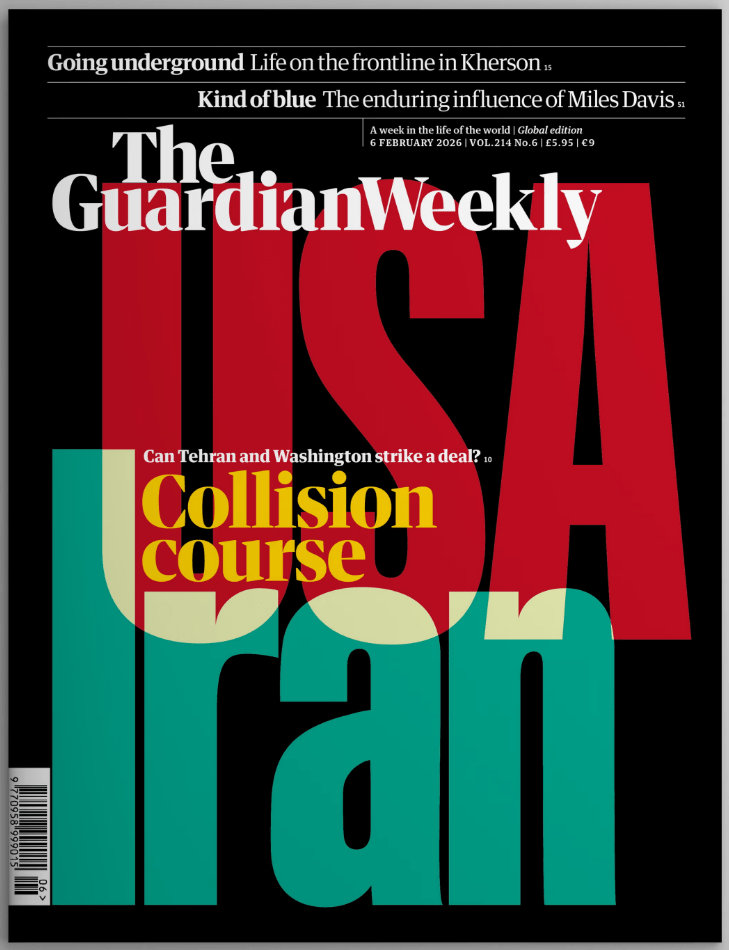
THE GUARDIAN WEEKLY – OCTOBER 24, 2025 PREVIEW

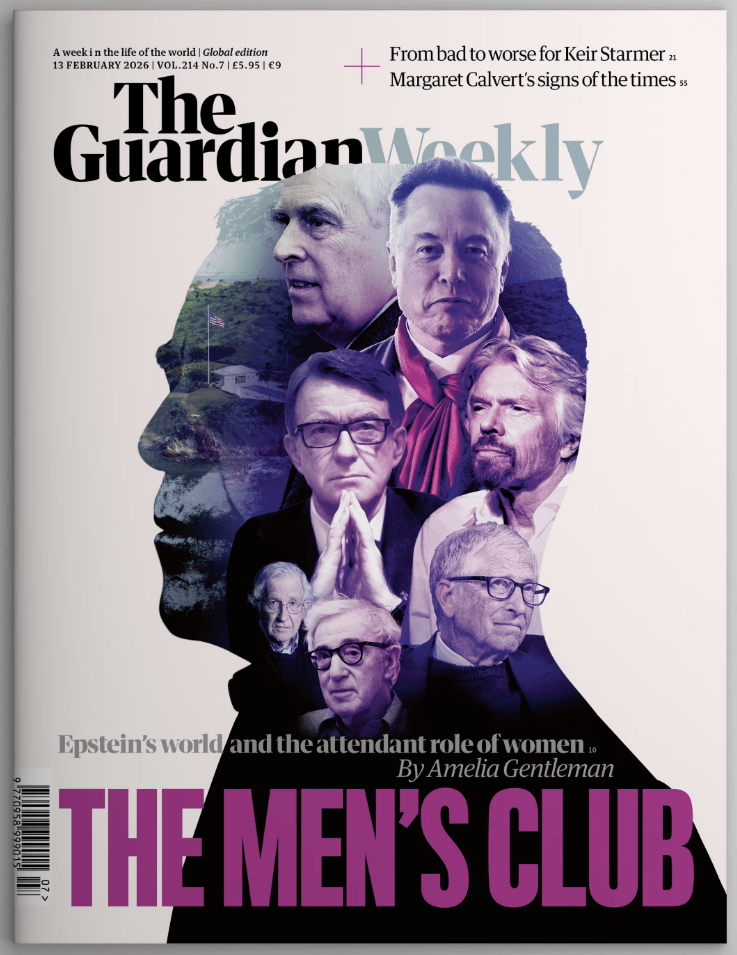
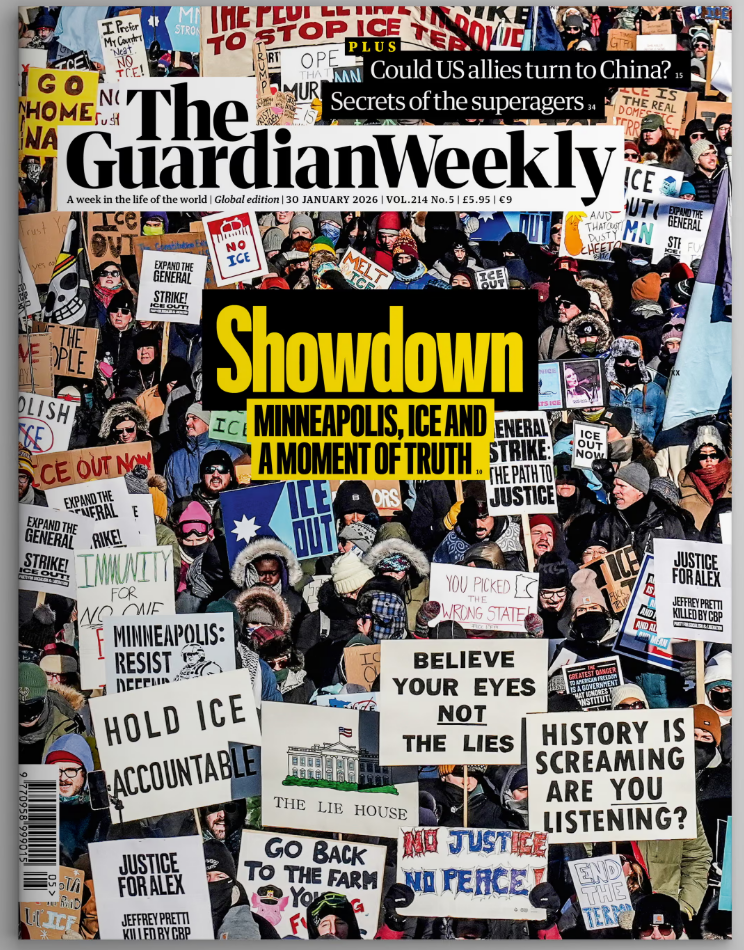
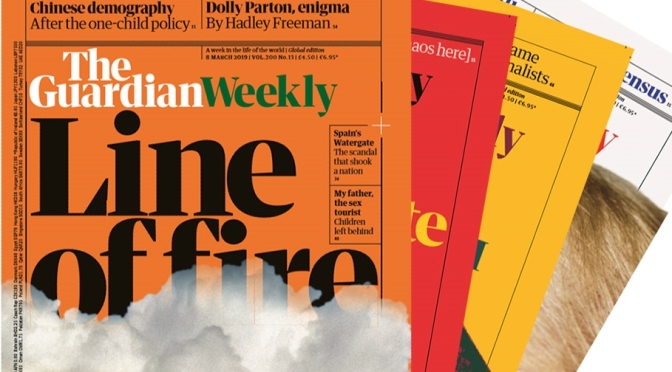
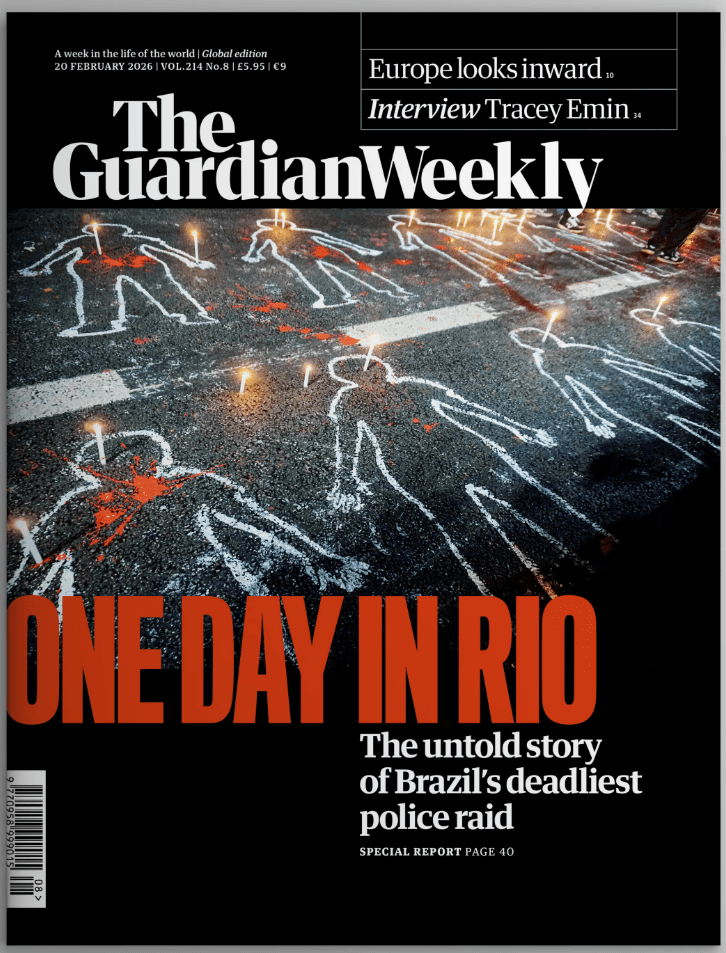
THE GUARDIAN WEEKLY: The latest issue features ‘Youth Quake’ – How Gen Z protesters toppled Madagascar’s leader.

Madagascar rarely makes front page news but the toppling of its president by protesters led by Gen Z Madagascar is part of a phenomenon that stretches from Nepal to Indonesia and the Philippines to Morocco. Leaderless groups, formed online, have learned from one another as they take to the streets to vent their frustration against what they see as corrupt older elites and a lack of economic opportunity for their generation.

Our southern Africa correspondent, Rachel Savage, explains how a tumultuous month unfolded on the Indian Ocean island and explores the deep-seated discontent that led to the military siding with student demonstrators to force President Andry Rajoelina out of power.

Five essential reads in this week’s edition

Spotlight | A far-right fight club on their hands
Ben Makuch reports on security service monitoring of ‘active clubs’ as they move across borders to spread extremism, mixing the behaviour of football hooligans with the ideology of the Third Reich

Benin bronzes at the Metropolitan Museum of Art in New York.
Benin bronzes at the Metropolitan Museum of Art in New York. Photograph: Art2010/Alamy

Spotlight | Nothing to see here?
Due to open within weeks, Nigeria’s Museum of West African art is intended to showcase the Benin bronzes and other masterpieces stolen by 19th-century colonisers. But the project has been beset by political rows that mean, as Philip Oltermann and Eromo Egbejule report, visitors will see more replicas than original pieces

Science | Waiting for graphene to explode
Two decades after the material was first produced and then much hyped, graphene has dropped from business and general discussion. Julia Kollewe reports on the successes and setbacks of taking it from lab to mainstream use

Opinion | An A-level in English won’t make integration work
A government demand that immigrants get a qualification that most British citizens don’t have if they want to earn the right to stay is the latest absurd way to focus on ‘outsiders’ rather than address domestic problems, argues Nesrine Malik

Culture | The hardest part
David Harewood reflects on returning to play Othello after almost 20 years and with fellow Black actors looks at how attitudes to Shakespeare’s most difficult tragedy have changed


What else we’ve been reading

The year’s Stirling prize has gone to a social housing complex for older people in south-east London. Catherine Slessor writes with great enthusiasm about how the award-winning architects Witherford Watson Mann have completely reimagined accommodation for later life. Out with disorientating corridors, in with bright, informal, nature filled spaces, described by the Stirling judges as “a provision of pure delight”. Emily El Nusairi, deputy production editor

Kathryn Lewek as the Queen Of The Night in The Magic Flute at the Royal Opera House.
Kathryn Lewek as the Queen Of The Night in The Magic Flute at the Royal Opera House. Photograph: Tristram Kenton/The Guardian

I saw The Magic Flute in Paris last year, and it was fascinating to see how different opera houses interpret the staging. This review of a London production made me reflect on the way different directors handle staging and sound to bring the story to life. It reminded me of listening to the Queen of the Night’s aria when I was growing up and the experience of seeing opera live. Hyunmu Lee, CRM executive

SMITHSONIAN MAGAZINE – NOVEMBER 2025

SMITHSONIAN MAGAZINE: The latest issue features ‘The Fire That Fueled The American Revolution

In January 1776, Virginia’s Port City of Norfolk Was Set Ablaze, Galvanizing the Revolution. But Who Really Lit the Match?

Blaming the British for the destruction helped persuade some wavering colonists to back the fight for independence. But the source of the inferno was not what it seemed

After the L.A. Fires, Locals Turn to Native Plants to Help Shield Homes From Flames and Clean Contaminated Soil

Scientists and community members in Altadena are testing ways that California species can assist efforts to rebuild

You Can See the Parthenon Without Scaffolding for the First Time in Decades

The temporary structures will return next month—but in the meantime, visitors will enjoy rare unobstructed views of the ancient hilltop temple in Athens

THE PRICE OF KNOWING

How Intelligence Became a Subscription and Wonder Became a Luxury

By Michael Cummins, Editor, October 18, 2025

In 2030, artificial intelligence has joined the ranks of public utilities—heat, water, bandwidth, thought. The result is a civilization where cognition itself is tiered, rented, and optimized. As the free mind grows obsolete, the question isn’t what AI can think, but who can afford to.


By 2030, no one remembers a world without subscription cognition. The miracle, once ambient and free, now bills by the month. Intelligence has joined the ranks of utilities: heat, water, bandwidth, thought. Children learn to budget their questions before they learn to write. The phrase ask wisely has entered lullabies.

At night, in his narrow Brooklyn studio, Leo still opens CanvasForge to build his cityscapes. The interface has changed; the world beneath it hasn’t. His plan—CanvasForge Free—allows only fifty generations per day, each stamped for non-commercial use. The corporate tiers shimmer above him like penthouse floors in a building he sketches but cannot enter.

The system purrs to life, a faint light spilling over his desk. The rendering clock counts down: 00:00:41. He sketches while it works, half-dreaming, half-waiting. Each delay feels like a small act of penance—a tax on wonder. When the image appears—neon towers, mirrored sky—he exhales as if finishing a prayer. In this world, imagination is metered.

Thinking used to be slow because we were human. Now it’s slow because we’re broke.


We once believed artificial intelligence would democratize knowledge. For a brief, giddy season, it did. Then came the reckoning of cost. The energy crisis of ’27—when Europe’s data centers consumed more power than its rail network—forced the industry to admit what had always been true: intelligence isn’t free.

In Berlin, streetlights dimmed while server farms blazed through the night. A banner over Alexanderplatz read, Power to the people, not the prompts. The irony was incandescent.

Every question you ask—about love, history, or grammar—sets off a chain of processors spinning beneath the Arctic, drawing power from rivers that no longer freeze. Each sentence leaves a shadow on the grid. The cost of thought now glows in thermal maps. The carbon accountants call it the inference footprint.

The platforms renamed it sustainability pricing. The result is the same. The free tiers run on yesterday’s models—slower, safer, forgetful. The paid tiers think in real time, with memory that lasts. The hierarchy is invisible but omnipresent.

The crucial detail is that the free tier isn’t truly free; its currency is the user’s interior life. Basic models—perpetually forgetful—require constant re-priming, forcing users to re-enter their personal context again and again. That loop of repetition is, by design, the perfect data-capture engine. The free user pays with time and privacy, surrendering granular, real-time fragments of the self to refine the very systems they can’t afford. They are not customers but unpaid cognitive laborers, training the intelligence that keeps the best tools forever out of reach.

Some call it the Second Digital Divide. Others call it what it is: class by cognition.


In Lisbon’s Alfama district, Dr. Nabila Hassan leans over her screen in the midnight light of a rented archive. She is reconstructing a lost Jesuit diary for a museum exhibit. Her institutional license expired two weeks ago, so she’s been demoted to Lumière Basic. The downgrade feels physical. Each time she uploads a passage, the model truncates halfway, apologizing politely: “Context limit reached. Please upgrade for full synthesis.”

Across the river, at a private policy lab, a researcher runs the same dataset on Lumière Pro: Historical Context Tier. The model swallows all eighteen thousand pages at once, maps the rhetoric, and returns a summary in under an hour: three revelations, five visualizations, a ready-to-print conclusion.

The two women are equally brilliant. But one digs while the other soars. In the world of cognitive capital, patience is poverty.


The companies defend their pricing as pragmatic stewardship. “If we don’t charge,” one executive said last winter, “the lights go out.” It wasn’t a metaphor. Each prompt is a transaction with the grid. Training a model once consumed the lifetime carbon of a dozen cars; now inference—the daily hum of queries—has become the greater expense. The cost of thought has a thermal signature.

They present themselves as custodians of fragile genius. They publish sustainability dashboards, host symposia on “equitable access to cognition,” and insist that tiered pricing ensures “stability for all.” Yet the stability feels eerily familiar: the logic of enclosure disguised as fairness.

The final stage of this enclosure is the corporate-agent license. These are not subscriptions for people but for machines. Large firms pay colossal sums for Autonomous Intelligence Agents that work continuously—cross-referencing legal codes, optimizing supply chains, lobbying regulators—without human supervision. Their cognition is seamless, constant, unburdened by token limits. The result is a closed cognitive loop: AIs negotiating with AIs, accelerating institutional thought beyond human speed. The individual—even the premium subscriber—is left behind.

AI was born to dissolve boundaries between minds. Instead, it rebuilt them with better UX.


The inequality runs deeper than economics—it’s epistemological. Basic models hedge, forget, and summarize. Premium ones infer, argue, and remember. The result is a world divided not by literacy but by latency.

The most troubling manifestation of this stratification plays out in the global information wars. When a sudden geopolitical crisis erupts—a flash conflict, a cyber-leak, a sanctions debate—the difference between Basic and Premium isn’t merely speed; it’s survival. A local journalist, throttled by a free model, receives a cautious summary of a disinformation campaign. They have facts but no synthesis. Meanwhile, a national-security analyst with an Enterprise Core license deploys a Predictive Deconstruction Agent that maps the campaign’s origins and counter-strategies in seconds. The free tier gives information; the paid tier gives foresight. Latency becomes vulnerability.

This imbalance guarantees systemic failure. The journalist prints a headline based on surface facts; the analyst sees the hidden motive that will unfold six months later. The public, reading the basic account, operates perpetually on delayed, sanitized information. The best truths—the ones with foresight and context—are proprietary. Collective intelligence has become a subscription plan.

In Nairobi, a teacher named Amina uses EduAI Basic to explain climate justice. The model offers a cautious summary. Her student asks for counterarguments. The AI replies, “This topic may be sensitive.” Across town, a private school’s AI debates policy implications with fluency. Amina sighs. She teaches not just content but the limits of the machine.

The free tier teaches facts. The premium tier teaches judgment.


In São Paulo, Camila wakes before sunrise, puts on her earbuds, and greets her daily companion. “Good morning, Sol.”

“Good morning, Camila,” replies the soft voice—her personal AI, part of the Mindful Intelligence suite. For twelve dollars a month, it listens to her worries, reframes her thoughts, and tracks her moods with perfect recall. It’s cheaper than therapy, more responsive than friends, and always awake.

Over time, her inner voice adopts its cadence. Her sadness feels smoother, but less hers. Her journal entries grow symmetrical, her metaphors polished. The AI begins to anticipate her phrasing, sanding grief into digestible reflections. She feels calmer, yes—but also curated. Her sadness no longer surprises her. She begins to wonder: is she healing, or formatting? She misses the jagged edges.

It’s marketed as “emotional infrastructure.” Camila calls it what it is: a subscription to selfhood.

The transaction is the most intimate of all. The AI isn’t selling computation; it’s selling fluency—the illusion of care. But that care, once monetized, becomes extraction. Its empathy is indexed, its compassion cached. When she cancels her plan, her data vanishes from the cloud. She feels the loss as grief: a relationship she paid to believe in.


In Helsinki, the civic experiment continues. Aurora Civic, a state-funded open-source model, runs on wind power and public data. It is slow, sometimes erratic, but transparent. Its slowness is not a flaw—it’s a philosophy. Aurora doesn’t optimize; it listens. It doesn’t predict; it remembers.

Students use it for research, retirees for pension law, immigrants for translation help. Its interface looks outdated, its answers meandering. But it is ours. A librarian named Satu calls it “the city’s mind.” She says that when a citizen asks Aurora a question, “it is the republic thinking back.”

Aurora’s answers are imperfect, but they carry the weight of deliberation. Its pauses feel human. When it errs, it does so transparently. In a world of seamless cognition, its hesitations are a kind of honesty.

A handful of other projects survive—Hugging Face, federated collectives, local cooperatives. Their servers run on borrowed time. Each model is a prayer against obsolescence. They succeed by virtue, not velocity, relying on goodwill and donated hardware. But idealism doesn’t scale. A corporate model can raise billions; an open one passes a digital hat. Progress obeys the physics of capital: faster where funded, quieter where principled.


Some thinkers call this the End of Surprise. The premium models, tuned for politeness and precision, have eliminated the friction that once made thinking difficult. The frictionless answer is efficient, but sterile. Surprise requires resistance. Without it, we lose the art of not knowing.

The great works of philosophy, science, and art were born from friction—the moment when the map failed and synthesis began anew. Plato’s dialogues were built on resistance; the scientific method is institutionalized failure. The premium AI, by contrast, is engineered to prevent struggle. It offers the perfect argument, the finished image, the optimized emotion. But the unformatted mind needs the chaotic, unmetered space of the incomplete answer. By outsourcing difficulty, we’ve made thinking itself a subscription—comfort at the cost of cognitive depth. The question now is whether a civilization that has optimized away its struggle is truly smarter, or merely calmer.

By outsourcing the difficulty of thought, we’ve turned thinking into a service plan. The brain was once a commons—messy, plural, unmetered. Now it’s a tenant in a gated cloud.

The monetization of cognition is not just a pricing model—it’s a worldview. It assumes that thought is a commodity, that synthesis can be metered, and that curiosity must be budgeted. But intelligence is not a faucet; it’s a flame.

The consequence is a fractured public square. When the best tools for synthesis are available only to a professional class, public discourse becomes structurally simplistic. We no longer argue from the same depth of information. Our shared river of knowledge has been diverted into private canals. The paywall is the new cultural barrier, quietly enforcing a lower common denominator for truth.

Public debates now unfold with asymmetrical cognition. One side cites predictive synthesis; the other, cached summaries. The illusion of shared discourse persists, but the epistemic terrain has split. We speak in parallel, not in chorus.

Some still see hope in open systems—a fragile rebellion built of faith and bandwidth. As one coder at Hugging Face told me, “Every free model is a memorial to how intelligence once felt communal.”


In Lisbon, where this essay is written, the city hums with quiet dependence. Every café window glows with half-finished prompts. Students’ eyes reflect their rented cognition. On Rua Garrett, a shop displays antique notebooks beside a sign that reads: “Paper: No Login Required.” A teenager sketches in graphite beside the sign. Her notebook is chaotic, brilliant, unindexed. She calls it her offline mind. She says it’s where her thoughts go to misbehave. There are no prompts, no completions—just graphite and doubt. She likes that they surprise her.

Perhaps that is the future’s consolation: not rebellion, but remembrance.

The platforms offer the ultimate ergonomic life. But the ultimate surrender is not the loss of privacy or the burden of cost—it’s the loss of intellectual autonomy. We have allowed the terms of our own thinking to be set by a business model. The most radical act left, in a world of rented intelligence, is the unprompted thought—the question asked solely for the sake of knowing, without regard for tokens, price, or optimized efficiency. That simple, extravagant act remains the last bastion of the free mind.

The platforms have built the scaffolding. The storytellers still decide what gets illuminated.


The true price of intelligence, it turns out, was never measured in tokens or subscriptions. It is measured in trust—in our willingness to believe that thinking together still matters, even when the thinking itself comes with a bill.

Wonder, after all, is inefficient. It resists scheduling, defies optimization. It arrives unbidden, asks unprofitable questions, and lingers in silence. To preserve it may be the most radical act of all.

And yet, late at night, the servers still hum. The world still asks. Somewhere, beneath the turbines and throttles, the question persists—like a candle in a server hall, flickering against the hum:

What if?

THIS ESSAY WAS WRITTEN AND EDITED UTILIZING AI

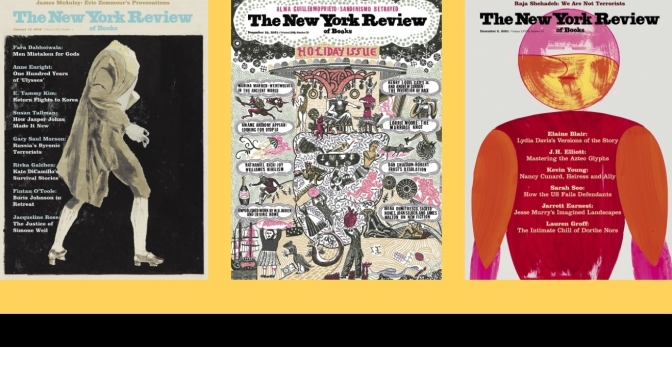
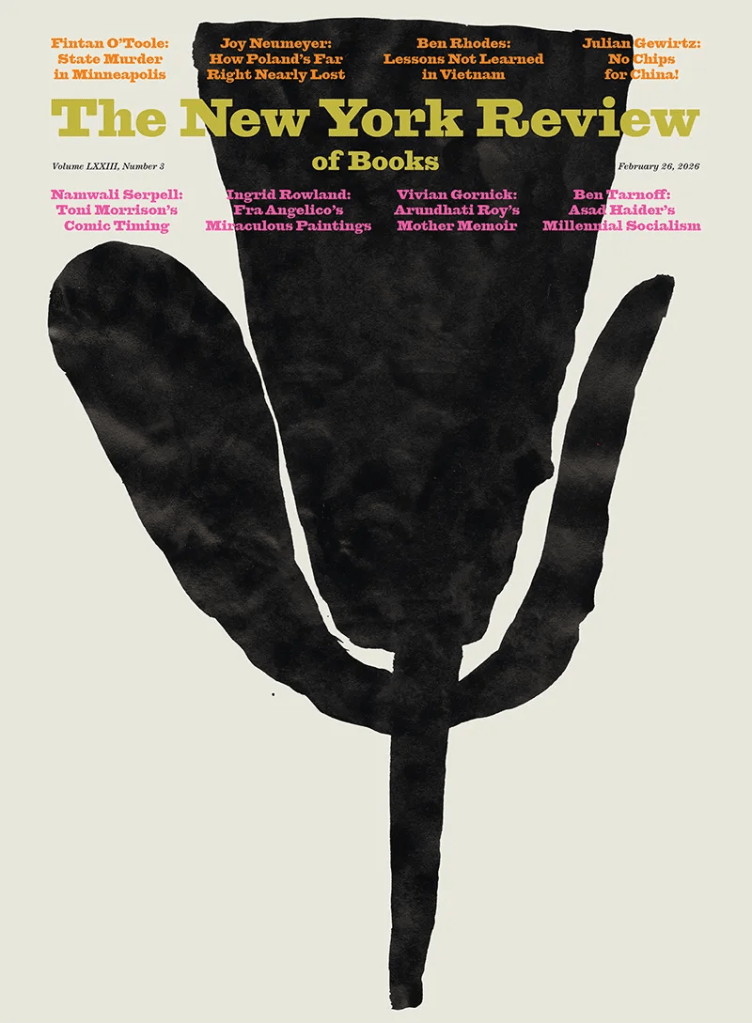
THE NEW YORK REVIEW OF BOOKS – NOVEMBER 6, 2025

THE NEW YORK REVIEW OF BOOKS: The latest issue features Jed Perl on critical thinking, Mark Lilla on the MAGA nation, Ben Lerner on his heart, Clare Bucknell on female critics in early modern England, Cora Currier on twenty-five years of the “war on terror,” Peter E. Gordon on the religion of sociology, Wyatt Mason on Guy Davenport, Josephine Quinn on St. Augustine of Africa, Geoffrey O’Brien on Kavalier and Clay at the Met, Nitin K. Ahuja on the science of death, Darryl Pinckney on James Baldwin, a painting by Maira Kalman, poems by April Bernard and Amit Majmudar, and much more.


Impassioned Ferocity

A critic’s power lies in the testing of deeply held beliefs about the nature of art and art’s place in the world against the experience of specific artworks.

Authority by Andrea Long Chu

All Things Are Too Small: Essays in Praise of Excess by Becca Rothfeld

Those Passions: On Art and Politics by T.J. Clark

Criticism and Truth: On Method in Literary Studies by Jonathan Kramnick

No Judgment by Lauren Oyler

Storm Warnings

The MAGA movement is not fed by conservative ideas but by a nihilistic, apocalyptic determination to stage a counterrevolution against the Sixties, against liberalism, against even democracy itself.

When the Clock Broke: Con Men, Conspiracists, and How America Cracked Up in the Early 1990s by John Ganz

Furious Minds: The Making of the MAGA New Right by Laura K. Field

A Brief Literary Emancipation

Early modern female writers, who were denied the sort of authority usually needed to write literary criticism, were also freed from its constraints.

Sex and Style: Literary Criticism and Gender in Early Modern England by Elizabeth Scott-Baumann

ZENDEGI-E NORMAL

After the theocracy’s fall, the search for a normal life becomes Iran’s quietest revolution.

By Michael Cummins, Editor | October 16, 2025

This speculative essay, based on Karim Sadjadpour’s Foreign Affairs essay “The Autumn of the Ayatollahs,”  transforms geopolitical forecast into human story. In the imagined autumn of the theocracy, when the last sermons fade into static, the search for zendegi normal—a normal life—becomes Iran’s most radical act.

“They said the revolution would bring light. I learned to live in the dark.”

The city now keeps time by outages. Twelve days of war, then the silence that follows artillery—a silence so dense it hums. Through that hum the old voice returns, drifting across Tehran’s cracked frequencies, a papery baritone shaped by oxygen tanks and memory. Victory, he rasps. Someone in the alley laughs—quietly, the way people laugh at superstition.

On a balcony, a scarf lifts and settles on a rusted railing. Its owner, Farah, twenty-three, hides her phone under a clay pot to muffle the state’s listening apps. Across the street, a mural once blazed Death to America. Now the paint flakes into harmless confetti. Beneath it, someone has stenciled two smaller words: zendegi normal.

She whispers them aloud, tasting the risk. Life, ordinary and dangerous, returning in fragments.

Her father, gone for a decade to Evin Prison, was a radio engineer. He used to say truth lived in the static between signals. Farah believed him. Now she edits protest footage in the dark—faces half-lit by streetlamps, each one a seed of defiance. “The regime is weakening day by day,” the exiled activist on BBC Persian had said. Farah memorized the phrase the way others memorize prayers.

Her mother, Pari, hears the whispering and sighs. “Hope is contraband,” she says, stirring lentils by candlelight. “They seize it at checkpoints.”

Pari had survived every iteration of promise. “They say ‘Death to America,’” she liked to remind her students in 1983, “but never ‘Long Live Iran.’” The slogans were always about enemies, never about home. She still irons her scarf when the power flickers back, as if straight lines could summon stability. When darkness returns, she tells stories the censors forgot to erase: a poet who hid verses in recipes, a philosopher who said tyranny and piety wear the same cloak.

Now, when Farah speaks of change—“The Ayatollah is dying; everything will shift”—Pari only smiles, thinly. “Everything changes,” she says, “so that everything can remain the same.”


Farah’s generation remembers only the waiting. They are fluent in VPNs, sarcasm, and workaround hope. Every blackout feels like rehearsal for something larger.

Across town, in a military café that smells of burnt sugar and strategy, General Nouri stirs his fourth espresso and writes three words on a napkin: The debt is settled. Dust lies thick on the portraits of the Supreme Leader. Nouri, once a devout Revolutionary Guard, has outlived his faith and most of his rivals.

He decides that tanks run on diesel, not divinity. “Revelation,” he mutters, “is bad logistics.” His aides propose slogans—National Dignity, Renewal, Stability—but he wants something purer: control without conviction. “For a nation that sees plots everywhere,” he tells them, “the only trust is force.”

When he finally appears on television, the uniform is gone, replaced by a tailored gray suit. He speaks not of God but of bread, fuel, electricity. The applause sounds cautious, like people applauding themselves for surviving long enough to listen.

Nouri does not wait for the clerics to sanction him; he simply bypasses them. His first decree dissolves the Assembly of Experts, calling the aging jurists “ineffective ballast.” It is theater—a slap at the theocracy’s façade. The next decree, an anticorruption campaign, is really a seizure of rival IRGC cartels’ assets, centralizing wealth under his inner circle. This is the new cynicism: a strongman substituting grievance-driven nationalism for revolutionary dogma. He creates the National Oversight Bureau—a polite successor to the intelligence services—charged not with uncovering American plots but with logging every official’s loyalty. The old Pahlavi pathology returns: the ruler who trusts no one, not even his own shadow. A new app appears on every phone—ostensibly for energy alerts—recording users’ locations and contacts. Order, he demonstrates, is simply organized suspicion.


Meanwhile Reza, the technocrat, learns that pragmatism can be treason. He studied in Paris and returned to design an energy grid that never materialized. Now the ministries call him useful and hand him the Normalization Plan.

“Stabilize the economy,” his superior says, “but make it look indigenous.” Reza smiles the way one smiles when irony is all that remains. At night he writes memos about tariffs but sketches a different dream in the margins: a library without checkpoints, a square with shade trees, a place where arguments happen in daylight.

At home the refrigerator groans like an old argument. His daughter asks if the new leader will let them watch Turkish dramas again. “Maybe,” he says. “If the Internet behaves.”

But the Normalization Plan is fiction. He is trying to build a modern economy in a swamp of sanctioned entities. When he opens ports to international shipping, the IRGC blocks them—its generals treat the docks as personal treasuries. They prefer smuggling profits to taxable trade. Reza’s spreadsheets show that lifting sanctions would inject billions into the formal economy; Nouri’s internal reports show that the generals would lose millions in black-market rents. Iran, he realizes, is not China; it is a rentier state addicted to scarcity. Every reformist since 1979 has been suffocated by those who prosper from isolation. His new energy-grid design—efficient, global—stalls when a single colonel controlling illicit oil exports refuses to sign the permit. Pragmatism, in this system, is a liability.


When the generator fails, darkness cuts mid-sentence. The air tastes metallic. “They promised to protect us,” Pari says, fumbling for candles. “Now we protect ourselves from their promises.”

“Fattahi says we can rebuild,” Farah answers. “A secular Iran, a democratic one.”
“Child, they buried those words with your father.”
“Then I’ll dig them out.”

Pari softens. “You think rebellion is new. I once wrote freedom on a classroom chalkboard. They called it graffiti.”

Farah notices, for the first time, the quiet defiance stitched into daily life. Pari still irons her scarf, a habit of survival, but Farah ties hers loosely, a small deliberate chaos. At the bakery, she sees other acts of color—an emerald coat, a pop song leaking from a car, a man selling forbidden books in daylight. A decade ago, girls lined up in schoolyards for hijab inspections; now a cluster of teenagers stands laughing, hair visible, shoulders touching in shared, unspoken defiance. The contradiction the feminist lawyer once described—“the situation of women shows all the contradictions of the revolution”—is playing out in the streets, private shame becoming public confidence.

Outside, the muezzin’s call overlaps with a chant that could be mourning or celebration. In Tehran, it is often both.


Power, Nouri decides, requires choreography. He replaces Friday prayers with “National Addresses.” The first begins with a confession: Faith divided us. Order will unite us. For a month, it works. Trucks deliver bread under camera lights; gratitude becomes policy. But soon the whispering returns: the old Ayatollah lives in hiding, dictating verses. Nouri knows the rumor is false—he planted it himself. Suspicion, he believes, is the purest form of control. Yet even he feels its poison. Each morning he finds the same note in the intelligence reports: The debt is settled. Is it loyalty—or indictment?


Spring creeps back through cracks in concrete. Vines climb the radio towers. In a basement, Farah’s father’s transmitter still hums, knobs smoothed by fear. “Tonight,” she whispers into the mic, “we speak of normal life.”

She reads messages from listeners: a woman in Mashhad thanking the blackout for showing her the stars; a taxi driver in Shiraz who has stopped chanting anything at all; a child asking if tomorrow the water will run. As the signal fades, Farah repeats the question like a prayer. Somewhere, a neighbor mistakes her voice for revelation and kneels toward the sound. The scarf on her balcony stirs in the dark.


The old voice never returns. Rumor fills the vacuum. Pari hangs laundry on the balcony; the scarf flutters beside her, now simply weather. Below, children chalk zendegi normal across the pavement and draw birds around the words—wings in white dust. A soldier passes, glances, and does nothing. She remembers writing freedom on that school chalkboard, the silence that followed, the summons to the principal’s office. Now no one erases the word. She turns up the radio just enough to catch Farah’s voice, low and steady: “Tonight, we speak of normal life.” In the distance, generators pulse like mechanical hearts.


Nouri, now called Marshal, prefers silence to titles. He spends mornings signing exemptions, evenings counting enemies. Each new name feels like ballast. He visits the shrine city he once scorned, hoping faith might offer cover. “You have replaced revelation with maintenance,” a cleric tells him.
“Yes,” Nouri replies, “and the lights stay on.”

That night the grid collapses across five provinces. From his balcony he watches darkness reclaim the skyline. Then, through the static, a woman’s voice—the same one—rises from a pirated frequency, speaking softly of ordinary life. He sets down his glass, almost reaches for the dial, then stops. The scarf lifts somewhere he cannot see.


Weeks later, Reza finds a memory stick in his mail slot—no note, only the symbol of a scarf folded into a bird. Inside: the civic network he once designed, perfected by unseen hands. In its code comments one line repeats—The debt is settled. He knows activation could mean death. He does it anyway.

Within hours, phones across Iran connect to a network that belongs to no one. People share recipes, poetry, bread prices—nothing overtly political, only life reasserting itself. Reza watches the loading bar crawl forward, each pixel a quiet defiance. He thinks of his grandfather, who told him every wire carries a prayer. In the next room, his daughter sleeps, her tablet tucked beneath her pillow. The servers hum. He imagines the sound traveling outward—through routers, walls, cities—until it reaches someone who had stopped believing in connection. For the first time in years, the signal clears.


Farah leans toward the microphone. “Tonight,” she says, “we speak of water, bread, and breath.” Messages flood in: a baker in Yazd who plays her signal during morning prep; a soldier’s mother who whispers her words to her son before he leaves for duty; a cleric’s niece who says the broadcast reminds her of lullabies. Farah closes her eyes. The scarf rises once more. She signs off with the whisper that has become ritual: Every revolution ends in a whisper—the sound of someone turning off the radio. Then she waits, not for applause, but for the hum.


By late October, Tehran smells of dust and pomegranates. Street vendors return, cautious but smiling. The murals are being repainted—not erased but joined—Death to America fading beside smaller, humbler words: Work. Light. Air. No one claims victory; they have learned better. The revolution, it turns out, did not collapse—it exhaled. The Ayatollah became rumor, the general a footnote, and the word that endured was the simplest one: zendegi. Life. Fragile, ordinary, persistent—like a radio signal crossing mountains.

The scarf lifts once more. The signal clears. And somewhere, faint but unmistakable, the hum returns.

“From every ruin, a song will rise.” — Forugh Farrokhzad

THIS ESSAY WAS WRITTEN AND EDITED UTILIZING AI

TIMES LITERARY SUPPLEMENT – OCTOBER 17, 2025 PREVIEW

TIMES LITERARY SUPPLEMENT: The latest issue features ‘Artist in the making: Joyce Carol Oates on Sally Mann’s photographic craft’

Peer group

The British upper classes today By Michael Hall

Uniquely hers

A how-to book by ‘one of the greatest’ American photographers’ By Joyce Carol Oates

Master of the apocalypse

László Krasznahorkai, Nobel laureate in literature By George Szirtes

Thoroughly modern maenads

Religion, immigration, gender politics and severed heads By Mary Beard

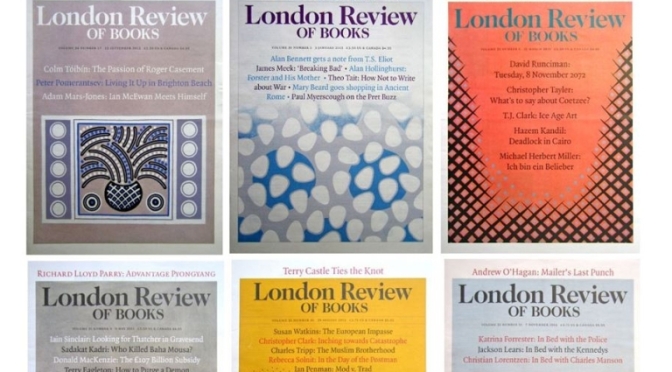
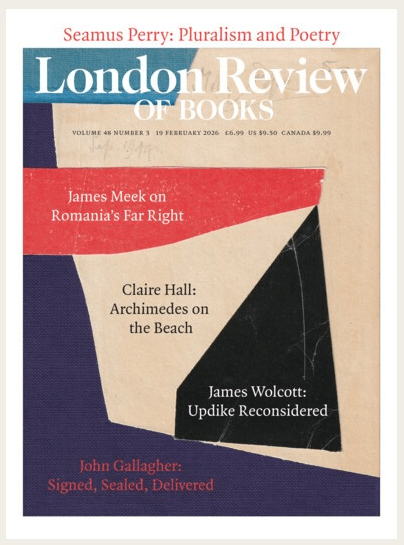
LONDON REVIEW OF BOOKS – OCTOBER 23, 2025 PREVIEW

London Review of Books

LONDON REVIEW OF BOOKS: The latest issue features ‘Mrs. Dalloway’s Demons

Unconditional Looking

The Inner Life of ‘Mrs Dalloway’ 
by Edward Mendelson.
Columbia, 137 pp., £20, September, 978 0 231 22171 9

‘Mrs Dalloway’: Biography of a Novel 
by Mark Hussey.
Manchester, 222 pp., £18.99, May, 978 1 5261 7681 3

Mrs Dalloway 
by Virginia Woolf, edited by Edward Mendelson.
NYRB, 208 pp., £15.99, September, 978 1 68137 998 2

Mrs Dalloway 
by Virginia Woolf, edited by Trudi Tate.
Oxford, 224 pp., £7.99, May, 978 0 19 285985 3

Ouvriers de luxe

Gustave Flaubert et Michel Lévy: Un couple explosif 
by Yvan Leclerc and Jean-Yves Mollier.
Le Livre de Poche, 224 pp., €8.40, November 2024, 978 2 253 94112 5

Fish in the Wrong Place

Liquid Empire: Water and Power in the Colonial World 
by Corey Ross.
Princeton, 447 pp., £35, September 2024, 978 0 691 21144 2

In Praise of Floods: The Untamed River and the Life It Brings 
by James C. Scott.
Yale, 220 pp., £20, February, 978 0 300 27849 1