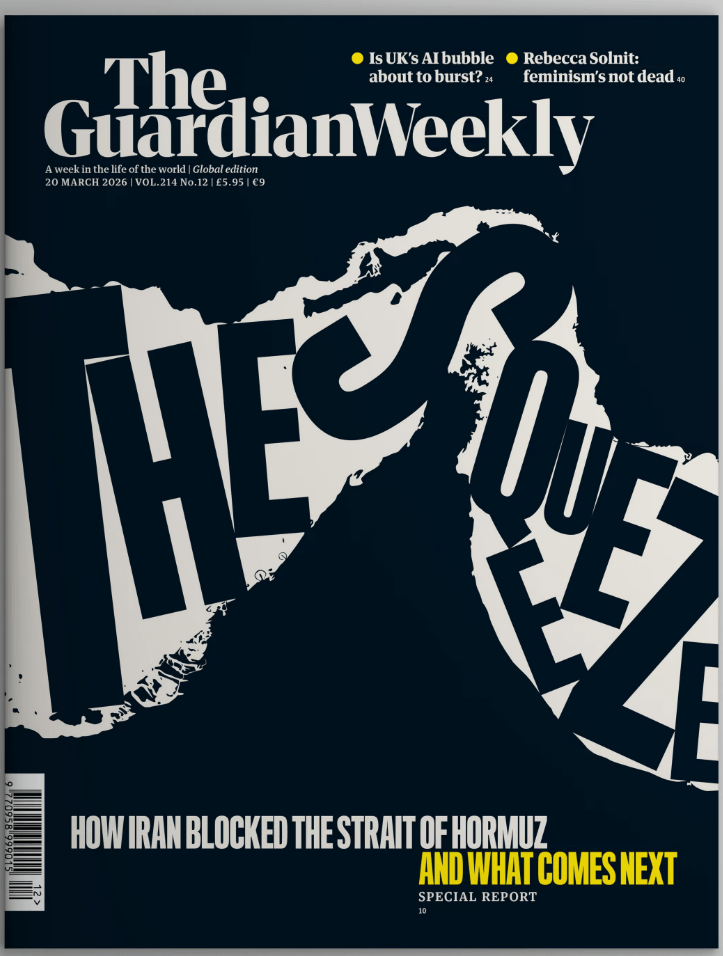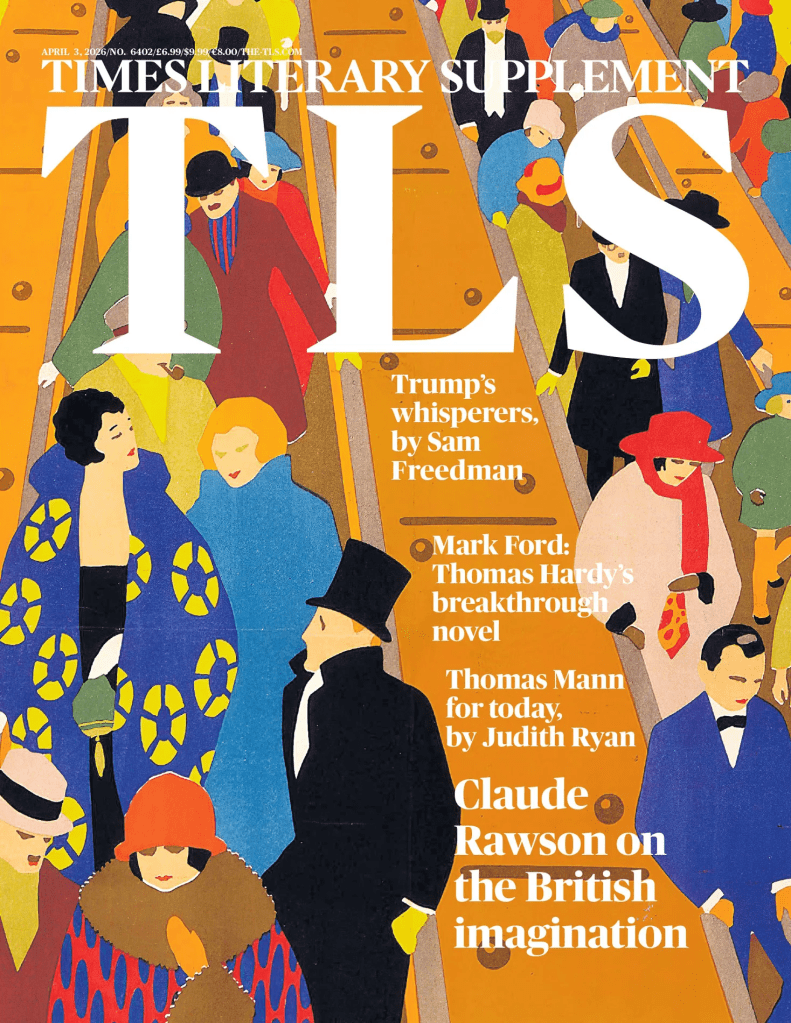
The US capture of Venezuelan president Nicolás Maduro reinforces the Trump administration’s capacity to invent any pretext to justify the use of armed force.
A new life of Gertrude Stein treats her as a philosopher of language to trust, not explain—and gathers force from archival discoveries and intriguing plots of her reception and reputation.
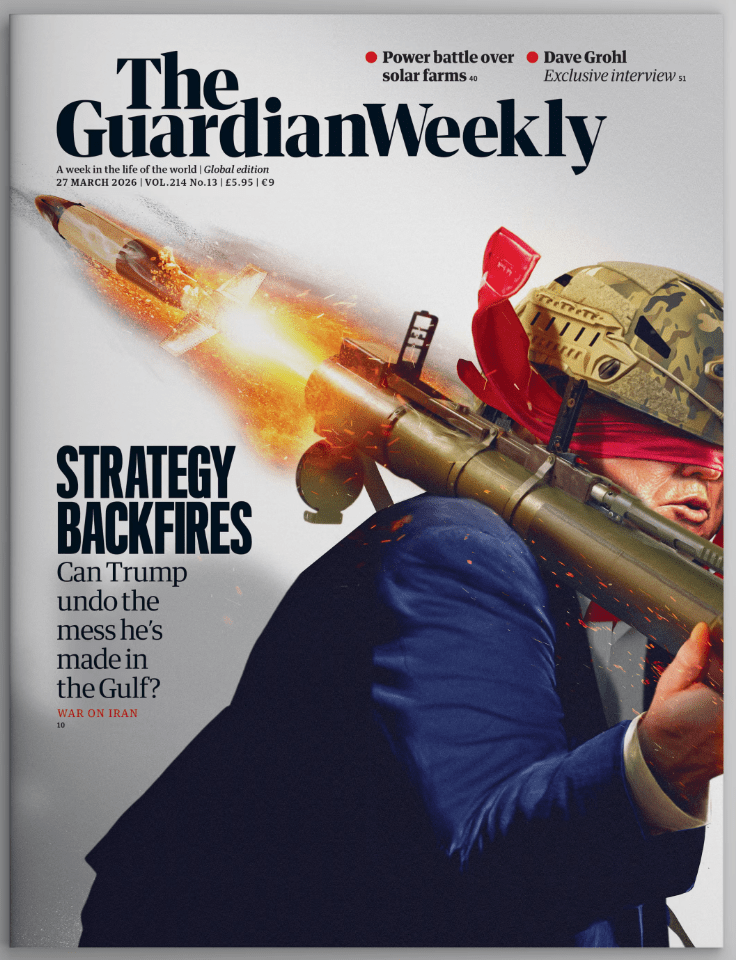
The dystopian nightmare of 2026 continued apace this week with Donald Trump seemingly hell-bent on taking over Greenland, either by purchase or military force if necessary, while potentially collapsing the entire western security alliance in the process.
Updates were delivered by the US president to European leaders in a trademark stream of social media insults and invective. As ever with Trump, it’s hard to tell if it all should be read as maximalist positioning ahead of a negotiation, or a genuine precursor to a military attack. But as Patrick Wintour and Jennifer Rankin write in this week’s Big Story, the damage among fellow Nato members already looks to have been done.
Melting sea ice has much to do with Greenland’s increasing strategic desirability. With the help of some great graphics, visuals editor Ashley Kirk explains what’s changing in the Arctic and who lays claim to what.
Spotlight | The man who trusted Trump – and paid with his life Many Iranian protesters believed a US president would – for the first time – rescue them, but now people can only despair after mass arrests and brutality. Deepa ParentandWilliam Christou report
Environment | Where have all Thailand’s dugongs gone?
The Andaman coast was one of few places in the world with a viable population of the marine mammals, but then dead ones began washing up. Now half have gone. Gloria Dickie reports from Phuket
Feature | Cuba edges closer to collapse Disillusioned with the revolution after 68 years of US sanctions and a shattered economy, one in four Cubans have left in recent years. Can the regime, and country, survive? ByAndrei Netto in Havana
Opinion | Take a lesson from the past, and light the way forward As Martin Kettle writes his last regular column for the Guardian, his thoughts turn to the examples and hope we can take from history
Culture | Michael Sheen on launching Welsh National Theatre As the newly founded national company’s first show comes to the stage, the proudly Welsh actor tells Kate Wyver about his plan to bring big productions back to his homeland
On a Bahamian island, in a landlocked lagoon, the planet’s densest collection of seahorses is offering scientists new insights into the secret lives of one of the world’s most mysterious fish.
We’re just a couple of weeks into 2026 and already it feels like an eternity has passed.
From Venezuela to Greenland, a blitz of revanchist US foreign policy moves by Donald Trump has thrown the world into turmoil. Domestically, it’s little better: in Minneapolis, the killing last week of Renee Nicole Good by an Immigration and Customs Enforcement agent – who was defended aggressively by Trump – prompted shock and fury across America.
While some argue that recent events simply represent a more honest, open approach towards US policy goals than in the recent past, others believe such brazen expansionism profoundly threatens the world order.
In a terrific essay this week, our senior international correspondent Julian Borger argues that these events signal a shift away from the postwar rules-based order and into a new age of global imperialism where, alongside Vladimir Putin’s Russia and Xi Jinping’s China, powerful nations use overtly brute force to achieve their objectives.
Spotlight | Iran protests: ‘The streets are full of blood’ After several days of protests amid an information blackout and a brutal crackdown, demonstrators recount their experiences on the frontlines to Deepa Parent and William Christou
Technology | Elon Musk’s pervert chatbot ‘Add blood, forced smile’: Amelia Gentleman and Helena Horton investigate how Grok’s AI nudification tool went viral
Feature | Trump’s assault on the Smithsonian The US president has vowed to kill off ‘woke’ in his second term in office, and the venerable cultural institution a few blocks from the White House is in his sights. Charlotte Higgins reports
Opinion | As the bombs fell, my family planted hope in a garden in Gaza Amid constant danger, Taqwa Ahmed al-Wawi’sseed-planting was a tiny act of resistance, offering food – and a sense of achievement among the devastation
Culture | Interview with Park Chan-wook The South Korean film director talks to Steve Rose about cultural dominance, the capitalist endgame and why we can’t beat AI
After buying his own liberty, the Marylander covertly assisted conductors on the Underground Railroad, including Harriet Tubman. But his possession of “Uncle Tom’s Cabin” turned him into an abolitionist hero
Donald Trump’s destruction of the civil service is a tragedy not just for the roughly 300,000 workers who have been discarded, but for an entire nation.
An Act of Cosmic Sabotage
How Donald Trump tried to ground NASA’s science missions
I Tried to Be the Government. It Did Not Go Well.
My five-month quest to monitor the weather, track inflation, and inspect milk for harmful microorganisms
Donald Trump consigned the remnants of the rules-based international order to the bottom of the Caribbean Sea as US forces extracted Nicolás Maduro to face trial in the US. With allies and adversaries of Washington still adjusting to last weekend’s audacious assault on Caracas, Trump and his inner circle are thinking about their next steps to secure US interests in what they regard as “our hemisphere”.
Our reporting team, led by Latin American correspondent Tom Phillips, gauges the reaction to Maduro’s abduction on the ground in Caracas and among Venezuela’s closest neighbours, while Dan Sabbagh explains how the US military had planned and executed the operation.
Since the start of the US military buildup and blockade of Venezuela, Trump had claimed that Maduro needed to be “brought to justice” for his alleged role in drug trafficking, which Trump claimed had caused thousands of deaths in the US. But, as international commentators Julian Borger and Nesrine Malik explain, that has proved the thinnest of justifications and already by last Saturday it was clear that Venezuela’s huge oil reserves were uppermost on his mind.
Spotlight | Iran in turmoil An ailing economy and plummeting exchange rate have prompted the biggest street protests in many years, report Deepa Parent and William Christou
Science | Is de-extinction really possible? Bringing woolly mammoths and dire wolves back to life captured the public’s imagination last year but, Patrick Greenfield reports, there are questions around what can actually be achieved
Feature | The power and purpose of guilt Psychologist Chris Moore saw first-hand how powerful and complex an emotion it is, as he explains to Emine Saner
Opinion | Adieu to the French art of lunch Paul Taylor mourns the demise of a convivial lunch at a bistro serving freshly prepared food and the end of an unpretentious part of working culture
Culture | Is the crisis in masculinty just a joke? It’s a ridiculous time to be male – and that’s good news for a new genre of social media comedy poking fun at the manosphere, finds Matthew Cantor
Turner is on our banknotes, Constable in our hearts By Ferdinand Mount
Coming out of Tate Britain just before noon on Budget Day, you are blinded by a blistering white sun behind Vauxhall Cross. The steepling glass towers south of the river are washed in an opal mist, the ziggurats of the MI6 HQ eclipsed to a ruined beige. Vauxhall Bridge gleams in the scarlet and yellow of a Turner sunset. J. M. W. would have rushed to the Embankment, whipped out his sketchbook, then worked up the whole shimmering scene into a six-footer and called it something like “The End of England”. John Constable would probably have turned away to catch the next coach to Hampstead Heath to paint Branch Hill Pond again.
‘One day, they’ll find me out’
How the young Dylan Thomas repeatedly stole from others By Alessandro Gallenzi
Mother was always right
A love-hate relationship recalled by France’s ‘greatest living writer’ By Marie Darrieussecq
The notebook fallacy
Why stylish stationery won’t change your life By Ian Sansom
News, Views and Reviews For The Intellectually Curious