Tag Archives: Heart Surgery

Research Preview: Nature Magazine – Nov 9, 2023

Volume 623 Issue 7986

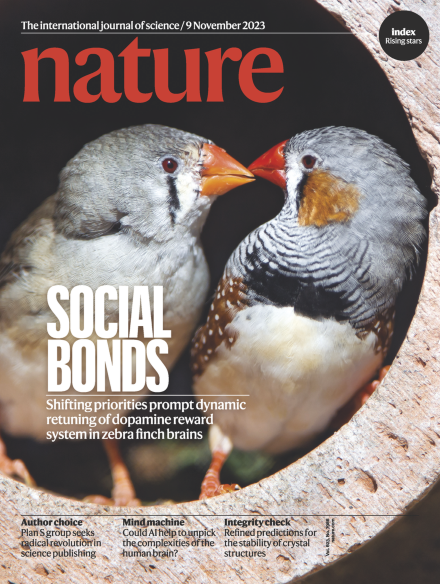
nature Magazine – November 9, 2023: The latest issue cover features the changes in dopamine signals in male zebra finches (depicted on the cover), as they engage in activities such as drinking, song evaluation and courting. The researchers found that dopamine responses are dynamically adjusted based on the birds’ current priorities. 

Brain and body are more intertwined than we knew

Gut bacteria. Scanning electron micrograph (SEM) of various bacteria found in a sample from a human small intestine.

A host of disorders once thought to be nothing to do with the brain are, in fact, tightly coupled to nervous-system activity.

A robot performs heart surgery with a strong but delicate touch

Device can wield tools inside one of the heart’s chambers while bracing itself against a stabilizer fitted into a major cardiac vein.

The Solar System’s biggest moon is spattered with salt

Dried brine from a subsurface ocean speckles the surface of Ganymede, which orbits Jupiter.

Studies: Heart Surgery Patients Can Be Safely Discharged In 3 Days

From a News-Medical.net online release:

Northwestern Medicine logo“Patients can go home after a shorter length of stay in the hospital without increased risk of complications and rehospitalizations,” said Dr. Malaisrie. “Because we found no detrimental effect of accelerated discharge, both patients and physicians should not be averse to discharging patients when medically ready.”

Dr. Malaisrie anticipates that the Northwestern Medicine cardiac ERAS program will result in faster recoveries, reduced complications, decreased time in the hospital, lower costs, and improved patient/family satisfaction. In the future, the researchers plan to closely examine both traditional clinical endpoints and patient-reported outcomes from the program.

“Expectations for recovery after cardiac surgery are being reset in the current era,” he said. “What does this mean for patients? It means that prolonged or taxing recovery is no longer required. Patients should know that recovery from heart surgery is not only quicker, but also better with ERAS programs.”

Read more

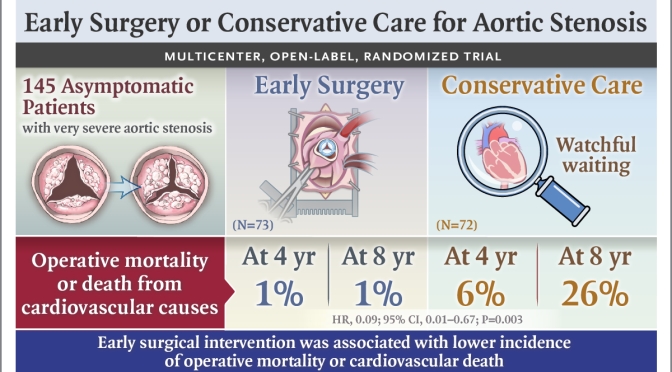
Aortic Stenosis: Early Aortic-Valve Replacement Surgery Lowers Mortality

Early Surgery or Conservative Care for Aortic Stenosis New England Journal of Medicine January 8 2020 Infographic

CONCLUSIONS

Among asymptomatic patients with very severe aortic stenosis, the incidence of the composite of operative mortality or death from cardiovascular causes during the follow-up period was significantly lower among those who underwent early aortic-valve replacement surgery than among those who received conservative care.

Read study

Heart Disease: Stents, Bypass Surgery Provide No Benefits To Stable Patients In Large Funded Trial

From a Stanford Medicine online release:
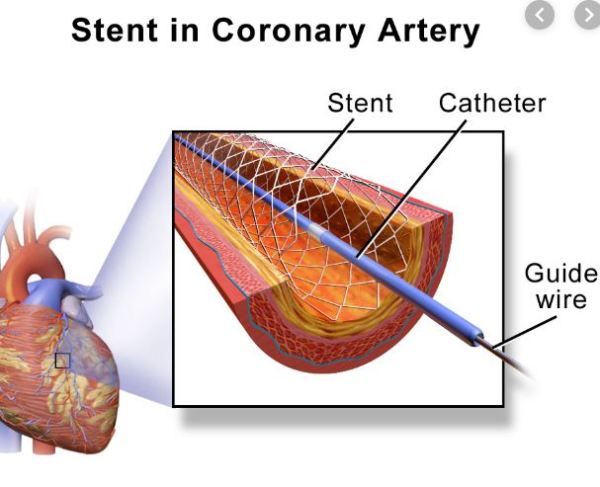
Stent in Coronary Artery“For patients with severe but stable heart disease who don’t want to undergo these invasive procedures, these results are very reassuring,” said David Maron, MD, clinical professor of medicine and director of preventive cardiology at the Stanford School of Medicine, and co-chair of the trial, called ISCHEMIA, for International Study of Comparative Health Effectiveness with Medical and Invasive Approaches. 

“The results don’t suggest they should undergo procedures in order to prevent cardiac events,” added Maron, who is also chief of the Stanford Prevention Research Center.

Patients with severe but stable heart disease who are treated with medications and lifestyle advice alone are no more at risk of a heart attack or death than those who undergo invasive surgical procedures, according to a large, federally-funded clinical trial led by researchers at the Stanford School of Medicine and New York University’s medical school.

The trial did show, however, that among patients with coronary artery disease who also had symptoms of angina — chest pain caused by restricted blood flow to the heart — treatment with invasive procedures, such as stents or bypass surgery, was more effective at relieving symptoms and improving quality of life.

To read more: http://med.stanford.edu/news/all-news/2019/11/invasive-heart-treatments-not-always-needed.html


Medical Devices: Heartbeat-Powered Pacemaker Successfully Tested In Living Pigs

“The development of these battery-free technologies will revolutionize implantable devices,” says Ramses Martinez, a researcher in industrial and biomedical engineering at Purdue University, who was not involved in either study. “Soon traditional rigid implants will evolve into conformable systems capable of harvesting the energy they need to function from the patient.”

Scientific American Heartbeat-Powered Pacemaker

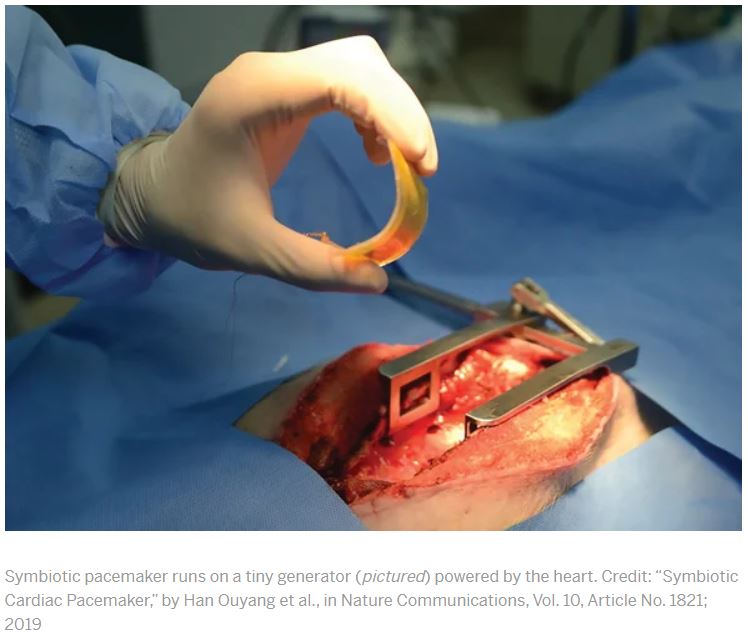
Current pacemakers have batteries that last less than 10 year and require expensive surgery to replace them. Harini Barath (Scientific American, May 28, 2019) reports that the pig’s heart generated ample energy to power a human pacemaker. Read more below:

https://www.scientificamerican.com/article/new-pacemaker-harvests-energy-from-the-heart/