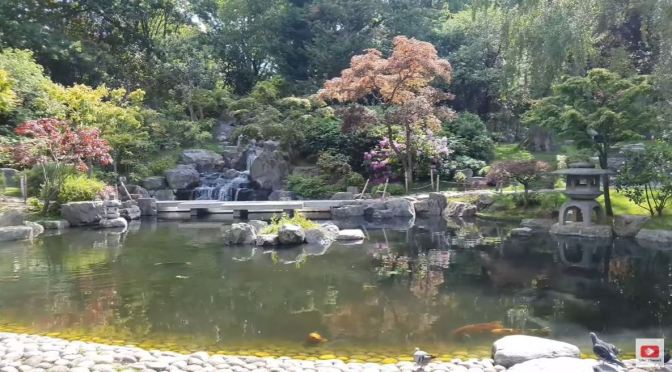
In Holland Park there are two Japanese gardens, one close to the other: the Kyoto garden and the Fukushima garden.
Kyoto garden was a cooperative project between the Royal Borough of Kensington and Chelsea and the Kyoto Chamber of Commerce in Japan. It was built in 1992 to celebrate the Japan Festival in London. A waterfall and a pond are the key points of the garden; all around there are different type of trees, including several maple trees, a few stone lanterns ishi-dōrō 石灯籠, and a tsukubai つくばい. The pond, with koi, is crossed by a bridge (in cement) and selected rocks are placed in the pond and along the shore.
Fukushima garden, inaugurated in 2012, was built to commemorate the support of the British people to the Japanese people following the natural disaster occurred on March 11, 2011. It is almost an empty space, covered by a green lawn on which a few rocks and a lantern are carefully placed. The landscape of the garden gives the feeling of emptiness left by the tsunami.
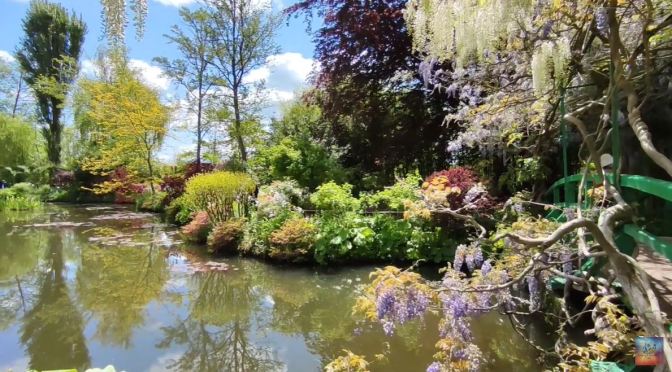
The Fondation Claude Monet is a nonprofit organisation that runs and preserves the house and gardens of Claude Monet in Giverny, France, where Monet lived and painted for 43 years. Monet was inspired by his gardens, and spent years transforming them, planting thousands of flowers.
Dreamlike flowers, a dragonfly with ‘invisible’ wings and a startlingly geometric overheard view of a garden were among the winners in the 2021 RHS Photographic Competition.
The overall winner was Oliver Dixon for his image of the flower garden at Loseley Park, Surrey, taken with a drone. It’s an image which really captures the mix of Man and Nature which goes in to a great garden.
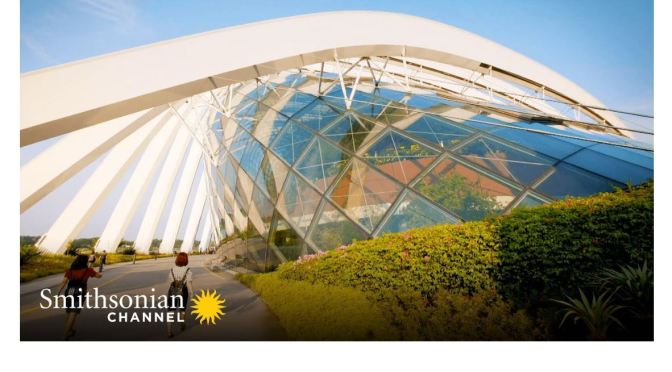
The ‘Gardens by the Bay’ are home to 100,000 thriving plants–but for the entire setup to work, the designers had to figure out a way to protect the eerily-designed structures against the strong winds that hit Singapore.
The Gardens by the Bay is a nature park spanning 101 hectares in the Central Region of Singapore, adjacent to the Marina Reservoir. The park consists of three waterfront gardens: Bay South Garden, Bay East Garden and Bay Central Garden.
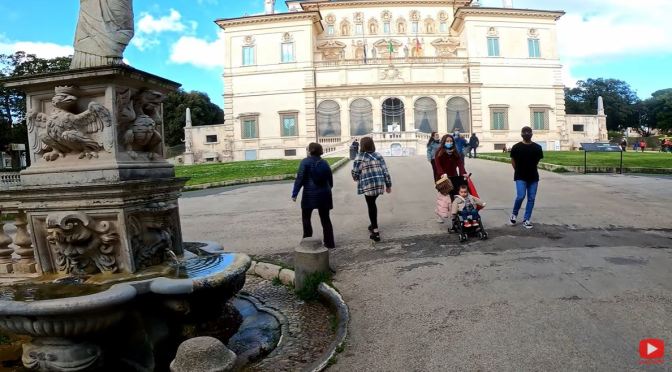
Villa Borghese is a landscape garden in Rome, containing a number of buildings, museums and attractions. It is the third largest public park in Rome after the ones of the Villa Doria Pamphili and Villa Ada.
The Tuileries Garden is a public garden located between the Louvre and the Place de la Concorde in the 1st arrondissement of Paris, France. Created by Catherine de’ Medici as the garden of the Tuileries Palace in 1564, it was eventually opened to the public in 1667 and became a public park after the French Revolution.
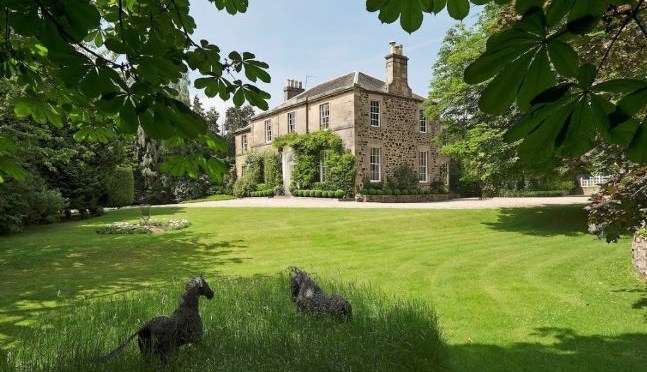
In just under 1 acre of beautiful gardens and a stones throw from the city center, this stunning period property has almost 6,000 sq. ft. (547 sq. meters) of accommodation and a separate 3 bedroom coach house. Considered Edinburgh’s finest private home this highly prized Georgian mansion is a once-in-a-generation opportunity and arguably the very best family home in Edinburgh.
The house is located in the affluent and prestigious Murrayfield area, especially sought after for its close proximity to world-class schools for every age group. This outstanding property dates back to the 1800’s. In the late 1990s, acclaimed Scottish architect Lorn Macneal enhanced the property with a skillful remodeling of the west wing, synthesizing flow, space and light, whilst retaining the detailed majesty of the original design.
Contemporary, prosperous, and rich in history, Edinburgh is undoubtedly the UKs’ second cultural capital and comes with a lifestyle that boasts unrivalled access to urban and country life. Scotland’s highlands are within easy reach of the house, offering majestic and untouched scenery amid lochs and mountains, while air and rail access to the UK and rest of the world is only around a 15-minute drive away.
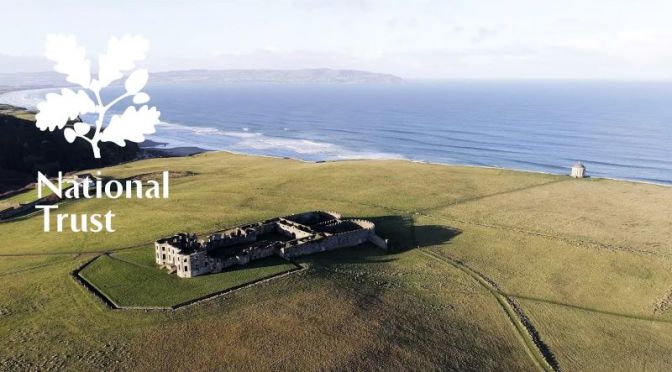
Experience the beauty and mystery of County Londonderry’s Downhill Demesne in this video tour of the vast landscape – fascinating ruins, an intriguing clifftop temple, unusual plants and trees, plus much more. We’ll be shedding light on the eccentric bishop that lived here and treating you to dramatic views of the North Atlantic.
The Mussenden Temple and Downhill Demesne is a National Trust property consisting of Downhill Castle and its estate, which includes the Mussenden Temple.
Ordering plants by post mostly from Italy, Germany, North Africa, and even the Cape of Good Hope, the Nuremberg merchant Volkamer was a devotee of the fragrant and exotic citrus at a time when such fruits were still largely unknown north of the Alps.
Famous First Edition: First printing of 5,000 numbered copies
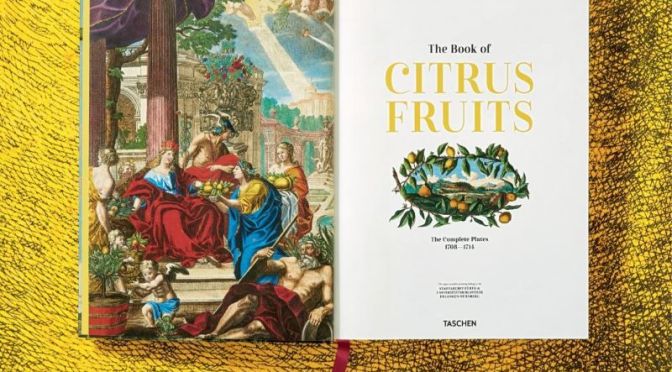
Have you ever thought of citrus fruits as celestial bodies, angelically suspended in the sky? Perhaps not, but J. C. Volkamer (1644–1720) did—commissioning an extravagant and breathtaking series of large-sized copperplates representing citrons, lemons, and bitter oranges in surreal scenes of majesty and wonder.
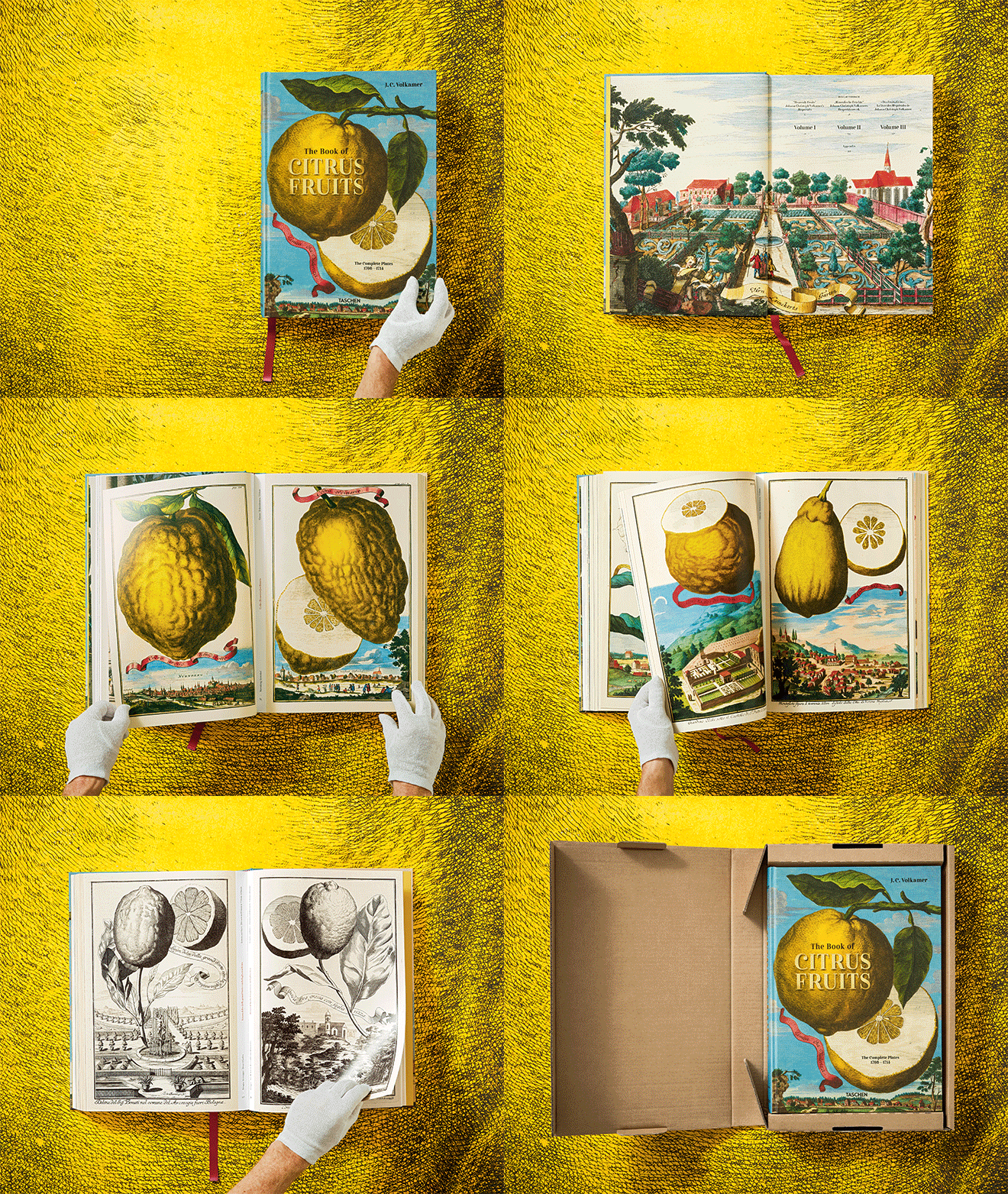
His garden came to contain a wide variety of specimens, and he became so obsessed with the fruits that he commissioned a team of copperplate engravers to create 256 plates of 170 varieties of citrus fruits, many depicted life size, published in a two-volume work.
In both volumes, Volkamer draws on years of hands-on experience to present a far-reaching account of citrus fruits and how to tend them—from a meticulous walk-through of how to construct temporary orangeries, glasshouses, and hothouses for growing pineapples to commentary on each fruit variety, including its size, shape, color, scent, tree or shrub, leaves, and country of origin.
In each plate, Volkamer pays tribute to the verdant landscapes of Northern Italy, his native Nuremberg, and other sites that captured his imagination. From Genovese sea views to the Schönbrunn Palace, each locale is depicted in the same exceptionaldetail as the fruit that overhangs it. We witness branches heavy with grapefruits arching across a sun-bathed yard in Bologna and marvel at a huge pineapple plant sprouting from a South American town. The result is at once a fantastical line-up of botanical beauty and a highly poetic tour through the lush gardens and places where these fruits grew.
Few colored sets of Volkamer’s work are still in existence today. This publication draws on the two recently discovered hand-colored volumes in the city of Fürth’s municipal archive in Schloss Burgfarrnbach. The reprint also includes 56 newly discovered illustrations that Volkamer intended to present in a third volume.
The author
Iris Lauterbachstudied art history and romance languages and literature in Mainz, Pavia and Paris and obtained her doctorate in 1985. Since 1991 she has been a member of the research department of the Central Institute for Art History in Munich and teaches the history of garden architecture at the Technical University in Munich. Her main areas of research include France during the 18th century and the history of European garden art from the 16th to the 20th century, while she has also carried out extensive research about the restitution of artworks that were looted during the Second World War.







 Boomers Daily