

Thomas Hardy’s depictions of a fictional Wessex and his own dear Dorset are more accurate than they may at first appear, says Susan Owens.
We feel a frisson when a real place plays a key part in a novel. The Cobb at Lyme Regis will always be associated with silly Louisa Musgrove and her tumble in Jane Austen’s Persuasion and Knole in Kent with Virginia Woolf’s hero-heroine Orlando. Thomas Hardy, however, took the use of known locations to another level. He may have invented the characters in his novels, but he made them walk along actual roads, look across valleys at real views and live in recognisable villages and towns — sometimes, even in identifiable buildings.
For all its operatic symbolism, Tess of the d’Urbervilles (1891) is a novel in which practical footwear matters. Among its heart-breaking moments is when Tess’s walking boots are discovered stuffed in a hedge where she had hidden them, mistaken for a tramp’s pair and taken away, forcing her to walk many miles back home along a rough road in pretty, but thin-soled, patent-leather ones.

A map depicting Hardy’s Wessex by Emery Walker, drawn for Tess of the d’Urbervilles. Credit: BBC / Album
Those who live in the country come to know land by ear as much as by eye. Hardy’s characters are expert in this — even in the dark and when drunk, as in Desperate Remedies (1871): ‘Sometimes a soaking hiss proclaimed that they were passing by a pasture, then a patter would show that the rain fell on some large-leafed root crop, then a paddling plash announced the naked arable.’



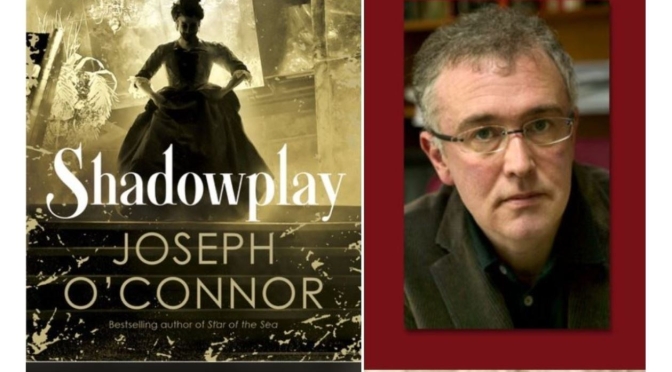
 “Shadowplay” opens in Dublin in the winter of 1876, with O’Connor painting that ravishing city with a soft lyricism that Stoker himself might have envied: “Smacks heading down the estuary, trailing petticoats of nets, out towards the expanse of the sea.” Stoker, a government clerk who moonlights as a theater critic, is reeling from the visceral intensity of Irving’s performance in Dublin as Hamlet. “Eyes glowing red in the gaslight,” Irving terrifies the audience, “slinking towards the lip of the stage, left hand on hip, wiping his wet mouth with the back of his sleeve. Sneering, he regarded them. Then he spat.” (


 BBC Radio 4 “Books And Authors” Talks To Maggie O’Farrell on her new novel, “Hamnet”
 On a summer’s day in 1596, a young girl in Stratford-upon-Avon takes to her bed with a fever. Her twin brother, Hamnet, searches everywhere for help. Why is nobody at home?
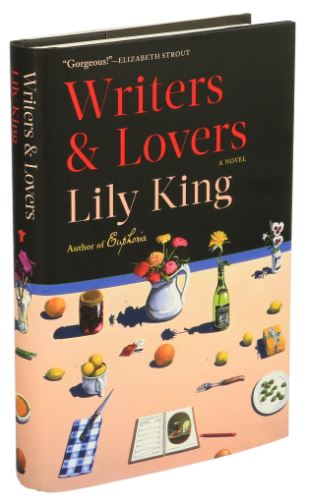 Writers & Lovers follows Casey―a smart and achingly vulnerable protagonist―in the last days of a long youth, a time when every element of her life comes to a crisis. Written with King’s trademark humor, heart, and intelligence, Writers & Lovers is a transfixing novel that explores the terrifying and exhilarating leap between the end of one phase of life and the beginning of another.
 Lily King returns with another instant New York Times bestseller: an unforgettable portrait of an artist as a young woman.


 David Rabe joins Deborah Treisman to read and discuss “
 Boomers Daily